Vaccines

Joe Biden is letting India down

From our US edition

With 40 percent of the population vaccinated, a palpable sense of normalcy has returned to America. The young are now getting their turn at the COVID vaccine and in almost every city, restaurants and bars are back in full swing. But while selfies of joyful reunions with older relatives flood social media here, in India, the picture is grim. The country reported world record-breaking coronavirus infection rates for four days in a row. Hospitals in several cities are grappling with severe shortages of beds, medicines and oxygen. For a country widely seen as the pharmacy of the world (India produces 60 percent of the world’s total vaccines), it is a sad irony that just 8 percent of its own population has been vaccinated thus far.
india

What the fight against HIV can teach us about defeating Covid-19

In the eighties, we were warned to beware an easily spread, deadly virus. The government’s ominous HIV adverts told us not to 'die of ignorance'. Thus a generation was educated through fear how to avoid infection by practicing safer sex and avoiding contact with the blood of those who are positive.  While those messages are still important today, HIV no longer represents the death sentence it once did. Still a life-altering and permanent disease, it can now be managed in a way that means people often live full lives with HIV, rather than die early because of it. No successful vaccination has been developed for HIV, but other medical developments helped to change the prognosis for those who contract it.

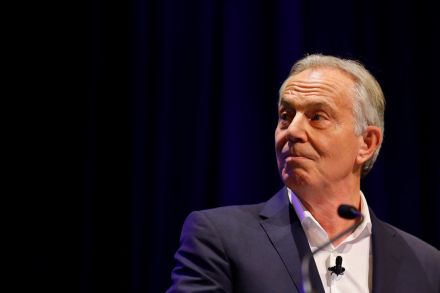
Boris should heed Blair’s advice on the Covid vaccine data

We’ve known from the data from phase three trials that the Pfizer and AstraZeneca vaccines have good efficacy against symptomatic cases of Covid-19. The data also hinted at near 100 per cent efficacy against serious illness, although the limited numbers of participants made it hard to be sure.  This morning, however, comes real world data showing the vaccines have all but eliminated hospitalisations. According to figures obtained by the Daily Telegraph, 74,405 people were admitted to hospitals across the UK between September 2020 and March 2021. Of these, just 32 were people who had received a vaccine at least three weeks earlier. The figures don't reveal whether or not there were any deaths.

Labour’s problems are piling up

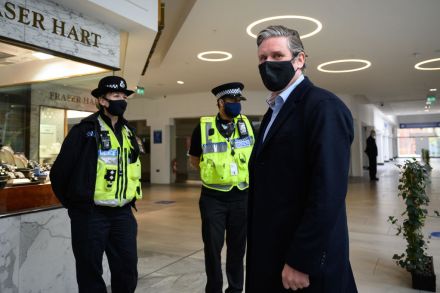
Can things get any worse for Keir Starmer? Yes appears to be the answer, if the latest YouGov poll is anything to go on. While the Tories have surged ahead to 43 per cent, support for Labour has tumbled down to 29 per cent. It's important not to blow a single poll out of proportion, but nonetheless these numbers make for grim reading for the Labour leader. That 14 per cent lead for the Conservatives is the largest since mid-May 2020, when the recently elected Starmer was still digging his party out of the polling abyss of the Corbyn period. A year on – and coming weeks before a crucial set of local elections and a by-election – it shows all too clearly that Starmer has so far failed to rescue Labour.

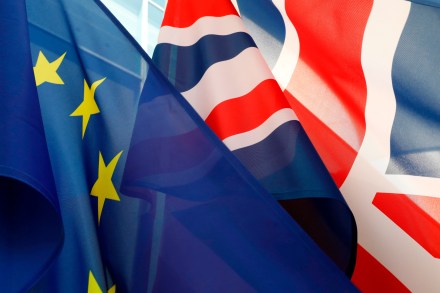
EU commissioner says Britain’s vaccine success is down to Brussels

Europe’s vaccine rollout has been a chastening experience for many in Brussels with the World Health Organisation describing it last week as ‘unacceptably slow’. So Mr S was intrigued to read an interview in Der Spiegel today with Thierry Breton, the EU’s Commissioner for Internal Market, in which the top official appeared to take credit for Britain’s vaccination scheme. Both at home and overseas, the UK procurement and rollout of the vaccines been widely seen as a success, with credit mostly going to the taskforce led by Kate Bingham. Not so, according to a bullish Breton, who claimed credit for all the vaccines produced in factories which happened to be based in EU countries.

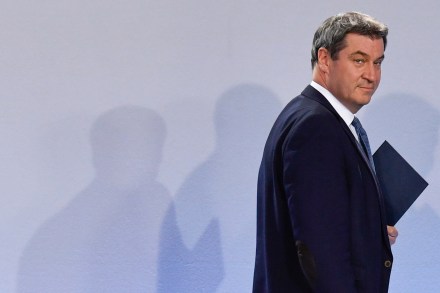
Berlin has been bounced into accepting Sputnik

Munich has had enough of the vaccine chaos in Berlin and Brussels. In a surprise announcement on Wednesday, Bavaria’s minister president Markus Söder stated that he would sign a preliminary purchase agreement for the Russian Sputnik vaccine. The leader of the Bavarian Free State explained that he would pre-order two and a half million doses of Sputnik V in the hope of receiving these by July. Söder, who is a potential candidate to replace Merkel, was keen to stress that this was dependent on regulatory approval by the European Medicines Agency.

Are vaccine passports enough?

From our US edition

As someone who is able to process information at a higher level than the average person, these past few weeks I have been investing a lot of my energies into the situation we find ourselves in regards to the COVID vaccine rollout. I have some concerns. Firstly, are any of the vaccines suitable for vegans? Have the ingredients been ethically sourced from independent suppliers who only employ Black and ethnic minority workers at a 25 percent above-average wage? Did the vaccine trials include a significant subset of genderqueer and nonbinary individuals and, (more importantly) if so, were their needs met when it came to respecting their unique identities and their right to exist?

vaccine passports

I hate vaccine passports — and you should too

From our US edition

The widespread implementation of some kind of digital vaccine passport or ‘vaxport’ appears to be a foregone conclusion in the United States — but not if I can help it. I’m going hard against it while there’s still time. You should too. It’s a very simple question: do I trust the government, Big Tech and corporations not to abuse this power? The answer is NO. Absolutely not. And why should I? Why would anyone? I could have just stopped at ‘do I trust the government, Big Tech and corporations?’ Opposing vaccine passports seems like something that should unite people across the entire political spectrum. Over the past decade we’ve had all of these institutions sell our data, spy on us and lie to us.

vaxport

Are we at risk of another Covid wave?

Could we really see another peak in Covid-19 hospitalisations as bad as January once society reopens in June? That was the story widely reported this morning, based on the latest modelling from SPI-M, the government’s advisory committee on modelling for scientific emergencies. The study caught attention not least because back in January very few people had received a vaccine: now, 56 per cent of the adult population has been vaccinated. By July, on current forecasts, every adult in Britain will have been offered at least a first vaccine dose. How, if vaccines actually work — and there is a lot of evidence to suggest they do — could we end up in as bad a situation as we did before we had population-wide vaccination?

Johnson is in trouble over vaccine passports – and it’s showing

From our US edition

The biggest question facing Boris Johnson is the future of his so-called vaccine passports. A few months ago, the idea was dismissed by No. 10 as 'discriminatory'. Matt Hancock, the Health Secretary, said: 'We are not a papers-carrying country.' But now, without debate or democratic scrutiny, vaccine passports are quickly heading from unthinkable to unstoppable. Today, No. 10 released more details — hence the questions Johnson is facing. But bizarrely, the Prime Minister was unable to admit to any of it, and pretended to be confused by what he was being asked. This matters.

Go with the flow: how helpful is mass testing?

Over half the adult population has been vaccinated, new infections and deaths have plummeted to their lowest level since last September — and the government chooses this point to launch a programme to test every adult for Covid twice a week. The Prime Minister is due to announce this afternoon that lateral flow testing kits will be distributed by the million, free of charge to anyone who wants them. We will all be encouraged to test ourselves — and be placed under an obligation to self-isolate if they are positive. Why? We have spent the past three months on a massive vaccination programme, using vaccines that have proved pretty well 100 per cent effective at preventing deaths and serious illness.

Florida bans vaccine passports

From our US edition

The ethical case against domestic use of ‘vaccine passports’ was made with some passion in Britain before Boris Johnson’s change of heart. Matt Hancock repeatedly assured people that Britain is 'not a papers-carrying country'. Vaccine minister Nadhim Zahawi said vaccine passports would be 'discriminatory'. Michael Gove promised that there were 'no plans' to introduce them. In a Westminster Hall debate, MPs from all parties lined up to say that out of principle, the minority who chose not to take the vaccine should suffer no penalty. Brits have not been told the reason for the U-turn. In theory, the UK government is taking soundings. In practice, those involved in Michael Gove’s review have been told that the decision has already been made by the PM: so they’re happening.

passports

Talking down vaccines is a short-sighted tactic

How strange to have spent a year in a world where to hug someone outside of your household is not allowed. For the past five days, six people in England have been able to meet up outdoors again, but only in a socially distanced way. Previously, the argument for crackdown on such instinctive human behaviour centred around hospitals being overrun. Today, the Covid data tells a very positive story, with infections, hospitalisations and deaths all down by 90 per cent or more since the most recent peak. Meanwhile, the right data is going up, with over half of the UK adult population having received at least their first dose of a Covid vaccine, and the top nine priority groups still on track to have been offered a first jab in less than two weeks' time.

Could the Sputnik vaccine end Russia’s rift with the West?

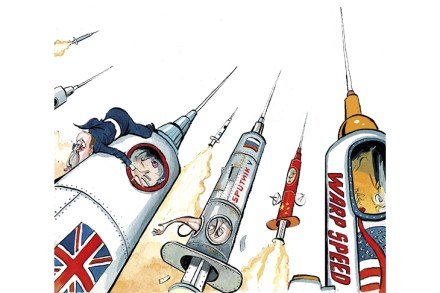
Accounts differ. But it would appear that during a wide-ranging conference call earlier this week, the leaders of France and Germany broached the possibility of – wait for it – buying some of Russia’s pandemic pride and joy: its Sputnik V vaccine. If a deal is struck this would be a huge boost to Russia at home and abroad, and by extension to President Putin, who has spent months trying to dispel widespread Western suspicions about the Russian vaccine, from its Soviet-era name to the breakneck speed of its development. Any deal would also represent quite a turnaround for France and Germany, whose leaders have spearheaded a Continental European reluctance to accept what many regard as ‘foreign’ vaccines in general and the Russian vaccine in particular.

Pfizer trial finds vaccine ‘100 percent effective’ against South African variant

From our US edition

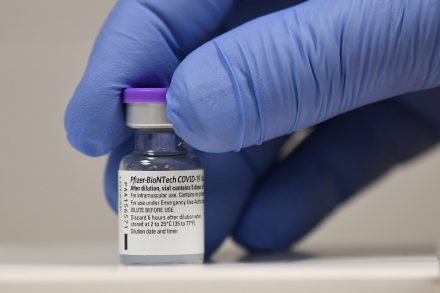
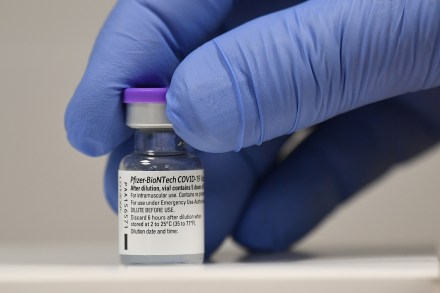
Pfizer and BioNTech have released some extraordinary findings from a Phase 3 trial involving 46,307 participants, between seven days and six months after a second dose was administered. The vaccine was found to have a 91.3 percent efficacy rate. These findings line up with the real world data coming out of Israel, which has used the Pfizer vaccine to inoculate its population, and reported several weeks ago that it proved 94 percent effective in preventing symptomatic illness. But on top of the overall efficacy rate came even better news: Pfizer is reporting that the ‘vaccine was 100 percent effective in preventing severe disease’ as defined by the Centers for Disease Control.

pfizer

Pfizer trial finds vaccine ‘100% effective’ against South African variant

Pfizer and BioNTech have released some extraordinary findings from a Phase 3 trial involving 46,307 participants, between seven days and six months after a second dose was administered. The vaccine was found to have a 91.3 per cent efficacy rate. These findings line up with the real world data coming out of Israel, which has used the Pfizer vaccine to inoculate its population, and reported several weeks ago that it proved 94 per cent effective in preventing symptomatic illness. But on top of the overall efficacy rate came even better news: Pfizer is reporting that the ‘vaccine was 100 per cent effective in preventing severe disease’ as defined by the US Centers for Disease Control.

How the Sputnik vaccine brought down Slovakia’s Prime Minister

March was a dark month for Slovakia. Covid cases and deaths in the country were among the highest in Europe, while political tensions reached breaking point this week with the resignation of Prime Minister Igor Matovič, after the country controversially purchased Sputnik V vaccine doses. Following disputes within the ruling coalition over the decision to depart from the EU’s vaccine strategy, Matovič agreed to trade places with the Minister of Finance, making him the first European leader to fall victim to ‘vaccine diplomacy’ amid concerns about a shift eastward in Slovak foreign policy. Matovič’s fall is particularly painful given the wave of optimism which swept him to power in last year’s elections.

Why is vaccinated Chile locking down again?

Get ahead with vaccination and you can open up your country sooner. It seems logical, but it is not quite how things are working in Britain, where in spite of this week’s relaxation our lockdown restrictions remain among the toughest in the world. This applies even less in Chile. On 29 March, 6.53 million of the country’s 19 million population had received a first dose of vaccine (either Pfizer or the Chinese Sinovac) and 3.37 million had received a second dose. In combined doses per million people, Chile is a little ahead of Britain. Yet large parts of the country have been placed back into a lockdown even more severe than Britain’s over the past three months.

Gove hints at vaccine passport app

It wasn't so long ago that ministers were lining up on broadcast to insists vaccine passports were out of the question when it came to the UK. While they could be used for travel abroad, the UK was — as Matt Hancock put it — not a 'papers, please' country. Instead, the UK appears to be turning into an 'app, please' nation. On Monday, Michael Gove met with MPs across the House for a private 'listening exercise' on immunity IDs. Although the purpose of the session was supposedly to gather MPs' thoughts on the issue of vaccine passports, attendees were left with the distinct impression that they would be going ahead regardless of their views.

Watch: Adonis grilled on UK vaccine scheme

As President of the European Movement during the current Brussels vaccine crisis, Andrew Adonis currently has his work cut out. With polls currently showing that Brits now have a more positive attitude towards the UK’s future outside the EU than negative by a margin of two to one, any bid to get the UK to rejoin the EU will suffer for as long as the trade bloc's jab woes continue. Still, Adonis could make it easier for himself and get round to deleting some of his old tweets on the UK's own vaccine efforts. Appearing last night on Spectator TV the peer was asked by Andrew Neil why he'd tweeted in November that the British vaccine rollout would 'lead to billions of corrupt contracts' and the supply and distribution would be a 'fiasco.'  https://twitter.