Laura Dodsworth

Laura Dodsworth is the co-author of the Sunday Times bestseller 'Free Your Mind: The new world of manipulation and how to resist it’

Chivalry is dead

From our UK edition

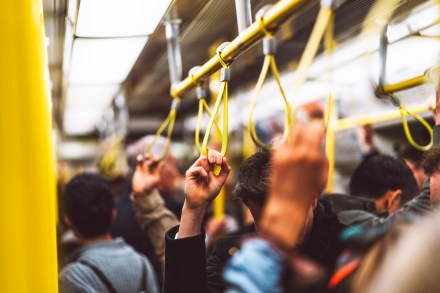
‘Excuse me please, would you mind moving your bag so I can sit down?’ I asked. He took a slug from his can of lager, looked me in the eye and said no. Picture the scene: the London Underground, steaming hot, a crowded carriage, a long day spent in heels, and a spot of sciatica. Before me was a muscular, able-bodied man, probably in his twenties. I didn’t ask for his seat – I politely asked for his suitcase’s seat. I thought he was joking. But he looked at me, unsmiling. ‘What, really?’ I asked. ‘This is a priority seat for luggage,’ he told me. He was on a priority seat for inconsiderate oafs. ‘This is a priority seat for luggage,’ he told me. He was on a priority seat for inconsiderate oafs.
Laura Dodsworth: How to protect yourself from government propaganda

From our UK edition

53 min listen

Laura Dodsworth is a photographer, artist and author. In her most recent book Free Your Mind: The New World of Manipulation and How to Resist it, Laura draws on the Nudge Unit, behavioural psychology and fact checking services to analyse the range of ways in which our minds are manipulated. On the podcast, Laura talks about the government propaganda machine and how this all relates back to issues such as climate catastrophe, the pandemic and free speech.

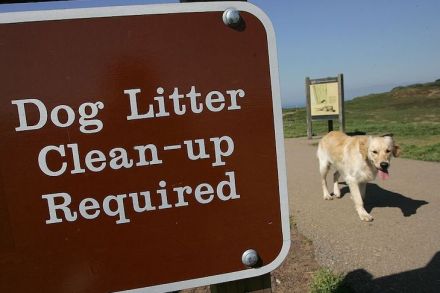
Why should I pick up my dog’s poo?

From our UK edition

In my local countryside lanes and wooded walks, no one is bagging the excrement deposited by the deer, foxes, rabbits or birds. There are luxuriant piles of horse manure in the fields. Cow dung is positively welcomed on the common by boho surburbanites for its contribution to biodiversity. Pet cats deposit their poop not just in the countryside, but also in my garden. So why is it only dog poo we take exception to? ‘Your dog just did a poo,’ a passerby said this morning. I looked at her non-plussed. Was this supposed to be praise, like an adult admiring a child’s majestic mastery of the potty?  ‘Thank you,’ I said. ‘How rude!’ she huffed.

What’s the truth about Facebook and Twitter’s algorithm riddle?

From our UK edition

Algorithms dictate what we do – and don't – see online. On Twitter and Facebook, they determine what posts do well and which ones get buried. Yet how they actually work is shrouded in secrecy. Elon Musk, who agreed a £34.5 billion takeover bid with Twitter's board last month, has voiced his concern about algorithms: 'I’m worried about (a) de facto bias in 'the Twitter algorithm' having a major effect on public discourse. How do we know what’s really happening?' He is right to be alarmed.  'Before you decide whether to publish, you have to think whether it will please the algorithm,' says an anonymous social media editor who works at a 24-hour news channel. 'If it doesn’t, it won’t perform well'.

Why I’m boycotting a festival of ideas

From our UK edition

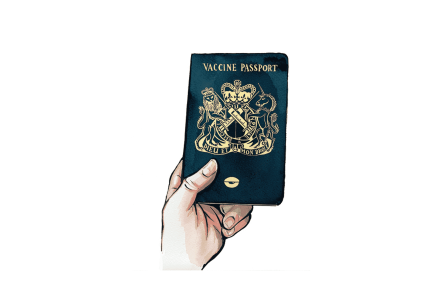
What’s the one idea that can’t be debated at a festival of ideas? The answer, it turns out, is the Covid Pass. If we don’t want a ‘medical papers, please’ checkpoint society, then we have to refuse to comply where we can I was delighted to be asked to give a book talk and join a debate at How The Light Gets In, the world’s largest festival of philosophy and music. I checked the website to ensure there were no discriminatory Covid Pass policies and agreed. So, I was surprised when someone who had bought tickets told me that they had cancelled their tickets because the festival had imposed the policy. I have withdrawn from the event.

The war on breathing

From our UK edition

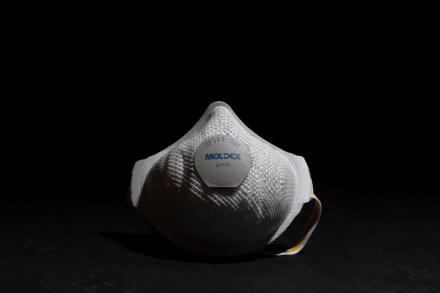
'We all have to be responsible for the fact that our health touches upon those who we sit next to and who we share air with. And this is a public health truism that is self-evident,' said health minister Lord Bethell, answering a question about mandating vaccine passports in nightclubs in the House of Lords. Yet according to Brunel University Physicist Dr Colin Axon, medics (and presumably Lords) have a 'cartoonish' understanding of how tiny particles travel through the air. There is a political war on breathing — the very thing that keeps us all alive. And Bethell is not alone. Dr Sarah Jarvis recently told Jeremy Vine, 'Breathing is an offensive weapon if you are infected with Covid.

The art of selling vaccines

From our UK edition

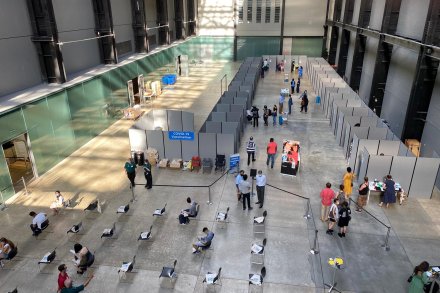
I was bemused when I first saw the photograph of spaced-out chairs and vaccination booths in the Turbine Hall of the Tate Modern. Was this an art installation designed to probe the relationship between personhood and state? Were we supposed to question the transformational power of medicine, in a live enactment of biomedical transubstantiation in the cathedral-like space? Alas, this was not art, à la Kara Walker, Olafur Eliasson or Carsten Holler. This was an NHS pop-up vaccination clinic, replete with a DJ ‘spinning tunes’. Presumably some clever behavioural psychologists have had a stab at what ‘groovy’ looks like, in an attempt to induce London’s trendy youngsters to be vaccinated.

When do vaccine incentives become coercive?

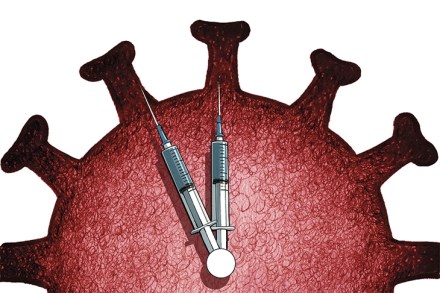
The vaccine programs launched this year appear to offer a Happy Ending to the Horrible Story of the COVID-19 Pandemic. But I am cautious. Not because I am ‘antivax’, but because lasting ‘ever afters’ are never written in the language of emotional manipulation and coercive control. Herd immunity, when enough people have either recovered from COVID or been vaccinated, will end the pandemic. The pressure to get there has given us a vaccination drive with an unprecedentedly strong behavioral psychology and emergency response approach. A panoply of persuasions has been deployed to encourage the hesitant, the slow and the complacent. From dating app bonuses to donuts, lotteries to laminated vaccination cards — when do incentives become coercive?

france vaccine