Travel

Why don’t more tourists visit Ethiopia?

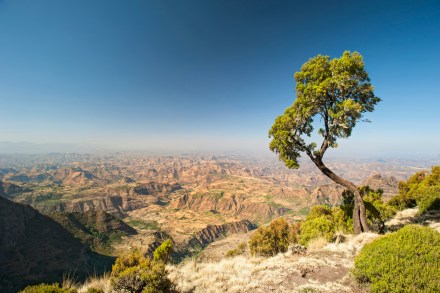
Standing on a cliff edge looking at where the Blue Nile is just a trickle, watched by a gelada baboon on a distant rock and staring over miles upon miles of some of the most beautiful countryside I’d ever seen, one thought struck me: why is there hardly anyone else here? Ethiopia is stunning to look at, once you get out of the capital, Addis Ababa. It offers history, culture, architecture, religion and everything in between. Yet when you tell anyone you’re going there the most common response is: ‘Really? Why?

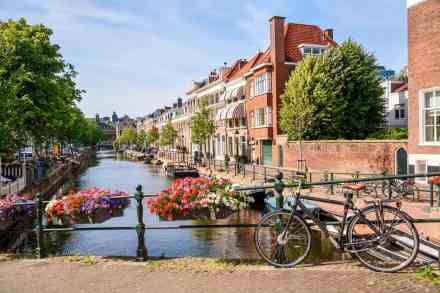
Forget Amsterdam – spend a weekend in the Hague

I love Amsterdam. I go every year for the galleries, the opera, the beer, the genever, the rijsttaffel, the brown cafés and, well, the fun. I’ve had many a fine time there, sometimes with and sometimes without dear Mrs Ray. It’s a top place.  I was cut to the quick, then, on hearing recently that the good burghers of Amsterdam had asked any British tourists in search of a ‘messy night’ to stay away. Admittedly, this controversial campaign is aimed chiefly at 18- to 35-year-olds on stag parties, rather than senior railcard-holders like me.

I’m a holidaymaker… get me out of here!

Reading about all the travel chaos, I began to regret my summer holiday plans. Wouldn’t it have been more sensible just to stay in Acton? But Caroline and I had arranged to go to Ibiza fora friend’s birthday party the weekend before last; then, after returning to London, we were due back in the Balearic Islands, this time with the kids. There was no turning back. The first thing to go wrong was that our British Airways flight to Ibiza from Heathrow was cancelled. Not that BA notified us. The first inkling I had that something had gone awry was when I tried to check in using the BA app the night before and it said that wouldn’t be possible.

What Britain can learn from Romania

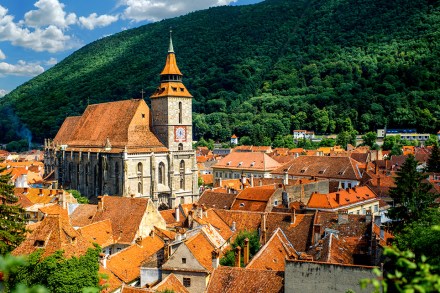
Romania gets a bad rap here, associated as it often is with organised crime. In recent years around half a million Romanians have settled in the UK, making them the fourth largest group of foreign-born residents. But the irony is that as Romanians head to Britain in search of a higher standard of living, we Brits should really be booking our flights to Romania to remind us of how our country once was. Romania has everything: fascinating medieval towns, unspoilt countryside, vibrant major cities and a 150-mile coastline. There are even still horses and carts on the roads. But the appeal is more than that: it’s the spirit of the place. If you want to go back to 1988 or even 1978 then a Wizz Air flight east is like a time-machine.

Hold the haggis: the changing face of Scottish food

Ask someone south of the border for their thoughts on Scottish cuisine and they’ll inevitably offer up thoughts of two Gaelic gastronomic inventions: haggis and deep-fried Mars bars.  Despite the wealth of produce available – and exported – from the country, Scottish fare has struggled to shake its tartan-clad clichés Despite the wealth of produce available – and exported – from the country, Scottish fare has struggled to shake its tartan-clad clichés. Take a table in London and you’ll find Orkney scallops, Isle of Mull oysters, highland venison and Outer Hebridean whisky on restaurant menus, while bonnie chefs like Quo Vadis’s charismatic Jeremy Lee and industry darling Adam Handling lead the capital’s kitchens.

Escaping the city in Argentina

From our US edition

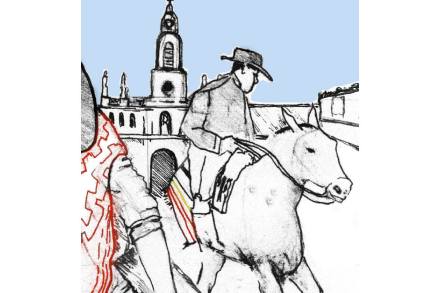
Planning a foreign trip is a bit like watching a trailer for a film. The research is a preview of coming attractions. I almost never made it to San Antonio de Areco, a charming country town about seventy miles northwest of Buenos Aires, because it seemed extravagantly expensive and complicated to visit. But trailers can be misleading, perseverance is a virtue, and Areco, as the locals call it, turned out to be the highlight of my visit to Argentina last summer. With just a week to spend in the world’s eighth largest country by land area, my plan was to spend four days in Buenos Aires and three in a small town, a place I hoped would give us an idea of what the country’s gaucho heartland is about.

argentina
roadside

Road-trip picnics are a casualty of our interstate system

From our US edition

Signs announcing roadside picnic tables once peppered America’s secondary roads and highways. Or so we call those byways now. Before the limited-access interstate system arrived in the 1960s, these roads were primary. America then was laced with a tangle of serviceable two-lane, hard-surfaced highways. Look at an old oil-company roadmap, if you can find one, to get the idea. Some roads were federal, some state, but all were emphatically open-access: get on anywhere, pull over wherever you like. They led through cities and towns, not around them; they traversed the countryside more than they cut through it. They required two-hands-on-the-wheel alertness in drivers, who got to know and respect the lay of the landscape.

The politics of sun loungers

The poolside was deserted when we passed on our way to breakfast. This time, I thought, as we ate at the still-quiet restaurant buffet, we’d triumph. Yet arriving back at the pool after eating, all the sun loungers closest to it had already been claimed – by owners who were nowhere to be seen. Reserving loungers might have been against the hotel’s policy, but removing the towels and beach bags that their claimants had placed on top of them felt like an act of aggression. Instead I sulked silently from my bed near the bins as, an hour later, the family of four who’d taken the plum spot I’d had my eye on for my own family finally sauntered over, ready to spend some time in their premium seats.

New York hotels with a literary twist

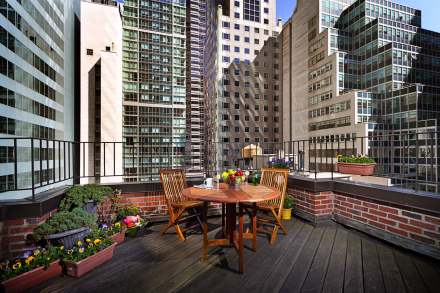
‘You really ought to read more books – you know, those things that look like blocks but come apart on one side.’ Perhaps F. Scott Fitzgerald was aiming for a motivational tone – literature was his livelihood, after all. He was also a seminal figure in the writers' movement that began in 1920s New York and, over the following decades, took root in hotels across the city. Hot on the heels of Spectator Life's guide to London's literary hotels, here are five New York hotels with their own tales to tell. The Algonquin Hotel [iStock] The Algonquin’s association with the infamous Round Table of the 1920s has provided it with more connections to literature and the arts than perhaps any other hotel in New York.

My culinary journeys: restaurants worth travelling for

Whenever it is suggested travelling south or north of the Thames to visit an ‘amazing’ restaurant I usually start conjuring up excuses. Across London seems a journey too far for food – but going across an ocean for it can be worthwhile. In NYC last year, I found myself with an evening off and, staying in the Lower East Side, made my way to the Bowery Meat Company. The menu was perfect: steak and seafood, excellent cocktails, and sides which included sublime creamed spinach and whipped potato that threatened to float off the plate. I usually eat oysters naked, but Bowery’s version – baked under a parmesan crust – was irresistible. The steak was thick, juicy and cooked to perfection, the fries hot and crunchy.

Has America checked out of Airbnb?

From our US edition

Airbnb is in trouble. Nick Gerli, CEO of real estate consulting firm Reventure, reports, “The Airbnb crash is real,” along with a list of the top ten cities where the company’s revenue has collapsed. “Watch out for a wave of forced selling from Airbnb owners later this year,” Gerli forbodes. https://twitter.com/nickgerli1/status/1673774695693385728 Last month the Wall Street Journal reported, “Airbnb reported higher revenue and profit in the first quarter, but customers reserved fewer-than-expected stays and the company gave a mixed outlook for the second quarter, spooking investors.” And while Investors Business Daily this week forecast “a new, more promising comeback attempt” for Airbnb stock, murmurings of an “Airbnbust” are hard to ignore.

airbnb

Welcome to the jungle: how Malaysia won me over

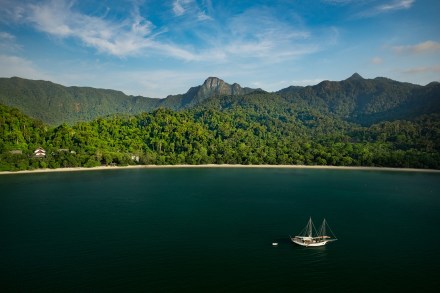
It’s approaching 6 p.m. at the Datai on Langkawi island, the tropical sun is still warm but no longer burny, and through my binoculars from my poolside lounger I’m watching the hornbills swooping down from the tall tree opposite and the sunbirds delving their long curved beaks in to some sort of exotic, colourful flora. By my side is a barely read copy of a classic work of literature and a half-drunk cocktail. I’m not sure that life gets much better than this. And that’s perhaps the main problem with staying in arguably Malaysia’s loveliest hotel.

Return to The Hague

From our US edition

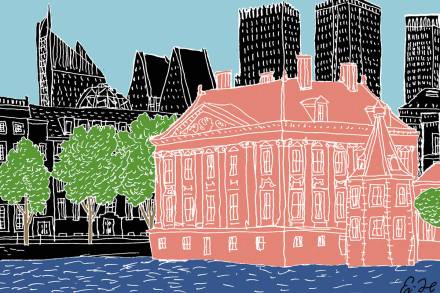
Much is said, chiefly by Americans used to Amtrak, about continental Europe’s wonderful train system, though just how wonderful depends on where you want to go. On a recent journey from Southampton, where we had disembarked early morning from the Queen Mary, to The Hague where we missed our evening dinner reservations at the Hotel des Indes, I made certain discoveries. One was that The Hague, seat of the Dutch government, home to the king and queen, venue of the World Court and other august institutions of world government, is now off-line: i.e. it is not on the high-speed rail network that links up London, Paris, Brussels and Amsterdam. This seems curious and, in a way, charming.

The Hague
Cape Town

Tears, tangles and tremendous views in Cape Town

From our US edition

Thirty feet underwater, somewhere on the False Bay coast near Simon’s Town in the Western Cape, South Africa. I’m getting battered by a strong current, deep in a kelp forest. I squint upwards and spot a pair of flippers. Kicking... upwards. My friend Abie is in a pickle. First of all, she’s vertical — not desirable in diving gear — and I can see now, she’s tangled. Brown kelp fronds the girth of beer cans shoot up all around us, forming a confused mass. I panic but try not to show it. Being buddied up with an old mate for a genuinely dangerous sport — you’re expected to know what you’re doing — has its downsides. I realize we are the responsible adults I’m looking around for.

How to join the beach hut brigade

They are expensive to maintain, plagued by tourists and influences seeking picture-postcard holiday snaps and cost more per square foot than houses in some of London’s most affluent neighbourhoods – despite lacking basic amenities such as running water. And yet such is the allure of the traditional seaside beach hut that, amid an otherwise shaky housing market, prices for these modest timber shacks just keep rising.  According to research by Moverly, which provides digital home information packs, the average asking price of a beach hut in England stands at £49,290 – up 43 per cent in the past year. In Dorset prices are up 101 per cent to more than £120,000.

How to combine city break and safari in Kenya

Nairobi is blossoming. With its vibrant art world, nascent farm-to-fork restaurant scene and unique hotels, east Africa’s biggest city is increasingly on the radar of international travellers. ‘We’re definitely seeing people wanting to stay longer in Nairobi,’ says Rose Hipwood of the Luxury Safari Company. ‘It’s absolutely a cosmopolitan city now. Rather than flying in and flying straight out on safari, people are wanting to extend their stays and see what restaurants, bars and museums there are.’ The country's safari offering is developing, too. Away from the crowds of the Maasai Mara, lesser-known hotspots are finding a following – devoid of people but brimming with nature.

Cape Town after Covid: business buzzes despite power outages

From our US edition

Blazing sunshine. Endless traffic. Horns honking. Wine bars heaving. Trance music blasting. Street hawkers calling. Coastal wind (called the "Cape Doctor" by locals) whistling. Grit in one eye, the other looking over my shoulder. Hair flying in every direction. To explore central Cape Town is to be gut-punched: by an evolving backdrop of sublime nature and the complexity of the human condition. To visit the city’s world-class restaurants, concept stores and co-working sites is to share a street with the sick, hungry and homeless. Look up, and you’re hypnotized by the monolithic mountains beyond; a brief distraction from the painfully obvious disparity. From some angles it feels like the Mother City is being wrapped in a tight hug.

casa del sonder cape town michelle fredman

Why now is the time to visit Aldeburgh

I have been reading Ronald Blythe’s Next to Nature which came out in October, just a few months before the great man’s death aged 100. And so a weekend holiday in Suffolk was calling to me. I went to Aldeburgh, on the coast, north of the river Alde. The town appears to be thriving – full of bustling cafés and London money. It is fashionable and chic. In many respects it is a world away from Blythe’s Akenfield. But there is much here to charm you. I lingered by a wonderful second-hand bookshop, Reed Books 4, its window display with Peter Kent’s Fortifications of East Anglia, George Ewart Evans’s The Farm and Village and Hugh Barrett’s recounting of a rural Suffolk morning in Early to Rise. Is this what Scruton meant by oikophilia? Here was heart-warming local pride.

The dauntless spirit of Richard Halliburton

From our US edition

A sailor; a conqueror of the most treacherous mountain peaks; a man who wades defiantly under the stars of the Far East sky; a dashing writer who pursues his mark as a hunter on safari; an explorer who rides elephants through the Alps. This is not a collection of young men, newly emancipated by the end of the Great War and a new era of global empires. It is the nearly improbable life of one man, Richard Halliburton, whose swashbuckling existence was inspired by everyone from Daniel Defoe and Rupert Brooke to Odysseus. Halliburton was the self-proclaimed protagonist of his own heroic epic. He decided in the days before his graduation from Princeton in spring 1921 that he would forgo a life of tedious expectations and “let those who wish have their respectability.

Halliburton

How to spend 48 hours in Hiroshima

Tourism is well and truly back in Japan, with packed flights and full hotels during the popular sakura (cherry blossom) season last month. And from today, all eyes will be on Hiroshima as it hosts the 49th G7 summit – an event that Japan’s Prime Minister Fumio Kishida has promised will showcase the ‘charms of our country’. So what can visitors expect from the city best known as where the world’s first atomic bomb was used in warfare in 1945? While Tokyo will no doubt be top of the to-do list for anyone on a flying visit to Japan, during a recent tour of the country it was western Honshu, where Hiroshima is located, that charmed us the most.