Travel

Welcome to the Seychelles… of Scotland

When Thailand's tourist board mistakenly used a photo of West Beach on the Isle of Berneray in Scotland to promote the tropical paradise of Kai Bae Beach, it took a British expat with a keen eye to spot the error.  But perhaps the confusion shouldn't come as a surprise. With ivory dunes tumbling down to turquoise waters and the occasional chatter of a faraway pod of dolphins, the beaches of Uist, a collection of islands in the Outer Hebrides, could easily be mistaken for some of the most popular bays in the Seychelles or Caribbean. The only giveaways are the brisk breeze that nips your ears and the dearth of other visitors. The beaches here are regularly voted some of the most beautiful in the world.

How to holiday like James Bond in Sardinia

Posing as a marine biologist and with Soviet agent Anya Amasova posing as his wife, James Bond checked into Hotel Cala di Volpe in the The Spy Who Loved Me (1977). Their mission: to gather intelligence aboard super-villain Karl Stromberg’s secret underwater lair, somewhere in the Tyrrhenian Sea between Sardinia and the Italian mainland. In the meantime, they stay in a spacious suite with exposed wooden beams and open ocean views (where Amasova also vows to kill Bond when the mission is over). When I stayed at Cala di Volpe this year, I saw no villainous marine lair, just Tommy Hilfiger’s super yacht. The hotel has retained its Bond glamour through the years and offers the super-rich (and some super-famous) a more private experience than St Tropez or Monaco.

Why we pick the wrong holiday destinations

Having returned from a fortnight’s break, I wonder if we get holidays all wrong. In northern Europe, the custom is that you head south to spend time on the beach. But equally, there is such a thing as too damned hot, especially if, like me, you have a healthy dose of Celtic ancestry. To avoid this, you need to study what is called the ‘wet-bulb temperature’. This is a measure of temperature which accounts for the cooling effect of evaporation. At 100 per cent relative humidity, the wet-bulb temperature is equal to the dry-bulb temperature shown on weather forecasts. At lower humidity the wet-bulb temperature is lower, owing to evaporative cooling, a mechanism all humans other than Prince Andrew depend on to reduce their body temperature.

The pagan pleasures of Spain’s Finisterre

It was starting to feel rather spooky on the pathway to Finisterre. Only two days before I’d been in the celebratory environs of Santiago de Compostela with its endless arrivals of jubilant pilgrims. Now dark clouds were scudding across the Galician hills in the distance and the only sound I could hear was the wind blowing – in an accusatory manner, it seemed – through the trees beside me. While Santiago de Compostela marks the official end of the famous Camino de Santiago pilgrimage, with the purported remains of St James the apostle in the basement of its cathedral, a minority of hardy souls continue for another 86 kilometres to the Galician coast.

How to spend a weekend in Riga

In Ratslaukums, Riga’s central square, there is an ugly brutalist building which encapsulates the contested history of Latvia’s beautiful, battered capital. This modernist eyesore was erected in 1970, when Latvia was part of the Soviet Union. It was built as a museum dedicated to Lenin’s crack troops, the Red Latvian Riflemen, who helped him overthrow the Tsar and win the resultant civil war. Without them, the Russian Revolution might have been stillborn. Today the content of this museum is completely different. The only relic of the Latvian Riflemen is the Soviet statue in the street outside.

What did Nasa achieve last time it visited the Moon?

Of mice and Moon What did Nasa achieve last time it visited the Moon? Apollo 17, in December 1972, involved putting two astronauts, Eugene Cernan and Harrison Schmitt, there for 75 hours. They used a lunar roving vehicle to collect 254lb of rock and dust samples from areas up to 4.7 miles from the landing site. Among them was some orange dust believed to have originated in a volcanic eruption 3.5bn years ago. Experiments were also conducted into the flow of heat from the centre of the Moon to the surface, into minor changes in gravitational force, and the effect of cosmic rays on mice. At the end, Cernan said that he thought humans would return ‘not too long into the future’. North Sea hopes Can the North Sea avert the energy crisis?

How to eat and drink your way around the Dubrovnik Riviera

‘I hope you’re hungry,’ crows a fisherman, setting down a plate piled high with freshly shucked oysters. They say you should face your worst fears head on. Well, here I am addressing mine – but I never thought it would be done in quite so idyllic a spot. I’m in Mali Ston, a small, picturesque town on Croatia’s Pelješac peninsula, about an hour’s drive from Dubrovnik. It’s 9.30 a.m. and many shops are still shuttered, but already Game of Thrones fans are out in force, taking selfies along the hillside’s 14th-century network of towers and fortresses. (The three-and-a-half-mile walls doubled as King’s Landing and the Eyrie in the fantasy drama.

The politics of topless sunbathing

I’m pretty certain that what I’m about to say is essentially unsayable. So here goes: we need to have a frank conversation about boobs. Bare boobs. Because on my recent holiday to Majorca, I have to confess to being a little astonished to see quite so many topless women on the beach. But what a simple joy it was; old, young, lithe, voluminous, ponderous – there they were in all their glory, glistening or wilting in the sun, or simply splashing about in the sparkling water. Boobs. I know, I know… as a straight, white, privately educated man in the raw good health of middle age this is not territory that I’m completely comfortable venturing into. And perhaps I shouldn’t. But I feel this needs to be said.

What’s new in New York City

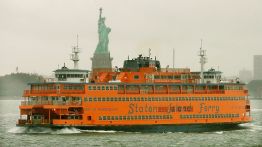
‘It is ridiculous to set a detective story in New York City. New York City is itself a detective story,’ said Agatha Christie. More than 60 years later, the Queen of Crime’s words still hold true. The Big Apple is a constantly changing beast: an enigma that, just as you think you’ve cracked it, coils itself into a new form for you to get your head around once more. That is what makes it the ideal return city break. Each time you travel there’s a new restaurant, hotel or show to try. And with many launches delayed by Covid-19, this year has brought an even greater glut of openings – making it the perfect time to visit. So, whether it’s your first time in New York or your 100th, which of the latest additions are worth seeing?

The funny truth about life as a diplomat’s wife

In the early 2000s my husband, a diplomat for the EU, was posted to Kazakhstan, a vast empty steppeland next to Siberia. It was winter and the place was covered with thick snow. My family were in England, my husband was mostly in the office; I was 61 and I didn’t know a soul. Our previous posting had been to Damascus and I had occupied myself by writing a book about the old palaces there, but here there were no old buildings as the Kazakhs had been nomads. I had nothing to do. Everyone spoke Russian – I didn’t. As my husband was a senior diplomat we qualified for a cook, but she and I could only communicate using animal noises: chicken was cluck-cluck, beef was moo and lamb was baa. The main foods available seemed to be cabbage, onion and potatoes.

The books Spectator readers take on their summer holidays

Recently, Spectator writers shared their all-time favourite summer holiday reads. In response, Spectator readers have been offering their own recommendations for what books to take to the beach… 'You might try Helen Thompson’s Disorder: Hard Times in the 21st Century, a history of oil politics. It starts with the simple fact that in evolving from the steam to petroleum age, the old western powers no longer had direct access to fuel and faced a growing dependency on oil from Russia, initially, and then the Middle East. The US, of course, is an exception as it has domestic resources – but foreign policy errors led to it being the guarantor of petroleum resources to the rest of Nato.

What I learnt on my grown-up gap year

Earlier this year, quite unexpectedly (and for personal reasons too tedious to share), I was forced to be outside the UK for ‘a while’. At the outset, I had no idea how long my exile might be: maybe weeks, maybe months. To add to the ambiguity, I had no particular place to go, except two already arranged travel writing trips of a week each (in the USA and Greece). So I decided: why not make a pleasing virtue of necessity? Why not, at the age of 58, do a geriatric version of a gap year, wandering freely about the globe? And that is exactly what I did. I packed my suitcase, headed out, and let whimsy and the weather dictate where I went next.

How the travel industry convinced us we needed holidays

In September 2019, Thomas Cook filed for compulsory liquidation, leaving 600,000 customers stranded abroad. It was a sorry end to a company that had lasted 178 years and survived both world wars. Founded by a Baptist preacher who began organising railway trips to Midland cities for local temperance societies, the company grew into one of the largest travel agencies in the world, thanks to the transformation of tourism from an activity for the idle rich to an experience open to all. This opening up of travel is the story Lucy Lethbridge tells in Tourists, taking the reader from the last years of the Grand Tour to the first years of the package holiday.

What’s the point of the NHS if it doesn’t work?

We left prepared. Bottles of water, protein snacks, phone chargers, portable Scrabble (even the teenagers can look at the internet for only so long). And we left early: our crossing was at 2 p.m., and by 9 a.m. we were already on the M25. Six-hour queues, we’d been warned. Armageddon on the M2. Somewhere around Maidstone, I got a text. P&O Ferries: ‘We regret our sailings are delayed by up to 45 minutes.’ Uh-oh. But as we descended into Dover, zero sign of trouble. We sailed through check-in. ‘So sorry there’s a bit of a delay,’ said the man in the booth. No worries, said we, pathetically grateful not to be stuck in a lorry park. On to French customs. Again, not a queue in sight.

Off the books: there’s more to Hay-on-Wye than the literary festival

Chances are you will have heard of Hay-on-Wye. You might even have been. It’s the town on the Anglo-Welsh border where more than 30 years ago a man called Peter Florence began what has become the world’s most famous literary festival. Now some 200,000 people descend on the place each May and June, and for 11 days it feels like the centre of the literary universe, with hordes carrying tote bags traipsing hither and thither and pubs and restaurants overflowing like Venice in high summer. If that’s what floats your boat, then get stuck in. But for my money, Hay is worthy of a visit in its own right – and preferably when all those other visitors (not to mention ex-presidents and Booker prize-winners) aren’t there.

They do things differently in the Cotswolds

The Season has ended and – apart from The Spectator’s summer bash of course – the two bang-up parties of July were discos in the Cotswolds. They do things differently there. At Jemima Goldsmith’s I danced so hard in high heels with a selection of her handsome young swains that I suspect the double hip replacement will be sooner rather than later. At Carrie and Boris’s Daylesford wedding do in a magical flower-filled field we all busted out our best moves. I was taught the slut-drop by Liz Hurley years ago in Nick Coleridge’s party barn in Worcestershire. She demonstrated how to collapse to the floor like a broken deckchair on the count of three. My problem at Daylesford was getting up again – not a challenge shared by my sister-in-law.

Iceland’s scenery takes your breath away – but so do the prices

I’m writing this on the plane back from Iceland, a fact that fills me with relief. Not because I didn’t enjoy my trip to the land of fire and ice – far from it – but because there was a serious risk I might be stuck there indefinitely with Caroline and my three sons. In the 24 hours before our departure, nearly 4,000 earthquakes were detected in the southwestern region known as the Reykjanes peninsula, which is where the international airport is located. Such unusual seismic activity is often a sign that a volcano is about to erupt and that, in turn, can create an ash cloud that necessitates the grounding of all aircraft, as happened in 2011. There are worse places to be stranded, of course.

What Spectator writers read on their summer holidays

The flights are booked, the passports are dusted down and it’s time to pack. But which books deserve space in your suitcase? Here, Spectator writers share their all-time favourite summer holiday reads… Matthew Parris My all-time favourite re-read at any time of year is Thornton Wilder’s The Bridge of San Luis Rey. A very short novel with the kind of perfection a geometrical proof may command, it starts with the death of a group of travellers crossing a Peruvian rope bridge who are linked only by the fact that they were on the bridge when it snapped, and traces the life of each up until that point. Wilder’s quest is to discover whether there exists any divine plan. Toby Young For pure escapism, I Am Pilgrim by Terry Hayes is hard to beat.

The curious rhythm of life in Spain’s Santiago de Compostela

Surely no other city can claim to have so many backpacks and walking sticks on its narrow cobbled streets. In Spain’s Santiago de Compostela it always looks like there is a giant hiking convention going on. These aren’t your average ramblers, though. They are pilgrims, as the city marks the end of the famous Camino de Santiago pilgrimage. The Camino, or the Way of St James, is most associated with the 500-mile route from the base of the French Pyrenees westward though Pamplona, Burgos and Leon.

Why now is the time to be spontaneous

I am not naturally a spontaneous person. I relish neatly laying out projects and plans in my Moleskine diary. It was out of character, then, when on the second Monday of the Wimbledon fortnight I decided on the spur of the moment to head to the All England Club and join the queue for a day ticket. If I didn’t get in, I reasoned, I could always have a nice meal in a nearby restaurant and watch the action on a big screen, content in the knowledge that I was at least sharing the air of the SW19 postcode. My back-up plan wasn’t needed. When I joined the ‘queue’, I was the only person in it. I was ushered straight into the grounds to enjoy six glorious hours of sun-drenched tennis. Perhaps there was something in this spontaneity lark after all.