Travel

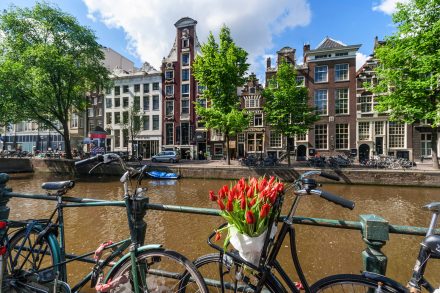
Avoiding the brash side of Amsterdam

From our US edition

More than forty cities have taken it upon themselves to claim the nickname “Venice of the North,” but only one can use it without any hint of irony. When leaving Amsterdam Centraal station — either fresh off the Eurostar or via a quick train connection from Schiphol airport — it is hard not to be momentarily dazzled by the spectacle of glassy-surfaced grey canals, all reflecting narrow, higgledy-piggledy gabled houses. I was in Amsterdam for the Rijksmuseum Vermeer exhibition, but took the opportunity to see more of the city than a quick day trip would have afforded.

The rise of the ‘workation’

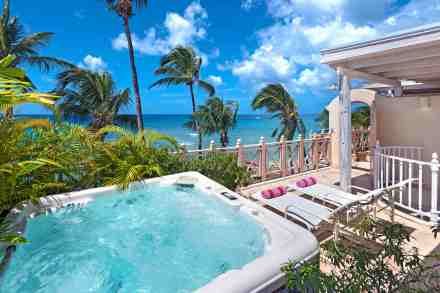
The biggest single driver of last year’s property boom was the surge in working from home. For many, the commute went from daily chore to occasional concern, enabling them to move to areas that previously seemed beyond reach, from the Cotswolds to Cornwall. But others have gone further still – swapping ‘work from home’ for ‘work from anywhere’. These digital nomads typically ditch the nine-to-five or find flexible employers to enable them to decamp to sunnier climes in the greyest months of the year. And during a winter of high energy bills and soaring living costs at home, the trend has been growing.

Hungarian wine is Europe’s best kept secret

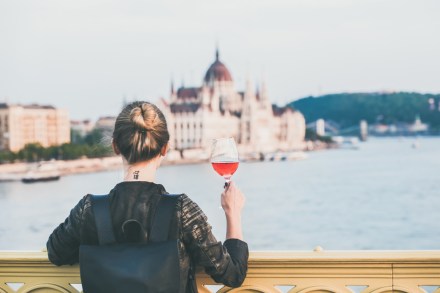
The Ottomans were evicted from Budapest in 1686, but you can still find reminders of Turkish rule if you look in the right places. All these relics are on the western, or Buda, side of the river, for Pest did not really exist in the 17th century. The original Turkish dome crowns the Rudas Baths, which are still in operation, public baths being one of the more salutary legacies of 145 years of Turkish occupation. Just north of the baths, on a slope leading up to the Buda Castle, an out-of-the-way cluster of graves is all that’s left of an old Muslim cemetery. From a distance, the weathered turban headstones look like pineapples. Other legacies of the Turkish era remain outside of Budapest.

How to combine a ski holiday with a city break

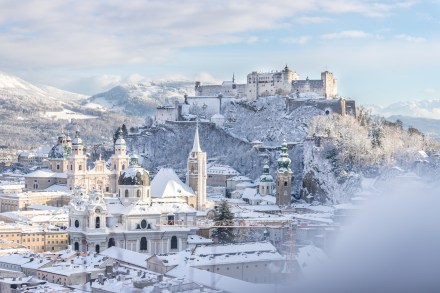
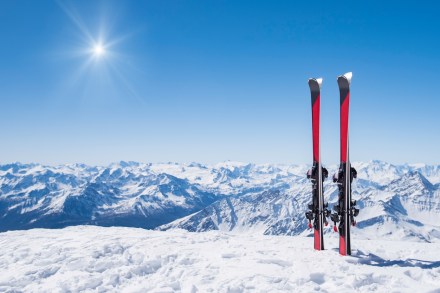
There’s always part of me that dreads the start of a ski holiday. Not because of the skiing (I adore that), but because of the journey. As a child it meant 16 hours in the middle seat jammed between brother and sister as we argued over who felt most car-sick. Nowadays it means faffy transfers and days off eaten up by travel. This year, I decided to try something different: why not make the journey part of the holiday? Rather than undertaking a mammoth day’s travel, I would split it up with a break – a city break to be precise. Austria immediately sprang to mind. Excellent skiing – naturally – and smaller than France and Italy (with more cultural caché than Switzerland), so resorts are bunched close to great cities. I considered the options and settled on Salzburg.

Murder most romantic: Burgh Island Hotel reviewed

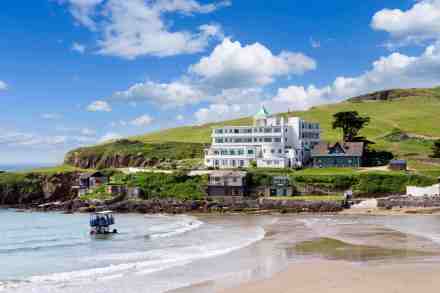
The Burgh Island Hotel lives on a tidal island in a deserted part of south Devon. The directions for visiting are very detailed. You drive along the deserted country road, and at a certain point – just before you lose mobile telephone reception – you must stop to telephone the hotel, and they tell you where to park your car on the mainland, and they will send the car across the beach and meet you in Bigbury-on-Sea. You drive on and eventually you see a brightly lit Art Deco palace under a cliff. It was built by a filmmaker called Archibald Nettlefold (Human Desires, The Hellcat), the heir to an engineering fortune. I think he was a very odd man. There is very little information about him, but he left this hotel, and there is probably an old monastery underneath it.

Why it’s time for a pilgrimage revival

At 3 a.m, with sleepless hours slipping by as storms besiege my tent, it’s easy to ask: why? Why swap the security of a home for a pilgrimage on foot with no itinerary beyond a smudged path on a 14th century map? And no comforts beyond those carried on my back or offered by strangers? Back on the bright path next morning, though, the question answers itself. The way is its own reward: the land resonates; the past speaks; my soul sings – and so do I. But my departure had not only been inspired by the pull of the open road. There were push factors, too. The economic attrition of the past two years had caught up with me, as it has with many. A bad bout of Covid; the apparent end of a cherished relationship; the loss of a pilgrimage charity which I had started.

Will child-free flights take off?

At first glance, I wasn’t sure if an email I got recently about 'adults-only flights' was a joke. I’m a parent of two teenage boys who has observed with dismay the growing intolerance for children in the public square in recent years. But I’d never heard anything like this. So I reviewed the study of 1,000 adults conducted by PhotoAID, and while I don’t know how scientific it was given that it was carried out by a company that sells passport and visa photos, the results are striking. Eight in ten survey respondents said they want adult-only flights, and 64 per cent said they’re willing to pay a premium of 10 to 30 per cent more to avoid the possibility of encountering children.

In defence of Brussels, Europe’s most underrated city break

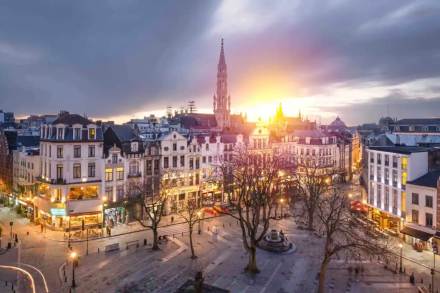
Strolling around the Belgian Comic Strip Center, admiring the elegant artwork of Hergé (creator of Tintin), I wonder for the umpteenth time why so many of my British friends are so disparaging about Brussels. It's one of my favourite cities, but most Britons I know wouldn’t dream of planning a break here. They don’t know what they’re missing. I’ve been here countless times, yet on each visit I discover something new. It’s full of quirky shops and exquisite restaurants, and there are some excellent museums too. If your idea of fun (like mine) is nosing around art galleries and antique shops, with plenty of pitstops en route, you’ll have a terrific time. I’ve never eaten better than in Brussels – and the beer (and the coffee) is superb.

My night with Beyoncé at Dubai’s most lavish hotel

Last weekend, Beyoncé was paid $24 million (£19.5 million) to perform for 1,500 invited guests in Dubai. Somehow, I was among them. Her set, which was her first live performance in four years, was 85 minutes long. That’s £230,000 a minute or £13,000 per head. And those millions are the mere tip of the air-conditioned iceberg. Queen B’s record-smashing fee barely surpassed my own champagne and beluga caviar bill that evening – covered by the host. This was all in aid of the opening of a hotel – Atlantis The Royal – which cites itself as ‘the most ultra-luxury resort in the world’. Never has a ribbon-cutting ceremony been so decadent. It brought to mind the Shah of Iran’s notorious 1971 party amid the ancient ruins of Persepolis, but designed for Instagram.

Snow question: Europe’s most reliable ski resorts

It’s every skier's holiday nightmare. You turn up to the slopes and, instead of fresh white powder, you’re greeted by a mass of sludge slowly liquefying into green-brown mud.  The Alps have had a torrid season, with higher-than-average temperatures and heavy rain forcing many resorts to close, sometimes within weeks of opening. For long stretches it was too warm even to operate snow cannons, which can magic up artificial snow but require low temperatures to work. While snowfall has picked up in time to save the season in some places, in Italy alone there are now 200 fewer ski resorts than in the 1980s.  But there are still some pockets that can offer a reliable season.

Not enough snow on the slopes? Try Tromsø

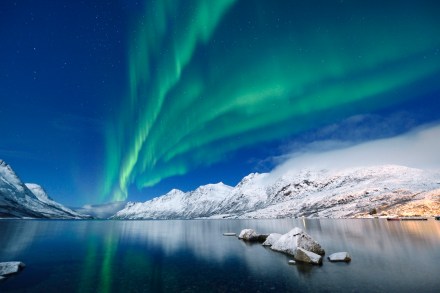
Europe’s ‘winter heatwave’ has left large parts of the Alps and Pyrenees bereft of snow over the past fortnight, causing grassy pistes and cancelled ski holidays. So where to go for a guaranteed winter wonderland? Well, Tromsø in Norway is 350km north of the Arctic Circle, so reliably snowy. In an average winter, it sees 160 days with at least 25cm of snow on the ground – and at the moment locals are having to dig out their cars. This small yet sophisticated city on the periphery of continental Europe is well worth a trip, especially if you’re after some wintry pursuits a little less high octane than downhill skiing.

2023 is the year of the vagabond

From our US edition

They say moving is one of the most stressful life events, but I’ve come to quite enjoy it. Last year alone, I lived in six different houses and moved across Wales, England, Scotland and the Channel Islands. So it’s really a good thing that the thought of packing up my belongings doesn’t give me palpitations. I’d be long dead if it did. As the world descends into a bleak new year, with recessions looming and nothing mildly positive to look forward to, more and more people are adopting this lifestyle. Some are not doing it out of choice. Sofa surfing and moving back in with parents are their only options to escape the multiple crises: cost of living, energy bills, housing, war. For others, there’s an air of "what’s the point?

Self-preservation in Sweden and Denmark

From our US edition

I am completely naked, shivering and mildly terrified. The word “vulnerable” goes partway to describing my state as my toes curl over the edge of a slippery jetty, in pitch-darkness. Did I mention that I am completely naked? This is not a fever dream, but a midweek wellness pursuit on the island of Nacka, where Stockholm city and countryside meet. It’s 7 p.m. and the sun is long gone. I inwardly curse a previous incarnation of myself, who booked this intrepid getaway while holed up in my warm apartment. The trip grew from my preoccupation with two Nordic lifestyle concepts currently in vogue: Swedish lagom (loosely translated as “balanced living”) and Danish hygge (retreating somewhere cozy, often with friends).

hygge

Would you co-own your holiday home?

Imagine dividing up your holiday time between your farmhouse in Tuscany, your villa on the French Riviera, your Mallorcan townhouse, your cottage in the Cotswolds and your apartment in Chamonix. Instead of dealing with the hassle of renting such properties, or the upkeep of owning each one of them, you just turn up and everything is ready and familiar.  Belgians Hilde and Henrik love the concept of co-owning five holiday homes, enjoying two or three weeks in each a year. ‘Everyone treats the house as if it’s their own, and we even found the fridge half full of beer when we arrived at Soller [in Mallorca],’ says Henrik, in his late fifties.

The joy of spending Christmas Day abroad

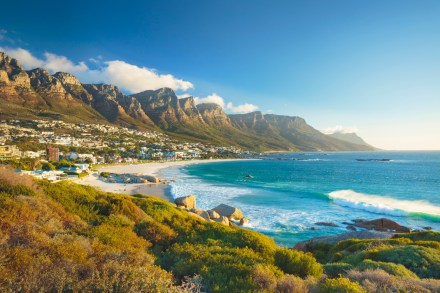
Spending Christmas Day abroad is, as they say, ‘Marmite’ – you either love the idea, or you hate it. But it seems there are plenty of us who love it. The Association of British Travel Agents estimates that five million Britons will escape abroad for Christmas and new year this month, with yesterday expected to be the busiest day for departures. Many are destined for sun-soaked destinations such as the Canary Islands, Southern Spain, Turkey, Barbados, the Middle East and Mexico. And I know exactly what the appeal is. My husband, young son and I have spent six of the past eight Christmases overseas – most of them at our second home just south of Valencia in Spain, another in Dubai and one in Cape Town. ‘Don’t you miss being at home?

Cockburn’s Christmas party chronicles

From our US edition

Shaker Heights, Ohio This year, Cockburn’s annual call for Christmas party invitations took him all over the country: DC, New York, even to one to “the longest-running libertarian-hosted Christmas party in Ohio.” What type of libertarians were these? he wondered, as visions of a drug-laced hors d'oeuvre platter and laissez-faire lovemaking danced in his head. “The party has spawned one marriage and three children,” Cockburn’s invitation said, confirming his suspicion (and hope) that all libertarians are also libertines. The Ohio party was advertised as “multi-generational,” and Cockburn’s would-be hosts helpfully added, “We managed to kill no one attending during Covid years.

christmas party

‘Country collectors’ go to war over Ukraine

From our US edition

While most travelers compile bucket lists of dream destinations, some revel in the pursuit of everywhere. Self-styled “extreme travelers” are seduced by hard-to-reach islands like Norway’s Bouvet, South Africa’s Prince Edward Islands and hundreds of other geographic oddities, in the same way children are tantalized by Disney World. In this subculture, visits to forbidden destinations like Guantánamo Bay, the Gaza Strip and India’s Andaman Islands, where the missionary John Allen Chau was murdered by spear-brandishing natives in 2018, confer status. And so do visits to pariah states and conflict zones, at least until Russia invaded Ukraine. The close-knit, extreme-travel community, who you might think would be an anything-goes bunch, is divided over the war.

travelers

How the royals do Cornwall

There was arguably no better advocate for holidaying in Britain than Queen Elizabeth II. Her Majesty loved to spend her summers in Scotland, having stayed at Balmoral each August since she was a girl. But could the next generation of royals favour the warmer climes of Cornwall over chilly Scotland? It certainly seems so. After Charles became King, William inherited the Duchy of Cornwall estate from his father. Not only is he now responsible for the Duchy’s extensive portfolio of Cornish property and farmland but he also inherits the 500-year-old Restormel Manor in the heart of Cornwall. Situated only a few miles from the house that inspired Daphne Du Maurier’s Rebecca, it frequently hosted King Charles and the Queen Consort during their annual tour of the region.

Antarctica: the best journey in the world

If there is one minor pitfall of being a travel writer, it is this. Whenever you tell a bunch of people what you do, invariably someone will ask: ‘Where’s the best place you’ve ever been?’ I struggled to answer until I got on a special new boat called the Greg Mortimer, operated by a Australian tour company called Aurora – and headed for Antarctica. We sailed south out of Ushuaia, in Tierra del Fuego, and crossed the Drake Passage. After three days I saw my first Antarctic iceberg. I’d observed icebergs before, in Iceland and Greenland, so I knew already that they could be striking, poetic, impressive. But this was on a grander scale entirely. It looked like an aircraft carrier made out of ethereal blue crystal.

How to make the most of Vienna’s Christmas markets

Oh, Vienna. Home to Mozart, Beethoven, Haydn, Freud, the Danube, waltzing and coffee house culture, to name but a few. Famous for its history and culture, the Austrian capital’s cobbled streets fizz with stories of ages past.  In my opinion, there is no better time to visit than in the winter – and the run-up to Christmas in particular. This city knows how to do Christmas. The streets are lit with a plethora of Christmas lights, some of which have acquired fame in their own right (I am told a friendly rivalry exists between the fans of the chandeliers on Graben – designed to create the impression of a gigantic outdoor ballroom – and the ‘curtain of lights’ around the corner on Kohlmarkt).  But the biggest draw of all are Vienna’s Christmas markets.