Terrorism

Iran’s hidden war with the West – and what we can do to fight back

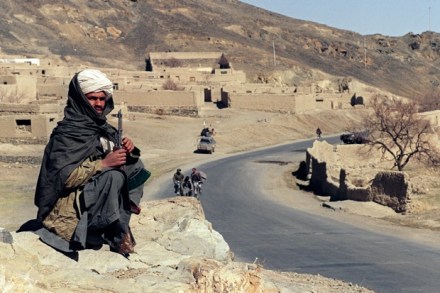
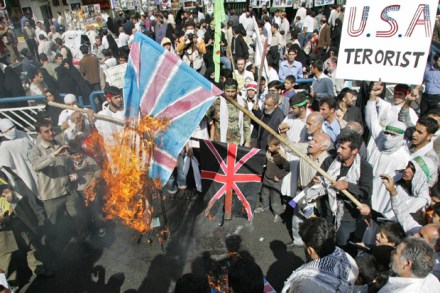
When British troops were on patrol in Iraq and Afghanistan, we faced many enemies, from jihadis to press-ganged civilians. But for me, the most terrifying ones lay buried. Bullets usually miss. Improvised explosive devices – IEDs — don’t. They are frighteningly simple. Old munitions wired together or plastic bottles packed with fertiliser and ball-bearings could destroy a vehicle and kill its passengers. During my four years in Afghanistan I saw IEDs evolve: first came remote triggers, then pressure plates and then low-metal-content devices. Curiously, IEDs evolved in a similar way in Iraq. This should be no surprise, since the groups trying to kill British troops shared one common resource: Iranian support. For years, Tehran has armed insurgents.
Isis takes its British schoolgirl jihadis seriously. Why don’t we?

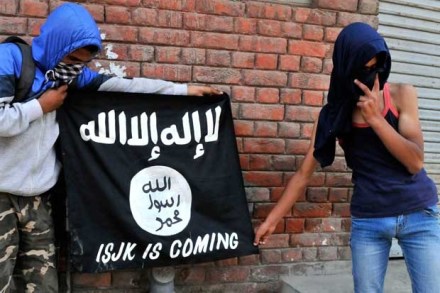
When the first schoolgirls ran away to Isis I had some sympathy for them — at least, I could see how they’d been suckered in. The girls were young, daft, desperate for a cause. They’d nosed about online, and found the Twitter feeds of jihadi wives who sell Syria as a teenage paradise: all fast food, deathless love, martyrdom and shopping. Because I felt for those first schoolgirls, I kept following their progress, checking for them online as they set up in Syria, married, and began to tweet themselves. But as I followed them on social media, my sympathy soon turned to disgust. ‘Happy #9/11’ wrote young Zahra Halane, one of the twins from Manchester who fled to Isis last year. ‘Happiest day of my life. Hopefully more to come. InSha Allah #Is.

Government will not deny ‘kill list’ of Isis targets

Does the government hold a ‘kill list’ of terrorists fighting for the so-called Islamic State who can be taken out at a moment’s notice? Michael Fallon certainly seemed to suggest so this morning on Radio 4, saying the government ‘would not hesitate’ to launch further attacks on those who posed a threat to this country. The Prime Minister’s official spokeswoman neither confirmed nor denied the existence of a list when asked about it. She said: ‘It means the government remains absolutely committed to doing what is necessary to protect British people here on the streets of Britain.’ Pressed on the existence of a list of names, she said: ‘It means that our approach is to protect us from that threat.

The spies we left in the cold

When a terrorist group is active in the UK — as Islamist extremists and dissident republicans are at the moment — there is no more essential figure in the prevention of carnage than an agent working for the security services. Reliable intelligence is what defuses bombs, intercepts arms caches, and apprehends suspects. Its acquisition can involve unimaginable personal risks, in circumstances of nerve-shredding tension. We should all be grateful, but most of us never get to know what to say thank you for, or to whom. An agent’s success manifests itself in nothing happening. Its continued value depends on secrecy. Is MI5 grateful on our behalf? Well, it seems that gratitude for intelligence sources may come with an expiry date.

Letters | 30 July 2015

What we’re building Sir: I was surprised and frustrated to read Ross Clark’s piece on housing associations in last week’s edition of your magazine (‘Stop moaning, start building’, 25 July). Surprised because it seemed to misrepresent the facts concerning housing associations, and frustrated because the analysis offered by Mr Clark ignores the key role that housing associations play in ending the housing crisis. Housing associations — which vary hugely in geography, size and function — have consistently supplied tens of thousands of new homes year after year. For example, last year they built 40,000 homes — a third of all new homes — and they matched every £1 of public investment with £6 of their own money.

The crackdown that backfired

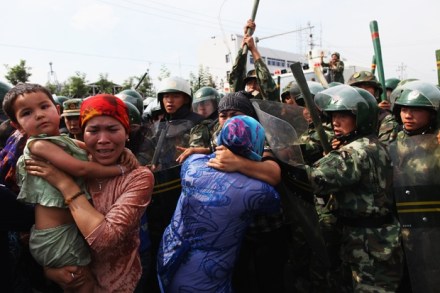
In October 2013, a jeep ploughed through a crowd of pedestrians on the edge of Tiananmen Square, crashed and burst into flames, killing five people. The authorities identified the driver as Uighur, a member of an Islamic ethnic minority hailing from China’s northwest region of Xinjiang. Six months later, eight knife-wielding Uighurs rampaged through a packed railway station in Kunming in southwest China, killing 29 people and wounding more than 140 others — an attack described by the national media as ‘China’s 9/11’. Beijing blamed both attacks on radical Islamist organisations pursuing what it calls the ‘three evils’: terrorism, separatism and religious extremism.

Je Suis Charlie? Even Charlie Hebdo has now surrendered to Islamic extremism

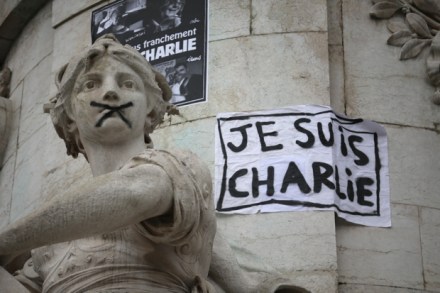
Bad news from the continent.  In an interview with the German weekly Stern, Laurent ‘Riss’ Sourisseau, the editor-in-chief of Charlie Hebdo, announced that he would no longer draw cartoons of any historical figure called Mohammed. This follows his former colleague Renald ‘Luz’ Luzier saying a couple of months back that he would no longer draw Mohammed either. ‘Luz’ announced that he was leaving the magazine shortly afterwards. I don’t judge either of them for this decision. ‘Luz’ happened to be running late for work on the morning that the Kouachi brothers forced their way into the Charlie Hebdo offices and started shooting his colleagues.

Teenage terrors

One of the great moments of my student life was opening the door and seeing visitors step back, shocked. I’d shaved my hair off to an eighth of an inch. It felt like velvet but looked spiky and hard. It was all down to Ulrike Meinhof, co-founder with Andreas Baader of the Red Army Faction, who’d just hanged herself in Stammheim prison, in Germany. My friends liked my haircut as we conflated Ulrike the martyr with images of a mullet-haired Jane Fonda raising her fist against the US army on behalf of the tortured Viet Cong.

The end of secrecy

Gordon Corera, best known as the security correspondent for BBC News, somehow finds time to write authoritative, well-researched and readable books on intelligence. Here he explores the evolution of computers from what used to be called signals intelligence to their transforming role in today’s intelligence world. The result is an informative, balanced and revealing survey of the field in which, I suspect, most experts will find something new. He starts with an event that took place 101 years ago next month, when the British dredger Alert set off from Dover in the early hours to cut the German undersea telegraph cables.

Could the Taliban become a useful ally against Islamic State?

For the better part of a decade, Nato forces fought a bitter war against the Taliban in Afghanistan, which claimed the lives of thousands of troops - including 453 members of Britain’s Armed Forces – and left thousands more seriously maimed by roadside bombs and other devilish devices. So it is perfectly understandable that anyone who has had the least dealings with this ugly conflict, from politicians to the families and friends of those who participated, should recoil in horror at reports that senior members of the Taliban are now actively participating in negotiations that could ultimately see them become members of the Afghan government.

Why we need to talk about theocracy

David Cameron is right to speak against religious extremism, even if it claims not to support violence. But what exactly is religious extremism? He defined it in opposition to British values, meaning democracy and the rule of law and so on. Maybe this is clear enough. But I think the matter can be clarified further. I think it should be defined in this way. Religious extremism idealises religious unity as the basis of good politics, and denigrates pluralism, liberal values, ‘secularism’ (in the political sense). In other words, it is theocratic religion. ‘Theocracy’ is an old-fashioned word, but I think we need to use it a lot more. It gets to the heart of the matter.

David Cameron must ally himself with moderate Muslims

Those who have been involved in counter-extremism in recent years would be forgiven for thinking that there is little new in the Prime Minister’s speech today. However, we need to remember two key things. First, that this government aims to increase the counter-extremism duties of frontline workers like teachers, so the target audience is wider UK civil society. Secondly, and this is evidenced by the Prime Minister speaking at a school in Birmingham, not at a security conference on the continent, we need to engage with the people who may be vulnerable to radicalisation in the first place.

The focus on terror has distorted the debate on encryption

Surveillance has hit the headlines again. This morning, the Data Retention and Investigatory Powers Act, or DRIPA, which passed last year after just 24 hours debate, was ruled illegal by the High Court in a landmark case. DRIPA was an emergency measure to allow law enforcement agencies access to communications data, and its illegality puts even more pressure on Theresa May’s forthcoming Investigatory Powers Bill, announced in the Queen's Speech. Last week, David Cameron announced that WhatsApp, Snapchat, iMessage, indeed, any encrypted messaging system, could be banned under new laws. In the fight against terrorism, the security services’ ability to intercept communications by would-be violent extremists is said to be paramount.

Keep the cops away from the radical clerics, be they Christian or Muslim

If you want to see our grievance-ridden, huckster-driven future, looks to Northern Ireland, which has always been a world leader in the fevered politics of religious victimhood and aggression. Just as the Tories and much of the politically-correct liberal centre think they can force us to be nice by allowing the cops to arrest those who 'spread hate but do not break laws' (in George Osborne’s sinister words) so Northern Ireland has all kinds of restrictions of 'hate speech' to police its rich and diverse tradition of religious bigotry. I suppose it was inevitable that they would catch 78-year-old Pastor James McConnell of the Whitewell Metropolitan Tabernacle in North Belfast. The pastor is a protestant of the fundamentalist kind.

Barometer | 9 July 2015

Naming terror David Cameron and the BBC argued over what to call the terror group most papers refer to as Isis — with the PM preferring Isil and the BBC continuing to call it Islamic State. Two more terror groups whose names caused problems in Britain: — The Red Army Faction was a German terror group which existed between 1970 and 1998, when it declared itself dissolved. Faced with the acronym RAF, British media preferred to call the group by its nickname the Baader-Meinhof Gang. — In the 1970s Italy was terrorised by a group known as the Red Brigades, most notorious for kidnapping and murdering the former prime minister Aldo Moro in 1978.

Diary – 9 July 2015

One strange consequence of my job as a foreign correspondent is discovering beautiful places when terrible things happen in them. So it was that I have been spending the past couple of weeks in Tunisia, a land of azure skies, whitewashed houses and apricot light which has inspired artists such as Paul Klee. That beauty — along with soft sandy beaches, local rosé and low prices — also attracted hundreds of thousands of British tourists. Not any more, after a young Tunisian took a gun from inside a beach umbrella at the resort of Sousse and slaughtered 38 holidaymakers, 30 of them British. Almost every Tunisian I met apologised on learning I was British: ‘Please don’t think Tunisians are like that — we are people of peace.

Barometer | 2 July 2015

Bank job Should we buy shares in companies which print banknotes in expectation of one getting to print millions of drachma notes? — In May, according to the ECB, there were a total of 17.6bn euro notes in circulation. Given that Greece accounts for approximately 2.5% of the GDP of the eurozone, 441m of these were Greek, and might need replacing with drachma notes in the event the country leaves the euro. — However, there is already a good business in printing replacement euro notes. In May, 2.76bn notes were taken out of circulation and 2.88bn new ones were put into circulation.

Don’t abandon Tunisia!

Just as a pilgrimage to Mecca is a holy obligation for all Muslims, it should now be a patriotic duty for as many Brits as possible to holiday in Tunisia. I say this not to make light of the tragic attack on the beach at Sousse last week, but to urge everyone to show the terrorists that they cannot win. They want to terrify us and shut down Tunisia’s resurgent tourist trade. They want to turn it into a failed state, a recruiting ground for lobotomised self-detonators. What better reaction could there be for those untouched by this attack than to laugh at our enemies and board the next flight to Hammamet? Even now, you’re more likely to be killed in a traffic accident in Britain than by a terrorist in North Africa.

You can’t take the Islam out of Islamic State

At last, British politicians have been galvanised into action by the appalling events last weekend in the Tunisian resort of Sousse, in which 38 people were murdered by an Islamist terrorist. Yes, yes, about time, you might be muttering to yourself — but credit where it’s due, please. They may be a little late to the party but at least they have arrived. A convocation of 120 of our MPs, including Boris Johnson, have demanded strong and forthright action.

Anniversary fatigue

There’s a part of me that thinks OK, we’ve heard enough now, one year on from the beginning of the centenary commemorations, about the first world war. Do we really need any more programmes (on radio or television) about Ypres, Gallipoli, Akaba, Versailles, and the Western Front? Or are we wallowing in history’s horror stories rather than trying to learn from them? There’s a danger that anniversary fatigue will set in and stop us pausing to think, to really contemplate, the reality of that terrible, catastrophic war and whether there is any way it can be prevented from happening again.