Alex Krasodomski

The Foreign Office’s anti-Isis video may be inept but at least it’s a start

From our UK edition

The Foreign and Commonwealth Office is taking the fight against Isis online. @UKAgainstISIL, a new Twitter account operated by the FCO, is providing 'updates on the UK Government’s ongoing work to defeat ISIL'. Since 2014, Isis have been a feature of online life. Their supporters and affiliates use the internet to communicate with each other, radicalise their sympathisers, host content and spread fear. Digital terrorism is a new phenomenon, and one that is proving difficult to counter. Twitter has been a staple of Isis propaganda exercises since the start and @UKAgainstISIL is the latest attempt at resisting this, but it isn’t without its problems. The most striking contrast is the quality of the content. See for yourself.
The focus on terror has distorted the debate on encryption

From our UK edition

Surveillance has hit the headlines again. This morning, the Data Retention and Investigatory Powers Act, or DRIPA, which passed last year after just 24 hours debate, was ruled illegal by the High Court in a landmark case. DRIPA was an emergency measure to allow law enforcement agencies access to communications data, and its illegality puts even more pressure on Theresa May’s forthcoming Investigatory Powers Bill, announced in the Queen's Speech. Last week, David Cameron announced that WhatsApp, Snapchat, iMessage, indeed, any encrypted messaging system, could be banned under new laws. In the fight against terrorism, the security services’ ability to intercept communications by would-be violent extremists is said to be paramount.

Mass surveillance is being undermined by the ‘Snowden effect’

From our UK edition

We are in the middle of a Crypto war again. Perhaps we have always been in the middle of a Crypto war. Since the 70s, the right and ability to encrypt private communications has been fought over, time and again. Here in the UK, Cameron’s re-election has prompted reports of a 'turbo-charged' version of the so-called ‘Snoopers’ Charter’, extending further the powers of surveillance that the whistleblower Edward Snowden described as having 'no limits'. Two nights ago, the US Patriot Act expired. With it, at least officially, elements of the NSA’s bulk surveillance programme expired too.

The General Election 2015 viral video chart

From our UK edition

Last week, the Greens released ‘Change the Tune’, a party political broadcast on YouTube. It features actors playing Cameron, Clegg, Miliband and Farage all singing in harmony. All four men are indistinguishable from one another. Ukip and the Lib Dems are the same, went the message. Only the Greens are different. Met with wild adulation from Green supporters and bewildered scepticism from more-or-less everyone else, the video has been the most high profile video of the campaign so far. Buckle up – it’s time for viral politics. YouTube and other platforms hosting political videos side-by-side with popular culture will play a significant role in this election. This is not particularly controversial.

Keep trolling the politicians, Twitter

From our UK edition

A politician’s life on Twitter is rarely uneventful. I have written in defence of all the goodwill and positive communication this election has seen on social media. But slip-ups are costly. As the election gets closer and the debates, broadcasts and gaffes begin, Twitter is watching. My research group CASM looked at how the #BattleForNumber10 went down on Twitter yesterday evening, running an analysis with Qlik during the debates to track the ‘boos’ and the ‘cheers’ being sent during the hour. The results gave it to Ed, but the most striking aspect of the chart was the hammering Cameron took as he was mauled by Paxman (who himself was roundly booed on social media as his interview-style became increasingly frenzied and personal).

The ‘Darknet’ is dangerous. It’s also deeply democratic

From our UK edition

The ‘Darknet’ is in the spotlight. Over the past few months, stories of paedophile rings, drug empires and terrorist organisations have set pulses racing as investigative journalists have begun dipping their toes into the network. Cue stories such as: 'Five scary things ANYONE can buy in the Darknet’s illegal markets'. Now, the Parliamentary Office of Science and Technology have released a briefing. The note, entitled ‘The Darknet and Online Anonymity’, centres on Tor. Tor is an easy-to-use web browser that makes tracking a user’s online activities much more difficult. It is designed to prevent government agencies and big corporations learning your location, your identity and your browsing habits.

Monitoring social media is easier said than done

From our UK edition

The three British girls who packed their bags and took a flight to Turkey have apparently crossed the border into Syria. Their intention seems to be to join the Islamic State and it looks like they may have succeeded. It emerged over the weekend that there had been contact between one of the girls and Aqsa Mahmood, a Scottish woman who travelled to Syria herself. Initially communicating through Twitter, it appears Mahmood played a role in their journey to Turkey and now into the heart of the conflict in Syria. Criticism turned on the security services: according to Aamer Anwar, the lawyer for the family of Aqsa Mahmood, they are not even doing the ‘basics’ to prevent this kind of migration.

Twitter has become a barometer for the political issues of the day

From our UK edition

Twitter has never been friendly to British politicians. From MPs’ gaffes that spread across the platform like wildfire to the incessant trolling, it can't make good bedtime reading for anyone on the front benches. Most MPs would probably dismiss most of what they read on Twitter as either stupid or horrible. But as we approach the General Election, the volume of chatter is starting to get louder. Increasing numbers of people are turning to Twitter to have their say in the run up to May 2015. Much of it is neither stupid nor horrible. In work being done by the Centre for Social Media Analysis (CASM) for the Sunday Times, we have begun to analyse the million or so tweets sent to MPs and PPCs over the last three weeks.

A tip for MPs on Twitter: know the difference between social and broadcast media

From our UK edition

Entering ‘Politicians are…’ into the Google search bar brings predictable results. Well, mostly. In amongst ‘liars’, ‘scum’ and ‘all the same’, Google suggests ‘lizards’: David Icke’s reptilian illuminati are still in the spotlight. Number five on the list is predictable: politicians are ‘out of touch’. Minding the gap has been central to British politics for years. Politicians, the line goes, are out of touch with reality, and, to make things worse, spend their whole time in Westminster, only visiting their constituencies to try to hang onto the seat. Yet some canny MPs are beginning to change this impression. This is the first general election where social media will be truly pervasive.

The British Army is right – social media is a new battlefield

From our UK edition

'News media representatives will be escorted at all times. Repeat, at all times.' Fifteen years ago, US Central Command circulated Annex Foxtrot. Centcom had had its fingers burnt by the reporting of Vietnam, and it wasn’t going to make the same mistakes this time. The narrative of the Gulf war belonged to them. Today, the story couldn’t be any more different. Psy-ops and social media: the butts of a thousand jokes, and there were plenty after the British Army announced the formation of a 1,500 strong ‘social media unit’.

Are the members of hacker group Lizard Squad cyberterrorists or cybervandals?

From our UK edition

Another day, another hack. This morning, Facebook and Instagram went dark. Facebook has blamed a technical glitch; ‘Lizard Squad’ celebrated another successful attack: Facebook, Instagram, Tinder, AIM, Hipchat #offline #LizardSquad — Lizard Squad (@LizardMafia) January 27, 2015 Yesterday, the group claimed responsibility for defacing the website of Malaysia Airlines. One of the more active of many mysterious groups, they have claimed responsibility for a range of online mischief in the last year, from hacking into online games networks to the temporary internet blackout in North Korea in December 2014 (although the latter isn’t easy to prove).

The real danger of #CyberJihad is that anybody can get involved

From our UK edition

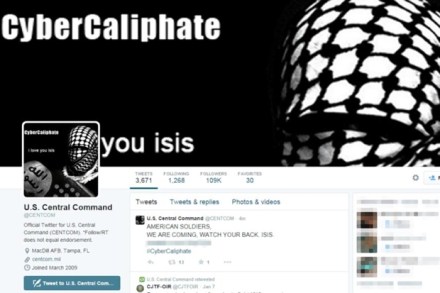
There was a certain irony to the news that @CENTCOM had been hacked yesterday afternoon. While President Obama was giving a speech on cybersecurity, the U.S. Central Command Twitter account was spouting pro-Isis propaganda. Nothing new here, though. Since day one, Isis have used the internet to threaten the West and in particular American soldiers. During a few days in August last year, my research group tracked eighty thousand tweets sent using the hashtag #AMessageFromISIStoUS from Isis sympathisers. Many of them contained grisly threats: images of US casualties and coffins with warnings not to interfere in the affairs of the Caliphate. Cyber-jihad is a natural evolution of terrorism. Islamic State seem to have caught the world unawares by their use of the internet.