Syria

The Syrians who can’t go home

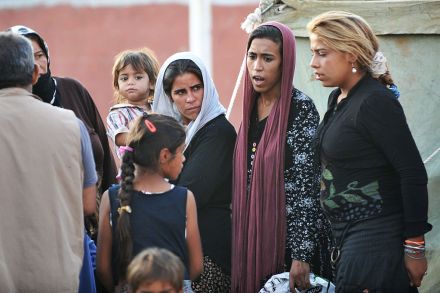
In a waiting room in Beirut’s Adlieh district, with harsh fluorescent lighting glaring down on us, the handcuffed prisoners, we took turns to rotate between the floor and the splintered wood of a short bench. On the wall, someone had scrawled a life-sized drawing of an AK-47, its muzzle inscribed with the words ‘Pew! Pew!’ Royal blue fingerprints, remnants of the admission process, smudged the plasterboard. Names and dates were scratched into the walls, a record of how long people had been held – days, weeks or months. This was my introduction to Lebanon’s detention centres. In August, I was bundled into the back of a pickup while working with a charity supporting Syrian refugees in the Bekaa valley.
Bombing Syria in 2013 would not have toppled Assad

In hindsight, did the US, UK and France fail to seize the chance to topple President Bashar al-Assad in 2013? This is the question that convinced Wes Streeting, the health secretary, to attack his colleague, Ed Miliband, the energy secretary and former Labour leader. Miliband orchestrated the vote that threw out the proposal by David Cameron’s government to join the US and France in airstrikes against Damascus in retaliation for chemical atrocities on the Syrian people. Streeting concluded that if Labour in opposition had supported the vote for airstrikes, Assad’s regime would have fallen, thus bringing relief and liberation for the Syrian population.

Have Syria’s rebels really reformed?

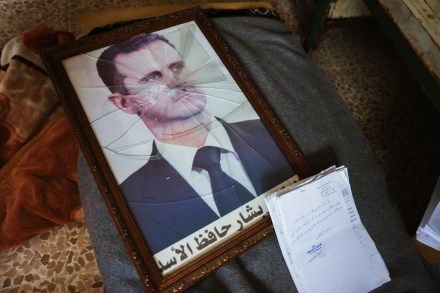
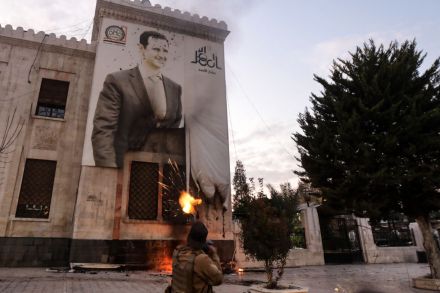
There were two scenes from Syria last night screened by the BBC and Channel 4 News that should give the Panglossian optimists hailing the birth of a ‘new Syria’ a pause for thought. In one, filmed at the Assad family mausoleum in Qardaha, near the port of Latakia, armed members of the Islamist HTS who now control most of the country were joyfully burning the coffins of Hafez al-Assad, the ruthless dictator who ruled Syria from 1970 until his death in 2000, and that of his elder son and heir apparent Bassil, whose death in a car crash in 1994 opened the way for the second Assad son Bashar’s rise to power.

Israel must leave Syria

As I walked through Vienna last weekend, I happened upon several protests organised by Syrian refugees celebrating the downfall of Bashar al-Assad, the butcher from Damascus. People were singing, some even crying, as they rejoiced the end of the father-and-son al-Assad dictatorship, which had lasted 53 years.   The protestors had not yet seen the images of tens of thousands of released political prisoners, the slaughterhouses, or the underground torture chambers, but they had already seen enough. They were among the 12 million people who were displaced during the Syrian civil war and many of them undoubtedly had family members or close friends who had been among the over half million Syrians who had been killed. It was a rare moment of total jubilation.

Can you tell a good guy from a bad guy in the Middle East?

Please excuse the tone of jubilation, but I have been dancing around my kitchen for the past couple of days, in a state well beyond elation, at the removal from power of Bashar al-Assad’s murderous regime in Syria and its successors who, I am convinced, are a little like our own Liberal Democrats, except with powerful rifles. No matter how deranged the dictator, whoever is trying to oust him will be about ten times worse An expert from a Washington D.C. thinktank told the BBC that some of the chaps who had marched through from Homs to Damascus were ‘moderates’. This was the line taken up, so far as I am aware, by the corporation itself and indeed most other broadcasters – hence my delight.

Syria’s future is uncertain

A momentous fortnight in the Levant. Following a negotiated ceasefire agreed in between Israel and Hezbollah bringing a fragile possibility of peace to Lebanon, opposition forces in Syria drove the dictator Bashar al Assad into exile. They ended 54 years of autocratic rule by the Assad family and 14 years of acute suffering for the Syrian people since the uprising of the so–called ‘Arab spring’. Syrian Army soldiers not only abandoned their posts but also dumped their uniforms – though apparently not their guns – and thousands fled across the border to Iraq to avoid retribution. Around the world in countries that have given refuge to Syrian refugees in recent years, including Sweden, the UK and capitals in the Middle East, celebratory demonstrations erupted.

Is Assad’s downfall a ‘catastrophic success’?

43 min listen

Over the weekend, the rebels from the Syrian opposition claimed Damascus and president Assad had fled to Russia. Keir Starmer has welcomed the collapse of Bashar al-Assad’s barbaric regime in Syria and called for civilians to be protected after rebel forces took control of Damascus. Freddy Gray speaks to Michael Weiss, an editor at The Insider, and Owen Matthews, writer and historian. They discuss how this story could develop on the international stage, whether this is the reinvention of the Arab Spring, and what is left of Iran, now that several of its proxies have been destroyed.

How does the Syrian conflict affect Britain?

12 min listen

Following news that President Bashar Al-Assad's regime in Syria has fallen, Natasha Feroze discusses what comes next with James Heale and Michael Stephens, senior associate fellow at RUSI. What does the Syrian conflict mean for Britain? Do we need to reconsider our counter-terrorism policy? And how will Britain's historic relationship with Syria shape our path going forward?

How will HTS rule Syria?

Yesterday we woke to the astonishing news that the rebels from the Syrian opposition had taken Damascus and President Assad had fled. The joy is huge and infectious, even if tempered with trepidation. In 2007, I was assured by a soldier in Damascus that the Ba’athist regime had the solidity of rock. That could be said to be the line Assad repeated throughout the civil war from 2012 onwards. Yet in a few days from 27 November to 8 December this year, opposition forces spearheaded by HTS - Hay'at Tahrir al-Sham (‘the Organisation for the Liberation of the Levant’) - swept out of their bases in rebel-held Idlib and the Turkish controlled north, and the rock-solid regime crumbled to dust.

Will Syria’s new rulers show mercy?

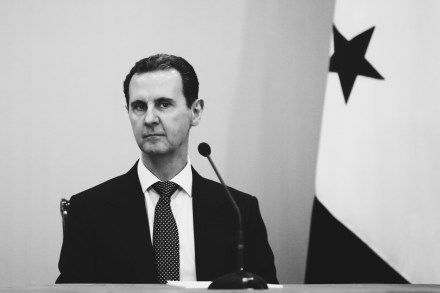
The late Henry Kissinger said of the Iraq-Iran war in the 1980s that it was a shame that both sides couldn’t lose. Much the same is true of the current situation in Syria, where the long established regime of the brutal but secular Assad dynasty looks increasingly likely to fall to a sudden Islamist rebel offensive. Syria has been convulsed by a vicious and multi-sided conflict since 2012 when riots against the dictatorship of Bashar al-Assad turned into a full-scale civil war. Assad, a London trained ophthalmologist, had reluctantly become the heir apparent to his iron-fisted father Hafez al-Assad (the surname means ‘the lion’) after the death of his more political brother Bassel in a car crash.

Will the Syrian Civil War create another ISIS?

There are unintended consequences, and then there are unintended consequences. What we are seeing in Syria, as Aleppo and Hama fall (and Homs braces itself) to a coalition of anti-regime forces whose DNA is to be found in al-Qaeda et al, is an unintended consequence of Israel’s bombardment in Syria of Iran-funded pro-Assad groups, and the pulverising of Hezbollah in Lebanon. An unintended consequence of the weakening of Iran and its Axis of Resistance. For the three pillars on which Bashar al-Assad props up (for the time being) his murderous kleptocratic narco-state – Iran, Hezbollah and Russia – are, respectively, on their ‘best’ behaviour in the hope of talks with the US, broken, or extremely distracted.

Trump is already the diplomat-in-chief

From our US edition

The United States only has one president at a time. Until January 20, that’s Joe Biden. But President-elect Donald Trump and his skeleton foreign policy team are waiting in the wings, plotting policy behind the scenes on issues — Ukraine, Gaza, Iran, Middle East peace — that have stymied the Biden administration for the last year. In fact, Trump is already influencing the respective calculations of allies, partners and adversaries before he even steps foot in the Oval Office. And Biden’s advisors seem perfectly fine with it. Trump fancies himself as a master negotiator, somebody who’s inherently skilled at poking, pressuring and sweet-talking the opposite side of the table until he gets what he wants.

diplomat

What the ‘experts’ got wrong about Syria

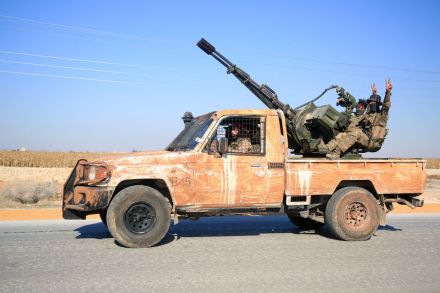
Provincial capitals falling before an unexpected advance. Military units allegedly defecting, deserting or switching sides. Talk of a coup in Damascus. The Syria of 2012 is the Syria of 2024. For years this was a so-called ‘frozen conflict’. The front lines did not move, no matter how many artillery and aerial attacks there were on civilians in the country’s north. The maps did not change, though dozens of people at a minimum were killed in fighting every week. But now Syria’s civil conflict has reignited. From their portion of Idlib province, a broad coalition of armed groups led by the Islamists Hayat Tahrir al-Sham (HTS) have taken over a significant swathe of territory.

Would a Secretary Marco Rubio implement Trump’s policies?

From our US edition

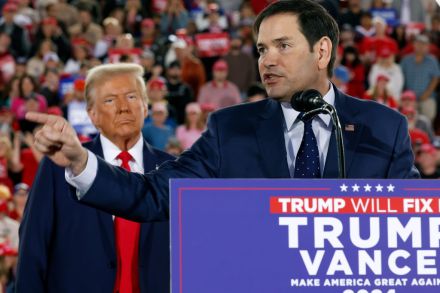
What on earth is Donald Trump thinking? That’s what many realists and restrainers inside and out of Washington are asking themselves after news broke late last night that Marco Rubio, the senior senator from Florida, is set to be tapped as secretary of state in the next administration.  The reactions haven’t been uniformly bad, mind you. Other candidates rumored to be under consideration, such as Vivek Ramaswamy, caused many in the US foreign policy elite to wretch in fear. Others, like former national security advisor Robert O’Brien and Senator Bill Hagerty, who served as US ambassador to Japan during Trump’s first term, would have been predictable choices with whom most could live.  Rubio, however, is one of the most hawkish options Trump could have picked.

rubio

How Syria collapsed

In April 2018 I was taken on a coach through miles of war-wasted urban landscape in the Syrian cities of Aleppo and Homs. They looked much like the photos of Gaza today, except the shattered streets were always empty and sometimes there were longhand Arabic signs chalked crudely on broken concrete slabs: ‘for sale’, or ‘water disconnected’. The people had fled the crude barrel bombs. Where had they gone? The war had ended in these cities over a year before, which was why we were allowed to visit. Deaths in Gaza are counted – in Syria they were not. We only have estimates. Somewhere between 25,000-30,000 civilians and 10,000-15,000 combatants died in Aleppo. The dead were not even real statistics.

Colum McCann: American Mother

35 min listen

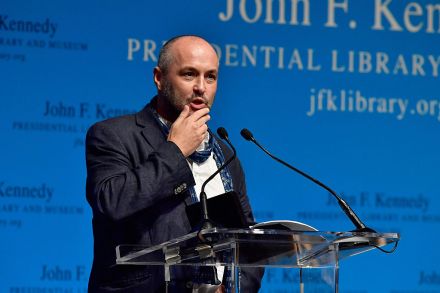
My guest on this week's Book Club podcast is the award-winning novelist Colum McCann, whose new book takes him out of the territory of fiction and into something slightly different. American Mother is written in collaboration with Diane Foley, mother of Jim Foley, the journalist killed by ISIS in Syria in 2014. He tells me how he came to reinvent himself as (not quite) a ghostwriter, why he thinks you can use the tools of the fiction-writer to get at journalistic truth, and about what it was like to sit in the room with Diane Foley and the man who murdered her son.

Biden’s action in Iraq and Syria is merely delayed reaction

From our US edition

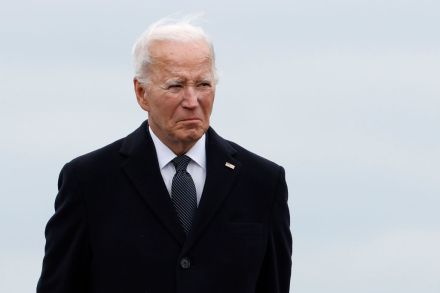
What do you think of the apothegm “Better late than never?” I think it is often dubious. For confirmation, I adduce the airstrike the Biden administration just conducted against eighty-five targets in Iraq and Syria. The attacks, against infrastructure associated with Iran’s Revolutionary Guard, are billed as the opening salvo in response to last week’s drone attack by Iranian assets in Jordan that left three Americans dead and more than forty injured. Taking a page from an earlier, square-jawed time, officials from the administration tersely commented that America’s “multi-tiered” response would continue at a “time and in a manner of our choosing.”  Spoken like a real administration. I wonder from what storeroom they got the script?

air strikes iraq syria

US launches retaliatory air strikes in Iraq and Syria

From our US edition

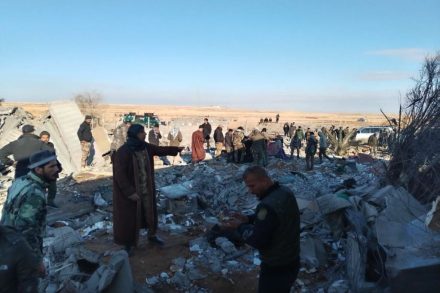
The US is currently launching retaliatory air strikes in Iraq and Syria, the Pentagon confirmed this afternoon.  The strikes come after three American servicemembers were killed in a drone strike by an Iranian-backed militia on Sunday, with dozens more wounded. Top Biden administration officials had said “it will pretty be clear” when the American response begins. “The first thing you see won’t be the last,” National Security Council spokesperson John Kirby told the media Wednesday. -Matt McDonald Soros staffers unionize — and immediately get laid off This month’s better-than-expected jobs numbers are cold comfort to employees of a George Soros-funded group that recruits young Democrats to run for office.

Espionage dominates the best recent crime fiction

The best espionage novels cater to our fantasies while still persuading us of the authenticity of their worlds. Of the titles published this year, two stand out in the field, and each author understands that, in fiction, veracity is not the same as authenticity. In Hemingway’s words: ‘All good novels have one thing in common. They are truer than if they had really happened.’ An extended chase, beginning in Siberia, is a kind of Russian version of The Thirty-Nine Steps White Fox (Bantam, £18.99) is the concluding volume of a trilogy of thrillers by Owen Matthews, one of the best of many western writers on Russia. It can happily be read on its own, though it is sufficiently gripping to send readers back to the earlier two books.

The Middle East catches diplomacy fever

From our US edition

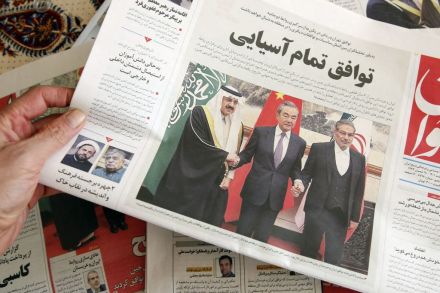
Peace isn’t exactly blossoming like rosebuds in the Middle East. The region is still host to a devastating civil war in Yemen, a humanitarian crisis in Syria, sporadic terrorist attacks in Iraq and an endless tit-for-tat between the US and Iranian-backed militias in Iraq and Syria. Indeed, just last night, President Biden authorized several airstrikes against three militia locations in retaliation for a drone attack on an American base in Syria that killed one contractor and injured six others. But for an area of the world so often regarded as hopeless, the Middle East is suddenly looking like an epicenter of diplomacy.

syria peace