Syria

The earthquake that will devastate Seattle

From our US edition

At around eleven in the morning on February 28, 2001, I was standing in front of a mirror in my home in suburban Seattle, adjusting what remained of my hair prior to driving downtown to meet a friend for lunch, when the ground began to shake beneath my feet. The movement lasted about twenty seconds and wasn’t entirely unpleasant, with just the slightest hint of the old days when I was a devotee of Bacchus. After a bit, I checked that the house was all right, looked in on my infant son peacefully asleep in his crib, said goodbye to my wife, started the car and went on my way into the city. It was bedlam out there.

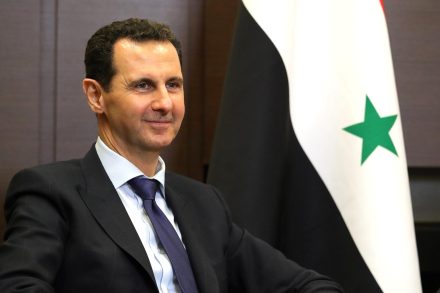
How the earthquake is strengthening Syria’s dictatorship

From our US edition

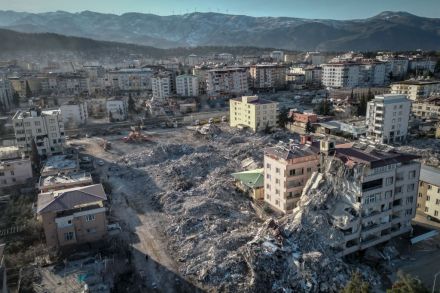
Northwest Syria is one of the most wretched places on earth. The Syrian province of Idlib, straddling the border with Turkey, is a haven for the internally displaced and is in all practicality a state within a state. Throughout Syria’s twelve-year-long civil (and proxy) war, Syrian dictator Bashar al-Assad has treated the area as a dumping ground for fighters who refuse to lay down their arms and civilians who want nothing to do with Assad family control. Idlib, representing 4 percent of Syria’s total land, is now host to 25 percent of its entire population. And that was before the earthquake hit. If Syria’s northwest was a gateway to misery before the tremors, it’s now a hellscape. Entire families have been wiped out. Buildings have been reduced to rubble.

A year in Gaziantep before the earthquake

From our US edition

In 2013, I was studying for a Master’s degree in Beirut when a bomb went off in Baghdad. I remember receiving a message from a friend checking in to see if I was all right — even though I was 500 miles away. It can be hard to convey to people back in the United States that violence in the Middle East is not necessarily a part of everyday life. At times — in Iraq in the years following the US invasion, for example — it is. But such attacks are usually a tragic anomaly. All this stands in stark contrast to news about the earthquakes in southern Turkey and northern Syria, which struck last week and killed at least 36,000 people.

gaziantep

The virtues of American ‘nation-building’

From our US edition

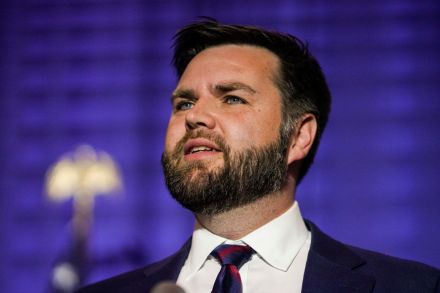
Newly minted senator JD Vance of Ohio has wasted no time in extolling the virtues of a soft isolationist foreign policy. In a January 31 op-ed for the Wall Street Journal, Vance endorsed Donald Trump for president largely because Trump isn't a hawk. A prominent member of the GOP's national conservative wing, Vance has made skepticism of American leadership abroad a centerpiece of his political identity. The senator attacks the “bipartisan foreign policy consensus that has led the country astray many times.” Never mind that the so-called "consensus" only really exists under extreme circumstances, such as after the 9/11 terror attacks. Think of the deep divide between right and left over how to deal with Cuba and Saudi Arabia, for example.

Who cares about Syria’s earthquake victims?

At 4 a.m. on Monday, when the earthquake hit, most of the 4.5 million people living in northwestern Syria were asleep. Thousands of buildings collapsed, burying their residents alive. The majority of those living in this small corner of Syria had already been displaced from their homes in other parts of the country by the civil war. The northwest is the final stronghold of Syria’s opposition and is the main target of president Bashar al-Assad’s grim campaign to retake full control of the country. Before the earthquake, some two thirds of the area’s basic infrastructure ­– public housing, water and sanitation, hospitals and medical clinics, roadways and power generation – was already destroyed or damaged. The people living there could not have been more vulnerable.

Erdogan’s plan for war, and peace

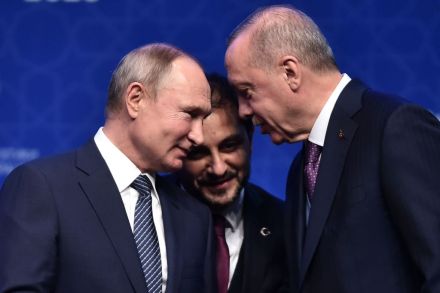
There are ‘global issues that we both have on our plates’, US Secretary of State Anthony Blinken said, mysteriously, when he met with his Turkish counterpart last week. Foreign Minister Mevlut Cavusoglu, standing by Blinken’s side, thought the same. ‘We will focus on areas of partnership in bilateral and regional issues.’ Diplomacy as usual, then. Behind the boring platitudes lies a serious rift between Turkey and the United States. In late December, Syrian and Turkish defence ministers met in Moscow in the first proper meeting between the two governments in a decade. There are plans for another meeting between foreign ministers that could lead to a direct meeting between Turkey's leader Recep Tayyip Erdogan and Syrian president Bashar al-Assad.

The US must punish Iran for aiding Russia

From our US edition

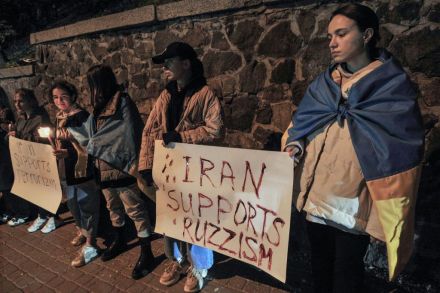
Russia’s brutal war in Ukraine has been disastrous for Vladimir Putin, but it has been a boon for the Islamic Republic of Iran. Western nations are increasingly concerned about Tehran’s profitable cooperation with Moscow, as Iran leverages Russian desperation to fuel its own ambitions. So far, Iran has sent hundreds of drones to Russia along with training personnel, and may soon send ballistic missiles. Tehran has continued its malign activities in the Middle East as well, attempting to steal American drones and blind American ships, attacking and endangering American forces and personnel, and supporting destabilizing groups such as the Houthis in Yemen. Iran has also ruthlessly repressed widespread protests at home.

The agony and frustration of reporting from the Middle East

For 25 years, Abed Takkoush assisted foreign reporters like Jeremy Bowen when they arrived to cover the chaos and conflicts in Lebanon. He drove them around in his battered Mercedes, pointing out with grim relish the places where dark deeds had taken place: the assassinations, atrocities, kidnappings and slaughter of civilians that scar this mesmerising nation. During one Israeli onslaught in 1996, Abed sped past a gunship firing at cars on the highway between Sidon and Tyre, laughing with relief when shells exploded on the road rather than the car. ‘We laughed with him,’ writes the veteran BBC reporter. ‘It was a calculated risk. The alternative was turning back to Beirut without a story.’ Four years later their luck ran out on the last day of Israeli occupation.

Iran and Russia: the new Axis of Evil?

From our US edition

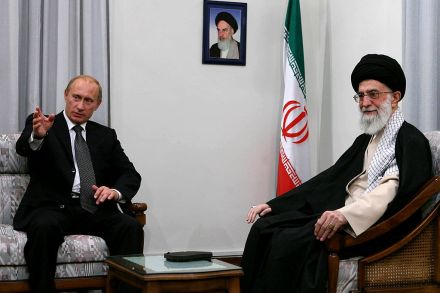
Russian President Vladimir Putin’s visit to Tehran last week brought attention to a growing partnership between Russia and Iran. The Russian shook hands with Iranian Supreme Leader Ali Khamenei, a rare gesture since both men are notorious coronaphobes. The old cleric expressed support for the Russian invasion of Ukraine, while the old KGB man offered Iran supplies of grain. US intelligence even claims Iran will open its drone arsenals to Russia. This strange friendship has its limits, but its growth could spell trouble. History does not suggest this is a natural partnership. The list of grievances between Iran and Russia is long. Great powers are often rough with middle-power neighbors.

Where will the war in Ukraine go next?

From our US edition

Almost every night in Russia, it seems, a government building bursts into an unexplained fire. Fuel depots, office buildings, infrastructure hubs — and once a bridge. No doubt people have their theories. Insinuation abounds. "Karma is a cruel thing," one Ukrainian official has said on Telegram. But in the main, both the Russian government and Ukraine maintain an eloquent silence. The metaphor is apt. The fires are an unexpected consequence of Russia’s war in Ukraine, an eventuality, no doubt, that no one in the Kremlin inner circle anticipated, or planned for. And yet they burn merrily nonetheless.

How Syria became another narco-state

From our US edition

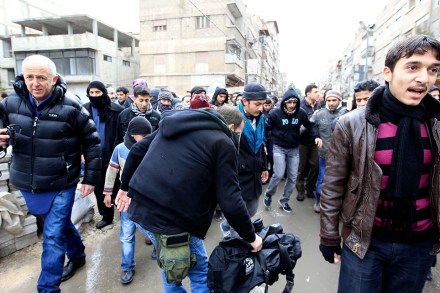
There is a drug war brewing in the Middle East, and Syria is at its center. The country has been destroyed by its eleven-year civil war, and in the ruins of what was once a prosperous country, an entirely different economy now takes shape. It’s an economy of poverty and privation, where food and energy prices are perpetually high, and supplies of basic commodities are uncertain. The regime of Bashar al-Assad, now unlikely to be overthrown, has become the Middle East’s biggest moocher — a rent-seeking entity that begs for “reconstruction” funds from nearby monarchies to keep its own corrupt machinery in operation. Wartime brings its own economic calculations.

The end of the last Arab Spring success story

From our US edition

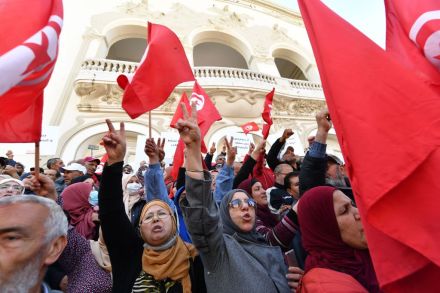
Visibly, and with very little pretense, Tunisia is sliding into tyranny. In the last two years, its president, Kais Saied, has frozen and dissolved the country’s parliament and threatened its former members with prosecution. He has dismissed an errant prime minister. He has ruled by decree. He has quashed the high judicial body attempting to scrutinize his changes to the constitution and replaced it with a new organization filled with hand-picked appointees. Accusing his opponents of planning their own coup attempt, Saied has faced down months of protests over each of these individual changes with uncommon steeliness. Saied’s hold over the instruments of government and his comradery with the brass of the army appears near total.

How many refugees can Eastern Europe take?

From our US edition

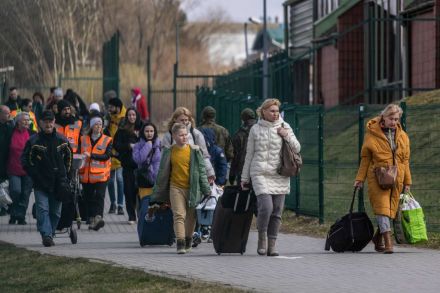
Hundreds of thousands of Ukrainian refugees have already streamed into Slovakia, Hungary and the Czech Republic. Head north to Poland, and the numbers go from the unprecedented to the jaw-dropping: two and a half million refugees have entered the country with a total population of 38 million since the war in Ukraine began. In the Czech Republic, where I live, official estimates put the current number of refugees at over 300,000, a figure expected to rise to between 500,000 and 600,000 in the coming months. In a country of less than eleven million, that’s five percent of the population. In Poland, a proportion closer to ten percent is possible. At the moment, most of the Czech Republic’s refugees are concentrated in Prague.

Time for Turkey to align with the West

From our US edition

To deter Russia from invading Ukraine, the US and its Western allies vociferously vowed unified and decisive action against Russia. Countries like Hungary and Turkey, which enjoy favorable relations with Russia, were a concern, as it was not clear whether they would join US-led sanctions against Russia. Turkey’s refusal to enforce these sanctions would be a significant lifeline for Russia and show division in the Western camp. Turkey’s uncertain loyalties don’t come as a surprise. For one thing, Turkey is heavily dependent on energy imports from Russia. For another, Turkey has had a turbulent history with the Kremlin. When Putin annexed Crimea back in 2014, Turkey only expressed meek disapproval, a stark departure from its historical strategic stance regarding Ukraine.

west

Yes, Putin could use biochemical weapons in Ukraine

From our US edition

The Russian Defense Ministry held a briefing last week claiming that they have discovered US-led biological laboratories in Ukraine. Moscow stated that a rapid halt was brought to the facilities’ activities, adding that Kyiv and Washington had violated the Convention on the Prohibition of Biological and Toxin Weapons. The Kremlin did not feel the need to provide evidence of its claims, par for the course in Putin’s Russia.

biochemical weapons

Yvette Cooper’s refugee record

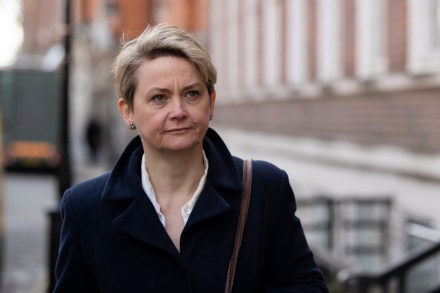
As the Ukraine crisis rages, Labour has chosen to focus on the issue of visas for fleeing Ukrainian refugees. Shadow Home Secretary Yvette Cooper went for her opposite number Priti Patel on it in Parliament yesterday, demanding 'clear answers' for those 'urgently seeking sanctuary or to rejoin relatives.'  It looks like Patel will now be forced to give a ministerial statement today, updating the government's position on the issue: a win for Cooper and those demanding more action. Still Mr S couldn't help but think back to Cooper's own record when it comes to refugees.

Sanctions on Russia won’t work

From our US edition

Another battle in the West’s sanctions war against Russia is set to begin. The US and its NATO allies have put together what they’re calling a strong package of economic restrictions on Russia in response to its military buildup near Ukraine’s border. What’s in the package remains a secret but it appears to focus on Russia’s energy sector. A State Department spokesperson told NPR on Thursday that the Nord Stream 2 pipeline from Russia to Germany would remain inoperable if an invasion happened. The Financial Times suggested that other new Russian gas developments are also on the sanctions list. The UK wants Russia booted from SWIFT, the Belgian financial messenger services company, while the West also floated the idea of sanctioning Russian President Vladimir Putin.

Why is the US still in Syria?

From our US edition

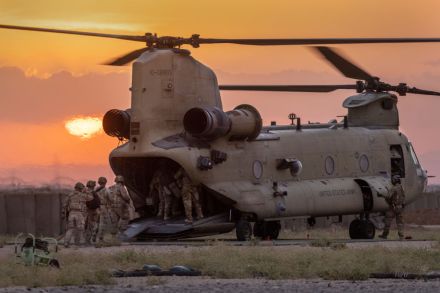
A week ago, US troops camped out in the small, dusty Syrian outpost of al-Tanf suddenly found themselves under a “deliberate and coordinated attack", as multiple explosive-laden drones barreled toward their positions. According to US officials who spoke to the AP on background, Iran “resourced and encouraged” the latest drone attack targeting US forces. The five drones were also reportedly Iranian-manufactured, leading to speculation that Tehran is testing the Biden administration at a time when nuclear negotiations between the US and Iran remain in limbo. Fortunately, US troops managed to defuse the drone attack without suffering any casualties.

syria

Biden stole Trump’s foreign policy

From our US edition

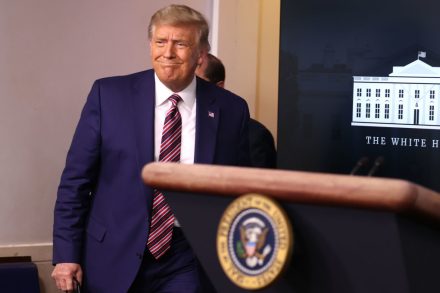
When President Donald Trump in 2020 signed a trade deal with China after years of escalatory tariffs, then-presidential candidate Joe Biden blasted the agreement. 'China is the big winner of Trump’s "phase-one" trade deal with Beijing,' Biden said after the agreement was finalized. He wasn’t alone. Many trade experts at the time believed the purchasing targets Beijing was required to meet were highly unrealistic. Sure enough, China’s compliance has been less than ideal. According to the Peterson Institute for International Economics, China is roughly 70 percent of the way there with two months left to go. Yet despite Biden’s past comments about the accord, not to mention the tariffs that set the stage for the deal, the White House isn’t fully breaking with the pact.

foreign policy

Biden’s big UN whopper

From our US edition

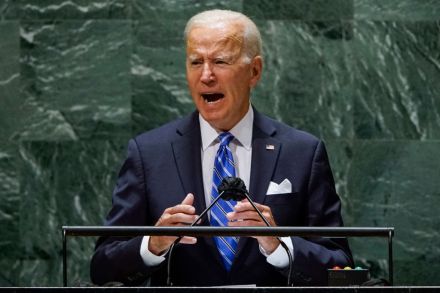
President Joe Biden walked into the grand UN General Assembly chamber this morning with a list of asks, an appeal for greater cooperation among the world’s great powers and a bit of controversy trailing behind him. Biden’s first UN address came at a difficult time in American diplomacy. The European Union, led by an irate France, is livid over a $60 billion US-Australian nuclear submarine deal that European leaders view as skeevy and duplicitous. And last month’s American troop exit from Afghanistan remains a sore point for contributing nations in the Nato coalition, some of which wanted more time to evacuate their own nationals. Biden, however, sidestepped all of these disputes.

un