Syria

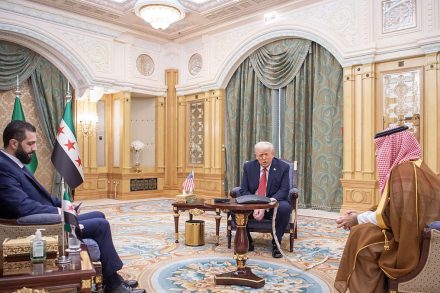
US troops finally leave Syria

From our US edition

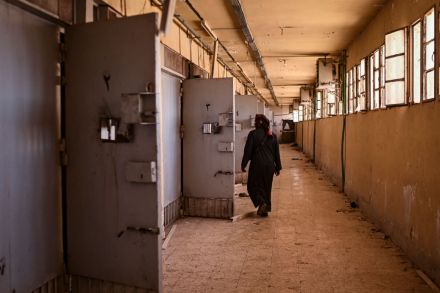
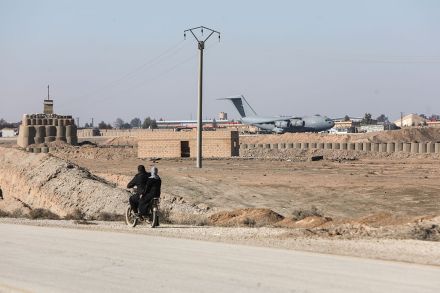
In December 2018, to the shock of pretty much everybody in the US national security establishment at the time, President Donald Trump publicly ordered the withdrawal of all US troops from Syria. The announcement caused a panic within the Defense Department, State Department and National Security Council, whose officials teamed up to dissuade Trump from going through with it. A similar story unfolded ten months later, in October 2019. Again, the bureaucracy pushed back; in October 2019, the House went so far as to pass a resolution opposing a US withdrawal, with senior Republican lawmakers signing onto the measure. Fast-forward more than six years later, and the US troop withdrawal Trump floated about during his first term is finally coming to fruition in his second.
Syria

The End of Rojava

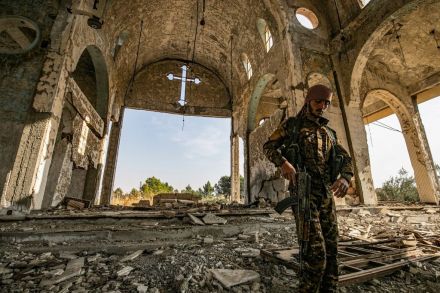
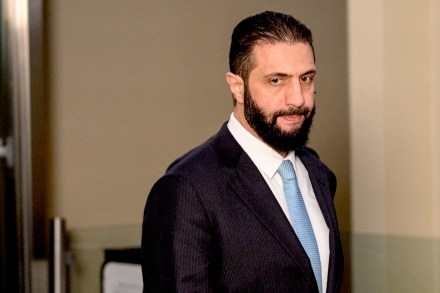
Recent weeks have seen a political and military earthquake in Syria. Nearly 14 months after driving Bashar al Assad from Damascus, President Ahmad al Sharaa is on the point of extending his transitional government’s complete control over the third of Syria east of the Euphrates. For all practical purposes, this will mean the end of the Kurdish-dominated Syrian Democratic Forces, the SDF, which had been the West’s allies against Is is. Time is being called on the semi-independent and self-declared autonomous Kurdish province of Rojava which has been created by the SDF during Syria’s civil war.

Playing ball with Team Trump

From our US edition

The State Department has a “secret playbook for using sports to advance Trump’s agenda,” according to Politico. Foggy Bottom has a tough assignment ahead. Witness the opening ceremonies of Sunday’s NBA game in London between the Memphis Grizzlies and Orlando Magic, the first NBA game in the UK in six years. As Vanessa Williams sang the National Anthem, someone shouted “Leave Greenland alone,” which the arena cheered. Cockburn doesn’t think Williams is much of a threat to Greenland. President Trump’s appearance last night at the College Football Championship – along with Secretary of State Marco Rubio, Ivanka and Jared, Kai Trump and Steve Witkoff – went without a hitch.

Putin moves troops into Trump’s backyard

From our US edition

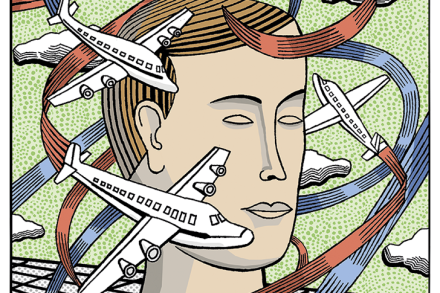
Clandestine US military forces are not the only foreign military troops operating in Venezuela. Russia has quietly dispatched military advisors of its own to the country, moved to reinforce Venezuela’s air defenses and signaled readiness to deepen military cooperation. While Donald Trump has authorized the CIA to conduct covert ops on Venezuelan soil and just days ago approved the seizure by US troops of an oil tanker leaving Venezuela, Vladimir Putin has pledged his support for Nicolás Maduro. In a phone call with Maduro on Thursday after the tanker was captured, the Russian president “expressed solidarity with the Venezuelan people.

Inside the gruesome world of the ‘human safari’

From our US edition

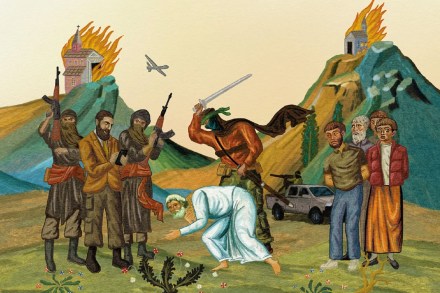
“People don’t actually do that, right?” my publisher asked nervously. “No one actually goes on a human safari, do they?” Eight years ago, I didn’t know for sure. There had certainly been rumors for years that wealthy foreigners were traveling to conflict zones to kill civilians at random. Gradually I had concluded that some people were indeed heading off to complete their bucket list of horrors. In my novel To The Lions, I placed the “human safari” in a fictional refugee camp in southern Libya. Concrete proof, however, was almost impossible to find. Several times during my years as an investigative journalist, I heard stories about nightmarish things going on in places where law and order had collapsed.

ISIS is stirring once more

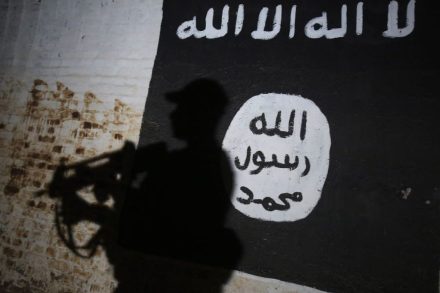
Indications that the Islamic State (ISIS) has begun to employ artificial intelligence in its efforts to recruit new fighters should come as no surprise. At the height of its power a decade ago, Isis was characterized by its combination of having mastered the latest methods of communication with an ideology and praxis that seemed to have emerged wholesale from the deserts of 7th century Arabia. In 2014 and 2015, ISIS recruitment took place on Twitter and Facebook. YouTube was the favored platform for the dissemination of propaganda. The group's videoclips of its barbaric prisoner executions, including the beheadings of a series of western journalists and aid workers and the immolation of a captured Jordanian pilot, became the organization’s gruesome trademark.

isis

The jihadist I knew: my life as al-Sharaa’s prisoner

As Washington rolls out the red carpet today for the former al-Qaeda chieftain and now Syrian president, Ahmed al-Sharaa, Syria’s minorities continue to live in terror. An army of destruction, half Mad Max, half Lollapalooza is rolling through the desert somewhere south of the country’s capital, Damascus. Who has ordered these militants into action? No one knows. What do they want? It isn’t clear. But, as a former prisoner of al-Sharaa’s band of jihadists, I can’t say I’m surprised by what is unfolding in Syria. Whatever else might be said about the old regime of Bashar al-Assad, no one was ever in doubt as to who was in charge.

Massacres in Syria & the Congo: why aren’t Western elites drawing attention to religious persecution?

28 min listen

After the fall of the Assad regime in Syria, many people voiced fears that the religious minorities in the country could face increased persecution. This could be at the hands of the new government’s supporters, or simply because the new regime can't protect them. Now those fears appear to have been realised. There is rising sectarian violence against Christians, the Alawites and the Druze (pictured). There are also frequent barbaric attacks on Christians in parts of Africa: more than 40 Christians have just been murdered by Islamists in the Democratic Republic of the Congo while attending church.

The Alawite women taken as sex slaves in Syria

Syria’s Alawite communities are in the grip of a fear that their women and girls could be kidnapped and held as sabaya, or sex slaves. After the Assad dictatorship fell, amid revenge attacks by militias loyal to the country’s new rulers, there were reports of abductions for rape and even of forced marriage. Alawite human rights activists say that some women are still being held prisoner and that kidnappings are still happening. They accuse the Syrian authorities of being unwilling or unable to stop it. The activists say that between 50 and 60 women and girls have been taken. These numbers are small compared with the 1,600 or more civilians killed in a spasm of sectarian violence in March.

On the Israel-Syria border, death is always close

Syria’s new president, Ahmed Al-Sharaa, is desperate to stay on the sidelines of the Iran-Israel war. Most middle eastern states have strongly condemned Israel for its surprise attack on Iran, but the Syrian government has been conspicuously silent. Since coming to power in December 2024, Al-Sharaa’s forces have confronted Iran-backed militias in many regions of Syria, and moved to curtail Tehran’s soft power by expelling Iranian clerics and closing Shia religious centres. The rag-tag collection of Sunni-Islamists, who now form a large part of the Syrian army, have a long list of scores to settle with the Shiites and their main patron. But, simultaneously, Israel has launched hundreds of airstrikes on Syria and significantly expanded its occupation, far beyond the Golan Heights.

Why Trump met Syria’s interim president

From our US edition

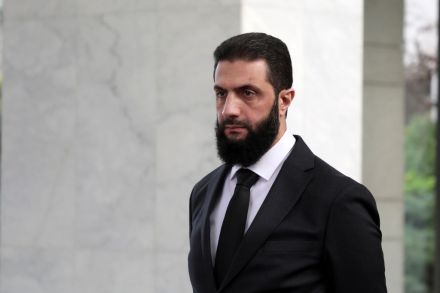
Few career arcs in modern history can be as remarkable as that of Ahmed Hussein al-Sharaa – or Abu Mohammed al-Jolani, to give him the nom de guerre under which he fought American troops in Iraq back when he was a firebrand member of al-Qaeda. Twenty years ago al-Sharaa was languishing in a US military prison in Baghdad, held on suspicion of terrorism. Today, as Syria’s new interim President, he shook hands with Donald Trump posing for photo-calls alongside the de-facto ruler of Saudi Arabia Mohammad bin Salman. Trump was evidently impressed by al-Sharaa, who has swapped the turban and dusty fatigues that he habitually wore before taking Damascus by storm last winter for a plain blue suit and purple tie. “He’s a young attractive guy.

al-sharaa

Letters: The romantic route to cheap flights

Blood on our hands Sir: Paul Wood asks if anyone will be punished for the bloodbath in Syria (‘Massacre of the innocents’, 15 March). But where does one start? What we have seen most recently are the dreadful consequences – as also in Iraq and Afghanistan – of selfish western meddling in the Middle East for our own ends. I was on sabbatical in Syria at the end of 2010 interviewing Syrians of all religions and political persuasions. Well over 90 per cent and especially women saw the Assads as the only plausible bulwark against an Islamist theocratic nightmare. There was freedom of religion, freedom of association, the freedom for women to choose what to wear and be educated to university level.

Massacre of the innocents, saving endangered languages & Gen Z’s ‘Boom Boom’ aesthetic

37 min listen

This week: sectarian persecution returnsPaul Wood, Colin Freeman and Father Benedict Kiely write in the magazine this week about the religious persecution that minorities are facing across the world from Syria to the Congo. In Syria, there have been reports of massacres with hundreds of civilians from the Alawite Muslim minority targeted, in part because of their association with the fallen Assad regime. Reports suggest that the groups responsible are linked to the new Syrian president Ahmed al-Sharaa (formerly known as Abu Mohammed al-Jolani). For some, the true face of the country’s new masters has been revealed. Whether the guilty men are punished will tell us what kind of country Syria has become since the fall of Assad’s dictatorship.

Massacre of the innocents: the return of sectarian persecution in Syria

No one covers up their war crimes any more. They film them, celebrate them, post them on X. So we have videos from Syria this week showing Islamist fighters making terrified Alawite men get on their hands and knees and howl like dogs. In one video, the victims crawl along a street spattered with blood and gore as a bearded gunman clubs them with a wooden pole. The camera comes to rest on half a dozen bodies. Then we hear rifle shots. There has been a massacre of Alawites in Syria this past week: hundreds of civilians have been killed. The killings were perpetrated by the armed groups that put Syria’s new President, Ahmed al-Sharaa –formerly the militia leader known as Abu Mohammed al-Jolani – in power. For some, the true face of the country’s new rulers has been revealed.

The West must not look away from what’s happening in Syria

Tony Blair’s former spin doctor Alastair Campbell has many talents. But his understanding of Middle Eastern politics leaves much to be desired. Last month he welcomed Syria’s new leader Ahmed al-Sharaa on to the podcast he hosts with the former Conservative minister Rory Stewart. Reflecting on the encounter afterwards in a newspaper column, Campbell was anxious to give the ‘gently smiling President’ the benefit of the doubt. He was ‘definitely saying a lot of the right things’. There was, Campbell acknowledged – ‘one big blot on the Syrian landscape’ – the ubiquity of men smoking. But otherwise everything seemed in order. It was the case, he said, that ‘virtually everyone you meet says that they feel happier than they did under [Bashar al] Assad’.

Save Syria’s Christians

David Lammy, the Foreign Secretary, and Marco Rubio, US Secretary of State, had rather tellingly different responses to the latest wave of violence in Syria. Lammy deplored the ‘horrific violence’ but failed to address where that violence was coming from. Rubio, by contrast, stated clearly that ‘radical Islamist terrorists’ were targeting minorities in Syria, including Alawites, Christians and Druze. Rubio is right. While precise numbers are difficult to ascertain, it appears that, according to a source verified by the Hungarian government’s State Secretariat for the Aid of Persecuted Christians – the only one in the world – up to 3,000 people may have been killed, the majority of them innocent Alawite civilians. A number of Christians have also been killed.

Are Syrian Christians who speak the language of Jesus about to disappear after 2,000 years?

26 min listen

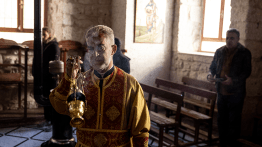
There has been a Christian community in Syria since the first century AD. But it is shrinking fast and faces terrifying new threats as the country’s government, following the overthrow of President Assad, forges alliances with hardline Muslims including foreign jihadists – Uighurs from China, Uzbeks from Central Asia, Chechens from Russia, Afghans and Pakistanis. Mgr Michael Nazir-Ali, the former Anglican Bishop of Rochester who is now a Catholic priest of the Ordinariate, has written a heartbreaking piece for The Spectator about the Christians of Maaloula in southwest Syria. It’s one of the last remaining communities to speak Syriac, a dialect of Aramaic, the language of Jesus Christ.

Tulsi Gabbard will bring sunlight to a rotten system

From our US edition

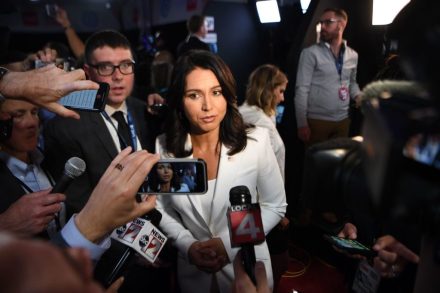
First, a disclaimer: Tulsi and I are good friends. Despite our political differences, we’ve forged a deep bond over the years.  At our first lunch together, we got kicked out of the restaurant because we couldn’t stop talking. Today, I’m proud that she and her husband Abraham are godparents to my eldest daughter, Liberty. It’s because I know Tulsi so well that I understand why she would make an excellent director of national intelligence. Americans have understandably lost trust in our intelligence services. In choosing Lieutenant Colonel Gabbard, President Trump has picked a highly-qualified, reform-minded leader who can regain that trust.

tulsi gabbard

Don’t judge Syria’s new rulers yet

Some people went mad when Ahmed al-Sharaa (you might know him as Abu Mohammad al-Jolani, the commander of Hayat Tahrir al-Sham and the now de facto leader of Syria) refrained from shaking the hand of Annalena Baerbock, the foreign minister of Germany, when she visited Damascus this week. Not shaking hands with a woman! Al-Sharaa is the same jihadist he always was! Another story which fixates westerners: the bars in Damascus – the centrepieces of the Assad regime’s propaganda tours, where journalists and vloggers were made pleasantly drunk within earshot of concentration camps – do they still serve their favourite poison?

We all knew Syria was hell

The liberation of Syria’s notorious Sednaya jail close to Damascus a week ago has resulted in a wave of belated outrage in much western media toward the former dictator and his methods. For Syria watchers, there is something rather surreal about this late discovery of the methods of Assad’s regime. Some of the precise numbers remain disputed. There is, as yet, no independent verification of the statement by Mouaz Mustafa, head of the Syrian Emergency Task Force, that the mass grave at al-Qutayfah contains the remains of at least 100,000 people. The task of piecing together the precise dimensions of the Assad regime’s crimes against the Syrian people, and crucially the names and whereabouts of the victims, is only now beginning.