Syria

Stephen Miller: here comes the Afghan refugee crisis

From our US edition

The rapid takeover of Afghanistan by the Taliban has potentially dire consequences for Afghan women and children. The Islamist group was able to commandeer sophisticated US weaponry and other military equipment during our poorly-planned troop withdrawal. And so Americans have been primed to cheer the arrival of planes carrying thousands of Afghan refugees, who we are told would otherwise be executed by the Taliban, into the United States. But what are the long-term consequences of rapid refugee resettlement? Could this present a risk to national security? How will this effect Americans economically or culturally?

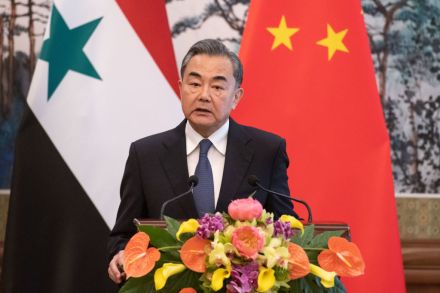
Former White House Senior Advisor Stephen Miller (Getty Images)

China’s Belt and Road to Damascus

There is, it seems, no regime too odious to be a partner of China. Being repressive and corrupt have long been useful assets for gaining the friendship of Beijing, but its recent embrace of the ‘Butcher of Damascus’, Bashar al-Assad, carries reputational and other risks for China – even when it doesn’t have much of a reputation to lose. China has offered Syria membership of its Belt and Road Initiative (BRI), and with it the promise of munificent investment in Syrian roads, railways, ports, telecoms, hotels and much more. The offer came this week from China’s foreign minister Wang Yi, who was the first high-profile guest in Damascus after Bashar al-Assad’s re-election as president.

A Damascene moment in London: Imad’s Syrian Kitchen reviewed

Imad’s Syrian Kitchen is an eyrie off Carnaby Street, a once-famous road which seems to exist nowadays to sell trainers to tourists who have fallen, as if by wormhole, out of the Liberty homeware department with its pathological dependence on florals. No matter. Nearby, in Kingly Court, which is like Covent Garden before it fell to Dior and Apple, more interesting things happen: the sort of things that London, so sunken, needs. Kingly Court is charming because it invokes an ancient coaching inn — London was once filled with them — and it is, due to the presence of independent eating houses, still palpably bright, pleasing and alive. The restaurant is likewise cheerful: wooden floors; pale walls; blue windowsills; blue tiles; a beamed ceiling; photographs of Damascus.

Looks lovely if nothing else: Craig and Bruno’s Great British Road Trips reviewed

To its huge credit, ITV has managed to find perhaps the last two television celebrities who’ve never before been filmed travelling around Britain while exchanging light banter and using the word ‘iconic’ a lot. In Craig and Bruno’s Great British Road Trips, the Strictly judges are driving a Union flag-bedecked Mini through such telegenic staples of heart-warming TV dramas as the Lake District, the Yorkshire Dales and the Scottish Highlands. For the opening episode, the choice fell on the Cornish coast, which certainly helped the programme achieve its primary aim of looking lovely. But this, as it transpired, was just as well — because for a fair amount of the time, not much else happened.

Can Joe Biden get real about Russia?

From our US edition

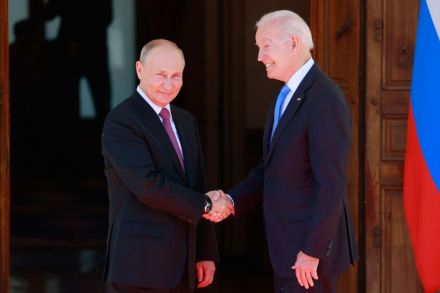
President Biden’s description of President Putin as a 'worthy adversary’, in advance of their summit today, was a sensible move. On the one hand, it restores the basic civility necessary for any diplomatic exchange, after Biden’s unfortunate 'killer’ remark. After all, the conduct of international relations by a superpower is a serious matter — and part of Biden’s own international prestige lies in his restoration of dignity to the US presidency after the flamboyant excesses of Trump.

putin russia

Adios, AUMF

From our US edition

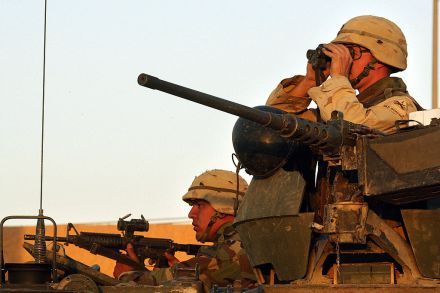
Saddam Hussein was executed at the gallows in 2006 — but the Authorization for the Use of Force used by the US military to topple his regime in Iraq is still alive and kicking, a legacy the Pentagon has been loath to bury along with that war. That legislation, passed in October ahead of the March 2003 invasion of Baghdad, authorized then-president George W. Bush to use the Armed Forces of the United States ‘as he determines to be necessary and appropriate’ in order to ‘defend the national security of the United States against the continuing threat posed by Iraq; and enforce all relevant United Nations Security Council Resolutions regarding Iraq’.

aumf

Isis’s weakness is now its strength

As coronavirus swept the globe a year ago, Isis began issuing pronouncements. ‘God, by his will, sent a punishment to the tyrants of this time and their followers,’ said one such; ‘we are pleased about this punishment from God for you.’ With the world on lockdown, Isis followers were urged not to sit around at home but to ‘raid the places’ of the enemies of God. ‘Don’t let a single day pass without making their lives awful.’ The virus might have begun as God’s punishment to China for persecuting the Uighurs but, as one Isis video put it, the pandemic was a chance to attack Americans, Europeans, Australians and Canadians. For a moment, the jihadis toyed with the idea of sending infected volunteers to sicken the enemy.

TikTok’s fake news problem

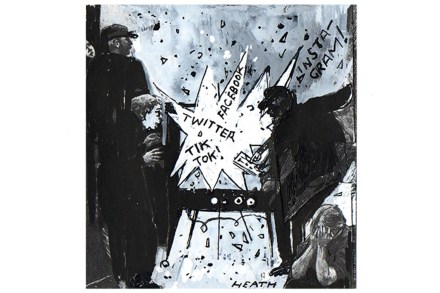
Something troubling is happening on TikTok. The video sharing app is sometimes dismissed as a place where young people go to while away the hours watching banal videos. But TikTok is more than just a quirky hobby for younger generations: it's where many come to get their news. What's more, during Covid it's become a window into a world that is effectively shut. This makes the spread of fake news and misinformation on the app something that should alarm us all. This week, a TikTok video claiming that the United States was responsible for reducing Syria to rubble spread like wildfire around the app.

We shouldn’t forget the horrific crimes of Isis returnees

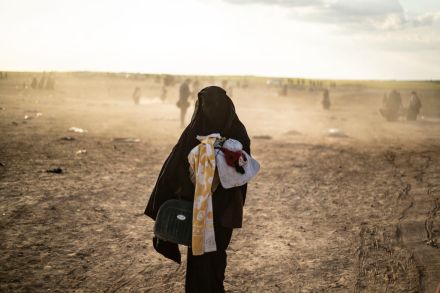
Summer 2015. A five-year-old girl is chained up and left outside in the desert sun in Fallujah, Iraq – a punishment for wetting the bed while feeling unwell. The little girl slowly died of thirst in temperatures exceeding 50 degrees Celsius. Condemned to the same inhumane punishment was the girl's mother, made to endure the additional and unimaginable horror of helplessly watching the life drain from her daughter's tiny body. The mother and child were members of Iraq’s Yazidi religious minority. Their captors, members of Islamic State (IS), are said to be German and Iraqi. At the time, Islamic State recruits felt invincible. They taunted the West and ruled over civilians in their territory with cruelty and terror.

The twisted logic of Shamima Begum’s defenders

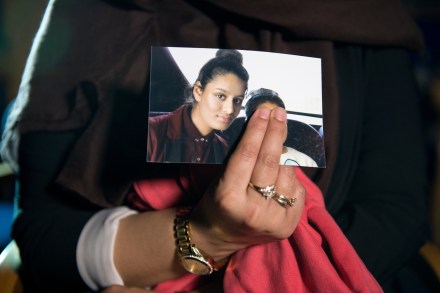
Shamima Begum is back in the news. Firstly because she’s had a makeover. She can be seen on the front page of today’s Telegraph sporting long, flowing locks, trendy shades and Western clothing. Is Shamima the Islamist now aspiring to be Shamima the celeb? Perhaps she’s angling for her own reality TV show: The Real Housewives of Raqqa. But the second reason she’s in the news is because the British-Indian sculptor Anish Kapoor has expressed sympathy for her. He says she’s a victim of British racism. I really wish Sir Anish would stick to what he’s (very) good at — public art installations — and leave the Shamima business alone. Because his comments are risible.

Back to tit-for-tat in the Middle East

From our US edition

Plus ça change, plus c'est la même chose. President Biden may have promised that ‘America is back’, but the United States’ decades-long shadow war with Iran never left. Last month’s reciprocal strikes in Iraq and Syria, and a further 10 rockets launched at a US base in Anbar Province last week, were notable only for their normalcy. Far from being Biden’s ‘Hour One Crisis’, this kind of geopolitical hair-pulling via high explosives is all too normal in the post-Iraq War, post-Arab Spring hash of the Middle East. Two American contractors and at least one Iraqi Shia militiaman are now dead. More casualties are likely to come in the weeks ahead. This first Biden counter-strike was no more than violent messaging, perhaps primarily to a domestic audience.

iran tit-for-tat

Shamima Begum is not a victim

A dark cloud hangs over the Al Hol Camp where Shamima Begum is being held in North-Eastern Syria. She is said to be ‘angry and upset’ at the decision of the Supreme Court to not allow her to return to the UK to contest the loss of her citizenship. This bleak picture stands in stark contrast to the feelings of the vast majority of the British public that will be raising a toast to the Supreme Court and thanking them for putting their interests ahead of an ISIS terrorist.  Ever since Shamima Begum was ‘discovered’ in a Syrian Democratic Force holding camp by the Times Journalist Anthony Lloyd, the UK has been gripped by the drama surrounding the 21 year old woman. In a very short amount of time, two competing narratives were formed by the public.

Macer Gifford: My fight against Isis

In mid 2015, Macer Gifford, the City trader who went to Syria to fight Isis, got an unexpected phone call. He was in London for a break and busy doing media interviews as the unofficial spokesman for the Kurdish YPG militia. The caller, though, wasn’t just another hack after a quote. Instead, it was a lawyer whose client was on the ‘other side’. Tasnime Akunjee said he was working for the family of Shamima Begum, the teenager from Bethnal Green who had run away to join Isis. ‘He said they were looking at trying to get her out of Raqqa,’ remembers Gifford. ‘He asked if there was any way the YPG could pick her up, so that she could then be brought back to the UK.’ Was she keen to return, asked Gifford?

Western states have failed the Palestinian ‘right of return’

From our US edition

The issue of Palestinian refugees, and the Arab and Palestinian demand that those refugees be allowed to exercise what they call a ‘right of return’, attracts scant attention. Neither Israel’s leaders nor its public, and certainly not the international community, spend very much time discussing it. This is in stark contrast to other core issues. For example, there is endless discussion of the settlements and the military occupation of the territories, which are indeed important; but the Palestinian refugee issue has barely been subjected to any real strategic discussion. There have been no serious attempts at a resolution, or even efforts to place it on the agenda.

palestinian

Oil on troubled waters: the US-Saudi alliance is crumbling

Donald Trump said in October 2018 that the Saudi royal family ‘wouldn’t last two weeks’ without American military support. Last week, on the back of the collapse of the US fracking industry, he finally acted on his long-standing anti--Saudi instincts. He ordered the immediate withdrawal of two patriot air defence batteries, sent to defend the kingdom’s oil infrastructure in September after a missile attack blamed on the Iranians. He also recalled hundreds of US troops and said the US Navy presence in the Persian Gulf would be scaled back. Leaving with the ships were dozens of US fighter jets, which would have been crucial for defending against any full-scale Iranian assault.

The art of the hermit

Late in the afternoon on Valentine’s Day, I walked through an almost empty Uffizi. Coronavirus was then a Wuhan phenomenon. Our temperatures had been taken at the airport, but there were no restrictions on travel and those wearing masks looked eccentric. I congratulated myself on finding Florence so quiet. Off-season, I thought smugly. That’s the way to do it. Heaven knows it’s empty now. The painting that caught my eye on that distant-seeming visit was a long, low cassone-shaped painting on the theme of the Thebaid attributed to Fra Angelico (c.1420). The Thebaid is a collection of texts telling of the saints who in the first centuries of Christianity retreated to the barren lands around the Egyptian city of Thebes.

After the Americans

From our US edition

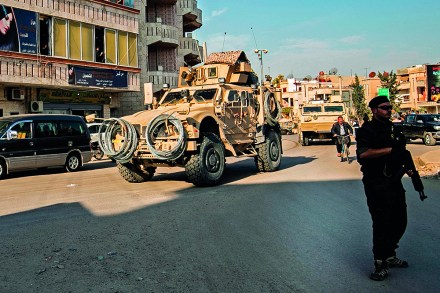
This article is in The Spectator’s January 2020 US edition. Subscribe here.Malkef, northern Syria I’m sitting under an olive tree about a mile from the front with ‘Agir’, a Kurdish soldier from the Syrian Democratic Forces (SDF). The sharp cracks and dull rumbles of fighting make their way to us over dusty farmland; the shade protects us from the scorching mid-morning sun and omnipresent Turkish drones. Agir tells me how the Turkish-backed Free Syrian Army (FSA) can’t fight — at least, compared with the Islamic State (Isis). Agir fought Isis with American backing for years in Syria. Sometimes, he says, Isis soldiers would tie foam cushioning to their feet, sneak up to your position in the moonlight and slit your throat.

americans syria

Hungary isn’t afraid to call ‘Christian persecution’ what it is

From our US edition

Following Donald Trump’s election, there was hope that the US would aid Christian communities overseas, especially in Iraq where the population of Christians was reduced by over 80 percent since the US invasion. The Obama administration was less receptive to a focus on persecuted Christians, often opting to use euphemistic terms. Christian persecution became known more as a series of sporadic, unrelated incidents rather than a phenomena. The US has invested significantly in helping rebuild Iraq, but the effectiveness of our aid has been limited, and some people on the ground in Iraq claim they never saw the entirety of the aid themselves.

hungary christians

In defense of journalism

From our US edition

It was lucky for the New York Times and the Washington Post that they did not uncover the Pentagon Papers or the Watergate Scandal in this unhappy age. They would have found themselves mercilessly beset by ‘citizen journalists’ denouncing them as tools of the Soviet Kremlin or the Red Chinese. Perhaps the same self-appointed guardians of rectitude would also have gone through the past writings and sayings of the journalists involved, and found they were insufficiently loyal to the fashionable opinions of the time. It is a form of McCarthyism. And if you scoff at that, you have to ask yourself honestly if you would have recognized Joe McCarthy for what he was in his own time, or stood up to him, as so few actually did?

syria journalism

Trump’s Syria missile strike was a scandal

From our US edition

This article is in The Spectator’s January 2020 US edition. Subscribe here. I suspect the Third World War will begin with a claimed atrocity — probably the use of poison gas by a ‘regime’ against ‘its own people’. Such things are now the favorite way to make wars where there was peace. Border violations went out of fashion years ago. Invasions are illegal under the UN Charter. There are no Archdukes left to assassinate. ‘Weapons of Mass Destruction’ will forever evoke hollow laughter. But democracy needs a popular pretext for war, and righteous mass outrage about the inhumanity of the enemy is almost invariably effective. This is why it is rather important that the people we trust to verify such claims are honest and trustworthy. For who will verify the verifiers?

syria