Surrealism

J.G. Ballard’s surreal fiction continues to resonate through the century

In 1951, when J.G. Ballard was 20, Pandora and the Flying Dutchman premiered in London. Directed by Albert Lewin and starring James Mason, Ava Gardner and a solid cast of English actors, it was filmed on the Catalan coast by Jack Cardiff in lush MGM colour. Man Ray contributed designs based on the work of de Chirico. Set in an Anglo-Spanish colony, it featured a Surrealist painter, a racing car driver and a toreador. All love the mysterious Pandora, who is unable to love anyone until the Dutchman drops anchor. To prove his passion for Pandora one suitor takes poison while another pushes his beloved car over a cliff.

Defiantly creative to the end: the transgressive Dorothea Tanning

I received this book for review on the same day that Dorothea Tanning was making headlines in the auction world, breaking records with the sale at Christie’s of a tiny but key early work for more than £4 million. Her prices have risen an astonishing sevenfold in the past year, as collectors cotton on to her significance as a Surrealist; and while she may still be trailing on Leonora Carrington’s coat-tails, she looks to be steadily catching up.   Born in America to Swedish parents, Tanning was the very model of a fiercely independent artist, and her works are singular and disquieting like few others. She was largely self-taught as a painter and developed a virtuoso technique.

The art of Schiaparelli

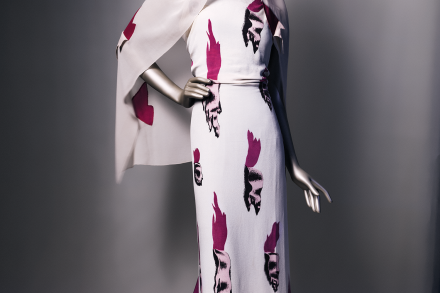
It’s a great shame that Elsa Schiaparelli is less widely known than her rival Chanel. Perhaps that’s down to how difficult her name is to pronounce. Is it ‘shap’, ‘skap’ or ‘skyap’? Tristram Hunt, director of the V&A, answers with a quip from Schiaparelli herself: ‘No one knows how to say it, but everyone knows what it means.’ The V&A’s new exhibition Schiaparelli: Fashion Becomes Art traces the web of influences around one of the great couture houses of the 20th century. Like Coco Chanel (I hate to compare them), Elsa Schiaparelli created clothes for the modern, independent woman – it is now conventional to say so but they ‘pushed boundaries’.

A satirical masterpiece: Blinding, by Mircea Cartarescu, reviewed

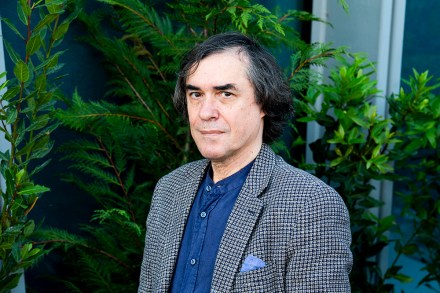
Before the 1989 revolution, Romania had seen nearly a century of polarisation – a fascist regime swiftly replaced by a communist one. In Blinding, Mircea Cartarescu’s first instalment of an ambitious, surrealist trilogy, that duality, along with other antagonisms central to existence, is represented by the motif of a butterfly. The novel was originally published in Romanian in 1996, and the title refers to the epiphany which, it’s suggested, can be achieved if life’s opposites are reconciled. We first meet the narrator, twentysomething Mircea, languishing in a squalid studio flat in Bucharest, his rapidly industrialising home city. He is writing his own ‘endless book’, his aim being absolute self-knowledge.

Rauschenberg is a bore

From our US edition

Pity the security guard at the Guggenheim who must patrol the gallery in which Robert Rauschenberg: Life Can’t Be Stopped is installed. Mounted in commemoration of the artist’s centennial – Rauschenberg was born in Port Arthur, Texas, in October 1925 – Life Can’t Be Stopped includes “Revolver II” (1967), a set of plexiglass discs with images overlaid. A cord leads from the back of this contraption to a pedestal on which there is a control panel – a set of buttons placed in proximity to the viewer. These switches set the plexiglass discs in motion, and they beg to be pushed. On my trip to the museum, visitor after visitor was shushed away from “Revolver II” with the age-old plaint: “Please don’t touch the art.

man ray

Man Ray is alluring in the way a psychopath is

From our US edition

Down to his chosen name, Man Ray (born Emmanuel Radnitzky in Philadelphia in 1890) worked hard to squash anything about him you might call human. At least that’s what is suggested by the Met’s exhibition Man Ray: When Objects Dream. The show spans much of his career – he was associated with surrealism and dada, held a day job as a commercial photographer and experimented with almost every medium imaginable – but coheres around his so-called rayographs, also known, in less egotistical fashion, as photograms. Many will know this medium from elementary school: place objects on top of a light-sensitive sheet and expose them to light to yield white silhouettes against a dark background.

The inspiration for David Lynch’s mysterious, disquieting world

‘He was the true Willy Wonka of film-making – I feel like I won the golden ticket getting the chance to work with him!’ The speaker is Lara Flynn Boyle, who played Donna Hayward, the friend of the murdered Laura Palmer in David Lynch’s small-screen masterpiece Twin Peaks. That comparison, cited in John Higgs’s terrifically lucid and compact study of the filmmaker, who died in January, aged 78, is rather brilliant.

Sixties Surreal at the Whitney is a bad trip

From our US edition

The Whitney’s Sixties Surreal is not about Surrealism. I spent about a week trying to figure out what it might actually be about, before I gave up. The show claims to seek to answer a simple question: what if Surrealism, rather than Cubism, had been the dominant thread in modern American art? This is funny to me, as Dalí’s melting clocks are far better known in America than any Cubist painting. Regardless, the museum never provides an answer. Instead, the Whitney jumps right to its agenda: reviving what it deems an overlooked thread of countercultural art. Ah, yes, the woefully neglected subject of… counterculture in the 1960s.

sixties surreal

Magnetic and manipulative – the enigma of Gala Dali

Salvador Dali’s wife Gala was born Elena Ivanova Diakonova in 1894 in Kazan, on the banks of the Volga. Her father was an abusive alcoholic who vanished when she was ten. Her mother, a midwife, moved the family to Moscow where Elena attended an exclusive school. But in 1913 she started coughing, so was sent to a Swiss sanatorium, Clavadel. There she fell in love with a fellow patient, Paul Éluard, who had just published his Premiers poèmes. They got engaged but had to wait until he turned 21 (she was 22) to marry – by which time she had adopted the name Gala. They had a daughter, Cécile, but they left her with his parents. Éluard was one of the Dadaist circle around André Breton. The big event in spring 1921 was the debut show of a German artist, Max Ernst.

The liberating, invigorating music of Pierre Boulez

‘When you’re not offensive in life, you obtain absolutely nothing,’ declares a twinkly-eyed Pierre Boulez in one of the archive films that the Barbican were screening to celebrate the composer’s centenary. What a joy to be reminded of the young Boulez – the unashamed elitist, the unbeatable snob. Not even allies such as Schoenberg (too trad) and Messiaen (‘vulgar’) were safe from his tongue. To Boulez, pop music wasn’t good or bad; it didn’t exist. Ditto his own life. ‘I will be the first composer without a biography’, he proclaimed. Forget that Boulez was entangled in a love triangle with Camus’s mistress and for most of his time on earth screwing his valet, Hans… The music was everything.

An exhilarating, uneven survey of an outstandingly eccentric British surrealist

Ithell Colquhoun was always a bit of a mystery surrealist. Her greatest hit is the unsettling, dream-like ‘Scylla’ (1938), a painting of two towering cliffs, which could equally be thighs in the bath. The prow of Odysseus’s Argo peeps through them. The pubic hair is seaweed, and there are shells, but, as far as discernible, no crabs. The point of view of the painting is that of the titular monster Scylla, lying in wait. It’s witty and disturbing; mythic and domestic. A British surrealist high point, frequently anthologised. This aside, her name was relegated to lists.

The triumph of surrealism

When Max Ernst was asked by an American artist to define surrealism at a New York gathering of exiles in the early 1940s, he pointed across the room at André Breton and said: ‘That is surrealism.’ Even today it can seem as if no other answer is available, so tenacious was his grip. A former student of neurology and psychiatry, with no qualifications other than an instinct for the coming thing (‘an astute detector of the unwonted in all its forms’, as he later described his fellow conspirator Louis Aragon), Breton encountered the early writings of Freud as a medical orderly on a trauma ward, during the first world war, and immediately recognised the significance of his work.

This UFO testimony had me hooked

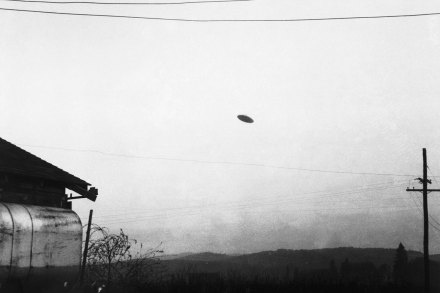
In October 1964, a young man was driving to a dance in Hamburg, Pennsylvania, when his radio began to pick up a strange frequency. At first he thought it was just tuning in to a local channel, but then voices came through discussing some kind of nuclear war – and issuing bomb reports. Recalling the incident decades later, the driver described the simultaneous appearance of a star overhead followed by the sudden realisation that he could see through the floor of his car. ‘I hadn’t done any dope, I wasn’t doing any beer,’ he adds so casually that you feel inclined to believe him. And yet his body felt like jelly.

Why has Leonora Carrington still not had a big exhibition?

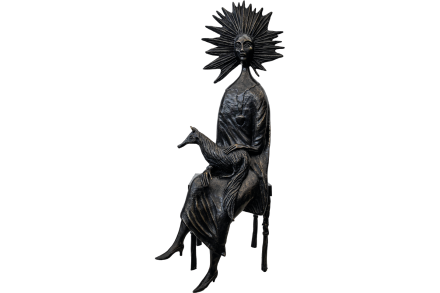
‘It had nothing to endow it with the title of studio at all,’ was Edward James’s first impression of Leonora Carrington’s Mexico City workspace in 1946. ‘The place was combined kitchen, nursery, bedroom, kennel and junk store. The disorder was apocalyptic: the appurtenances of the poorest. My hopes and expectations began to swell.’ Carrington blended Egpytian, Mayan, Mesopotamian and Celtic legends learned at her nanny’s knee Over six decades in the creative chaos of this house on Calle Chihuahua, Carrington would paint some of her best-known works and write her quirky serio-comic novella The Hearing Trumpet, which is narrated by a 92-year-old woman.

This British surrealist is a revelation

When the 15-year-old Maggi Hambling arrived at Benton End in Hadleigh, Suffolk – home of the East Anglian School of Painting and Drawing – with two paintings to show the school’s founders, Cedric Morris and Arthur Lett-Haines, she was ushered into the dining room where Morris was having dinner. He made some criticisms but was very encouraging, then Lett-Haines came in and made the opposite criticisms but was encouraging too. As teachers, both believed in bringing out a student’s native talent – but as artists and characters, says Hambling: ‘They were polar opposites.

How a market town in Hampshire shaped Peggy Guggenheim

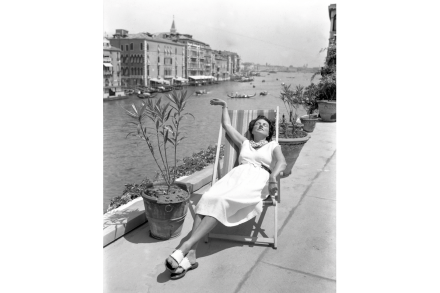
On 24 April 1937 Marguerite Guggenheim – known as Peggy – of Yew Tree Cottage, Hurst was booked by a certain PC Dore for driving an unlicensed vehicle through nearby Petersfield. What was the founder of the famous Venice museum doing in a market town in Hampshire? It’s a long story, vividly told in an exhibition marking the 25th anniversary of the opening of Petersfield Museum on the site of the former police station and courthouse where she paid her £1 fine. ‘Peggy,’ said a friend, ‘is absolutely revolting about sex. Delicacy is unknown to her’ In the 1930s the Jewish-American heiress, who had lost her father Benjamin on the Titanic, was rattling around Europe with a fast crowd of writers and artists.

‘I’m a hypocrite and a total fraud’ – the confessions of a French Surrealist poet

Michel Leiris (1901-90) was one of those intellectual adventurers who are the astonishment of French literature in the 20th century. Their achilles’ heel is that most were communists, in a few cases Nazis; and nothing kills the life of the mind more thoroughly than preaching. Their saving grace is that many were eccentric characters, and their autobiographical work can often be their most luminous legacy. Among Leiris’s subjects are his dogs, his ideal hotel, his hatred of Wagner, his Anglophile snobbery and his tailor Because they were anti-form, the ideal prose vehicles became ‘aphorism’ or ‘fleuve’. The most brilliant of the French aphorists, Emile Cioran (though he was Romanian), exclaimed in an interview ‘Expression – that’s the cure!

The surreal life of Leonora Carrington

From our US edition

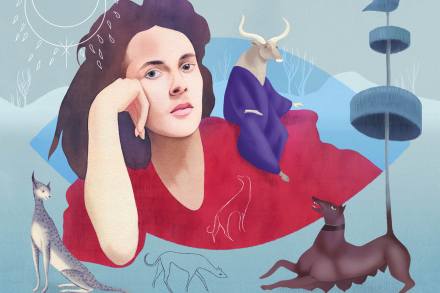
"It’s the belief that nothing is ordinary, that everything in life is extraordinary. And being old is no more, no less, extraordinary than being young.” When the artist and writer Leonora Carrington was asked in 2006 what “Surrealism” meant to her, this was her reply. It was a remarkably frank statement from an artist who had, at other points in her career, declared that she “was never a Surrealist,” even memorably asserting that the Surrealist link between women (the femme-enfant) and the muse was “bullshit.” Perhaps it owes its frankness to the interviewer: sitting across the kitchen in Carrington’s house in Mexico City was her cousin, the journalist and author Joanna Moorhead.

carrington

Restless visionary: Man Ray was always ahead of his time

In the summer of 1940, after almost 20 years in Paris, Man Ray fled the Nazis for the country of his birth. Disliking New York, where he’d spent his youth, he made for the West Coast. He hoped to get as far as Tahiti or Hawaii. But his trip came to an end when, braced by the space, lifted by the lack of skyscrapers (‘made me feel taller’) and swept off his feet by a dancing girl (the latest in a long line of hoofers for whom he’d have the hots), he settled in Los Angeles. Though he would live there for more than decade, he never really liked the place. Nonetheless, he was far more productive in America than in Europe.

The life of René Magritte was even more surprising than his art

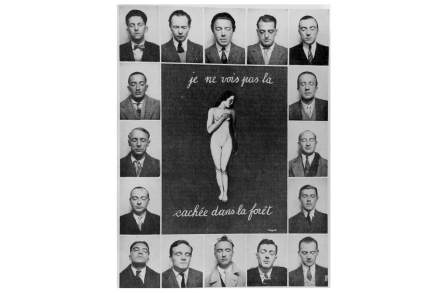
We live at a time in which we could (until recently) travel without difficulty and take for granted access to cultural treasures. It’s easy to forget that this wasn’t always the case, and minds were shaped by what possibilities were available. The Belgian painter René Magritte is a good example of huge talent pushed through a very narrow opening. His art has now become an exemplar of the striking image that commerce can feature. Advertising regularly uses his paradoxical visual combinations of faces replaced by apples, of skies in the shape of doves, of roses filling rooms and, supremely, the conundrum of the pipe demurely labelled ‘Ceci n’est pas une pipe’.