Stalin

Designing the swimming car, the Doodlebug and the Panzer tank was all in a day’s work for Ferdinand Porsche

The aggressive character of the famous German sports car, in a sort of sympathetic magic, often transfers itself to owner-drivers. The joke goes: ‘When you get into a Porsche, you feel you want to invade Poland.’ In this fascinating and meticulously researched book, Karl Ludvigsen investigates the genetic spiral that gave Porsche cars the character of weaponry. All German manufacturers were forced to supply the Third Reich. The BMW-sponsored London Olympics 2012 were held on a site devastated by Luftwaffe planes powered by its engines.

Unreliable evidence

I hadn’t really thought much about pixels before, despite spending a large portion of my day looking at them. After all, a pixel is just a tiny unit in a digital image, and we all tend to look at the bigger picture. But how about this: this humble unit has now become a key feature of drone warfare. Drone-fired missiles have reportedly been developed that can burrow through targeted buildings, and leave a hole that appears smaller than a pixel on publicly available satellite images. This means that drone strikes are often invisible to groups who try to monitor attacks, such as NGOs or the UN.

What does it really mean to have a tyrannical father?

What was it like, asks Jay Nordlinger, to have Mao as your father, or Pol Pot, or Papa Doc? The answer is that while all happy families are alike, the children of monsters are unhappy in their own way. Some dictatorial offspring are fairly normal while others are psychos. Nicu Ceausescu, son of the rulers of Romania, was from the age of 14 a figure of ‘comic-book evil’ whose hobbies included raping women. His brother, Valentin, is bookish and quiet, has a close circle of decent friends and works at the Institute of Atomic Physics outside Bucharest. For Svetlana Alliluyeva, being Stalin’s daughter was like being, as she put it, ‘already dead’.

Lady killer

‘Kiss me, Sergei! Kiss me hard! Kiss me until the icons fall and split!’ sings Katerina Ismailova, adulterous antiheroine of Lady Macbeth of Mtsensk. Stalin was not amused by Shostakovich’s bleak black comedy but our culture would be poorer without bored wives like Katerina. Perhaps all that Emma Bovary, Anna Karenina and Laura Jesson needed was a proper kiss — the sort that mutes the white noise of disappointment. But a kiss is never enough in these cautionary tales of bourgeois bed-hopping. One thing leads to another and before you know it you’re knocking back the arsenic, throwing yourself in front of a train or back home listening to the wireless with poor dear Fred, a man whose kisses were never that hot.

Dick at his trickiest

In the more than 40 years since Richard Nixon resigned as president — disgraced as much by his inveterate lying as by his actual crimes related to Watergate — history has been relatively kind to him. Compared with Ronald Reagan, Bill Clinton and George W. Bush, Nixon in retrospect can seem statesmanlike, thoughtful and liberal-minded. He established diplomatic relations with communist China, took the US off the gold standard, negotiated the wind-down of the Vietnam war, and created the Environmental Protection Agency — accomplishments that generally prompt even Nixon-haters to pause before they condemn Tricky Dick to perdition. But now comes Joan Brady with a bracing reminder of what indeed was so hateful, so villainous about Nixon and his political ascent.

The continent in crisis

Sir Ian Kershaw won his knight’s spurs as a historian with his much acclaimed two-volume biography of Hitler, Hubris and Nemesis. He is now attempting to repeat the feat with a two-volume history of modern Europe, of which this is the opening shot.Inevitably, the figure of the Führer once again marches across Kershaw’s pages as they chronicle the years dominated by Germany’s malign master. First the Great War that gave Hitler his chance to escape obscurity, and then the greater one he launched himself. Opening with the continent’s catastrophic slide into generalised conflict in 1914, Kershaw apportions blame or the disaster more or less equally to all the combatant nations.

The powers that were

Ivan Maisky was the Russian ambassador in London from 1932 to 1943, and his knowledge of London, and affection for it, went back to his time there as a political exile from 1912 to 1917. Even after the multitude of books published on the subject, these diaries throw new light from a fresh angle on the lead-up to 1939, and the subsequent course of the war. Maisky’s commitment to communism was total. On 4 November 1934 he writes: Today, any man, even an enemy, can see that Lenin is an historical Mont Blanc… a radiant guiding peak in the thousand-year evolution of humanity, while Gandhi is just a cardboard mountain who shone with a dubious light for some ten years before disintegrating.

The Spectator’s Notes | 6 August 2015

As someone who has rarely written a sentence in praise of the late Sir Edward Heath, I hope I can escape charges of ‘cover-up’: I don’t believe the accusations against him. Even the word ‘accusations’ is an exaggeration, actually, since the story so far seems to be Chinese whispers with nothing amounting to evidence, put out by the frightened police. When this fashion for airing unsupported claims of child abuse has finally run its course, we shall be collectively ashamed of it, and people like Tom Watson MP will be seen for the McCarthys they are. (This is true, by the way, even if some of the things Mr Watson alleges turn out to be the case: the same applied to McCarthy.) One should explain the culture of the period now under scrutiny.

Does anybody still believe that the EU is a benign institution?

Ever since Margaret Thatcher U-turned in the dying days of her premiership, there has been a kind of agreement between Left and Right on what the European Union is. Most Conservatives followed the late-vintage Thatcher. They stopped regarding the EU as a free market that British business must be a part of, and started to see it as an unaccountable socialist menace that could impose left-wing labour and environmental policies on a right-wing government. As many critics have said, the Tory version of British nationalism that followed had many hypocrisies. It did not want foreigners infringing national sovereignty when they were bureaucrats in Brussels but did not seem to mind them when they were generals at Nato or economists at the WTO.

Leonid Yakobson: the greatest ballet genius you’ve never heard of

On YouTube there’s a brief dance video of a Viennese waltz so enchanting that not even Fred and Ginger in ‘Cheek to Cheek’ can outcharm it. A dandy in top hat and a captivatingly pretty girl in bonnet and white frills do ecstatic jumps and twirls in each other’s arms to the seething Rosenkavalier waltz. That it’s Soviet is almost unbelievable — still more so that it dates from the still Stalinist 1954. But this is a gem by Leonid Yakobson, a choreographer who was one of the USSR’s most arresting modern voices, yet of whom you will find rare mention in the West or Soviet ballet histories.

Why Putin is even less of a human than Stalin was

LBC likes to tell us it’s ‘Leading Britain’s Conversation’, though in the case of weekday pre-lunch presenter James O’Brien you’ll have to sit through a series of bombastic monologues from the host before any punters get a word in edgeways. O’Brien knows everything, and he doesn’t mind telling you. Still, I understand that running a talk show is no job for timid introverts who might burst into tears if callers start giving them a hard time. The trick is pretending to listen sympathetically while being ready to drop the guillotine without compunction (after all, these people aren’t your friends, they’re just statistics for the business plan).

The gripping story of the failed NKVD officer who fooled the FBI and the CIA

This is not quite another story about a man who never was. But it is about a man who certainly wasn’t what he said he was. The context is Russian intelligence operations of the 1930s, especially those of the NKVD (known later as the KGB) during the Spanish civil war. In Britain we tend to see 1930s/1940s espionage through the prism of the Cambridge spies — Philby, Burgess, Maclean, Cairncross and Blunt, the so-called Ring of Five — but, as Boris Volodarsky points out, the full picture is much wider. By 1937, he reckons, the Russians had over 100 agents and collaborators in Britain alone, with many more in other western countries. And they were ruthlessly active in Spain.

Both lyricist and agitator: the split personality of Vladimir Mayakovsky

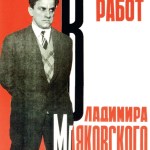
Why increase the number of suicides? Better to increase the output of ink! wrote Vladimir Mayakovsky in 1926 in response to the death of a fellow poet. Four years later, aged 36, he shot himself. What drove the successful author, popular with the public and recognised by officialdom, to suicide? Bengt Jangfeldt provides some clues to this question in his detailed, source-rich biography. Mayakovsky came to poetry as a Futurist, co-authoring the 1912 manifesto A Slap in the Face of Public Taste, which granted poets the right ‘to feel an insurmountable hatred for the language existing before their time’. That the new era demanded a new language was a principle Mayakovsky adhered to all his life.

The madness of Nazism laid bare

‘If the war is lost, then it is of no concern to me if the people perish in it.’ Bruno Ganz, who not so much portrays Hitler as becomes him in Bernd Eichinger’s 2004 film Der Untergang (Downfall), spits the Führer’s nihilist venom so convincingly that the fundamental insanity of Nazism is at once laid bare, even to his closest collaborators. The madness of Nazism is now merely Hitler himself, and when on 30 April Ganz/Hitler, entombed in the Führerbunker, shoots himself, the film’s tension is at once gone. What follows is just rats fleeing the hole; and the rest, as it were, is silence. But it was not. VE (Victory in Europe) Day was not celebrated in London until 8 May, and in Moscow on 9 May.

Hiding in Moominland: the conflicted life of Tove Jansson

Tove Jansson’s father was a sculptor specialising in war memorials to the heroes of the White Guard of the Finnish civil war. He did not like women. They were too noisy, wore large hats at the cinema and would not obey orders in wartime. Tove used to hide to spy on his all-male parties, where everybody got astoundingly drunk and attacked chairs with bayonets. ‘All men are chums who will never leave each other in the lurch,’ she concluded. ‘A chum doesn’t forgive, he just forgets — women forgive everything but never forget. Being forgiven is very unpleasant.’ Father and daughter had such a strained relationship that she sometimes had to run to the loo and vomit.

Maya Plisetskaya and Rodion Shchedrin: ‘The KGB put a microphone in our marriage bed’

‘People in the West don’t understand nothing. Even the new Russian generation don’t understand anything at all. You don’t know, and it’s better you don’t.’ Maya Plisetskaya scrutinises me with her beautiful, kohl-rimmed, 88-year-old eyes, a gaze made wary in childhood, when her father was shot as an enemy of the Soviet people, her mother jailed, and her Jewish family broken by persecution. ‘Can anyone understand how if you took a single carrot from the collective farm, just one carrot, you could get ten years’ prison? Who could understand that?

The threat from Russia’s spies has only increased since the fall of Communism

‘No, we must go our own way,’ said Lenin.  The whole world knows him as Vladimir, while he was in fact Nikolai. ‘Nikolai Lenin’ was the party alias of Vladimir Ilyich Ulianov, a terrorist leader and psychopath whose ideas changed the history of the greater part of the 20th century. This era ended on 26 December 1991 with the collapse of the 74-year-old Soviet Union, founded by Lenin, who seven years after the Bolshevik revolution died of syphilis, only to be succeeded by Stalin. ‘Stalin’ was also an alias. The Soviet dictator’s real name was Ioseb Vissarionovich Jugashvili, born into the family of a Georgian cobbler. His education, which he never finished, was limited to a theological seminary.

Archive interview: Alexander Litvinenko on ice picks, radioactive thallium and Putin’s assassins

In the 25 November 2006 edition of The Spectator, Neil Barnett recalled his encounters with the poisoned spy Alexander Litvinenko. Two days before the magazine went to press, Litvinenko died from radiation poisoning. As Theresa May reopens the investigation into his death, we are republishing Barnett's interview once more: The hotel off a main square in a central European capital was a seedy, low-budget place. When I asked the receptionist for Alexander Litvinenko in room 38, she looked at me blankly, then after some rooting around said, ‘We only have a Mr Jones in room 38.

Doctor Zhivago’s long, dark shadow

For most Russians, Boris Pasternak is one of their four greatest poets of the last century. For most Anglophone readers, he is the man who won the Nobel Prize for Doctor Zhivago. The first four chapters of The Zhivago Affair give a full picture of Pasternak’s life and the Soviet literary world up until the early 1950s, when Zhivago was nearing completion. Pasternak was born in Moscow in 1890, into an assimilated and highly cultured Jewish family. His father was a painter, his mother a concert pianist; among the family’s friends were Leo Tolstoy, Sergey Rachmaninov and Rainer Maria Rilke. Pasternak wanted first to be a composer, then a philosopher — but by the age of 22 he understood that his vocation was poetry.

A Pole’s view of the Czechs. Who cares? You will

When this extraordinary book was about to come out in French four years ago its author was told by his editor that it was likely to fail miserably. As Mariusz Szczgieł explains, the doubts were reasonable. No one was sure if anybody in the west would be interested in what a Pole had to say about the Czechs: ‘A representative of one marginal nation writing about another marginal nation is unlikely to be a success.’ But in 2009 Gottland won the European Book Prize (a serious award; the late Tony Judt’s Postwar won it the previous year) and it has been well received throughout the continent.