Neil Barnett

The Saudis are playing a clever game with oil supplies. Here’s how to understand it

From our UK edition

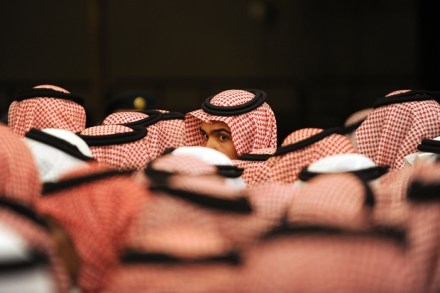
As oil prices continue to plummet, the rather sterile debate over Saudi intentions drags on. Some believe the Saudis are locked into a secret conspiracy with Washington to stiff Russia and Iran. Others prefer to take the Saudi oil minister at his word and believe that it’s all about market share. The truth is that the debate is founded on a false dichotomy: the Saudis are doing both things at once, and several other things as well. The best way to understand this is to try to step into the shoes (or sandals, rather) of a senior member of the al-Saud family. Your neighbourhood is convulsed in war and revolution, and you have seen apparently stable regimes in Tunisia and Egypt swept away, while your own vassal state of Bahrain is on the verge of civil war.
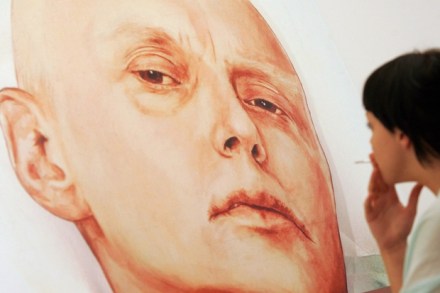
Archive interview: Alexander Litvinenko on ice picks, radioactive thallium and Putin’s assassins

From our UK edition

In the 25 November 2006 edition of The Spectator, Neil Barnett recalled his encounters with the poisoned spy Alexander Litvinenko. Two days before the magazine went to press, Litvinenko died from radiation poisoning. As Theresa May reopens the investigation into his death, we are republishing Barnett's interview once more: The hotel off a main square in a central European capital was a seedy, low-budget place. When I asked the receptionist for Alexander Litvinenko in room 38, she looked at me blankly, then after some rooting around said, ‘We only have a Mr Jones in room 38.

A faraway place we should care more about — as Gulf investors clearly do

From our UK edition

You may have seen the recent Georgian marketing campaign on BBC World and CNN, which looks like a splicing of The Apprentice and the title sequence from The Professionals. Among the familiar names dropped in the ad, such as HSBC, is an enigmatic one, Rakia. And this, it turns out, is not Bosnian firewater, but the acronym of the Ras Al Khaimah Investment Authority, which is presumably a sovereign wealth fund from that microscopic Arab emirate — though its website presents it as an inward investment promotion body, something quite different. Nevertheless, Rakia has become a major player in Georgia, buying strategic assets like the powerful media group Imedi and the free zone of the port of Poti.

We don’t need this annual outburst of pipeline politics

From our UK edition

The Kremlin wants Western Europe to be dependent on Russian gas, says Neil Barnett, but that doesn’t have to happen if the EU is prepared — for once — to show leadership The annual New Year gas dispute between Russia and Ukraine assumed particularly menacing proportions this year, being longer than usual and coming in a bitterly cold, recession-bound winter. With a number of countries in central Europe dependent on Russia for 100 per cent of their gas supplies — and Britain needing new sources as North Sea reserves deplete — it’s worth asking if the fatalistic belief that there is no way out of growing dependence on Moscow is reasonable. The simple answer is ‘no’.

King coal prepares for a comeback

From our UK edition

Neil Barnett says the miners’ union that took on Margaret Thatcher and lost is now talking surprisingly good sense about Britain’s future energy security The National Union of Mineworkers’ headquarters in Barnsley has a splendid retro feel. In the assembly hall hang banners celebrating the struggles of the working class: from one of them, Arthur Scargill, Shredded Wheat comb-over to the fore, stares into the middle distance; another from Kellingley Colliery shows a miner wearing only trousers and a helmet, throttling a huge python labelled ‘Capitalism’. The script below declares ‘Only the strong survive’, while behind him an optimist has written ‘Socialism Leads to Prosperity’.

Can Lord Bell’s PR skills combat the aroma of communism and cabbage?

From our UK edition

Minsk is not a mecca for entrepreneurs or foreign investors, but it seems that the perpetual leader of Belarus, Aleksander Lukashenko, has decided to change that. The kolkhoz (collective farms) are not about to be broken up, and nor is the KGB ready to give up its paternalistic interest in business. But Lukashenko, Europe’s answer to Kim Jong-Il, needs cash and he needs it yesterday. The reason is that the cheap Russian gas that used to subsidise the economy is getting a lot more expensive: Gazprom has pushed the price up from a trifling $47 per 1,000 cubic metres in 2006 to $119 today. It’s still cheap compared to the European market price of roughly $370, but for a subsidised Brezhnev-type economy, it’s cold turkey.

Tantamount to financial terrorism

From our UK edition

You sport a huge beard and a towel on your head and in the name of Allah you try to bring down the computer infrastructure on which the world depends. You are, in contemporary argot, a ‘cyber-terrorist’. You wear a button-down shirt and chinos, and in the name of turning a profit you deliberately set out to wreck a pillar of the financial system, or a country’s economy. In this case you are, it appears, a ‘market manipulator’. Can you spot the difference? Aside from motive, little separates the two: one wants to create a global caliphate, the other to make billions, but neither employs violence and both are indifferent to the chaos they cause. Is it time for hedge-fund managers to be subjected to extreme rendition from their Mayfair offices?

Putin’s game in European energy: divide and conquer

From our UK edition

Vladimir Putin’s efforts to divide the West may be on the back foot now that Nicolas Sarkozy and Angela Merkel have decided to stop being beastly to the Americans, but his most effective attack dog — Gazprom — is gleefully setting EU countries against each other. For governments fixated on more immediate threats such as radical Islam, this might seem footling stuff. But the struggle by OMV, Austria’s biggest oil and gas company, to snap up its Hungarian counterpart MOL (pron. ‘mole’) provides a perfect insight into the underworld of the Central European energy business: all the more so because at first sight Gazprom’s hand is invisible.

‘Remember Trotsky!’

From our UK edition

Neil Barnett recalls his encounters with the poisoned spy who has had the bearing of a marked man for years. The Russian intelligence services, Litvinenko told him, are purely political organisations, whose only purpose is to shore up Putin’s power The hotel off a main square in a central European capital was a seedy, low-budget place. When I asked the receptionist for Alexander Litvinenko in room 38, she looked at me blankly, then after some rooting around said, ‘We only have a Mr Jones in room 38.’ It was Litvinenko, of course, employing one of his endless ruses designed to throw off his former FSB (Federal Security Service) comrades who had hounded him since his defection (or ‘granting of asylum’) to the UK in 2000.

Catch me if you can

From our UK edition

Will Osama and Saddam ever be found? If they fare as well as the Bosnian Serb mass murderers Ratko Mladic and Radovan Karadzic, perhaps not. In July the desperate duo celebrated eight years on the run from indictments by The Hague Tribunal, and the smart money has them at large a while longer. Mladic seems to have vanished, but the hunt for Karadzic goes on. It goes without saying that no one is quite sure where the bouffant-haired psychiatrist and cod poet is, but best guesses have him roving the remoter parts of Republika Srpska (the Serbian bit of Bosnia) and Montenegro.