Boris Volodarsky

Boris Volodarsky is a former captain in Russia's special forces, the GRU Spetsnaz. He is now a Fellow of the Royal Historical Society

Russian intelligence isn’t all it’s cracked up to be

From our UK edition

Western countries have always had a rather high opinion of Soviet intelligence. British secret services – MI5, MI6 and Special Branch – tended to greatly exaggerate Russia's successes during the Cold War and even after the collapse of the USSR. But the reality when it comes to Russian secret services is rather different. As the famous Russian satirist Vladimir Voinovich, the author of the dystopian 'Moscow 2042', put it:  ‘I am not afraid of the KGB. Either their car will break when they decide to come and arrest me, or they run out of petrol on the way to my home, or they simply forget my address.’ Have things improved in the years since the end of the Cold War? Russia's bungled invasion of Ukraine suggests not.
The threat from Russia’s spies has only increased since the fall of Communism

From our UK edition

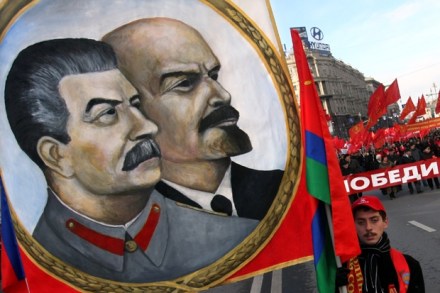
‘No, we must go our own way,’ said Lenin.  The whole world knows him as Vladimir, while he was in fact Nikolai. ‘Nikolai Lenin’ was the party alias of Vladimir Ilyich Ulianov, a terrorist leader and psychopath whose ideas changed the history of the greater part of the 20th century. This era ended on 26 December 1991 with the collapse of the 74-year-old Soviet Union, founded by Lenin, who seven years after the Bolshevik revolution died of syphilis, only to be succeeded by Stalin. ‘Stalin’ was also an alias. The Soviet dictator’s real name was Ioseb Vissarionovich Jugashvili, born into the family of a Georgian cobbler. His education, which he never finished, was limited to a theological seminary.