Stalin

One Night in Winter, by Simon Sebag Montefiore – review

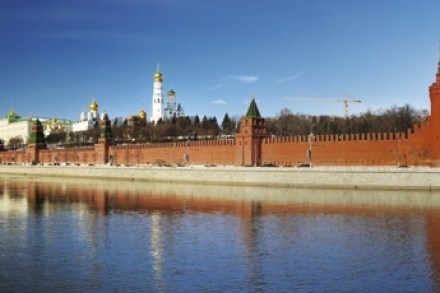
Simon Sebag Montefiore’s One Night in Winter begins in the hours immediately following the solemn victory parade that marked the Soviet Union’s victory over Nazi Germany — probably the high point of Stalinism. Two teenagers, dressed in 19th- century costume and members of a secret literary club called, aptly as it turns out, the Fatal Romantics, have chosen this moment, of all moments, to re-enact a duel from Pushkin’s Onegin on a bridge beneath the very walls of the Kremlin. Needless to say, when the duel goes fatally wrong and the dead boy and girl are revealed to be the offspring of members of the Soviet leader’s inner circle, we

The Tragedy of Liberation, by Frank Dikötter – review

The historian of China Frank Dikötter has taken a sledgehammer to demolish perhaps the last remaining shibboleth of modern Chinese history. This is the notion, propagated in countless books and documentaries, that Mao’s regime started off well, deservedly coming to power on a wave of popular support and successfully tackling the evils left behind by the corrupt and incompetent Nationalists. Then, at the end of the 1950s, it all started to go wrong. There were terrible natural disasters, followed by famine; and, seemingly unaccountably, the brotherhood of brave revolutionaries fell out, creating the bloodbath of the Cultural Revolution. This is the version still served up to A-level students in Britain.

An Armenian Sketchbook, by Vasily Grossman – review

Vasily Grossman, a Ukranian-born Jew, was a war correspondent for the Soviet army newspaper Red Star. His dispatches from the front between 1941 and 1945 combined emotional engagement with independent-minded commentary. A solitary, questioning spirit, Grossman set out always to document truthfully what he saw and heard. His report on the vile workings of the Treblinka death camp, ‘The Hell of Treblinka’, remains a masterpiece of controlled rage and unsparing lucidity. Unsurprisingly, Grossman was mortified when the man who had prevented Hitler’s annihilation of Jewry was suddenly set on their extinction. In early 1953, Stalin announced in the pages of Pravda that a plot to murder Kremlin members had been

Eric Hobsbawm: A man of Extremes

A few years ago, I wrote a review of Eric Hobsbawm’s last collection of essays and noted  ‘Hobsbawm is now 94, and although I have no wish to usher the old boy from the room, I can see his obituaries now. Conservative and liberal writers will say that his loyalty to totalitarianism disfigured his writing, most notably, in his whitewashing of Soviet atrocities in The Age of Extremes, his history of the 20th century. Leftists will say he was the greatest Marxist historian of our times, whose sweeping accounts of the world from the Enlightenment to the present have shaped the way we think. Neither will acknowledge that both have

Stalin: Not Such a Bad Chap Really

That, anyway, seems to be one of the things to come out of Terry Eagleton’s new book, Why Marx Was Right. It’s not published until May but Tyler Cowen reports that it contains these winning arguments: But the so-called socialist system had its achievements, too.  China and the Soviet Union dragged their citizens out of economic backwardness into the modern industrial world, at however horrific a human cost; and the cost was so steep partly because of the hostility of the capitalist West. […] Building up an economy from very low levels is a backbreaking, dispiriting task.  It is unlikely that men and women will freely submit to the hardships

Caught between two great evils

David Brooks, the great New York Times columnist, recommends the best essays of the year every Christmas. His selection this year includes a brilliant essay by Anne Applebaum, of this parish, on Hitler, Stalin and Eastern Europe. It makes you realise quite how bloody the Eastern Front was—‘On any given day in the autumn of 1941, as many Soviet POWs died as did British and American POWs during the entire war’—and think about the effect on these societies of being caught in the middle of these two extremist ideologies. There is always a tendency for us to discuss how the crimes of Hitler and Stalin compare. But I think Applebaum