Russia

Letters: It’s time for the common cup to return to communion

The Bull of Oman Sir: There was one significant omission in the cast of characters mentioned by Charles Moore in his notes on the Sultan of Oman’s armed forces (Notes, 19 February): General Sir Timothy Creasey KCB . The omission is all the more surprising given the key role Margaret Thatcher played in getting General Tim to take up the Sultan’s invitation to go back out to Oman as deputy commander in chief and chief of defence staff. Having been instrumental in achieving a satisfactory resolution of the insurrection in Dhofar as a senior loan service officer, General Tim was highly regarded by the Sultan but he was not keen to take up the offer of direct employment.

Portrait of the week: Storms rage, Covid curbs end and Russia’s ‘renewed invasion’

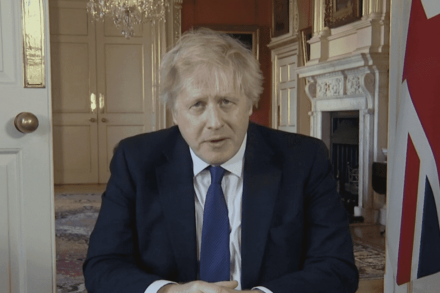
Home Boris Johnson, the Prime Minister, announced, in the House of Commons, sanctions against Russia after its ‘renewed invasion’ of Ukraine. These included the freezing of five banks’ assets and those of three Russian billionaires (Gennady Timchenko, Boris Rotenberg and his nephew Igor Rotenberg). The price of Brent crude oil reached a seven-year high of $99.38. A day earlier, the Prime Minister had told parliament that all coronavirus restrictions in England were to end on 24 February. People who tested positive for Covid would no longer be required by law to self-isolate, but would still be advised to stay at home.

rape

Was Russia’s ‘rape’ of Ukraine inevitable?

From our US edition

In a press conference earlier this month, Vladimir Putin noted that the Ukrainian government does not like the Minsk agreement and then added: "Like it or not, it's your duty, my beauty." The saying has well-known sexual connotations: Putin appeared to be quoting from “Sleeping Beauty in a Coffin” by the Soviet-era punk rock group Red Mold: “Sleeping beauty in a coffin, I crept up and fucked her. Like it, or dislike it, sleep my beauty.” Although the Kremlin press representative claimed that Putin referred to an old folkloric expression, reference to Ukraine as an object of necrophilia and rape is clear.

Joe Biden is no Jack Kennedy

From our US edition

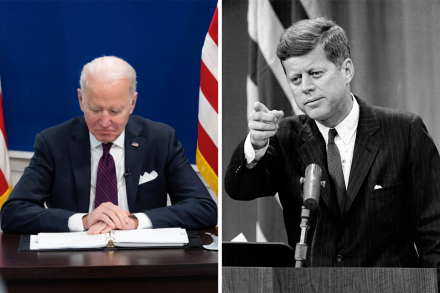
As the Ukraine situation heats up, you can already picture the insider account Vice President Kamala Harris will publish one day in her 2025 bestseller Thirty-One Days in February. But then, as any survivor of the Cuban Missile Crisis is bound to tell President Joe Biden, “I knew Jack Kennedy, Jack Kennedy was a friend of mine, and you, Joe Biden, are no Jack Kennedy.” One of the clichés if not the myths about the Cuban Missile Crisis was that President Kennedy and Soviet leader Nikita Khrushchev were playing chicken and Khrushchev “blinked." Under threat of potential nuclear war, he then decided to withdraw the Soviet nuclear missiles from Cuba. We now know that what really happened was more complicated than the initial reports made it appear.

Why we shouldn’t ban Russia Today

Nadine Dorries, the Culture Secretary, has written to Ofcom urging it to keep the situation with Russia Today ‘very carefully under review' given events in Ukraine. At PMQs, Keir Starmer called for the government to ask Ofcom to review RT’s license.  But if RT lost its broadcast license in the UK, then Putin would use this as an excuse to kick out the BBC and other British broadcasters. Just look at how Russia closed the Moscow office of Deutsche Welle, the German public service broadcaster, and ended the accreditation of its journalists after a German-language version of RT was taken off air in Germany. The least-worst option would be for guests to refuse to go on RT given the credulous way in which it reports Kremlin propaganda.

Has Putin outplayed Macron in Africa?

While the world is focused on Ukraine, Emmanuel Macron has withdrawn all French forces from Mali. Last weekend, thousands of soldiers were flown out of the former French colony after nine years of fighting Islamist insurgents in the Sahel. Malian protesters bid the French soldiers farewell by shouting ‘Shit to France’ at the departing planes. Following a military coup in May, Mali’s ‘interim President’ Colonel Assimi Goïta began to tire of the French and their calls for free elections. There were also lingering doubts over France’s motivation, stoked by a Russian disinformation campaign. So Goïta began looking for allies who could provide him with muscle to fight the Islamist insurgency without any lectures about democracy.

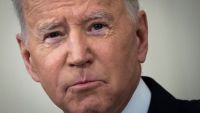
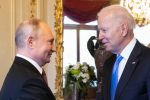
U.S. President Joe Biden and Russian President Vladimir Putin (Getty Images)

Biden exploits the Russia conflict for political gain

From our US edition

President Joe Biden is preparing to buck responsibility no matter the outcome of the brewing conflict between Russia and Ukraine. Biden's statements about Russia have been anything but cohesive. One day he is giving up the game by stating publicly that he has no appetite for war and would allow a "minor incursion"; the next he's focusing exclusively on diplomatic channels; the next he's warning of force if Putin makes another move. All the while, White House officials have planted news stories and touted vague "intelligence" warning of an imminent Russian invasion. The message is this: war with Russia is inevitable, unless it isn't, in which case Biden gets all the credit. So who gets the blame if Putin does invade Ukraine and the US responds with military force?

Putin’s next move

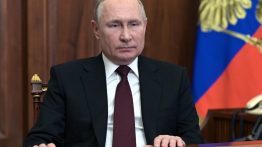
Budapest Russian troops, many apparently without insignia, began advancing into the disputed Donbas region yesterday. The question now is how much further they will go. The Donbas rebels claim an area three times the size of the territory they currently hold, which is roughly equivalent to the area of Devon. If Moscow were to try to take control of the larger territory, it would mean overrunning the Ukrainian frontlines. It is unlikely that Kiev’s military can mount a serious defence if the Kremlin orders a full-scale attack. The call to advance came in the form of a belligerent speech by Putin to the Russian people. In it, he strongly suggested that his aim was to reintegrate the country of 45 million into the motherland.

Connecting the dots between Russiagate and Hillary

From our US edition

Let's connect the dots between John Durham, Russiagate, the FBI, and Hillary Clinton. They strongly suggest the Clinton campaign ran a sophisticated, multi-prong coordinated intelligence operation against Trump with either the active or tacit support of the FBI. In the case of prong one, the dossier, the Clinton campaign hired MI6 intelligence officer Christopher Steele. The hiring was through its law firm, Perkins Coie, which hired Fusion GPS, which hired Steele to hide the funding source. The use of the law firm as a cutout allowed Hillary to deny that she'd funded the dossier, and the media to claim for a year or more that it was actually the Republicans themselves who paid for it.

hillary clinton laws

Putin must look at the West and laugh

Whatever the West’s response to Russia’s attack on Ukraine’s sovereignty, the crisis demonstrates the limitations of western politics and policy across the board. If Vladimir Putin understands any demographic better than the Russian people, it is the governing class of the West: that Harvard-Oxbridge-Sciences Po axis of toweringly smug and practically interchangeable global-liberals who weep for international norms they weren’t prepared to defend. Their ideas and their sanctions are tired because they are civilisationally tired. Putin knows this, but none of the rival ideologies aiming to replace liberalism have anything better to offer.

Macron’s diplomatic failure in Russia was still a political success

President Emmanuel Macron may or may not have imagined that his mission to Moscow would head off armed conflict in Ukraine. He will nevertheless have calculated that while his mission was an abject diplomatic failure, it was a modest political success. The French pro-Macron media (most of it) bigged up the visit as a triumph of French diplomacy and an affirmation of Macron’s global stature. Plus, all the jetting back and forth gave the President an excuse to further delay announcing his candidacy for the presidential election, the first round of which is in just 47 days. He might have failed to stop Putin’s aggression, but at least he was seen trying. That the deal he claimed with Putin was imaginary wasn’t really important.

Are the lights about to go out across Europe?

Impact-Site-Verification: de2f122d-4b66-49e8-911d-d4d5628b0063 Today’s snap decision by German Chancellor Olaf Scholz to halt Nord Stream 2 — the new pipeline intended to export vast amounts of Russian gas into the EU — will make precisely no difference to European energy security, at least in the short to medium term. It could force a rethink of Berlin’s longer-term energy strategy, but the bigger question facing energy markets is whether Russia will curtail existing gas flows into Europe. Scholz on Tuesday instructed Germany’s Federal Ministry for Economic Affairs and Climate Action not to allow the Baltic Sea pipeline to start pumping gas 'for now'.

Britain’s Russia sanctions are underwhelming

The sanctions that Boris Johnson has just announced in response to Russia’s breach of international law are fairly underwhelming. Five banks are being hit, three rich individuals and those members of the Duma who voted to unilaterally recognise the breakaway republics. They will not make Moscow take notice in the way that the decision end certification of Nord Stream 2 has. Johnson’s defence of the limited nature of these sanctions is that they are the ‘first tranche’ and the UK needs to hold things back to try and deter Russia from further action. But given that the UK, rightly, considers what Russia is up to an invasion of Ukraine, these sanctions are nowhere near robust enough. The three oligarchs hit have been on the US sanctions list since 2018.

It’s too late to break Europe’s gas reliance on Russia

So, Nord Stream 2 will not be plugged into Germany’s gas grid. A little surprisingly, Chancellor Olaf Scholz has been first out of the blocks this morning in the western economic response to Putin’s recognition of breakaway states in eastern Ukraine. The block is not total: what Scholz says is that the certification process for the pipeline will be halted — leaving open the possibility that it might, after all, be connected if Putin starts to behave himself, or Germany becomes especially desperate for gas. Nevertheless, it is a significant move which will have an economic impact on Russia. But it is astonishing that the project was ever allowed to come this far in the first place.

Sanctions won’t stop Putin

The Lithuanian prime minister, Ingrida Šimonyte, put it well yesterday: 'the way we respond will define us for the generations to come'. The invasion of Ukraine started last night with Vladimir Putin’s order to send troops into eastern Ukraine. He had earlier recognised the breakaway provinces of Donetsk and Luhansk, which together constitute the Donbas region, as independent republics. The two self-proclaimed states declared their independence — something neither Kiev nor any other third country save Russia has yet recognised — following 2014 following the Maidan revolution. The US, UK and EU say they will announce fresh sanctions as early as today. What we know is that the technicalities have been drawn up.

Will Putin now roll on to Kiev?

The White House told us with absolute certainty that there would be an invasion of Ukraine this week — instead Vladimir Putin bit off a chunk of Ukraine without firing a shot. Perhaps it seemed to him that recognising the two breakaway territories of Luhansk and Donetsk was a clever move: he had not, after all, ignored the warning that — in Boris Johnson’s phrase — one Russian soldier putting a toe-cap over the border would make sanctions inevitable. But sanctions will come anyway — the issue is only about how severe they will be — imposed because, as Johnson says, there has been a clear breach of international law.

ukraine

Diplomacy is Ukraine’s last hope

From our US edition

Amid a pile of Russian disinformation, a mass evacuation of civilians from the self-proclaimed separatist republic and reports that Russian commanders are preparing to execute an invasion order, diplomacy (or at least the hope of it) reared its beautiful head late Sunday night. After a frantic series of calls orchestrated by French president Emmanuel Macron, the White House released a statement confirming President Biden’s openness to a direct meeting with Russian president Vladimir Putin. Whether or not the leader-to-leader discussions happen, however, won’t be fully up to Biden or Macron. It takes two to tango, as the hackneyed phrase goes. And right now, Moscow has been habitually cryptic about its intentions.

The seismic importance of Putin’s latest move

Vladimir Putin has tonight unilaterally recognised the two breakaway republics in Ukraine. In doing so, he has effectively ended the Minsk peace process. The move also begs the question of whether Putin is recognising the territory that these so-called republics actually hold, or the much larger territory that they claim. If the latter, then that raises the question of whether Russian troops will be used to take that land given that Putin immediately signed ‘friendship and mutual assistance’ treaties with them at the end of his speech this afternoon. The speech, though, went even further than recognising the break-away republics, carving off another chunk off Ukraine after the annexation of Crimea in 2014.