Russia

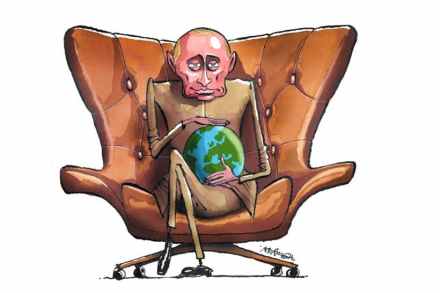
Putin must look at the West and laugh

Whatever the West’s response to Russia’s attack on Ukraine’s sovereignty, the crisis demonstrates the limitations of western politics and policy across the board. If Vladimir Putin understands any demographic better than the Russian people, it is the governing class of the West: that Harvard-Oxbridge-Sciences Po axis of toweringly smug and practically interchangeable global-liberals who weep for international norms they weren’t prepared to defend. Their ideas and their sanctions are tired because they are civilisationally tired. Putin knows this, but none of the rival ideologies aiming to replace liberalism have anything better to offer.
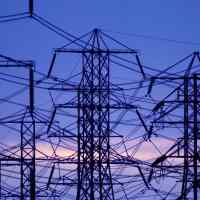
Are the lights about to go out across Europe?

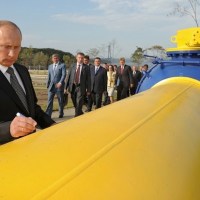
Impact-Site-Verification: de2f122d-4b66-49e8-911d-d4d5628b0063 Today’s snap decision by German Chancellor Olaf Scholz to halt Nord Stream 2 — the new pipeline intended to export vast amounts of Russian gas into the EU — will make precisely no difference to European energy security, at least in the short to medium term. It could force a rethink of Berlin’s longer-term energy strategy, but the bigger question facing energy markets is whether Russia will curtail existing gas flows into Europe. Scholz on Tuesday instructed Germany’s Federal Ministry for Economic Affairs and Climate Action not to allow the Baltic Sea pipeline to start pumping gas 'for now'.

Five of the worst responses to the Ukraine crisis

Boris Johnson has just got up in the Commons to announce Britain's response to the ongoing Ukraine crisis. Vladimir Putin last night ordered troops into two breakaway regions of eastern Ukraine run by Moscow-backed separatists, prompting fears that the balloon is about to go up. There are a lot of grim faces in Parliament today as MPs meet to ponder the future of the region. Gulp. Johnson told the House that he was announcing sanctions against five Russian banks – Rossiya, IS Bank, General Bank, Promsvyazbank and the Black Sea Bank – and three Russian high net-worth individuals. While many across Parliament want the PM to go further, it's by no means the worst response to the ongoing situation in the Baltic.

Britain’s Russia sanctions are underwhelming

The sanctions that Boris Johnson has just announced in response to Russia’s breach of international law are fairly underwhelming. Five banks are being hit, three rich individuals and those members of the Duma who voted to unilaterally recognise the breakaway republics. They will not make Moscow take notice in the way that the decision end certification of Nord Stream 2 has. Johnson’s defence of the limited nature of these sanctions is that they are the ‘first tranche’ and the UK needs to hold things back to try and deter Russia from further action. But given that the UK, rightly, considers what Russia is up to an invasion of Ukraine, these sanctions are nowhere near robust enough. The three oligarchs hit have been on the US sanctions list since 2018.

It’s too late to break Europe’s gas reliance on Russia

So, Nord Stream 2 will not be plugged into Germany’s gas grid. A little surprisingly, Chancellor Olaf Scholz has been first out of the blocks this morning in the western economic response to Putin’s recognition of breakaway states in eastern Ukraine. The block is not total: what Scholz says is that the certification process for the pipeline will be halted — leaving open the possibility that it might, after all, be connected if Putin starts to behave himself, or Germany becomes especially desperate for gas. Nevertheless, it is a significant move which will have an economic impact on Russia. But it is astonishing that the project was ever allowed to come this far in the first place.

Sanctions won’t stop Putin

The Lithuanian prime minister, Ingrida Šimonyte, put it well yesterday: 'the way we respond will define us for the generations to come'. The invasion of Ukraine started last night with Vladimir Putin’s order to send troops into eastern Ukraine. He had earlier recognised the breakaway provinces of Donetsk and Luhansk, which together constitute the Donbas region, as independent republics. The two self-proclaimed states declared their independence — something neither Kiev nor any other third country save Russia has yet recognised — following 2014 following the Maidan revolution. The US, UK and EU say they will announce fresh sanctions as early as today. What we know is that the technicalities have been drawn up.

Will Putin now roll on to Kiev?

The White House told us with absolute certainty that there would be an invasion of Ukraine this week — instead Vladimir Putin bit off a chunk of Ukraine without firing a shot. Perhaps it seemed to him that recognising the two breakaway territories of Luhansk and Donetsk was a clever move: he had not, after all, ignored the warning that — in Boris Johnson’s phrase — one Russian soldier putting a toe-cap over the border would make sanctions inevitable. But sanctions will come anyway — the issue is only about how severe they will be — imposed because, as Johnson says, there has been a clear breach of international law.

The seismic importance of Putin’s latest move

Vladimir Putin has tonight unilaterally recognised the two breakaway republics in Ukraine. In doing so, he has effectively ended the Minsk peace process. The move also begs the question of whether Putin is recognising the territory that these so-called republics actually hold, or the much larger territory that they claim. If the latter, then that raises the question of whether Russian troops will be used to take that land given that Putin immediately signed ‘friendship and mutual assistance’ treaties with them at the end of his speech this afternoon. The speech, though, went even further than recognising the break-away republics, carving off another chunk off Ukraine after the annexation of Crimea in 2014.

Is a Russian invasion now imminent?

Tensions on the Ukraine border are continuing to increase. Worryingly, Russian state media has gone from mocking Washington’s warnings of an invasion to ramping up the various pretexts that the Kremlin is trying to create for one. The leaders of the two self-proclaimed breakaway republics in the Donbas have been on Russian TV today asking for Russia to recognise them and offer military assistance. Moscow is also claiming that it has killed five Ukraine troops who supposedly crossed into its territory.  The Biden administration remains convinced that an attack on Ukraine is coming in the near future.

How the Ukraine crisis ends

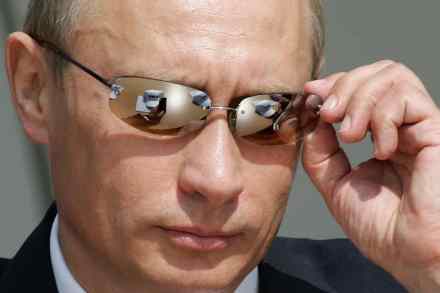
Vladimir Putin does not think in the way the West does. Of course sanctions will hurt. But so what? He may be wrong in his strategic calculations, but he is not, as Boris Johnson claimed over the weekend, irrational. Putin is an old-school strategist. This is one of the reasons that sanctions will not have the desired impact. An import ban on Russian gas would definitely hurt the Russian economy, but that seems highly unlikely. Italian President Mario Draghi said on Friday that we should not touch gas. It is now the guy who sits in Moscow, rather than Draghi, who is willing to do ‘whatever it takes’. An import ban on the latest iPhones does not have the same deterrent effect as a continental gas shortage. Don’t fool yourself about the impact of sanctions.

Can the India-US relationship last?

From our US edition

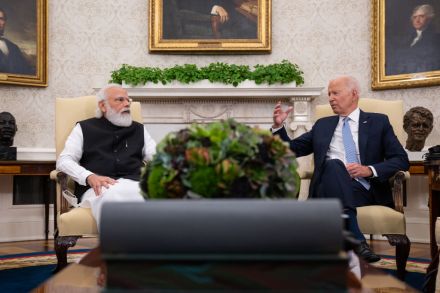
India and the United States have rediscovered each other after the cordial hostility of the Cold War. Those years of isolation have made India’s political and financial elites susceptible to flattery. America’s courtship of India, lubricated by the economics of globalization and the post-9/11 zeal to spread democracy, is now being consummated in the American search for a democratic counterweight to China. But India is a chaotic democracy in a volatile neighborhood. Can it hitch itself to America without forfeiting its autonomy? Foreign strategic experts exhort India, which is non-interventionist to its marrow, to act like a global power.

india
russian

Fall and decline

From our US edition

In December 1921, a twenty-two-year-old Ernest Hemingway, then the European correspondent for the Toronto Star, came across the oddest group of immigrants in history — the White Russians who had fled the Bolshevik Revolution. “Paris is full of Russians,” Hemingway told his readers. “They are drifting along in Paris in a childish sort of hopefulness that things will somehow be all right, which is quite charming when you first encounter it and rather maddening after a few months. No one knows just how they live, except by selling off jewels and gold ornaments and family heirlooms that they brought with them to France.” Hemingway neatly summarized the meat of this gripping latest book by Helen Rappaport, the author of The Romanov Sisters and Caught in the Revolution.

Sunday shows round-up: Ukraine could see ‘biggest war in Europe since 1945’

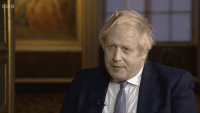
The Prime Minister has been attending the annual Munich Security Conference, where the prospective Russian invasion of Ukraine is very much at the top of the agenda. The BBC’s Sophie Raworth caught up with Boris Johnson yesterday, following a speech he made warning of the disaster that war would bring. Johnson said in the interview that he believed that Vladimir Putin was ready to orchestrate such a crisis at any moment: https://twitter.com/BBCPolitics/status/1495334713057288192?ref_src=twsrc%5Etfw ‘It is important that people should feel confident again’ Tomorrow, the government is expected to announce its plans to remove all Covid restrictions for England.

skating

China’s Olympic propaganda show ends in global shame

From our US edition

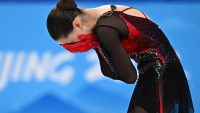
It was only fitting that China's hopes of putting on the perfect Olympics should ultimately be dashed by its new partner in crime, Russia. The two countries started the Beijing Winter Olympics by announcing a "no-limits" partnership against the West, and ended them with one of the biggest sporting scandals in recent Olympic history. If the 2008 Beijing Summer Olympics were China's coming out party, then the 2022 Winter games would tell the world that the rising authoritarian regime was stronger — and cockier — than ever. The opening ceremony jabbed at those critical of China's human rights abuses by highlighting China's diversity and allowing a Uighur to carry the Olympic torch.

We blew our chance to befriend Putin

You have the advantage over me. It may be that you are reading this now in your makeshift fallout shelter, hair falling out and bleeding from the gums as the nuclear winter descends. More likely you are saying, rather smugly, to your neighbour: ‘I knew he was taking the piss. He’s a right one, that Putin.’ Or perhaps Vlad’s forces are already in London, having swept through western Europe in about eight hours, the Germans for once outdoing the French with their alacrity to surrender. Well, that should see an end to Stonewall and the Tavistock Clinic, no? Every cloud, etc.

Taking Ukraine would finish Putin

‘Never interrupt your enemy,’ said Napoleon, ‘when he is making a mistake.’ A Russian invasion and occupation of Ukraine would prove (perhaps, by the time this Spectator is published, ‘will’ prove) a terrible mistake. Were it not for the death and despoliation such a mistake would bring — an outcome one could never welcome — the response to Vladimir Putin’s implicit threats should surely be: bring it on! When we told Russia they’d only be hurting themselves, did we not mean it?

Russian roulette: is Moscow’s bluff backfiring?

A bluff only works if you can carry it off convincingly. The massing of some 130,000 Russian soldiers on Ukraine’s borders has led to London and Washington declaring that a full-scale invasion is imminent, but it could still be a feint. The Russians know everything they do can be seen by satellite. On the phone from Kiev, Colonel General Ihor Smeshko says he is not inclined to read too much into the Russian army’s logistics. He was head of Ukraine’s domestic intelligence service and later a candidate for president.