James W. Carden

James W. Carden is a contributing writer at The Nation, and was an adviser to the US-Russia Bilateral Commission during the Obama presidency.

The American Brezhnev era is over

Since 9/11, Washington has spent billions of dollars promoting “democratic norms” abroad. The policy mirrored the late Soviet Union's attempts to promote communism in countries outside Moscow’s direct control, as witnessed under the leadership Leonid Brezhnev. And now at last it appears to have ended, following Donald Trump's executive orders and yesterday’s State Department takeover of the United States Agency for International Development. This American Brezhnev policy has had a kind of Alice-in-Wonderland effect: democratically elected leaders such as Ukraine’s ill-fated Viktor Yanukovych could be violently overthrown in the name of democracy.
The security state says jump. The media asks ‘how high?’

The tacit alliance between operatives of the national security state and corporate media burst into view last week when the New York Times and the Washington Post did the FBI’s job for it by tracking down the leaker of documents that detailed, among other things, the extent of American and allied involvement in the Ukraine war.  That Bellingcat, the shadowy, government-funded open-source intelligence group, played a role in helping to identify the twenty-one-year-old Air National Guardsmen Jack Teixeira proves (once again) that many media outlets are now de facto agents of the national security state.

media leak tows security state

If only there was a GOP ‘civil war’ over foreign policy

Last week, the Biden administration’s mouthpieces kicked into gear with two nearly identical stories touting the threat that a few high-profile Republican heretics pose to the American proxy war in Ukraine. On March 15, the Washington Post reported on “A Republican ‘civil war’ on Ukraine,” while the following day Politico published a story headlined, “Wanted: A GOP presidential contender who supports Ukraine.” These stories come in the wake of — and no doubt as a response to — a recent Tucker Carlson segment that asked a dozen or so possible Republican presidential candidates several questions about American involvement in Ukraine.

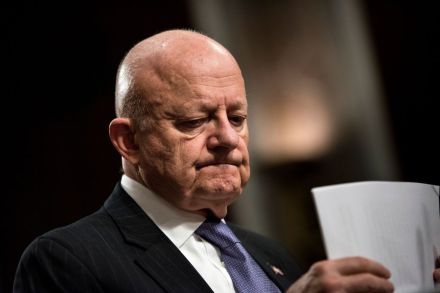
James Clapper is still a shameless liar

Last week, the New York Times decided that now might be a good time, amid the cacophony of war abroad and soaring inflation at home, to come clean about the Hunter Biden laptop story. On March 16, the Times published a report on the junior Biden’s messy tax affairs in which, a full twenty-four paragraphs in, they acknowledged the authenticity of the emails and files contained on the now-infamous laptop.

This is what liberal war fever looks like

From our UK edition

In a private letter written in 1918, the recently deposed German chancellor Theobald von Bethmann-Hollweg admitted that in the run-up to the Great War, 'there were special circumstances that militated in favour of war, including those in which Germany in 1870-71 entered the circle of great powers' and became 'the object of vengeful envy on the part of the other Great Powers, largely though not entirely by her own fault'. Yet Bethmann saw another crucial factor at work: that of public opinion.'How else,' he asked,'[to] explain the senseless and impassioned zeal which allowed countries like Italy, Rumania, and even America, not originally involved in the war, no rest until they too had immersed themselves in the bloodbath?

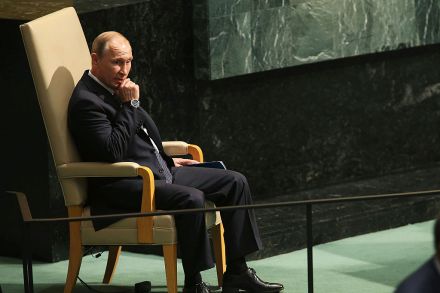
Putin’s path to war in three speeches

With regard to the illegal war being waged by Russia against Ukraine, no one has any right to be surprised. For all the understandable and justifiable outrage over Russian president Vladimir Putin’s decision to abandon diplomacy and launch what appears to be an unprovoked act of aggression, a look at prior statements by Mr. Putin shows that, with the passage of time, patience and rationality gave way to irrationally, paranoia and ultimately the decision to launch an armed conflict. Any proper accounting of the history of the downturn in US-Russia relations must include Putin’s 2007 address to the Munich Security Conference. To many, this was a kind of point of no return, with Putin putting the US and its European allies on notice: there are red lines not to be crossed.