Russia

China and Russia are an alliance of disruptors

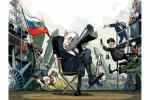
Four years ago, Vladimir Putin and Xi Jinping made pancakes together in Vladivostok while thousands of their military forces conducted joint exercises in Siberia. This month, as China hosted the Olympics, Putin and Xi announced that a ‘new era’ in international relations had begun, one in which the two great authoritarian powers of the 21st century will reshape the liberal international order established in 1945 and reaffirmed in 1991. Some call it Cold War II, yet the blossoming relationship between Moscow and Beijing may best be thought of as an alliance of disruptors.

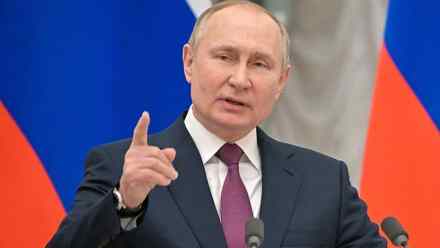
Theatre of war: Putin’s deadly dramatics over Ukraine

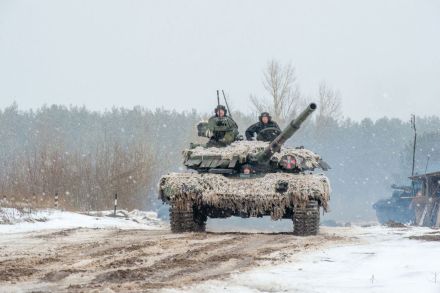
Vladimir Putin now knows that the West won’t fight for Ukraine. The past few weeks have shown that. All options are open to Moscow. Russian troops could march on Kiev or stay on the border destabilising Ukraine’s economy until its government gives way. If Putin wanted a fight, he would win — at least initially. No western military force will stop Russia from crossing the border. The main question is what punishment the West would be able to inflict on Russia after an incursion. Would Nato members be able to agree on what approach to take? Tensions within the alliance have been exposed.

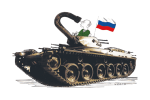
How do Russian and Ukrainian military forces measure up?

Facing the music Police in New Zealand played Barry Manilow records to truck drivers in an attempt to persuade them to break up their protests. One of the first uses of music as a weapon was by US forces attempting to force Panamanian military leader and drug dealer General Manuel Noriega to leave the Vatican embassy, where he had sought sanctuary in December 1989. For three days over Christmas they played an eclectic mixture of music including ‘Too Old to Rock’n’Roll, Too Young to Die’ by Jethro Tull, ‘Judgment Day’ by Van Halen, ‘Born to Run’ by Bruce Springsteen, ‘Give It Up’ by KC and the Sunshine Band, ‘We Gotta Get Out Of This Place’ by the Animals and ‘Never Gonna Give You Up’ by Rick Astley.

What would Thatcher have made of Putin?

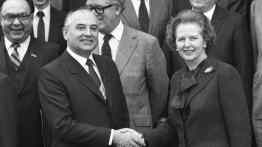
When Sir Tony Brenton writes a letter to the Times, as he frequently does, it always says at the bottom that he was British ambassador to Moscow. The uninformed reader could be forgiven for thinking the sub-editors have got it back to front and he was actually Russian ambassador to London. Sir Tony’s message in every letter is ‘It’s all Britain’s fault’. In his latest, his particular target was the Foreign Secretary, Liz Truss, after her visit to Moscow. He said she ‘might usefully recall Margaret Thatcher’s wise message to Mikhail Gorbachev sent in 1985 as perestroika began to take off: “We know that you have as much right to feel secure as we do”’. It is hard to think of a less apt comparison.

Playing until her fingers bled: the dedication of the pianist Maria Yudina

The 20th century was an amazing time for Russian pianists, and the worse things got, politically and militarily, the more great pianists thrived, despite the extreme danger and discomfort in which they lived and in which some of them died. If we think immediately of Richter, the greatest of them all, and Gilels, there are at least 20 more that we could add without exaggeration. One of the most important was without question Maria Yudina, born in 1899, who astonishingly survived until 1970. She was not just a sovereign artist but an eccentric of the kind and degree that only Russia seems able and willing to supply.

How western journalists became Putin propagandists

Why does Vladimir Putin need Russia Today and Sputnik News when the western media are doing such a great job on his behalf? Throughout his two decades in power, Putin has yearned for international respect. Failing that, he’ll settle for fear. And what more satisfying outcome could there be for a serial sabre-rattler like Putin to have his bluff finally taken seriously? For weeks, British papers and TV have been filled with images of scary Russian tanks, warships and artillery blasting away — mostly provided, if you check the photo credits, by Russia’s Ministry of Defence. Since November, the US and British governments have been issuing increasingly strident warnings that Putin is preparing an imminent and massive attack on Ukraine.

What would Thatcher have said about Putin?

When Sir Tony Brenton writes a letter to the Times, as he frequently does, it always says at the bottom that he was British ambassador to Moscow. The uninformed reader could be forgiven for thinking the sub-editors have got it back to front and he was actually the Russian ambassador to London. Sir Tony’s message in every letter is ‘It’s all Britain’s fault’. In his latest, his particular target was the Foreign Secretary, Liz Truss, after her visit to Moscow. He said she ‘might usefully recall Margaret Thatcher’s wise message to Mikhail Gorbachev sent in 1985 as perestroika began to take off: “We know that you have as much right to feel secure as we do.

Biden’s looming energy crunch

From our US edition

Oil and gas prices have soared since Joe Biden took office and skyrocketed further as Russian troops surround Ukraine. Prices will get worse — much worse — if Putin invades. President Biden has promised “swift, sharp sanctions” on Russia and an end to the Nord Stream II pipeline, which will supply Germany with much-needed Russian natural gas when it’s completed. The German chancellor has said little about ending the pipeline but has not publicly contradicted Biden’s threat to stop it. European analysts are confident Germany will go along with American energy sanctions, including those on Nord Stream II. In any case, the US can stop the pipeline, if it chooses.

energy

Is Germany finally standing up to Russia and China?

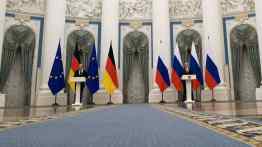
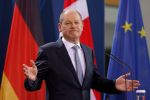
When German chancellor Olaf Scholz met Russian president Vladimir Putin yesterday, the visuals said it all. As he had done with Emmanuel Macron, Putin kept his visitor at arm’s length, or rather at five metres’ length. Sitting at opposite ends of the Kremlin’s infamous long table, the two men were as physically far away from each other as they were on content. But Scholz did not seem intimidated by this. On the contrary. At the press conference that followed, he was assertive, even feisty. Are we seeing the beginnings of a post-Merkel foreign policy shift in Berlin?

As with Iraq, so with Russia

From our US edition

Against the backdrop of the Ukraine crisis, we have been bombarded with many historical analogies. Leading the list are the 1961 Berlin standoff and the 1962 Cuban Missile crisis. And then there is that all-time favorite, the 1938 Munich Agreement. Those crises should certainly not be regarded as ancient history. But then why go back 60 or 80 years when you can walk down memory lane? Like, say, when an American president was trying to rally the public and mobilize international support in the name of using military force against an alleged bloodthirsty dictator who was supposedly threatening Western geostrategic interests and challenging its liberal democratic values?

ukraine

NATO won’t bleed for Ukraine

From our US edition

Ask three different people whether Russian President Vladimir Putin will approve an invasion of Ukraine, and you are likely to get three different answers. Yes, a Russian land, air, and sea blitz is inevitable and will come in fairly short order, likely without warning. Yes, a Russian invasion is possible, but could still be averted with some shrewd diplomacy. Or, no, surely Putin understands an invasion would be a disaster for his legacy and his country’s economy. In the midst of all of this comes wild speculation about what Putin is thinking at any given moment, how the weather may factor into his calculations, and what the Russian government’s end goal really is. What can be said for certain, however, is that diplomacy has picked up significantly over the past week.

The Ukraine crisis has united the West

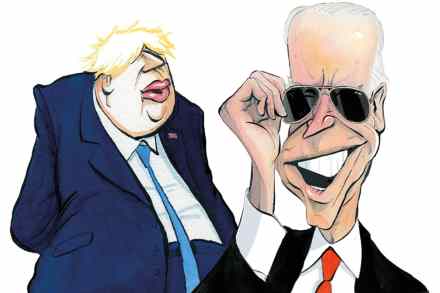
There has been a subtle change of tone from Joe Biden and Boris Johnson about the likelihood of a Russian invasion of Ukraine. It has gone from 'highly likely' to 'there may be a diplomatic solution' — or from 'almost all hope lost' to 'chink of hope'. So from where does that hope emanate? Largely, I am told, from noises out of Ukraine that its government is moving towards a public statement that although it retains the right to join the Nato western defence alliance, it will commit to not consider applying for at least ten years. The US president and UK prime minister are keen to encourage, through diplomatic channels, such a statement from Ukraine’s President Volodymyr Zelensky.

I stand with Diane Abbott

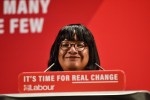
Not for the first time in her political career, Diane Abbott is getting a lot of flak online. She’s being trolled, heckled and denounced as an enemy of the United Kingdom. Only this time Ms Abbott is being hauled over the coals not for saying something silly, but for saying something sensible. Something true. Something fundamentally correct. Namely, that Nato bears a great deal of responsibility for the current crisis in Ukraine. Browsing the Abbott-bashing headlines you could be forgiven for thinking she had upped sticks, flown to Moscow, and sworn lifelong allegiance to Vladimir Putin. ‘Diane Abbott backs Russia!’, says the Express.

What really happens if Russia invades Ukraine?

Russia will pay an enormous price if it invades Ukraine, whether it goes for the whole country or only the eastern region around Donbas. Vladimir Putin has already assembled well over 100,000 troops near Ukraine’s borders, moved in tanks, heavy artillery and aircraft, and brought in the medics and blood supplies needed to deal with casualties. Western governments have evacuated all but essential diplomatic personnel and told their citizens to get out now. Still, no one knows what Putin has decided, or even if he has decided. Visits to Moscow by senior western politicians have yielded little information and no diplomatic solution. The message seems to be that Putin remains uninterested in a compromise.

Why does Germany look so weak on Russia?

From our US edition

A recent survey of Germans done by Forsa, amongst the most reputable polling institutions in that country, shows that at least in one way, the Cold War has not quite ended. A majority of West German respondents (52 percent) blame Russia for escalating the conflict with Ukraine, while a plurality of East German participants (43 percent) blame the United States. All respondents, meanwhile, plead for peace in the region and expressed fear of a looming war between Europe and Russia. The political repercussions here are very real. The generation born in the late 1960s, having been completely educated in the East German communist dictatorship, currently constitutes the most significant single voting block in the East.

Is Orbán serious about leaving the EU?

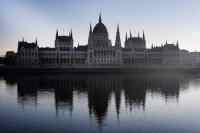
First the UK decided to leave the EU. Then in Poland, lawmakers started talking about it. Is Hungary now seriously considering Huxit? For the first time ever, Viktor Orbán has insinuated that leaving the union could be a possibility. The Hungarian Prime Minister kicked off his campaign for re-election over the weekend by attacking Brussels’s ‘Jihad’ against his country and suggesting that continued membership of the EU might not be possible. This is obviously an alarming prospect for the EU. Over the course of Orbán’s premiership, Vladimir Putin has brought Hungary into his orbit. The latest step in that process was a 15-year gas deal signed in September. Russia will now supply about half of Hungary’s gas.

The unthinkable horror of a Russia-Ukraine war

From our US edition

In the coming days, if intelligence assessments are accurate, the world will watch the unfolding of a bloody war between Russia and Ukraine. It will make history for all the wrong reasons, as the largest armed conflict since World War Two. And while Moscow would almost certainly defeat Kyiv on the battlefield, the real story will be the horror unleashed by the first modern war fought between nations of real consequence in decades. Such a war would showcase military modernizations that, while well-known, will still shock most Americans and change our perception that war in the twenty-first century is anything but cost-free. Worst of all, there's chance that a Russia-Ukraine war might not be contained to just those two countries, sucking in America in the process.

Ukraine’s plight paints a bleak vision of Europe’s future

It is tempting to view Vladimir Putin as a Cold War relic: a former KGB officer who hasn’t got over the fall of the Soviet Union, which he called the ‘greatest geopolitical catastrophe of the century.’ But, as I say in the Times today, what is happening on Ukraine’s border isn’t a throwback to the Cold War. Rather, it is a preview of Europe’s future. Since Nato’s creation, European security has rested on America’s involvement. But Europe is now a secondary concern for the US; Asia and competition with China is the most important challenge facing Washington now. The horribly messy US withdrawal from Afghanistan was justified on the basis that it would free up resources to focus on China.