Russia

Are Russians turning against Putin?

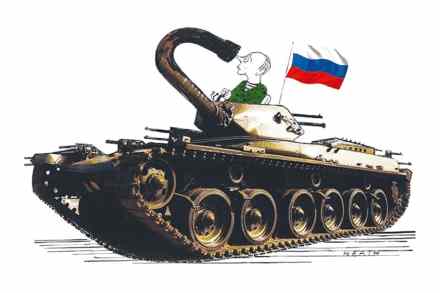
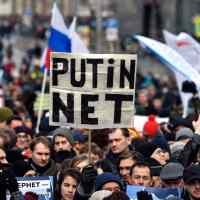
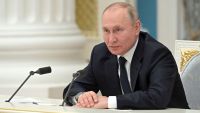
One of the reasons why I judged — wrongly — that Vladimir Putin would not order an all-out invasion of Ukraine was the likelihood of a protracted war. But another was the possibility of popular protest in Russia, which could have potentially destabilising effects on the Kremlin. After sporadic protests in the hours immediately after the invasion, all of them ending in arrests or dispersal by police — citing Covid restrictions — Thursday evening sprang a surprise. Young people came out in their hundreds with homemade placards saying 'nyet voine', no to war, not just in Moscow and St Petersburg, where political engagement tends to be higher, but in nearly 50 towns and cities across Russia. https://twitter.com/ragipsoylu/status/1496905869983768581?

Is Britain prepared for the cost of sanctions?

Sanctions hit both sides: this is a point that Joe Biden has made to Americans and Olaf Scholz is making to Germans. But Boris Johnson is not (so far) talking about the economic implications of this war. They will be — and in fact, already are — profound.  When Russian tanks moved into Ukraine, the price of gas for next-day delivery in the UK shot up 40 per cent. A study by Investec yesterday suggested this means typical household energy bills — already expected to approach £2,000 in April — could end up closer to £3,000. Quite a hit for a country already facing a cost-of-living crisis. And this is just one way in which the conflict could impact household budgets.

Will the West shut Russia out of Swift?

You may never have heard of the Society for Worldwide Interbank Financial Telecommunications — or at least not by its full name. Even if you had you may have mistaken it for a fairly inconsequential trade body that holds rather dull conferences in hotel function rooms in places like Frankfurt.  Yet it finds itself at the centre of the West’s response against Vladimir Putin. Swift, as it is otherwise known, is the system by which banks communicate in order to undertake cross-border financial transactions. This morning the Ukrainian foreign minister pleaded with the West to cut off Russia from the system. Britain would like to do just that, as would some of the smaller EU states.

Putin’s path to war in three speeches

From our US edition

With regard to the illegal war being waged by Russia against Ukraine, no one has any right to be surprised. For all the understandable and justifiable outrage over Russian president Vladimir Putin’s decision to abandon diplomacy and launch what appears to be an unprovoked act of aggression, a look at prior statements by Mr. Putin shows that, with the passage of time, patience and rationality gave way to irrationally, paranoia and ultimately the decision to launch an armed conflict. Any proper accounting of the history of the downturn in US-Russia relations must include Putin’s 2007 address to the Munich Security Conference. To many, this was a kind of point of no return, with Putin putting the US and its European allies on notice: there are red lines not to be crossed.

The stakes for Europe are even higher than in 1938

From our US edition

Any analysis of the Ukraine situation risks lagging behind the news. As of the time this article was published, Russia had conquered the former Chernobyl nuclear power plant. Its forces are only about sixty miles away from Ukraine’s capital, Kyiv, which has already experienced shelling. Russians have also attempted to capture Antonov International Airport, just fifteen minutes away from the capital’s ring road. Meanwhile, European leaders are resorting to the usual responses: “concerned,” “strongly condemning." There is even a Twitter account mocking the EU’s approach to all major crises, called “Is EU Concerned?” The response to the invasion of Ukraine is not spared from similar mockery. Here in Europe, it feels like 1938 all over again.

Eating donuts in Poland as the bombs fall

From our US edition

Tarnowskie Góry, Poland  There was something faintly obscene about lining up outside the bakery to celebrate Fat Thursday. Granted, it made no difference to Ukrainians whether I ate donuts or scrambled eggs for breakfast. But I had a brief sense of how fortunate it is to live in a peaceful society. Ukraine is not so lucky. Missiles have been falling throughout the night and day, and Russian soldiers have occupied key positions, right up to the outskirts of Kyiv. Some of us expected Putin to occupy Donbas and leave Western Ukraine alone. That has been proved entirely, tragically mistaken. After such a long, mysterious military build-up, the speed and scale of the Russian offensive has been stunning.

poland

Let Russia choke on Ukraine

From our US edition

At least for the moment, it looks like Russian president Vladimir Putin is intent on conquering Ukraine, a nation he's never believed has the right to exist. While the fog of war always limits accurate real-time military analysis, it seems for now that Russia has committed to annexing at least large sections of Ukraine and is winning the day militarily with ease. Of course, the media has predictably gone into overdrive, warning of World War Three, gas prices that will stay high for years and perhaps even Putin attacking NATO and nuclear war. But let’s put away the hysterics for a moment and think about the here and now. Russia’s goal in Ukraine has always been clear and does not involve war on NATO or even conquering Ukraine in its entirety.

ukraine

The Ukraine invasion is good news for Wall Street

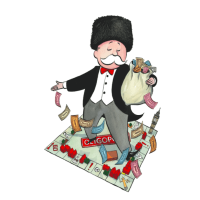
Don’t be fooled by the pictures that will shortly start to emerge of traders apparently tearing their hair out against of backdrop of red screens. A proper crisis is exactly what Wall Street traders want — to provoke yet another stimulus package, as well as the cancellation of interest rate rises. In the Alice in Wonderland world of bubblenomics, bad news is good, and good news is bad. If we have good economic figures, there is a danger that the Fed, the Bank of England and other central banks will take away the punch bowl. On the other hand, all we need is a sudden crisis that gives the impression, however briefly, that the world is coming to an end — and back will come the bowl, with an even stronger mix than before.

Boris Johnson promises more sanctions

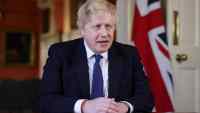
Following Vladimir Putin's decision to launch a full-scale invasion of Ukraine, Boris Johnson has addressed the nation. Speaking from 10 Downing Street, the Prime Minister spoke of his regret that 'our worst fears have now come true' and Russia had 'unleashed war in our European continent'. Johnson said he had spoken with the Ukrainian president to reiterate the UK's ongoing support. A vast invasion is underway — by land, by sea, and by air. And this is not, in the infamous phrase, some faraway country of which we know little. We have Ukrainian friends in this country; neighbours, co-workers: Ukraine is a country that for decades has enjoyed freedom and democracy and the right to choose its own destiny.

What is the point of the UN?

When all this is over, we will have to hold a grown-up and perhaps very difficult conversation about the United Nations. No institution is perfect, or has supernatural powers to stop war or despotism, and perhaps nothing could have dissuaded Vladimir Putin from invading Ukraine. But the UN’s failure to prevent one fifth of its permanent security council from overrunning another member state should give us pause. There are the hard realities of realpolitik, of course, but there is also the question of endemic institutional failure. It may be that we will either have to change how we think about the UN or change the UN itself.

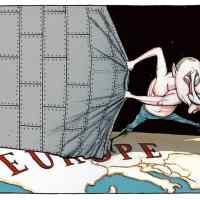
Europe is painfully reliant on Putin

Vladimir Putin declared war on Ukraine in the early hours of this morning, starting with a massive air attack from the north, south and east, targeting military and civilian infrastructure. This is the worst-case scenario. Putin's speech on Monday set the ideological groundwork. This morning he spoke again, calling Ukraine ‘our historic lands’. He said he was launching what he called a ‘special military operation’ with the goal, not of occupying the country, but of ‘demilitarising and de-Nazifying’ Ukraine. And Putin spoke too to us here in the West: To anyone who would consider interfering from the outside: if you do, you will face consequences greater than any of you have faced in history. All relevant decisions have been taken. I hope you hear me.

Will George Galloway honour his Russia bet?

Ah, gorgeous George, the man so often on the right side of history. The rabble-rousing politician, who has had more parties than Boris Johnson, has been at it again in recent weeks, insisting that 'the West provoked this crisis' in Ukraine. Coincidentally, the former Labour MP also hosts a show on Moscow-backed network RT UK – previously better known as Russia Today. Galloway struck a bet earlier this month with a pro-Unionist Twitter account. Under the suggested terms of the deal, if Europe reached July without an invasion, Ukrainian soldiers killed in action or without any Ukrainian territory gained by Russia, the user in question would have to change their profile picture to one of George Galloway and post a public apology.

never trumpers

Never Trumpers play 4D chess over Russia — and lose

From our US edition

“Pro-democracy” Washington Post columnist Jennifer Rubin — she long ago ditched the “conservative” descriptor — had a howler of a tweet about foreign policy the other day. On the subject of Russia’s invasion of Ukraine, Rubin wrote that “we don’t have to guess what Trump would have done – he would have praised Putin and rolled out the red carpet to the rest of Europe. THIS is who the GOP follows.” Rubin was joined in this opinion by novelist Stephen King, who tweeted that “Mr. Putin has made a serious miscalculation. He forgot he is no longer dealing with Trump.” King is right in at least one key respect: Putin is not dealing with Trump. And we need not speculate — contra Rubin’s advice — as to what Trump would have done.

Two reasons Putin thinks he can weather sanctions

The nature of the Russian attack on Ukraine, striking across the country and not just concentrating on the territory claimed by the so-called breakaway republics, shows Vladimir Putin’s confidence that he can weather whatever sanctions the West imposes. This is not an assault designed to sit in any kind of grey area, but an unambiguous invasion — which the West has always made clear would bring forth the maximum set of sanctions. This is not an assault designed to sit in any kind of grey area Putin’s confidence is driven by two things. First, as I say in the magazine this week, Russia has been preparing to face expanded sanctions since the annexation of Crimea in 2014.

Vlad the Invader: Putin is looking to rebuild Russia’s empire

‘War’, in Prussian military theorist Carl von Clausewitz’s most famous dictum, ‘is nothing but a continuation of politics with the admixture of other means.’ A generation of Democrats — the American variety, but also European Christian and Social Democrats — have sought to ignore that truth. Appalled by the violence of war, they have vainly searched for alternatives to waging it. When Vladimir Putin ordered the annexation of Crimea in 2014, Barack Obama responded with economic sanctions. When Putin intervened in the Syrian civil war, they tried indignant speeches. When it became clear that Putin intended a further and larger military incursion into Ukraine, Joe Biden and his national security team opted for sanctions once again.

What Putin has in common with Hitler

We are always cautioned against comparing a modern political event with those that led up to the second world war. One can see the risk of hyperbole and slander. But as Vladimir ‘Inky Poops’ Putin re-invades Ukraine, he will be making such comparisons himself. His long and bitter address on Monday showed his taste, common in tyrants, for historical disquisitions designed to turn grievance into aggression. He lambasted the foolishness of the Soviet leadership in the 1920s and 1930s which had laid ‘a mine to destroy state immunity to the disease of nationalism’.

Did Storm Eunice really break records?

Blow by blow Did Storm Eunice really set a new record for wind speed in England? A 122 mph gust measured at the Needles on the Isle of Wight is, according to the Met Office, provisionally the fastest ever recorded in England. Greater speeds have been measured in Scotland: 173 mph on Cairngorm summit on 20 March 1986 and 142 mph at Fraserburgh on 13 February 1989. Northern Ireland, too, has recorded a faster gust, of 124 mph at Kilkeel, County Down on 12 January 1974. Last week’s record is only provisional. One suspect detail is that it is more than 30 mph faster than any gusts recorded elsewhere.