Russia

What I learnt from retracing the iron curtain

Just before the pandemic, I spent several months travelling through Europe from the north of Norway to Istanbul and beyond to Azerbaijan. I saw unforgettable sights: the endless daylight of the Arctic summer; the vast Hammershus castle on the Danish island of Bornholm; Vienna’s ornate Prunksaal library; and the sandy beaches of Corfu. But the focus of my journey was precisely those things that most travellers to these places often ignore. I was following the route of the Iron Curtain. My aim was to visit every part of that old great divide, all the places where NATO once abutted the Warsaw Pact, where overwhelming military might stood constantly primed for apocalypse.

The strange ideology that could be driving Putin

From our US edition

Vladimir Putin’s motives in attacking Ukraine have become the subject of many deep and searching speculations. Is he seeking a personal legacy by attempting to reassemble the parts of the Soviet Union that fell asunder? Is he pursuing Russian national security by making sure Ukraine never becomes the frontline of NATO? Is he gleefully taking advantage of a weak and incompetent US president? Is he vindicating the glorious history of the KGB? These theories are not mutually exclusive, and there are many more possibilities. I want to enter the discussion from my nearly pristine ignorance of Russian geopolitical designs.

eurasianism

Why do Russian tennis stars need to condemn Putin?

Nigel Huddleston is Under-Secretary of State for Sport, Tourism, Heritage and Civil Society, hardly the biggest job in government. Yet he seems a little inebriated on what little authority he has – at least if his latest remarks to the Department for the Digital, Culture, Media and Sport committee are anything to go by. Huddleston has taken on board the mood of the moment. He appreciates that sport must make a stand against Vlad the Invader and the invasion of Ukraine, and which sensible person would disagree? But boycotting Russia from major competitions and clamping down on dodgy oligarch football owners isn’t sufficient, apparently. Huddleston wants more.

biochemical weapons

Yes, Putin could use biochemical weapons in Ukraine

From our US edition

The Russian Defense Ministry held a briefing last week claiming that they have discovered US-led biological laboratories in Ukraine. Moscow stated that a rapid halt was brought to the facilities’ activities, adding that Kyiv and Washington had violated the Convention on the Prohibition of Biological and Toxin Weapons. The Kremlin did not feel the need to provide evidence of its claims, par for the course in Putin’s Russia.

Turkish drones are transforming the war in Ukraine

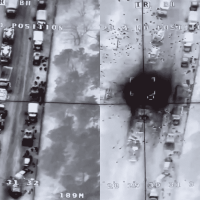
Istanbul, Turkey A cheer rings out in a secret command centre. On the screen, another Russian missile launcher has vanished in a cloud of shrapnel and smoke. Working miles behind the front line, a team of Ukrainian drone operators is trying to turn the tide of the war against the Kremlin’s forces. The most effective weapon in their arsenal is the Turkish-made Bayraktar TB2. Soaring 160 meters above the battlefield, it delivers death at the push of a button. So fearsome is its reputation that it has inspired a love song that has gone viral in Ukraine and even a video game. https://www.youtube.com/watch?

crazy nuts

Is Putin nuts?

From our US edition

As Russian forces level Ukrainian cities with artillery, missiles and airstrikes, there's a concerted effort to get inside the mind of Vladimir Putin: from pundits, former US national security officials and current heads of government. What could possibly get the man to stop the bombardment and support a ceasefire? Is Putin intent on conquering all of Ukraine? Or is there some combination of concessions the Ukrainian government and the West could offer that would end the war and bring about a full Russian troop withdrawal? The fact is none of us know what Putin’s endgame is. Putin’s own advisors, especially those kept out of the inner circle, may not even understand what the Russian leader is planning.

How to offer a room to a refugee

Michael Gove has announced that members of the public will be able to offer rooms and accommodation to named refugees through a government portal – Homes for Ukraine – which was launched on Monday. Gove said that he was confident there would be no shortage of people coming forward, although he gave a somewhat roundabout answer as to whether he himself would be hosting a refugee. The British public, however, appear to be very open to becoming hosts, with one in three saying they would offer a room, according to a poll conducted by The Observer. When Gove launched the scheme in the House of Commons yesterday, Lisa Nandy was quick to criticise the government’s policy of asking volunteers to name Ukrainians who they wished to host.

Russia is the West’s great tragedy

From our US edition

The books written about the tragedy of the Russo-Ukrainian War will be legion. In the meantime, there's another book that ought to have been written 20 years ago about a previous tragedy concerning Russia: how, following the collapse of the Soviet Union in 1991 and with it the demise of the communist regime, Russia and the West failed to “converge” in some way. Why did the two did not come to embrace each other politically, economically, and culturally? The rivalry between East and West has since 1917 been fundamentally an ideological and not a nationalist one. Historically, before the Bolshevik Revolution, Washington had been on cordial terms with Moscow, from which it had purchased the Russian territory of Alaska in 1867.

us-russia

Biden must decide the environment’s price tag

From our US edition

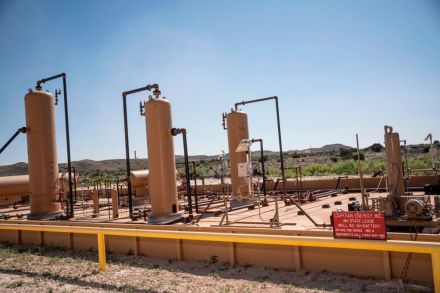
Boris Johnson is considering doing something that should be a duty for every leader. In the wake of sanctions poised to disrupt the 8 percent of domestic oil and 18 percent of diesel the UK imports from Russia, Johnson is reportedly toying with the idea of putting his country first and on the road to self-sufficiency by lifting the UK’s moratorium on fracking. The British government banned hydraulic fracturing, or “fracking,” in 2019. Fracking is a method of extracting oil and natural gas by drilling deep underground and fracturing shale rock with a fluid mixture (99 percent water and sand) that allows fossil fuels to flow out, be captured, processed and used to myriad ends (including gasoline).

What happens if Russia defaults?

Well down the list of things to worry about as the ghastly Ukrainian tragedy unfolds is the high probability that the Russian government will stop paying its international debts. But this risk should certainly be somewhere on that list – as the fallout from past defaults has shown. We have been here several times before. Moscow also defaulted on its debt in 1998, exacerbating a sell-off across all emerging markets. It led to the collapse of a huge US hedge fund, Long-Term Capital Management, which had to be bailed out to prevent a worldwide meltdown. This came too late to save many other investors from large losses. Ten years later, apparently isolated problems in the US mortgage market did cause a global financial crisis.

Russia’s war is a global cancer

From our US edition

One thing I have always found fascinating about Russia is that when they tell us they are going to do something, they usually do it. So when Moscow struck a military base near the Poland-Ukraine border that was a staging ground for arms shipments, we shouldn't have been surprised. They told us that was their next plan of action just twenty-four hours before they did it. But that’s just the beginning of what Russia likely has in store for the West, NATO, and the entire world if we aren’t careful. Russian president Vladimir Putin’s plan seems simple: chaos on a scale that will extend far beyond Ukraine. You see, Putin is starting to come to grips with the fact that he can’t win the war in Ukraine — at least on paper — unless he destroys Ukraine.

cancer

Kamala Harris laughs at a war

From our US edition

It’s nice to be prescient. On Thursday, in a column titled “Kamala Invades Poland,” I introduced the world to “cackle diplomacy.” “Silly partisan hyperbole!” I nearly heard as the social media-ites had their say. But then the vice president of the United States did me proud. Just a few hours after my column posted, there she was, holding a press conference with Polish President Andrzej Duda. Some say the people who run our government sent Kamala Harris to Eastern Europe in order to give her a chance to shine in the sphere of international relations. Watch her performance and tell me what you think. “I am here, standing here. On the northern flank...on the eastern flank...talking about what we what we have in terms of the eastern flank and our NATO allies.

Putin’s dream of annexing Ukraine is over

As the Russian invasion of Ukraine enters its third week, it is becoming abundantly clear that the Kremlin’s maximalist geopolitical aims of regime change and a ‘greater Russia’ which includes Ukraine and Belarus are no longer achievable. The question now is how much damage will Russian forces inflict on Ukrainian cities and their brave defenders before Putin and his advisors lower their ceasefire conditions to terms that Ukraine’s leaders and population can accept. Ukraine is in a strategically stronger position than many in the West appreciate, but the war on the ground is still stacked in Moscow’s favour in the short term.

Peace and its consequences in Ukraine

From our US edition

It is now a matter of consensus that Vladimir Putin never intended to fight the type of war that now faces him in Ukraine. What was plainly meant to be a blitzkrieg-style assault has devolved into a war of attrition, with death, destruction and violence on a scale unseen in Europe since the disasters of the last century. It is quite plain that the Kremlin, despite its bluster, is aware of this. The Kyiv government's claims of Putin dismissing his generals and raving in fury at his security services are consistent with events on the battlefield; indeed, after two weeks of fighting, Russia has only managed to decisively claim one Ukrainian city.

volodymyr zelensky ukraine invasion

Don’t buy Biden’s ‘Putin price hike’

From our US edition

The Putin price hike. That’s the line the Biden administration is using to absolve itself of blame for higher gas prices. “Russia is one of the three largest oil producers in the world,” White House spokeswoman Jen Psaki said in a social media video meant to deflect criticism from President Joe Biden. “And the fact that they started this conflict, invaded a foreign country, and they are such a big producer of oil in the world is the reason why the global oil markets are disturbed and why gas prices are going up.” The administration banned Russian oil imports this week, with the House of Representatives approving a similar ban on Thursday.

Can Boris get the Saudis to pump more oil?

The oil price is up by more than 40 per cent since the start of the year. It is being driven up by the Russian invasion of Ukraine, the lack of investment in oil and turning the world economy on and off again: US production is still not back to pre-pandemic levels. In the immediate term, as I say in the Times today, pretty much the only way to bring the price down is to get Saudi Arabia – which has 1.5 to 2 million barrels a day of spare capacity – to pump more. The West’s relationship with Saudi Arabia has always been morally problematic.

vatican

Why won’t Pope Francis condemn Russia?

From our US edition

On February 25, the day after Russia invaded Ukraine, Pope Francis met with Aleksandr Avdeyev, Russia’s ambassador to the Holy See. Yet rather than summoning Mr. Avdeyev to the Vatican, Francis called at the Russian embassy, just two blocks from the Castel Sant’Angelo. The visit was a violation of diplomatic protocol. Heads of state don’t just pop ‘round to the local embassy. Over the next couple of days, it became clear that Francis wouldn’t be paying the same honor to Ukraine’s ambassador. Even more strikingly, Francis refused to condemn Russia for the attack. Vatican-watchers fumed. On February 28, the Vatican’s secretary of state released a video condemning the conflict “unleashed by Russia against Ukraine.

Don’t make war in Ukraine about Putin’s mental health

There was a time when supposedly serious commentators on world affairs used to at least feign historical knowledge. They might quote Bismarck or Castlereagh. Now, international relations punditry, like almost everything else, has succumbed to the language of pop psychology. Vladimir Putin is ‘gaslighting’ the Russian people, we are told, motivated by his ‘hypermasculinity’. His invasion of Ukraine is, according to one commentator on Radio 4 this morning, ‘unforgivable abuse’. I thought abuse meant kicking a dog or being cruel to a partner. Now it means starting a war. It’s almost as though we’re unable to think of Putin as anything other than a nasty contestant on reality TV.