Russia

Why Biden’s slip-up is so revealing

From our US edition

The White House might have issued the fastest correction of a sitting US president’s remarks in history this weekend. But it doesn’t matter one bit. The bottom line is Joe Biden — and most of the civilized world — wants to see Vladimir Putin out of power in Russia. More to the point: they want to see his regime changed and him most likely Gaddafi'd for his sins. And, to be frank, who can blame them? There is just one problem: getting rid of Vlad means World War Three. And I can tell you from gaming out such a conflict countless times in simulators, such a conflict leaves tens of millions of people dead. But let’s step back for a moment. I'm going to cut the president a little bit slack for saying out loud what we are all thinking.
regime change

Germany’s progressives have a Putin problem

Eighty-nine years ago this week, the German Social Democrats in the Reichstag cast the only votes opposing Adolf Hitler’s dictatorial power grab, the Enabling Act. Today’s SPD members often cite that moment as the proudest in their party’s 146-year history. With a memory like that, there is something awkward about the current SPD Chancellor’s position. Olaf Scholz is now having to come to terms with decades of SPD appeasement towards the dictator in Moscow. Before Putin’s invasion, Russian doves could be found across the German political spectrum, but Scholz's now-ruling SPD has an especially long and developed history of Kremlin cosiness.

Could Biden gaffe us into world war three?

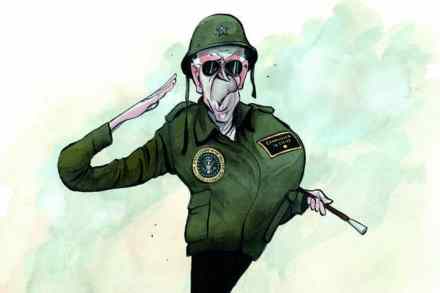
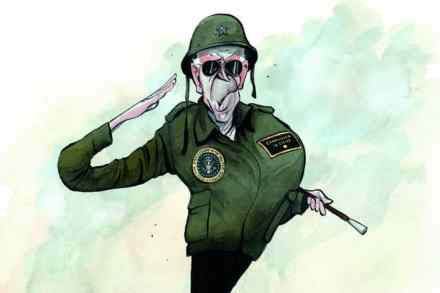
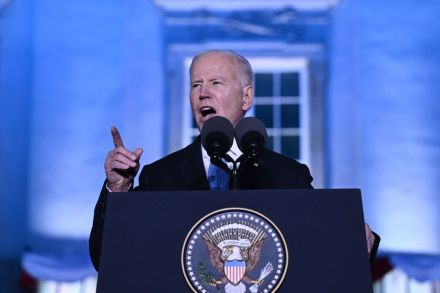
‘I want your point of view, Joe,’ Barack Obama once told his vice-president Joe Biden. ‘I just want it in ten-minute increments, not 60-minute increments.’ Obama understood Biden’s biggest flaw – his mouth runs away with him. He’s a verbal firebomb always threatening to go off. Last night, oops Biden did it again. As he rounded off his fiery speech in Poland against Vladimir Putin and autocracy, he concluded: ‘For God’s sake, this man cannot remain in power.’ The onset of senility had reduced the dangerousness of Biden’s loquacity The White House, in what is now a familiar routine, issued a quick clarification. The President was not demanding ‘regime change’ in Moscow.

No more dithering over Ukraine

From our US edition

The extraordinary skill, courage and effectiveness of Ukraine’s fighting forces have given the US and NATO an extraordinary opportunity to reestablish military deterrence in Europe and show the Kremlin that unprovoked military aggression will be repelled and ultimately defeated. But President Biden and NATO leaders are dithering. They are simply not acting with the urgency needed to fully support Ukraine’s military. It’s the same failure they displayed for the year prior to the invasion, when Putin was building up tens of thousands of troops along Ukraine’s border. Even now, the US and NATO are hesitating to provide the full complement of essential weapons to Ukraine, including air-defense systems, MIG fighters and a lot more drones, anti-tank and anti-ship weapons.

ukraine
warsaw

Biden’s Warsaw speech was both baffling and moving

From our US edition

Poland “Biden fell asleep.” Perhaps a thousand jokesters posted this and similar jibes in the livestream comments as we waited for the president to speak from Warsaw. Thousands of Poles, and doubtless many Ukrainian refugees, were gathered around the Royal Castle in the center of the Polish capital to wait. Biden trotted out — old but amiable and very much awake. In fact, after spending two days meeting refugees, Ukrainian representatives and Polish politicians, he looked surprisingly sprightly. God help me for saying this but I have a soft spot for the president.

Why Russian tactics won’t win the war

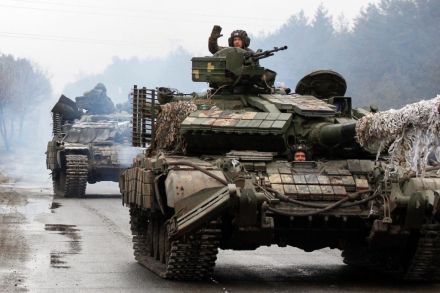
As the Russian invasion of Ukraine enters its second month, the war has settled into a largely attritional struggle – and the picture is very different across the various fronts. Russian forces have been forced on to the defensive in many areas. The Russian ministry of defence has announced that the ‘first phase’ of the invasion is over, to be replaced with a more limited focus on Donbas in the east of Ukraine. The reason for this is simple: Ukrainian forces have not only stopped the Russian advances around Kyiv in the north and Mykolaiv in the south-west but have begun to regain towns and cut key Russian supply routes.

Is Putin’s war spreading?

Yerevan, Armenia ‘This is our land,’ Anna says, looking out over her roadside flower shop. ‘Lenin promised it to us.’ Her father was born across the mountains in Russia, one of around 100,000 displaced Armenians only able to return home after world war two. ‘But thanks to Lenin, we have our own country. A free country – at least for now.’ As the fighting in Ukraine stretches into its first month, another conflict between two former Soviet states might not be far away. Last year, a brief but bloody war broke out between Armenia and Azerbaijan over the breakaway region of Nagorno-Karabakh, which had been autonomously governed by ethnic Armenians over the past three decades.

Was Biden’s chemical weapons threat a gaffe?

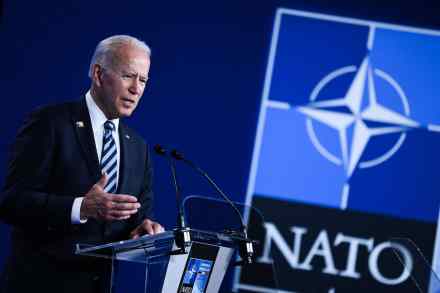
Did Joe Biden mean to threaten Russia with a chemical weapons attack? That seemed to be what he implied at yesterday’s Nato summit when he said Russia using chemical weapons in Ukraine ‘would trigger a response in kind’ from the US. To respond ‘in kind’ means to respond in the same way – i.e. by firing chemical weapons back at Russia. Given that the US committed to destroying its remaining stockpiles of those munitions when it signed the Chemical Weapons Convention in 1993, it would seem very unlikely that this is what Biden meant. Or indeed, that he would have any chemical weapons to unleash in the first place. There is something to be said for ambiguity.

A state of virtual war

From our US edition

My husband came into the living room the other day as I was sitting on the couch, scrolling on my computer — doomscrolling to be more accurate. “What are you doing?” he asked. “Are you watching... war?” We laughed at the absurdity of the comment but he wasn’t wrong. That’s exactly what we had been doing for days. Watching war on social media. Needless to say, it was a challenge to focus on this piece. As the conflict escalated rapidly in Ukraine, I couldn’t tear myself away from the drama as it unfolded on Twitter. Putin seemed backed into a corner, desperate and using many of the same barbaric tactics he used in Syria. Bombing hospitals. Bombing kindergartens. Killing civilians.

war

How bad could a Russian cyberattack be?

From our US edition

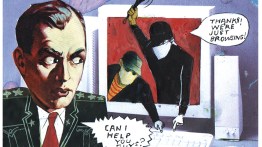
When I have designed wargames around a NATO-Russia conflict, I often left out cyberattacks for a simple reason: it was just too complicated. Too many unknowns make an accurate simulation impossible. The number of targets, scale of the attack, damage done, how the attack could be carried out and its ramifications were beyond calculation for a mere simulation on the scale I was running using just consumer-based computer technology. Honestly, nuclear war seemed easier to think about, and that says a lot. But that should give us pause. Our world is basically a giant computer now, with cloud-based networks controlling virtually every aspect of our lives, from sewage and water treatment plants, to our electrical grid, to our smart homes, and on and on we go.

cyberattack

See this Russian hip hop star before they arrest him: Oxxxymiron’s Beauty & Ugliness reviewed

Grade: A+ I was going to review hyperpop chanteuse Charli XCX’s album this week, but it was such boring, meretricious, grandstanding 1980s retread electropop vacuity that I thought, nah, even if it is headed to the top of our ravaged charts. So have this instead. Oxxxymiron is Russia’s No. 1 hip-hop artist. Yes, Russian hip hop is indeed an oxxxymiron, much as would be Serbian reggae or Iranian gospel, but never mind. He’s a youngish Jewish bloke born in Leningrad, with a degree in Middle English from Oxford University, and is hugely popular in his home country. Is it any good, this album released late last year? It’s darker and nastier than US hip hop, full of menace and those icy synths the Russians seem to adore even more than their Iskander missiles.

What TV is telling Russians – and why they believe it

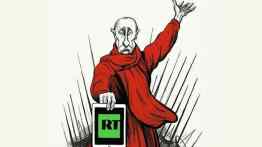
If you want to understand how Russians see the world, it helps to watch Russian TV. The Kremlin’s control over the airwaves permeates every part of Russia’s television schedules. There are no longer soaps or series during waking hours, just relentless TV shows about Russia’s place in the world. The popular and execrable ‘news’ discussion show 60 Minutes now often lasts two to three hours. It is as if EastEnders and Coronation Street were replaced with 200 minutes of state propaganda. Such shows depict Russia’s horrific assault on Ukrainian towns, cities and people as a special military operation. They are punctuated with clips of Vladimir Putin celebrating a successful and pre-emptive mission to free Donbas from genocidal Ukrainian butchers.

The West needs to spread doubt and fear

Zakhar Prilepin is a well-known novelist in Russia and an ultra-nationalist warrior in Donbas. Once a member of the National Bolshevik party (yes, the left/right implications of its name are as bad as they sound), he is now a strong Putin supporter. He appeared on Russian state TV last Sunday to emphasise that the Russians should not try to appear nice and humane to the West (not a clear and present danger, one would have thought). Prilepin argued that Russia’s approach should be as harsh as possible: ‘If they [the West] are seriously afraid of the conflict with Russia, of WWIII, of nuclear war or the escalation of the conflict, we should be convincing them that we’re ready for it, that we love it, that we like to make war.’ I regret to say he is completely right.

Portrait of the week: Spring statement, weapons for Ukraine and no more free-range eggs

Home Britain had provided Ukraine with more than 4,000 Next Generation Light Anti-tank Weapons, the Ministry of Defence said. Shell reconsidered its decision to pull out of investing in the large Cambo oil field, 75 miles off the west coast of Shetland. The government was expected to put into special administration Gazprom Marketing & Trading Retail Ltd, with which several councils have contracts to buy gas, though it does not come from Russia. Among those seeking to buy Chelsea Football Club, on sale after the sanctioning of its owner Roman Abramovich, a group called the True Blue Consortium was given support by John Terry.

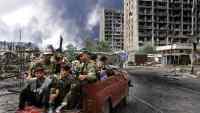
Inside Putin’s mind: the lessons of Chechnya

As far as Vladimir Putin is concerned, ‘we are nobody, while he who chance has enabled to clamber to the top of the pile is today Tsar and God’. So said Anna Politkovskaya, the eminent Russian journalist, in her book Putin’s Russia. She continued: ‘In Russia we have had leaders with this outlook before. It led to tragedy, to bloodshed on a huge scale, to civil wars. I want no more of that.’ She wrote those prophetic words almost two decades ago. A reporter for the Russian newspaper Novaya Gazeta, Politkovskaya came to prominence during the second Chechen war. Her accounts of that conflict, which officially lasted from 1999 to 2000, revealed Putin’s war against separatist rebels in the Caucasus as a hideous, corrupt sham.

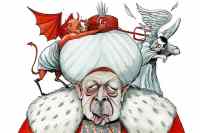
Turkey’s dilemma: whose side is Erdogan on?

Istanbul Vladimir Putin’s ill-conceived blitzkrieg in Ukraine has failed thanks, first and foremost, to the guts of Ukrainian soldiers and civilians. British and US-supplied anti-tank weapons have played a crucial role, too. But it’s Ukraine’s Turkish--made TB2 Bayraktar drones that have been the war’s most unexpectedly effective weapon. Unexpected not just because of their battlefield killing power but because the father-in-law of the TB2’s inventor and manufacturer is Recep Tayyip Erdogan – the only European leader to have once described himself as a friend of Vladimir Putin. Erdogan, with a foot in the East and West, has emerged as the war’s key power-broker – and his loyalty is being actively courted by both Moscow and Washington.

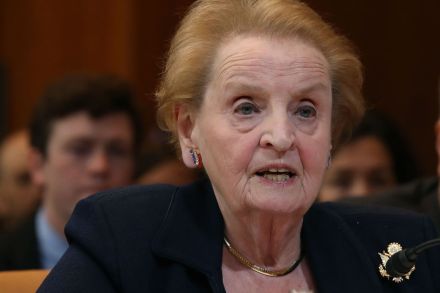
Madeleine Albright was an idealist overpowered by cynics

From our US edition

People die at random, of course, but it seems poignant that Madeleine Albright has died at the very moment the liberal post-Soviet world has met its own, more violent, end. Her term as Bill Clinton’s secretary of state coincided with the moment America, the most powerful nation in the history of the world, sat, unknowingly, at its own apogee. The Soviet Union was newly gone. America stood peerless and unchallenged. The attacks of September 11, 2001, and the twenty years of War on Terror that followed, were still unthinkable. China’s GDP rivaled Italy’s, not America’s. Even offhand, Albright could describe America as the “indispensable nation.” Charles Krauthammer had called it early — this was the “unipolar moment.

Volodymyr Zelensky’s sitcom is now as sad as it is funny

From our US edition

There are few world leaders braver than Volodymyr Zelensky. Ukraine's president spends his time holed up in his capital, defending his homeland from an onslaught of invading Russian troops. He's addressed every major parliament in the West to plead for weapons and aid. Joe Biden calls him weekly; Emmanuel Macron has started to dress like him. Given his present international standing, it's incredible to think that just six and a half years ago, Zelensky was settling down to watch himself play the president of Ukraine in the premiere of Servant of the People, the sitcom which set the stage for his political career.

stalemate

How will the battlefield stalemate end in Ukraine?

From our US edition

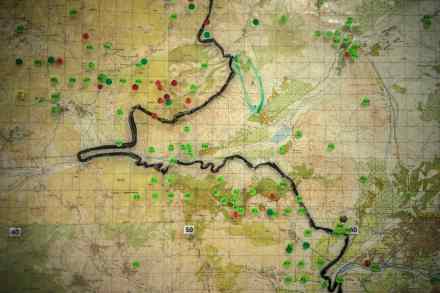
The simplest description of the war in Ukraine is this: stalemate, accompanied by constant, deadly bombardment. For the Ukrainians, that bombardment is aimed at the Russian military. For the Russians, it is aimed mostly at civilian targets, a deliberate strategy that is also a war crime. Russian artillery shells, cluster bombs and cruise missiles are killing tens of thousands of Ukrainian civilians and destroying their homes, schools and businesses. Meanwhile, Ukraine’s counterattack is imposing huge, irreplaceable losses on Russia’s army, killing soldiers, destroying their equipment and liquidating incompetent military leaders who come to the front to untangle the mess. Russia’s initial war plan failed, abysmally.