Justin Bronk

Justin Bronk is the Research Fellow for Airpower and Technology in the Military Sciences team at RUSI. He is also Editor of the RUSI Defence Systems online journal.

The West shouldn’t underestimate Russia in Ukraine

From our UK edition

Russia’s winter offensive appears to have begun with a decidedly underwhelming series of operations in the Donbas. So far results have ranged from grinding and very costly victories in the towns of Krasna Hora and Soledar, to an outright disaster at Vuhledar where most of Russia’s 155th Naval Infantry Brigade was destroyed, and its commanding officer killed, after becoming stuck and then fixed by artillery fire in the middle of recently re-laid Ukrainian minefields.   Meanwhile, a long-running operation by Wagner mercenary troops to take the partially encircled town of Bakhmut continues, and Russian forces are making probing attacks as far north as the Russian border near Kharkiv oblast and as far south as Zaporizhzhia oblast.

Why the West is reluctant to give Ukraine F-16s

From our UK edition

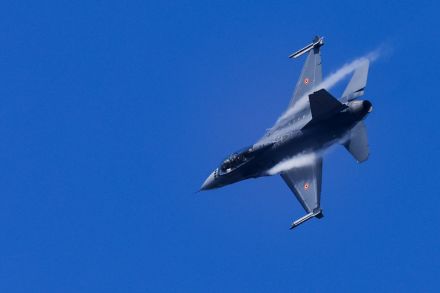
Ever since Russia invaded Ukraine almost a year ago, the questions of if, when and how to supply the Ukrainian Air Force (UkrAF) with western fighter aircraft have been a matter of fierce debate. President Zelenskyy has made repeated and impassioned calls for American-made F-16s in particular, as have UkrAF leaders and pilots.   Russia has a dense and highly lethal network of ground-based surface-to-air missile systems A significant majority of people in Europe and the United States want to see Ukraine emerge victorious and at peace on its own terms as soon as possible.

Don’t write off the Russian air force

From our UK edition

The Russian air force’s  failure to establish air superiority over Ukraine – and the consequent inability of its fighter and bomber aircraft to meaningfully affect the course of the war – has been one of the defining features of the invasion so far.    It has even become almost a given in policy and public discussion that Russian airpower is a busted flush. But recent research conducted by RUSI in Ukraine shows that in fact Russia conducted hundreds of strike sorties and fighter patrols deep inside Ukrainian airspace during the first three days of the invasion – which suggests it would be a dangerous mistake to underestimate Russian airpower as the war continues.

Why Russia failed to dominate the skies over Ukraine

From our UK edition

In the run up to the Russian invasion in February airpower analysts, including this author, were gloomy about Ukraine’s ability to defend its airspace. Even the more optimistic assessments assumed that Russia would mount a significant air campaign to destroy the Ukrainian Air Force on its airbases, coupled with large-scale strikes with stand-off cruise and ballistic missiles to blind Ukrainian long range early warning and surface-to-air missile (SAM) system radars. This would have forced Ukraine to move its mobile surface to air missiles away from the frontlines and to try and inflict a steady drumbeat of losses on Russian aircraft penetrating too far.

Ukraine defeats Russia in Kharkiv

From our UK edition

What began as a probing attack by Ukrainian mechanised forces towards the occupied town of Balakliia on 7 September has, with astonishing swiftness, turned into one of the most emphatic military victories in modern history. Having found a weak point in the Russian lines at Balakliia, Ukrainian forces swiftly advanced overnight to the town of Volokhiv Yar, and continued driving towards Sevchenkove during the morning of the 8th. Russian forces in the region were hurriedly sent to Sevchenkove to stall what was rapidly becoming a clear danger to a significant section of the frontlines around Chkalovske.

Ukraine’s Kherson offensive may have already been a success

From our UK edition

The Ukrainian armed forces launched a long-awaited offensive on Kherson this week. However, the counter-offensive was signalled for so long by both Ukrainian and western sources that the Russian army had plenty of time to significantly reinforce its positions there, meaning that the Kherson front is now more heavily manned by Russian troops than most other stretches of the frontline. Ukrainian government sources have requested a total blackout of media reports from the frontlines so exact details are sparse. But what is clear is that the Russian movement of forces has already had two positive effects for Ukraine, even before the actual counter-offensive operation was launched.

How Ukraine is sabotaging Russia’s army

From our UK edition

Ukrainian Special Operations Forces (SOF) or possibly partisan fighters have conducted successfully attacks on three significant targets in occupied Crimea since 10 August. An initial attack on the Saki airbase caused a fire that quickly spread to stored ammunition and fuel, resulting in multiple huge secondary explosions. These destroyed at least nine Russian fast jets and inflicted extensive damage to the base’s facilities and surrounding buildings. On 16 August further attacks were carried out on a large ammunition and equipment depot at the strategic railroad junction town of Dzhankoiskyi and another Russian airbase at Gvardeyskoye causing further fires and secondary explosions.

Is the war slipping away from Ukraine?

From our UK edition

After the decisive failure of Russia’s attempt to overthrow the government of Ukraine by seizing Kyiv, Kharkiv and other key cities in February and March 2022, Russia has concentrated its depleted forces in the Donbas and set itself far more limited objectives. In the two months since its retreat from the north of Ukraine, Russia has finally subdued the besieged defenders of Mariupol – who had been surrounded since the second day of the invasion – and slowly gained territory in Donbas. Since then Russia’s most notable conquest has been the small but important town of Popasna and the surrounding high ground that overlooks key supply routes into the city of Sievierodonetsk.

Inside Russia’s military collapse in Ukraine

From our UK edition

The Russian military has performed far worse in Ukraine than anyone could ever have predicted. After failing to take Kyiv, Russian troops have now been forced to focus on the Donbas region. Despite this greater concentration of forces, they are still struggling to make any major gains beyond the final capture of Mariupol, which had been under siege since the first days of the invasion without resupply or relief. For Vladimir Putin this represents a grand humiliation. But for the West, Russia’s struggling campaign offers an unrivalled opportunity to understand Russia’s capacity to pose a future military threat.

Russia and Ukraine’s fate is about to be decided

From our UK edition

The first phase of the Russian invasion of Ukraine has ended with a decisive defeat for Russian forces in the north of the country. The large scale Russian advances in the north west and north east were halted in the outskirts of Kyiv. Russian forces failed to take the encircled north eastern cities of Chernihiv, Sumy and Kharkiv and have subsequently been forced to withdraw to their starting positions in Belarus and Russia itself. The discovery of horrific Russian atrocities committed against the Ukrainian civilian population in the newly liberated towns has hardened Ukrainian determination to take back all of their lost territory rather than accept any ceasefire along current lines. In determining the outcome of this war, the next fortnight is likely to prove crucial.

Why Russian tactics won’t win the war

From our UK edition

As the Russian invasion of Ukraine enters its second month, the war has settled into a largely attritional struggle – and the picture is very different across the various fronts. Russian forces have been forced on to the defensive in many areas. The Russian ministry of defence has announced that the ‘first phase’ of the invasion is over, to be replaced with a more limited focus on Donbas in the east of Ukraine. The reason for this is simple: Ukrainian forces have not only stopped the Russian advances around Kyiv in the north and Mykolaiv in the south-west but have begun to regain towns and cut key Russian supply routes.

The Russian army is running out of momentum

From our UK edition

As the Russian invasion enters its fourth week it is clear that its forces are running out of momentum, although they continue to make limited territorial gains in the south and east of Ukraine. Having been denied a quick victory over Ukraine itself, Putin now needs to force the Ukrainian government to accept a ceasefire agreement that largely freezes the frontlines and allows him to claim a victory domestically. His strategy now appears to be to cut off the Ukrainian forces fighting a desperate battle to hold the line in Donbas in the east against combined Russian and separatist Donetsk and Luhansk forces from the rest of Ukraine, and to concentrate more firepower on the besieged cities of Mariupol in the south and Kharkiv, Sumy and Chernihiv in the north.

Why hasn’t Russia been able to stop Ukraine’s drone attacks?

From our UK edition

Among the many weapons being used by the Ukrainian military to inflict losses on the Russian invasion forces, several have risen to prominence in the country and on social media. Alongside ‘St Javelin’ and the ‘Ghost of Kiev’ which have mythologised the eponymous anti-tank missile and the Ukrainian air force’s Mig-29 fighters, the Bayraktar TB-2 unmanned aerial vehicle (UAV) has gained a symbolic place in the Ukrainian defensive arsenal. The TB-2 is a relatively small medium-altitude long endurance class drone. It weighs around half a ton, cruises at 70 knots (80 mph), and can carry up to four small laser-guided bombs with a practical engagement range of around 8km.

Putin’s dream of annexing Ukraine is over

From our UK edition

As the Russian invasion of Ukraine enters its third week, it is becoming abundantly clear that the Kremlin’s maximalist geopolitical aims of regime change and a ‘greater Russia’ which includes Ukraine and Belarus are no longer achievable. The question now is how much damage will Russian forces inflict on Ukrainian cities and their brave defenders before Putin and his advisors lower their ceasefire conditions to terms that Ukraine’s leaders and population can accept. Ukraine is in a strategically stronger position than many in the West appreciate, but the war on the ground is still stacked in Moscow’s favour in the short term.

The Russian army is failing – but not enough to lose the war

From our UK edition

There have been three major surprises for military analysts since the Russian military invaded Ukraine. The first has been the extent of the difficulties faced by the Russian army in terms of logistics, coordination of forces, morale and mobility. The second has been the failure of the Russian air force to achieve air superiority over Ukrainian air defences, and to operate against Ukrainian ground forces at scale. The third has been the extraordinary unity and effectiveness of the Ukrainian resistance, which has significantly slowed the Russian advance in the north of Ukraine and inflicted major personnel and vehicle losses on Russian forces on all fronts.