Christopher Booth

Christopher Booth is a former BBC Moscow bureau chief

A true popular uprising is taking place in Georgia

From our UK edition

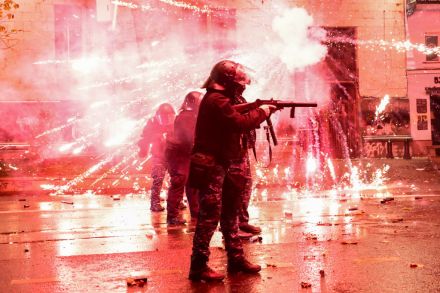
Georgia’s government recently decided to spend money on fresh black ‘Robocop’ uniforms for their riot police, with shiny new helmets to match. After parliamentary elections in October, they might have been forgiven for thinking the kit would go back on the precinct shelves with barely a scuff – a little shopsoiled at worst.  Protests immediately after the vote were predicted, but turned out to be sporadic and rudderless. The lacklustre opposition figures were hopelessly divided, little known and incapable of inspiring a following.
Remembering Gorbachev

From our UK edition

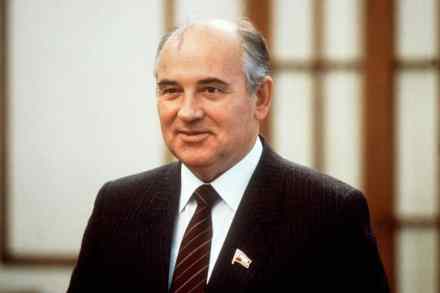
In early January 1997, I met my boyhood hero. It was in the grounds of his wintry dacha outside Moscow. A man in late middle age, though still sprightly, he wore a padded anorak against the cold and a dark patterned scarf. Snow lay fat on the bony branches, with more softly falling. His boots creaked over the frost on the pathways as we wandered and chatted: me in my broken Russian, he in his easily recognisable, gentle southern accent. It had been five years since he had signed away the Soviet Union at a pen stroke, and a little longer since he had been de facto discarded from genuine power. There were no bodyguards in evidence. This was yesterday’s man and nobody’s prize.

Can Moldova resist Russia’s embrace?

From our UK edition

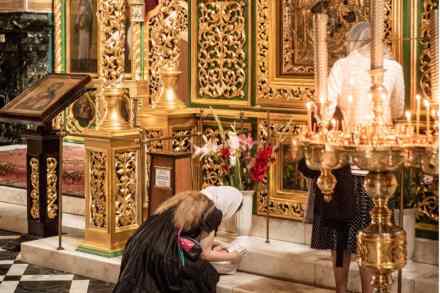
At the Cathedral of the Nativity, in the middle of Moldova’s capital Chisinau, many of those bowed in prayer before the icons are visitors to the country. Few among them know how long they must stay. The orthodox liturgy plays out across the surrounding park through loudspeakers, tempering thundery late August heat with the surging tones of the choir. Finally, as the church empties, the members of the congregation emerge to cross themselves, then lower their heads at the door, before returning to what for now passes as normal life. Many are refugees, and for them genuine normality can only be a distant imagining. Rain suddenly falls. A reliable way to upset a Moldovan is to describe the country as ‘the poorest in Europe’.

Do ‘ordinary Russians’ support the war?

From our UK edition

There was a whiteboard in the BBC Baghdad bureau for noting down phrases we hoped to ban from the airwaves. It had nothing to do with political correctness or self-censorship. This was all about self-improvement. The list of words was titled ‘Not Martha Gellhorn’, in honour of the veteran war reporter who wrote so well – especially when compared with us. We were perfectly aware of our shortcomings, though, and strove to do better, with the whiteboard serving as an aide memoire. It helped keep the prose fresh when deadlines were hectic, and when the temptation was to reach for the cliché closest to hand.

Putin’s cult of war

From our UK edition

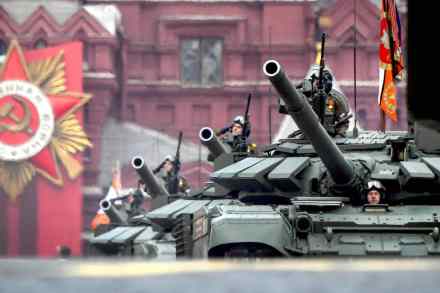
This idolisation of the Soviet military is Russia’s modern tragedy. Not least because it is crucial to Putin’s way of controlling the country. Russians are prodded to believe in a golden thread linking the achievements of an unsullied Red Army with what their soldiers are perpetrating in Ukraine today. This is why it was entirely to be expected that at today’s Victory Day parade Putin again couched his so-called ‘special military operation’ in terms of a fight against ‘Nazis’. It’s also why the Russian foreign minister, Sergei Lavrov, has compared Ukraine’s Jewish president to Hitler.

Is Putin in pain?

From our UK edition

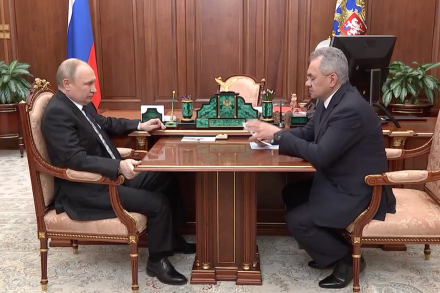
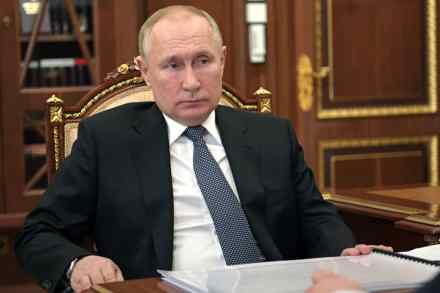
Is Vladimir Putin in pain? Until now, there has been plenty of chatter about the wellbeing of his minister of defence, Sergei Shoigu. Before the war, this veteran political survivor from the Yeltsin era was famous for being photographed on manly Siberian expeditions with his new patron, the bare-chested saviour of ‘All the Russias’. Putin and Shoigu camped out together in the taiga, with moody fireside photos and a spot of fishing – ‘Brokeback Mountain 2’, jested Russian bloggers. Though in reality, the two looked a more like Jack Lemmon and Walter Matthau in a dreary remake: Frumpy Old Men.

Why are elite Russian musicians backing Putin?

From our UK edition

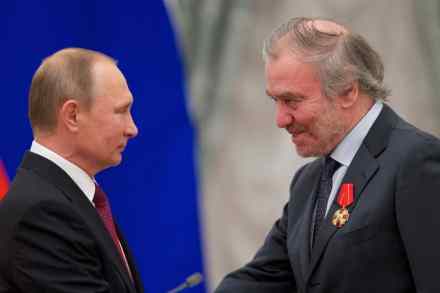
A world away from the stupendous horror perpetrated by Russian forces in Bucha and Kramatorsk, a parallel conflict is being grittily fought in quite other theatres. La Scala and The Metropolitan Opera are two of them. Valery Gergiev, Vladimir Putin’s most favoured conductor, is at the heart of the crossfire. His overseas contracts went up in smoke at the start of the invasion after he failed to recant his long-standing admiration for the Russian president. On one side of the lines are those who would support him, and who charge that Gergiev’s detractors are ‘cancelling’ Russian culture wholesale. Chief among such is Putin himself: ‘The names of Tchaikovsky, Shostakovich and Rachmaninoff are being removed from playbills!

Russia’s failure to communicate

From our UK edition

'So you’ve got one, right, Chris?' Lev Lvovich leaned in closer, and his beery breath was warm and damp on my face. 'It’s all OK,' he reassured me with a slur. 'We’re friends. You can tell me!' It was the middle of the evening, already long dark, and Lev and I were playing a drunken game of chicken to see who might reveal something valuable to the other. I was the BBC Moscow bureau chief, and he was our ‘kurator’ at the Russian foreign ministry, the guy who signed off on accreditations, and who was charged with keeping an eye on what we reported. 'Got one what?' I genuinely had no idea what he was talking about. Lev and I would meet every now and then to pretend we were good mates.

Russia ‘realists’ have very little to say about evil

From our UK edition

‘Every way of a man is right in his own eyes’, the Book of Proverbs says: it makes us feel good to know we’re on the side of the angels. The corollary is that other men must be in the wrong, and therefore blameworthy, and this shores up our self-regard still further. Of course, taken to extremes, the outcome is full-blown narcissism. But in certain schools of international relations, there’s a kind of especially vigorous anti-narcissism in fashion: the idea that when it comes to the sins of the world, ‘we’ in the west are almost always the guilty party (excepting those enlightened enough to perceive this truth). Ukraine is the latest conflict where self-flagellants flex a version of the argument.

Russia’s ‘denazification’ project is only just beginning

From our UK edition

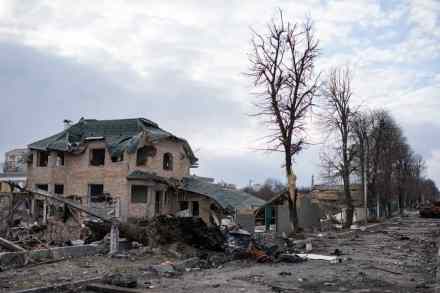
Truth, infamously, is the first casualty of war. But the truth, in modern Russia, was critically wounded before it got anywhere close to the staging grounds, let alone the battlefield. And still the disinformation project limps on. The most recent and blatant example of the Kremlin’s communications modus operandi is its instant write-off as ‘fake’ of photographs and video from Bucha, a quiet town outside Kyiv, now littered with civilian corpses and the broken machinery of war. Perhaps the invading troops left in a hurry, or perhaps Bucha was meant as some kind of warning, but the perpetrators didn’t care to clear up their handiwork.

The true story about Russian lying

From our UK edition

We were having a few drinks in a rented flat in the centre of Grozny in late 1994. A bunch of foreign reporters, including myself, who were usually based in Moscow, had been sent to check out the strange conflict flickering in Chechnya. It was late at night. The room was full of fag smoke. Someone played a guitar, inevitably. There was vodka. Outnumbered women journalists were enduring attention from men who were digging warfare, and living their best life to date. In a few cases, it was vice-versa: young male producers made interesting targets for seasoned female reporters. At the time, the background noise from the Kremlin was that if Chechen rebels didn’t stand down, there would be unspecified but terrible consequences.

Is this Putin’s ‘off ramp’ out of Ukraine?

From our UK edition

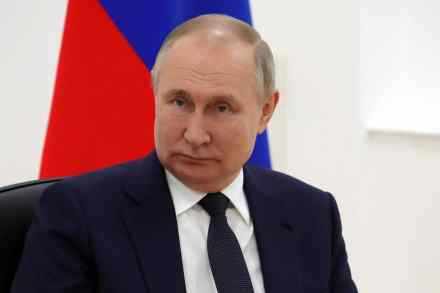
Vladimir Putin will soon have to select the version of defeat that suits him best. His plan A – a lightning quick invasion, followed by installing a government in Kiev, then horse trading with the effete and corrupt West – has failed entirely. To that extent, he has already lost. For now, Putin has applied plan B. It consists of tactics used elsewhere, such as in Grozny and Aleppo, which allows him to indulge his penchant for blind slaughter while waiting for someone to blink.

It doesn’t matter if Putin is mad

From our UK edition

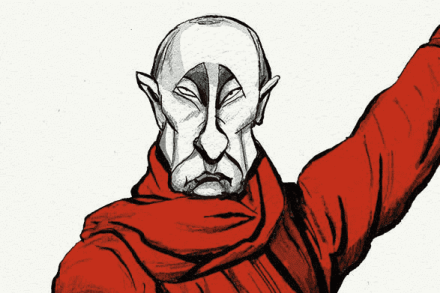
Mike Tyson put it simply: ‘Everyone has a plan until they get punched in the mouth’. And Vladimir Putin has just experienced a blistering one-two: fierce resistance on the battlefield, trashing his plans for blitzkrieg, followed by the rabbit punch of international sanctions that will soon rock the whole of Russian society. ‘Putinism’ is not an ideology that can command intellectual or spiritual loyalty if it doesn’t deliver. It is not an ‘ism’ like Marxism. It is simply a Mephistophelean deal with the Russian people: if I can have double-glazing and a half-decent smartphone, you can have yachts and palaces. That deal is now off the table.