Russia

The drone era has arrived

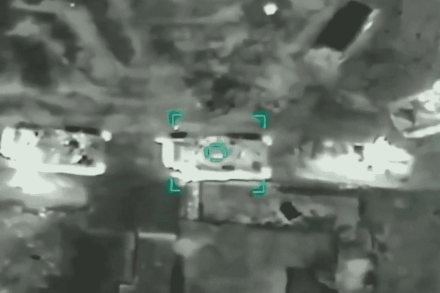
The Ukrainian airforce has so far held out in the battle for the skies. Russia continues to rely on missiles for deep strikes into Ukrainian territory while the defenders have been able to contest the airspace by employing drones. Ukraine has proven a turning point in the age of drone warfare. The first great drone superpower, the United States, used its unmanned aerial vehicles in places like Afghanistan where few fighters had the technology to shoot them down. But Ukraine isn’t primarily using drones to hunt people, loitering over targets for days; rather, it's using them to go after Russian armoured vehicles and supply columns. This seems like a strategy designed particularly for Russia.
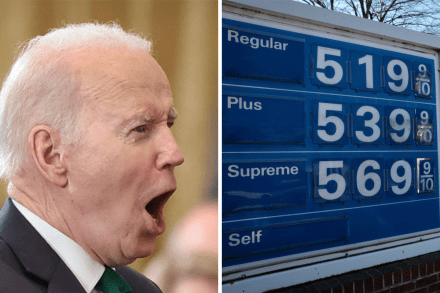
Old man yells at gas prices

From our US edition

President Joe Biden has lashed out at fossil fuel companies, accusing them of using high gas prices to “pad their profits at the expense of hardworking Americans.” These are the same fossil fuel companies, by the way, that two years ago were charging a measly average of $1.84 a gallon. They’re also the same fossil fuel companies that in 2020 donated $1.6 million to Biden’s presidential campaign. But no matter. If nothing else, Biden’s inveighing against Big Oil takes me back to my more youthful days when progressives were less afraid to run hard against what they called “the polluters.” Back then, every oil derrick was a seething Deepwater Horizon just waiting to explode and blackface the local terns and herons.

Is Germany already backsliding on Russia?

Just three weeks after Chancellor Olaf Scholz announced that Germany would directly arm Ukraine, Europe’s economic powerhouse is running out of weapons to send. 'We’re delivering Stingers. We’re delivering Strelas. The Defence Minister has looked at what we can deliver but honesty also requires us to say: we don’t have enough,' Foreign Minister Annalena Baerbock told the Bundestag last week. 'If we could conjure up more weapons to send, then we would.' Scholz then appeared to revert to an old German habit: trumpeting the importance of diplomacy as an end in itself.

yemen

What’s the difference between Yemen and Ukraine?

From our US edition

Millions of innocent civilians uprooted from their homes. Residential areas turned into dust, rubble and wire. Thousands of people killed in errant airstrikes. Store shelves emptied of basic staples. A humanitarian crisis dominating the everyday lives of a large swath of the population, who just want to escape the shelling and the fighting. This is the scene the world now equates with Ukraine, which has been subjected to a barbaric war of choice courtesy of Russian president Vladimir Putin. Yet for one poverty-stricken nation more than 2,400 miles to the south, this has been the grim reality for years.

Where Europe ends and the war begins

From our US edition

On a nondescript bridge in the northeastern Hungarian town of Záhony, the European Union ends and the war begins. Even amid the turmoil in Ukraine, the local border crossing is strangely quiescent. The flood of cars from the early days of the war has slowed to a trickle, and big eighteen-wheelers continue to cross over from Hungary into Ukraine. There are only two signs that something is amiss: a small notice on the door of the nearby Penny Market asking customers to help Ukrainian refugees, and a massive billboard of Hungarian prime minister Viktor Orbán’s stern face, promising voters that he will keep Hungary safe and peaceful.

viktor orban eu hungary

How much is Europe (still) paying Putin for oil?

When sanctions were imposed on Russia there was a big exception: Europe was still buying and paying for oil – leading to a bizarre situation. The West was doing everything it could to help Ukraine while still sending Putin hundreds of millions of dollars a day. But how much was that revenue worth to the Kremlin? As sanctions began to hit Russia, the price of Brent crude (the oil benchmark) soared to $130 a barrel, the highest since the 2008 financial crisis: an increase of over 90 per cent. It’s fallen since then but today it's still sitting between $107 and $115 dollars a barrel – well above where it had been weeks ago. But are these price rises making money for the Kremlin?

Boris’s Brexit-Ukraine comparison was a mistake

After years of post-Brexit rancour, the last few weeks have been a striking display of European (not just EU) unity. Britain was the first to send arms to Ukraine, now the EU is (for the first time) buying weapons so it can follow suit. No one forced Norway’s strategic wealth fund to disinvest all Russian assets, but it chose to. Even Switzerland is marching in lockstep with the sanctions. Putin had counted on European divisions, which had certainly been on display when Germany was still going ahead with the Nord Stream 2 pipeline, in defiance of protests and pleas from Eastern Europe and the European parliament.

Andrew Sullivan searches for spirituality

From our US edition

It was daunting preparing to meet Andrew Sullivan, considered one of the cleverest, most fearless journalists of his generation. There is the academic pedigree: the scholarship at Oxford — where he was also president of the union and a celebrated actor — followed by the PhD in political theory at Harvard, where he produced an iconic treatise on the work of British mid-century philosopher Michael Oakeshott, performed the entirety of Hamlet all by himself — "a whacked-out mid-1980s" version — and modeled for Gap. And there is the journalistic firepower. At twenty-eight, in 1991, Sullivan became the youngest ever editor of the New Republic, America's most august political magazine.

Putin and the Muslim world

Several thousand Muslim Chechen fighters are reportedly massing on the edge of Kiev. Syrian volunteers, filmed this week holding assault rifles and chanting pro-Moscow slogans, are en route to the Ukrainian frontlines. Is Vladimir Putin running out of Christians for his war machine? The number of Russian battlefield casualties has certainly been high. Up to 7,000 Russian infantry have been killed since the invasion began, according to US estimates. That would put Russian casualties at more than the entire American losses in 20 years of fighting in Afghanistan and Iraq. As many as 14,000 Russians may have been injured.

It doesn’t matter if Putin is mad

Mike Tyson put it simply: ‘Everyone has a plan until they get punched in the mouth’. And Vladimir Putin has just experienced a blistering one-two: fierce resistance on the battlefield, trashing his plans for blitzkrieg, followed by the rabbit punch of international sanctions that will soon rock the whole of Russian society. ‘Putinism’ is not an ideology that can command intellectual or spiritual loyalty if it doesn’t deliver. It is not an ‘ism’ like Marxism. It is simply a Mephistophelean deal with the Russian people: if I can have double-glazing and a half-decent smartphone, you can have yachts and palaces. That deal is now off the table.

Why is Putin firing a hypersonic missile in Ukraine?

Putin, like many other belligerent autocrats, does like his Wunderwaffen, or ‘wonder weapons.’ Now it appears he’s even used one in an act of wasteful overkill in Ukraine: using the hypersonic Kh-47M2 Kinzhal (Dagger) missile to apparently destroy an arms depot in western Ukraine. The Kinzhal was one of the six ‘magic weapons’ Putin unveiled in a moderately-deranged section of his 2018 state-of-the-nation address, which was memorably enlivened by a computer animation of what looked like a nuclear attack on Donald Trump’s Mar-a-Lago resort in Florida.

Time for Turkey to align with the West

From our US edition

To deter Russia from invading Ukraine, the US and its Western allies vociferously vowed unified and decisive action against Russia. Countries like Hungary and Turkey, which enjoy favorable relations with Russia, were a concern, as it was not clear whether they would join US-led sanctions against Russia. Turkey’s refusal to enforce these sanctions would be a significant lifeline for Russia and show division in the Western camp. Turkey’s uncertain loyalties don’t come as a surprise. For one thing, Turkey is heavily dependent on energy imports from Russia. For another, Turkey has had a turbulent history with the Kremlin. When Putin annexed Crimea back in 2014, Turkey only expressed meek disapproval, a stark departure from its historical strategic stance regarding Ukraine.

west

The Russian army is running out of momentum

As the Russian invasion enters its fourth week it is clear that its forces are running out of momentum, although they continue to make limited territorial gains in the south and east of Ukraine. Having been denied a quick victory over Ukraine itself, Putin now needs to force the Ukrainian government to accept a ceasefire agreement that largely freezes the frontlines and allows him to claim a victory domestically. His strategy now appears to be to cut off the Ukrainian forces fighting a desperate battle to hold the line in Donbas in the east against combined Russian and separatist Donetsk and Luhansk forces from the rest of Ukraine, and to concentrate more firepower on the besieged cities of Mariupol in the south and Kharkiv, Sumy and Chernihiv in the north.

Russia has never been a part of the West

In 1697 Tsar Peter the Great set out on a great journey across western Europe, seeking the support of European monarchs in his confrontation with the Ottoman Empire. Unsuccessful in securing alliances, he returned instead laden with ideas acquired in his travels through Britain and Holland, which he promptly put into action in modernising Russia. The most visible symbol of this new nation was Saint Petersburg, the intended new capital of his empire. By 1858, an English visitor to the city described it as ‘one of the handsomest cities in Europe’, with a street of residences ‘so large that 50 extend over an English mile.

The Hunter Biden disinformation campaign

From our US edition

Democrats are obsessed with the idea that when they lose elections it must be because of outside forces, usually some sort of Russian. But what we know now is that if anyone has been manipulating our once precious democracy, it has been the Democrats. The latest findings by the Durham investigation make clear that the 2016 Clinton campaign paid for and implemented a massive disinformation strategy to falsely link Donald Trump to Russia, and then worked the intelligence services of the United States and the mainstream media to drive that narrative deep into the American psyche. When Trump won, Democrats used that same strategy to try and drive him from office.

walter duranty

The reporter who covered up the Ukrainian famine

From our US edition

Now would seem to be an excellent time for the Pulitzer Committee to withdraw the award it bestowed on Walter Duranty in 1932 for his reporting on events in the Soviet Union. I know I am far from the first to call on the Pulitzer Committee to withdraw the award. I know as well that the Pulitzer Committee responded to one such call in 2003 by declaring that it could find no “clear and convincing evidence of deliberate deception” in Duranty’s 1931 reports from the Soviet Union published in the New York Times in 1931. Those thirteen reports on which the original award was based, admits the Pulitzer statement, amount to work that “measured by today's standards for foreign reporting, falls seriously short.” And time has moved on, etc., etc.

Why the Ukraine war might not end

From our US edition

One thing anyone who studies foreign policy for a living knows is that fairytale endings never happen in war. I suspect Ukraine will follow this sad trend. Why should we expect anything different? War never conforms to humanity’s desire for the good guys to defeat the bad guys. Indeed, great power politics grounded in realpolitik but shaped by mankind’s sense of morality is a mixture that yields tragic results. The demand for closure, clean endings to conflicts where the antagonists get punished, is rarely fulfilled. Wars only have happy endings in the movies. In fact, some wars never seem to end, as the combatants are left unfulfilled — or just haven't been weakened enough.

ukraine

Don’t cancel Russian culture

From our US edition

In the three weeks since Vladimir Putin launched his shocking invasion of Ukraine, the West has surprised the world with the severity of the economic sanctions it's imposed. No one has been more surprised than Putin himself, who believed the West too soft and his own nation’s oil too crucial to the global economy. How the West can further support Ukraine — while also avoiding the not-insignificant risk of a nuclear war — is a complex question. It will not be answered, however, by indulging in ugly prejudices or shunning Russian culture writ large. Since the war began, vandals have targeted businesses that are Russian-themed or owned by Russian expatriates.

The problem with that ‘stalled’ Russian convoy

From our US edition

The amount of disinformation coming out of Ukraine is unsurpassed in modern history. Unlike the glory days when outlets like CNN sent knowledgeable reporters into combat zones looking for actual information, today most mainstream media coverage is based on borrowed social media video, or just made up. The problem with the former, social media video, is that it lacks context. Here's eight seconds of a tank blowing up. Where was it shot? When? Was the explosion caused by a mine, a missile, or something internal to the tank? Is it Russian or Ukrainian (the tank and the missile)? In most cases, the media outlet has no idea of the answers. Even if they stumble onto the basic who-what-where, the exploding tank video is devoid of context.