Leon Hadar

Did the realists underestimate Putin?

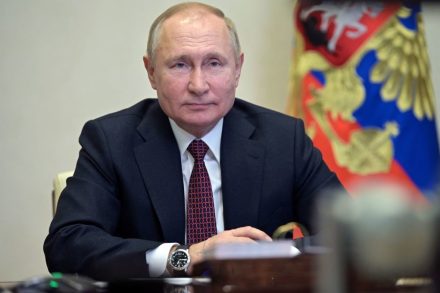
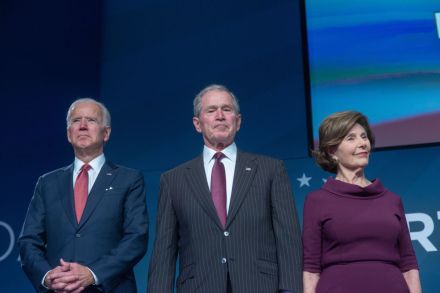
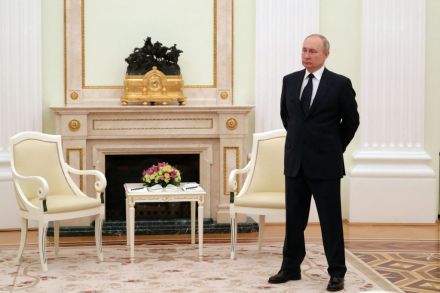
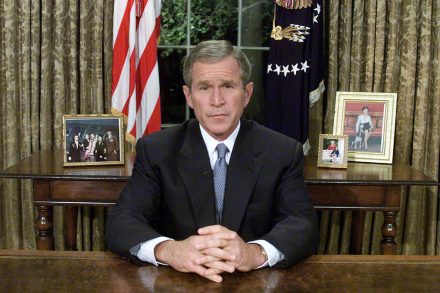
Liberal internationalists, neoconservatives and NeverTrumpers are having the time of their lives these days, ridiculing anyone on the political right who has ever said a good thing about Vladimir Putin. Those “Putin groupies” as a Wall Street Journal columnist described them, include former Italian prime minister Silvio Berlusconi, far-right French presidential candidate Marine Le Pen, Hungarian prime minister Viktor Orbán and, of course, Trump himself. Trump described Putin as a “genius” and said he was a better president than Barack Obama — and he isn’t the only American president to compliment the Russian leader. President George W. Bush said about Putin, “I looked the man in the eye. I found him to be very straightforward and trustworthy.
putin

Noninterventionists never win arguments

I’ve been thinking about where I was on the eve of the US invasion of Iraq in 2003, and my memories of the event are quite depressing. What have we learned? As a research fellow at the Cato Institute at that time, I was working with other analysts preparing research, authoring commentaries, publishing op-ed articles and giving interviews to the broadcast media, warning about the consequences of the coming American military conquest in the Middle East. It's not polite to toot one’s own horn, but we were right.

terror

America’s long history of sitting out Russian invasions

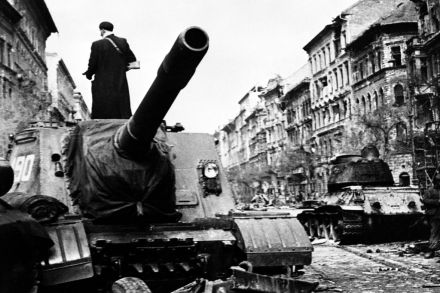
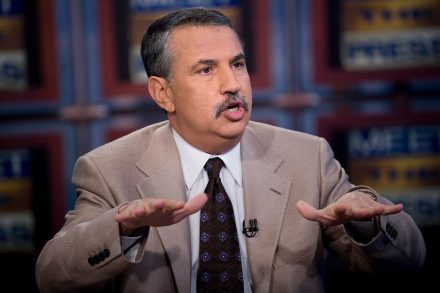
By now, my colleagues in the media may have convinced you that Russia’s invasion of Ukraine has been a “transformative” event, a challenge by a reactionary dictator to the “liberal international order,” if not an end to one historical epoch and the beginning of a new one. The world has turned upside down, nothing will again be the same, blah, blah, blah. When millennials make such apocalyptic observations, I can understand. Like Founding Father Thomas Paine, they assume that each day marks the “birthday of a new world.” But what about baby boomers like New York Times columnist Tom Friedman, who were in high school in 1956 during the so-called Hungarian Revolution, which was very much like what is happening in Ukraine today?

Biden’s confusion over sanctions

Russia’s military aggression against Ukraine requires a swift and effective Western response. But according to neoconservative and liberal internationalist pundits like columnist Walter Russell Mead, the invasion marks nothing less than an assault on the “world order” akin to Nazi aggression at the opening of World War II. “Not since Hitler attacked the Soviet Union in 1941 has a European leader committed an act of aggression as brutal or as nakedly cynical as Mr. Putin’s unprovoked attack on Ukraine,” Mead writes in the Wall Street Journal.

Joe Biden is no Jack Kennedy

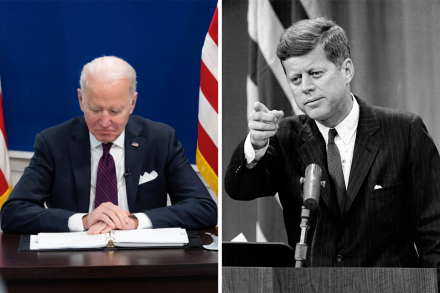
As the Ukraine situation heats up, you can already picture the insider account Vice President Kamala Harris will publish one day in her 2025 bestseller Thirty-One Days in February. But then, as any survivor of the Cuban Missile Crisis is bound to tell President Joe Biden, “I knew Jack Kennedy, Jack Kennedy was a friend of mine, and you, Joe Biden, are no Jack Kennedy.” One of the clichés if not the myths about the Cuban Missile Crisis was that President Kennedy and Soviet leader Nikita Khrushchev were playing chicken and Khrushchev “blinked." Under threat of potential nuclear war, he then decided to withdraw the Soviet nuclear missiles from Cuba. We now know that what really happened was more complicated than the initial reports made it appear.

Time to retire the ‘Munich’ analogy?

The Ukraine crisis signaled to Western officials and pundits to once again begin recycling the historical analogy of the 1938 Munich Agreement, which handed Nazi Germany parts of Czechoslovakia in a failed bid to head off major conflict in Europe. This was expected. Such comparisons are usually followed by the predictable warnings about the danger of Western “appeasement.” Hence British defense secretary Ben Wallace has recently compared Western diplomatic efforts to head off a Russian invasion of Ukraine to the appeasement of Nazi Germany ahead of World War Two, suggesting that unnamed Western countries were not being tough enough with Moscow.

As with Iraq, so with Russia

Against the backdrop of the Ukraine crisis, we have been bombarded with many historical analogies. Leading the list are the 1961 Berlin standoff and the 1962 Cuban Missile crisis. And then there is that all-time favorite, the 1938 Munich Agreement. Those crises should certainly not be regarded as ancient history. But then why go back 60 or 80 years when you can walk down memory lane? Like, say, when an American president was trying to rally the public and mobilize international support in the name of using military force against an alleged bloodthirsty dictator who was supposedly threatening Western geostrategic interests and challenging its liberal democratic values?

Israel and America are drifting apart

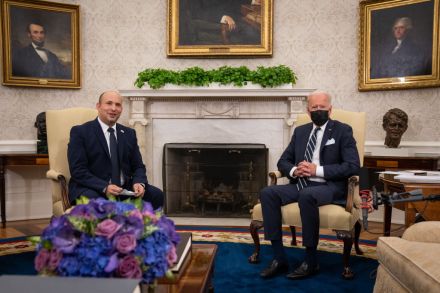
Israeli Prime Minister Naftali Bennett has revealed what members of his country’s national security elite have been chatting about behind closed doors for quite a while. “The United States has been, and will always be our best friend,” the Israeli PM said in a speech delivered before the Institute for National Security Studies (INSS) at Tel Aviv University. Then came the big “but”: “Washington has its own set of interests, which we must honestly admit do not always overlap with ours.” “We are speaking honestly and understand one another,” Bennett elaborated. America’s “interest in the region is dwindling. The United States is currently focused on the Russian-Ukrainian border and it is in a strategic conflict with China.

America’s control over the international system is slipping

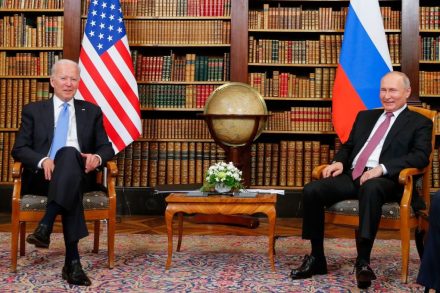
The US-led expansion of NATO in the direction of the Russian border took place when America was at the peak of its power — the "unipolar moment" — and when Russia had hit geostrategic rock-bottom. The global balance of power has changed since then, and that helps explain what is happening now. Vladimir Putin is correct when he argues that, since the collapse of the Soviet Union, the United States and its Western allies have taken advantage of Russian weakness. It may sound simplistic, but back then in the immediate aftermath of the Cold War, American policymakers did a lot of things just because, well, they could do them. And then they created geostrategic narratives to justify what they wanted to do.

biden putin

Europeans are still free-riding off American security

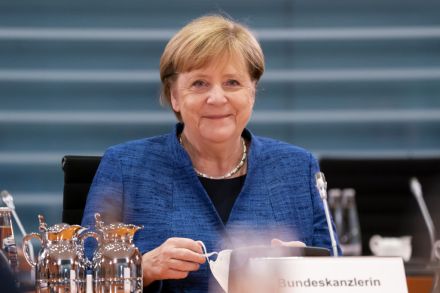
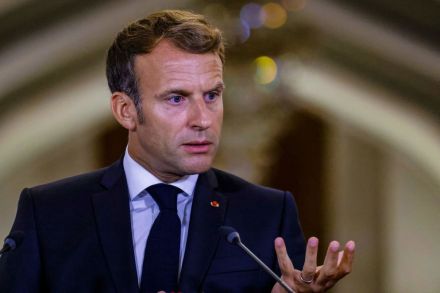
Remember how Washington’s foreign policy establishment and their media echo chamber bashed the “isolationist” President Donald Trump for abusing, humiliating and making life miserable for our close European allies, in the process obliterating the “liberal international order”? Remember how some of the Europeans responded? Germany’s Angela Merkel declared “a new chapter” in US-European relations, saying that Europe “really must take our fate into our own hands.” France’s Emanuel Macron stated that Europeans need to stop “being naïve,” and assert their strategic independence from the US. What happened? Nothing. Here we are, three decades after the end of the Cold War, and it is déjà vu all over again between Washington and Moscow.

angela merkel

Biden chickens out of Iran negotiations

We were promised a war of nerves in Vienna between Washington and Tehran, a game of chicken. Instead, President Biden has chickened out. He's also blaming Israel. Call it fowl play. Here's how it should be going. The United States wants Iran to re-commit to refreezing its nuclear program. Iran demands in exchange the revoking of the economic sanctions against it. Each side insists that it won't give up on its demands — even if that could lead to the collapse of the negotiations, the demise of the Joint Comprehensive Plan of Action (JCPOA) and eventually to a military confrontation. The diplomatic and military tensions between the United States and Russia over Ukraine involve just such an exercise in brinkmanship.

iran

Joe Biden, foreign policy realist

President Joe Biden talks the liberal internationalist talk but walks the realist walk. The recent Summit of Democracies wasn't idealism but part of a strategy to contain China and Russia. Internationalist rhetoric aside, Biden has a dark Realpolitik side — which explains why he was able to survive so many decades in Washington and get elected as president. Some of my friends on the right have criticized me for recommending Biden for the diplomatic move that should have earned him the 2021 Machiavelli Award. Announcing a new military pact with Britain and Australia (AUKUS) to deter China stabbed France in the back — or to put it another way, emulated the modus operandi of traditional French diplomacy.

Was it inevitable that Iran would go nuclear?

Was it inevitable that Iran would one day gain nuclear weapons? Identifying causality in human actions is a tricky exercise, especially when it comes to historical events, like the outbreak of World War Two. Was appeasement the cause? Or perhaps a war with Germany was unavoidable as long as Adolf Hitler was in power? It may also be fated that a nation of ninety million people, proud about its history and place in the world — Persia was already an advanced civilization when barbarian tribes roamed the British Isles — would become a nuclear military power. That nuclearization process actually commenced under Mohammad Reza Shah and continued because of concern that, thanks to French assistance, Iran’s adversary Iraq was on its way to developing a nuclear weapon.

iran nuclear

The fantasy of an Israeli-Palestinian ‘peace’

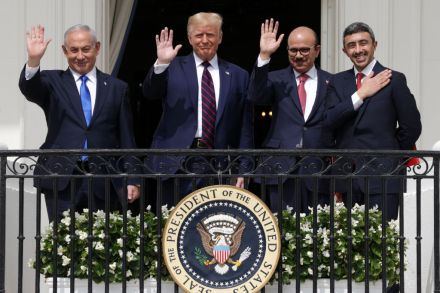
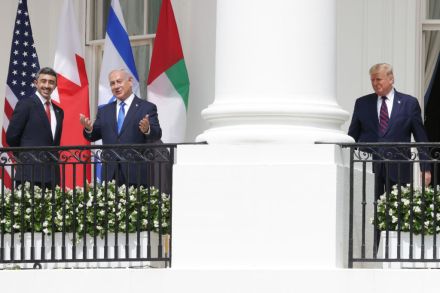
Long-time readers of this site may be aware that yours truly has not only applauded the Trump administration’s successful efforts to normalize Israel’s relationship with several Arab countries but has also proposed awarding the Nobel Peace Prize to Jared Kushner, the architect of the Abraham Accords. There were many reasons for my bullish sentiments regarding the Trump administration’s Middle East policy. First and foremost, as I pointed out, it disrupted the old American paradigm that held that any effort towards rapprochement between Arabs and Israelis hostage to the ultimatums of the radical Palestinian leadership.

peace palestinian

Ticking off the French was strategic genius

In December 2020, in the aftermath of the presidential election, Jake Sullivan, President-elect Joe Biden’s national security adviser, urged European officials to delay a European Union vote on a proposed economic agreement with China, called the Comprehensive Agreement on Investment. Sullivan, communicating with French and German officials, explained that the incoming Biden administration wanted to have 'early consultation' with the Europeans on China, and urged them to hold off until Biden took office to devise a common approach toward Beijing. Resisting the pressure from Biden, the European Commission announced that the agreement was concluded in principle, pending approval by the European Parliament.

french

Why can’t we fire the Blob?

Let’s say that two decades ago you were wondering where to invest your savings for retirement and the money that was supposed to pay for your kids’ college years, and decided to consult with your financial adviser known to be a market wizard. Let’s call him Tom Friedman. 'Don’t pay attention to all the bullish talk about Steve Jobs and Apple', Friedman said. 'I would bet all my money on two of the market’s crown jewels, Alta Vista and Enron'. Well, to make a very long story short, you are now spending your retirement years in a trailer park in Nevada, while your son is dealing drugs and your daughter works for an escort service to pay for their college studies.

blob friedman

Israel’s PR problems have nothing to do with PR

Following the US setback during the Tet Offensive in Vietnam in 1968, Walter Cronkite, the mythical CBS News television broadcaster, was sent to Southeast Asia to report on the military intervention there. After Cronkite proclaimed in his broadcast that the US lost the war in Vietnam and that it was time to bring the boys back home, then President Lyndon B. Johnson told his advisors, 'If I lost Cronkite, I lost Middle America.' Urban legend or not, it reflected the way I imagined the role of the American media to be when I had served as a press officer at the Israeli Consulate in New York about a decade or so after Cronkite aired that broadcast from Vietnam.

israel

How I became Hispanic

Several years ago I applied for a teaching position in an American university. In response I received a lot of forms to fill out, including one that required me to identify my ‘ethnicity or race’. I hate to tell this to those of my liberal friends who relish historical analogies from 1930s Europe, but when I noted how black Americans were classified in the form —‘You are defined as Black even if only one of your parents was an African American’—the Nuremberg Race Laws came to mind. When I look at myself in the mirror, I see, even with a summer tan, a very white man. So I assumed it would be a waste of time to fill in the part about race on the form the university had sent me.

hispanic

Netanyahu plays Churchill, but where’s his FDR?

For years Benjamin Netanyahu has been imagining himself in the role of Winston Churchill during the Blitz, the German bombing of Britain in 1940-41, when the United Kingdom stood alone in a Nazi-ruled Europe, hoping that soon their American cousins would join them in a joint campaign to defeat Adolf Hitler. In Netanyahu’s movie, the ayatollahs in Tehran play the role of the Nazi leaders, while he, like Churchill, tries to convince the Americans that the Islamic Republic poses an existential danger both to Israel and the United States and that everything must be done, including the use of military force, to prevent these successors to the Nazi regime from acquiring nuclear weapons. The British employed many methods, including disinformation, to drag Americans into the war in Europe.

netanyahu

Award the Nobel Peace Prize to Jared Kushner. Seriously!

In these pages last year, I suggested that while the President’s son-in-law may not be a great geo-strategic mind, we should give Jared Kushner a chance to give peace in the Middle East a chance. After all, to paraphrase President Trump’s message to African American voters, what do those suffering Middle Easterners have to lose after close to two decades of failed US military interventions in the area that brought about chaos and bloodshed? Needless to say that I was bombarded with dismissive messages from pals who are proud members of Washington’s ‘foreign policy community’. They thought I was out of my mind and/or trying to land a job in the Trump administration.

jared kushner