Russia

How inoculation against smallpox became all the rage in Russia

The concept of vaccination evolved from 18th-century inoculation practices and many people contributed to the accretion of knowledge. This book focuses on two individuals: the Quaker doctor Thomas Dimsdale, who, from his small Hertfordshire surgery, pioneered a simple smallpox immunisation; and Catherine the Great, who summoned him all the way to St Petersburg to inoculate her and the teenage Grand Duke Paul. Despite success all round, though, it turns out that anti-vaxxers are nothing new. After revealing the destructive force of smallpox – in one period of the 18th century, 400,000 perished annually in Europe – Lucy Ward, a journalist and former lobby correspondent, recapitulates the history of inoculation against the disease.

Cold war: Putin’s plan to hold Germany to ransom

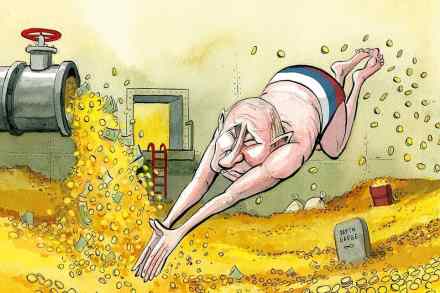
Russia has a long history of using the cold to defeat Europe. The winter of 1812 arrested Napoleon’s special military operation. Hitler’s troops hit the deep-freeze outside the gates of Moscow in December 1941. Now Vladimir Putin has the option to turn off the gas sent to Europe – a strategy against which Germany appears to have no defence. Gazprom, the monopoly supplier of piped Russian gas, has been giving Germany a taste of what life might be like, should Moscow play nasty. It recently halved the amount of gas sent through the Nord Stream 1 pipeline, using bogus technical excuses. Germany, which still relies on Russia for more than a third of its gas, is now realising it may have to cope with a total gas embargo – and a cold winter.

East Germans still find it hard to see Russia as the enemy

Not all of Germany is against Vladimir Putin. Sahra Wagenknecht, a Left party MP, recently defended him, saying he is not ‘the mad Russian nationalist’ of caricature and sending weapons to Ukraine was a ‘US-driven policy’ which played a role in provoking his invasion. Her views are quite common in East Germany and not only among the left. The far-right party Alternative for Germany, which has most of its support in the East, opposes sanctions and providing weapons. A recent opinion poll asked whether Berlin should ‘be tough on Russia’: half of West Germans agree, but just a third of East Germans do. Some 58 per cent of East Germans want Berlin to take an approach that doesn’t ‘provoke Russia’. Only 40 per cent of West Germans agree.

How to save Oxford Street – and your high street

Oxford Street is ‘a dinosaur district destined for extinction’, says Marks & Spencer boss Stuart Machin – whose plan to replace its ‘flagship’ Marble Arch store with a new ten-storey retail and office block has been referred to a public inquiry by Michael Gove as Housing Secretary, despite winning approval from Westminster council. Machin points out that his real flagship nowadays is M&S’s website, which accounts for a third of the group’s clothing and home sales, while much of its pre-second-world-war store estate stands in sad need of repurposing or right-sizing.

Boris gaffes, Russia laughs

From our US edition

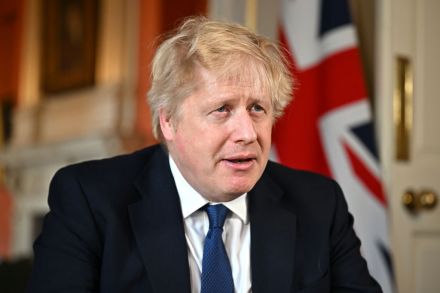
Cockburn woke up this morning to a good laugh over his coffee when he saw that British prime minister Boris Johnson had attributed Putin’s invasion of Ukraine to “toxic masculinity.” Johnson, the Conservative PM of the UK, told German broadcaster ZDF, “If Putin was a woman, which he obviously isn't, but if he were, I really don't think he would've embarked on a crazy, macho war of invasion and violence in the way that he has." He proceeded to say that the war is a “perfect example of toxic masculinity,” urging more countries to have “more women in positions of power.” While Putin’s bare chest on horseback may be the source of endless memes, Cockburn believes Johnson is focusing on the wrong things here.

Nato is no longer ‘brain dead’

Finland and Sweden will be formally invited to join Nato today. Them joining the alliance will bolster Nato's presence in the Baltic and make it easier to defend Latvia, Lithuania and Estonia. The alliance now has a clear, strategic purpose again Turkey had objected to the two countries joining, regarding them as too soft on Kurdish separatists, whom President Recep Tayyip Erdogan sees as 'terrorists' threatening his country. But having received some concessions on that front, Erdogan has dropped his objections. There’s also speculation that the US will sell F-16 fighter aircraft to Turkey in exchange for its cooperation on this matter.

Is Russian Orthodoxy dying in Ukraine?

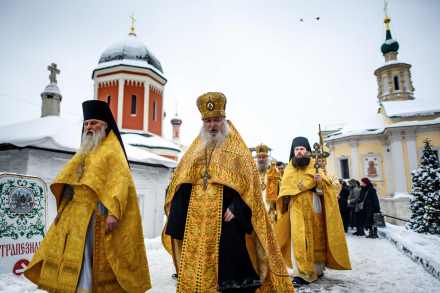
Ivano-Frankivsk has just become the first city in Ukraine to have no Russian Orthodox Church, amid a mass defection of churches away from the Moscow patriarchate and towards the breakaway Orthodox Church of Ukraine.  At the start of the invasion in February, almost two-thirds of Orthodox churches were still formally aligned with the Russian Orthodox Church whose leader – Patriarch Kirill – is a close ally of Putin. Until recently, the Russian Orthodox Church claimed dominion over Ukraine for centuries. The 2014 invasion of Crimea dampened its appeal. In 2019 a new Orthodox Church of Ukraine was recognised by Patriarch Bartholomew – the archbishop of Constantinople and the de facto leader of Orthodoxy.

Macron’s Russian oil plan is bound to fail

It will drain Vladimir Putin of funds for his war machine. It will bring down inflation. And it might even be enough to stop the global economy from tipping into recession. As President Macron put forward his wheeze for solving the energy crisis this week, he no doubt had plenty of persuasive arguments. He appears to have brought the rest of the G7 on board for his plan for a global cap on the price of oil. There is just one problem. Like most price controls, it is not going to work. Indeed. It will only make the crisis worse. Of course, everyone can see where Macron is coming from. Ever since Russia invaded Ukraine, and embargos started to be placed on its energy, the price of oil has soared. From $74 a year ago it has risen to $117 a barrel and could go a lot higher still.

Defending Ukraine should be a European project

From our US edition

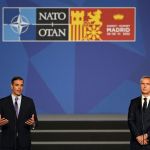
NATO gatherings at the head-of-state level are ordinarily placid, even boring affairs. But this week’s three-day NATO summit in Madrid will be quite different. For the first time in twenty-three years, the alliance is meeting as a war churns on European soil. Russian President Vladimir Putin’s invasion of Ukraine has been an electric shock to the continent’s defense establishment, at least if their rhetoric is any indication. European officials have finally come around to noticing that Europe isn’t an exceptional zone of peace and tranquility, but a region no more immune to armed conflict than any other. NATO, which was straying out of theater in a desperate attempt to stay relevant, is now back to performing the defensive mission it was meant to do.

What happens to US fighters captured in Ukraine?

From our US edition

Alex Drueke and Andy Huynh are two former American military members now in Russian custody, captured by the Russians in Ukraine, where they were fighting for the Ukrainian government. What is going to happen to them? The most likely thing is that both men will eventually be traded to the US in return for captured Russians. Prisoners are very valuable and rarely wasted in executions unless those carry much more value than the prisoners held by the other side. The deal may be public or secret, and the US can expect to pay a premium. Israel usually releases ten or more Palestinian prisoners in exchange for one of its captured troops.

Zelensky’s peculiar Glastonbury appearance

Volodymyr Zelensky didn’t quite make it onto the Glastonbury line-up posters. Perhaps Michael Eavis, the owner of ever-so Worthy Farm, had last-minute difficulties with the Ukrainian President’s booking agent. No matter. An eight-foot-high image of President Zelensky’s face graced the Pyramid Stage on Friday, right before ageing indie rockers The Libertines belted out their two-decades-old bangers. ‘Time for Heroes’, but not before festival-goers had enjoyed a brief set by Europe’s very own hero. You’d be forgiven for thinking the shtick’s getting a bit tired – but at least Pete Doherty can just about hold a tune. ‘Glastonbury is the greatest concentration of freedom these days,’ Zelensky told the festival.

Portrait of the week: Rail strikes, rates rise and a record-breaking stingray

Home A rail strike on three alternate days, bringing the system to a standstill for a week, was organised by the Rail, Maritime and Transport workers’ union. On the first day, the London Underground came out too. Tram drivers in south London arranged a strike of their own. Sir Keir Starmer, the Labour leader, instructed his frontbenchers not to join strikers’ picket lines, but some did. EasyJet announced plans to cut 7 per cent of its 160,000 flights scheduled between July and September after Gatwick, easyJet’s main airport, said it would reduce the number of flights taking off. Flights carrying up to 5,000 passengers were cancelled at Heathrow airport on one day because of trouble with baggage-handling.

Can the Big Mac save Russia?

From our US edition

Cockburn has rarely seen eye to eye with de-celebrated New York Times columnist Thomas Friedman. He's particularly irked over Friedman's habit of quoting conversations he's had with cab drivers, given that Cockburn never remembers his taxi rides the next morning. Yet today he can't help but think there's something to Friedman's pro-globalism parachute journalism after all. During the 1990s, Friedman became famous for touting what he called the Golden Arches Theory of Conflict Prevention. This held that "no two countries that both have a McDonald’s have ever fought a war against each other." The thinking behind this idea was simple: as American corporations expanded globally, as nations consolidated and opened up their markets, war became bad for business.

Russia is sidestepping American oil sanctions

From our US edition

When the European Union finally made the decision to ban 90 percent of Russia’s crude oil imports by the end of the year, the bureaucrats in Brussels were jubilant. The EU’s adoption of oil sanctions was thought be a big blow to Russian President Vladimir Putin, who depends on the revenue generated by his country's oil exports to fund his war in Ukraine. It doesn’t take a genius to figure out why European officials were so thrilled. The EU imported 2.2 million barrels per day of Russian crude last year, amounting to tens of billions of dollars in profits for the Kremlin every month.

Biden dumps weapons into Ukraine

From our US edition

Over the last four months, the Biden administration has assured us that it is only sending “defensive weapons” to Ukraine. It's a claim that's become more difficult to believe as more sophisticated systems are announced seemingly every week that do not require further congressional approval. Take the most recent example. The White House announced a fresh $1 billion last week for 18 more Howitzers, more long-range missiles for the HIMARS rocket systems announced earlier this month, and a new weapon, Harpoon anti-ship missiles. These are systems that can strike at the more than 20 Russian naval vessels accused of blockading Ukraine’s eastern ports.

How Russia’s cartoon heroine turned on Vladimir Putin

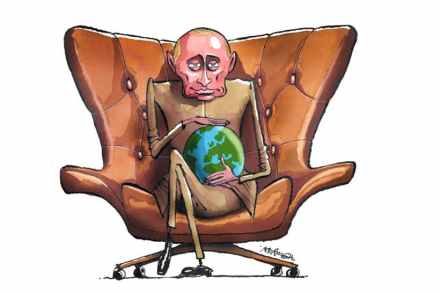
Vladimir Putin’s regime has a track record in building up public heroes whom it hopes to use, only to find the ungrateful wretches unwilling to play the roles it intends. The most recent is Natalia Poklonskaya, a woman whose trajectory from cartoon heroine to legal adviser has starkly illustrated the way Putin faces criticisms not just from remaining liberals at home, but also nationalists. Poklonskaya shot to fame amidst the Russian take-over of Crimea. A Ukrainian, she had been a senior prosecutor in Crimea, then in Kyiv, until she resigned in the wake of the ‘Euromaidan’ rising, ‘ashamed to live in the country where neo-fascists freely walk the streets.’ She returned to Crimea and after it was annexed by Moscow was appointed its Prosecutor.

Is the war slipping away from Ukraine?

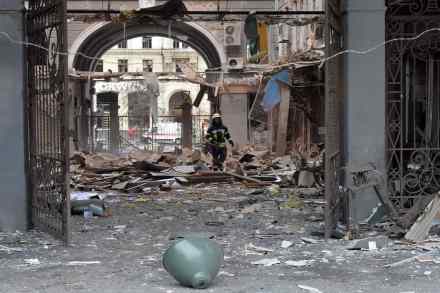
After the decisive failure of Russia’s attempt to overthrow the government of Ukraine by seizing Kyiv, Kharkiv and other key cities in February and March 2022, Russia has concentrated its depleted forces in the Donbas and set itself far more limited objectives. In the two months since its retreat from the north of Ukraine, Russia has finally subdued the besieged defenders of Mariupol – who had been surrounded since the second day of the invasion – and slowly gained territory in Donbas. Since then Russia’s most notable conquest has been the small but important town of Popasna and the surrounding high ground that overlooks key supply routes into the city of Sievierodonetsk.

Following the seam of the Iron Curtain

From our US edition

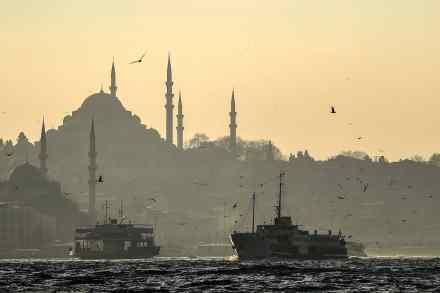
Just before the pandemic, I spent several months traveling through Europe, from the north of Norway to Istanbul and beyond to Azerbaijan. I saw unforgettable sights: the endless daylight of the Arctic summer; the vast Hammershus castle on the Danish island of Bornholm; Vienna’s ornate Prunksaal library; and the sandy beaches of Corfu. But the focus of my journey was precisely those things that most travelers to these places often ignore. I was following the route of the Iron Curtain. My aim was to visit every part of that old great divide, all the places where NATO once abutted the Warsaw Pact, where overwhelming military might stood constantly primed for apocalypse.

Russia slogs through the Donbas

From our US edition

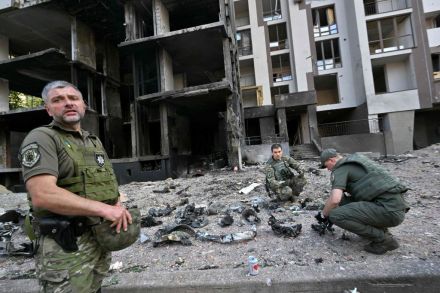
A brutal artillery battle: that’s what the latest phase of Russia’s war on Ukraine has become. Vladimir Putin failed in his original goal of seizing the entire country swiftly, beginning with the capital of Kyiv, and installing a puppet government. When Ukrainian resistance prevented that, Putin shifted to a smaller, more achievable objective: establishing complete control over two eastern provinces, Luhansk and Donetsk, which border Russia and are jointly known as the Donbas region. That’s where the war is being fought now, with an uncertain outcome. Victory will depend on who wins the artillery battle. Russia has more blunt firepower; Ukraine has more precise, longer-range weapons — or at least it will have them when more NATO supplies reach the frontlines.

artillery

How Michael O’Leary can stop the flying blame game

Stock markets are tumbling, but given the tide of economic news, that’s hardly surprising. The S&P 500 index dived into bear market territory – 20 per cent down since January – after a rise in US inflation for May. Our own FTSE indices reacted badly to an unexpected 0.3 per cent drop in UK GDP for April. Interest rate rises predicted on both sides of the pond this week will make investors jumpier still. So expect further falls in markets that have been driven by weight of cheap money to stay unnaturally high despite an increasingly bleak backdrop. And wait for the turn. When might that be? When investors think they can see beyond the inflation spike and pick value among depressed stocks.