Russia

The EU’s oil ban is a damp squib

When Putin’s tanks rolled into Ukraine on 24 February there was a conceit that this might be the first war which the West could fight – and win – by sanctions alone. The EU’s latest efforts to stop importing Russian oil show just what a folly this was. Donations of military equipment to Ukraine are certainly helping to keep Russian forces at bay, but economic sanctions? That is another story. Europe’s dependence on Russian oil and gas is the product of years of ill-conceived energy policy Sanctions may be helping to lower living standards among Russian citizens, but they are still a long, long way from cutting off the lifeblood of the Russian economy – its oil and gas exports.
Germany is failing Ukraine

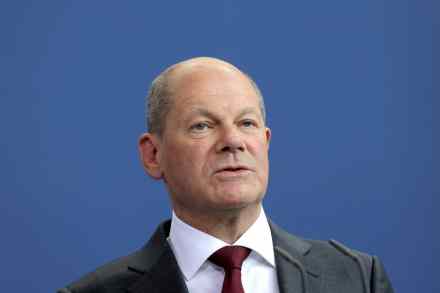
‘A giant step for German and European security,’ is how Chancellor Olaf Scholz described his government’s €100 billion cash injection for the country's depleted military. But while Germany’s newfound commitment to its own defence is welcome, its commitment to Ukraine’s is still questionable at best.   Over the weekend, the German newspaper Die Welt reported that it had seen documents showing that Berlin had reduced military support for Ukraine to ‘a minimum’. According to inside sources, only two German weapon deliveries have reached Ukraine since the end of March. Both contained light equipment such as mines, hand grenades and spare parts for machine guns.

How Russia wins

It is still too early to predict the outcome of the war in Ukraine. Russia has certainly solidified its position in the east and is making small military gains. What's become clear over the last few days is that Russia may, after all, be able to achieve at least some of its military goals. Here is an interesting, albeit disturbing, political scenario by Sabine Fischer, a senior fellow at a German foreign policy tank. She notes that the mood in Moscow itself has shifted. It is the Kremlin’s political calculation that the western nations will not sustain their massive financial and military support for Ukraine.

The West is watching the war in Ukraine like it’s sport

Every time I hear a politician speak of Munich, I suspect that something is amiss. Last week, President Zelensky accused former US Secretary of State Henry Kissinger of living in the ‘deep past’, and demanding that ‘a part of Ukraine be given to Russia’. ‘It seems that Mr. Kissinger has 1938 on the calendar instead of 2022’, Zelensky said. He wasn’t alone: figures from the Dutch Prime Minister Mark Rutte to the former chess champion Garry Kasparov put themselves on the record timidly or violently disagreeing with Kissinger. I wasn’t at Davos, but I learned of Kissinger’s revelations through Twitter.

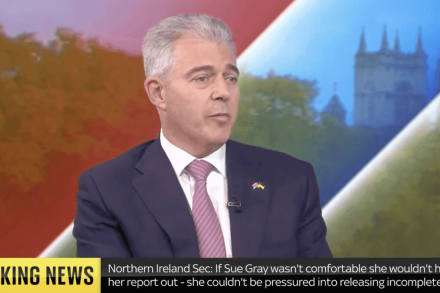
Sunday shows round-up: Minister ‘absolutely confident’ No. 10 did not pressure Sue Gray

Andrei Kelin – Russian war crimes allegations are ‘a fabrication’ Clive Myrie took the reins of the BBC’s Sunday Morning show, and the centrepiece was a pre-recorded interview with the Russian ambassador Andrei Kelin. Myrie confronted Kelin with evidence of war crimes by Russian soldiers in Ukraine, as in the town of Bucha and the razing of Mariupol. Kelin spent the interview stonewalling most of Myrie’s claims: https://www.youtube.com/watch?v=dGIN1qtMhrg Brandon Lewis – If we don’t stand up to Russia now, what’s next? Myrie went on to interview the Northern Ireland Secretary Brandon Lewis. He asked Lewis if the UK government was prepared to ask Ukraine to cede territory to Russia in order to end the war: https://www.youtube.

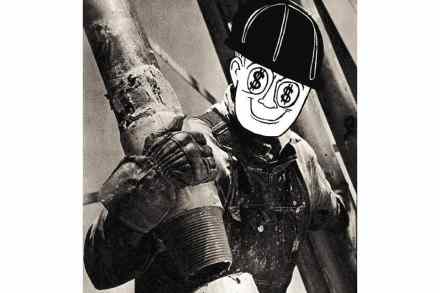
Are sanctions making Russia richer?

Before the invasion of Ukraine, it was by no means certain that there would be a united response from the West. The sanctions imposed on Russia after Vladimir Putin’s annexation of Crimea in 2014 were fairly limited, especially from the European Union. Germany pressed on with the Nord Stream 2 gas pipeline to Russia. But now, America, Europe and much of Asia have been united in applying severe sanctions against Russian banks, companies and oligarchs. Three months on, it’s time to ask: are the sanctions working? The answer from the Bank of Russia’s balance of payment data for January to April isn’t reassuring. It showed that the sanctions are emphatically not working, at least not in the way that they were intended.

Could Putin be toppled? An interview with Richard Dearlove

‘One of the things about being in Moscow as the guest of the Russian government,’ says Richard Dearlove, the former head of MI6, ‘is this real attempt to make you feel like an outsider.’ It comes, he says, ‘from a fundamental Russian suspicion of foreigners’: ‘The Kremlin is designed to intimidate you. It’s designed to make you feel as if you are at the centre of a great empire.’ Dearlove joined the Secret Intelligence Service in 1966, and though spies are always a little cagey about their past, it seems he served as an intelligence officer behind the Iron Curtain. After a stint as head of station in Washington, in 1999 he was appointed chief of MI6 by Robin Cook. It was then that he first met the man who is now Russian president.

Ukraine and a short history of dogs in war

In his own inimitable way, Ukrainian president Volodymyr Zelensky has unleashed his dogs of war on Vladimir Putin and once again he’s pulled off a propaganda coup. The Russian President has in the past not been averse to using animals to his advantage; he posed topless on horseback, making the pulse race of every red-blooded Russian woman, and in 2007 he famously brought his pet labrador, Konni, to a meeting with Angela Merkel, fully aware that the then German chancellor had a fear of dogs. Zelensky is more a Jack Russell guy and earlier this month he decorated one of Ukraine’s bravest of the breed – Patron, which means ‘ammo’ in Ukrainian.

Inside Russia’s military collapse in Ukraine

The Russian military has performed far worse in Ukraine than anyone could ever have predicted. After failing to take Kyiv, Russian troops have now been forced to focus on the Donbas region. Despite this greater concentration of forces, they are still struggling to make any major gains beyond the final capture of Mariupol, which had been under siege since the first days of the invasion without resupply or relief. For Vladimir Putin this represents a grand humiliation. But for the West, Russia’s struggling campaign offers an unrivalled opportunity to understand Russia’s capacity to pose a future military threat.

Letters: Banning Russia’s culture only benefits Putin

Don’t ban Russia’s culture Sir: It is uncouth, illiterate and actually beneficial to Putin when theatres, opera houses and other cultural institutions in Britain and across the globe block access to these heights of culture (‘Theatre of war’, 14 May). During Stalin’s last decade and throughout the Cold War, Isaiah Berlin was a superb help to this country and to Russia through his connection with Anna Akhmatova, including the award to her of an honorary doctorate at New College, Oxford, in June 1965, the year before her death. Censorship and blocking of the free flow of culture between Russia and western society is what the Soviet Union enforced.

Portrait of the week: Inflation’s 40-year high, Tory MP’s rape arrest and monkeypox in Britain

Home The annual rate of inflation, impelled by energy costs, rose to 9 per cent, its highest since 1982. Unemployment fell to 1.2 million, 3.7 per cent, its lowest since 1974 and below the number of vacancies of 1.3 million. Britain said it wanted to do something about the Northern Ireland Protocol, but the EU said it couldn’t. The Democratic Unionist party said it would not take part in the power-sharing executive of Northern Ireland unless Britain did. Liz Truss, the Foreign Secretary, told the Commons that a new law would adjust Northern Ireland’s trading status. Maros Sefcovic, vice-president of the European Commission, said the EU would ‘respond with all measures at its disposal’.

Cold Turkey: why is Erdogan resisting Nato’s expansion?

Driving a hard bargain is the Turkish President Recep Tayyip Erdogan’s chief survival skill – one that has kept him in power for nearly as long as his Russian counterpart Vladimir Putin. And the basic principles of bargaining are twofold: never give something away for nothing, and make your threats to walk away convincing. No surprise, then, that Erdogan’s buzz-killing announcement last week that Turkey would oppose Swedish and Finnish membership of Nato was made in characteristically blunt terms. Speaking of a planned visit of Nordic diplomats to Ankara, Erdogan asked: ‘Are they coming to convince us? Excuse me, but they should not tire themselves.

Italy’s hostility to Nato is building

Ravenna, Italy The war in Ukraine has caused an unholy convergence of the left and right in Italy. While there is nothing formal so far about this alliance of enemies, it nevertheless threatens to destroy the unity of Nato. The most high-profile participant is -Matteo Salvini, leader of the Lega – the party with the second-highest number of MPs in Italy’s parliament – which is invariably defined as ‘far right’. Salvini, who has been one of Vladimir Putin’s strongest supporters outside Russia, condemned the invasion of Ukraine and has now come out as a pacifist. He opposes Finland and Sweden joining Nato, or sending more arms to Ukraine, on the grounds that both would make peace less likely.

Sanction Gerhard Schröder

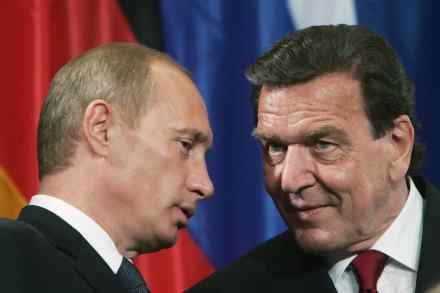
From the start of the war in Ukraine, the democratic world has shown striking unity in the economic boycott of Russia. But sanctions are always a blunt instrument: aimed at the regime, they end up harming the whole population. Ordinary Russians, too, are victims of Vladimir Putin’s corruption and misrule. Far better to target the Kremlin and those close to it. The system of targeted sanctions on named individuals is one way of doing this. Action has now been taken against 1,086 people, with assets suspended and travel bans imposed. To go after the rich and powerful is always a test for democracies, especially if such people are generous in their donations to political parties or have close political connections.

Russia and the death of the Golden Arches theory

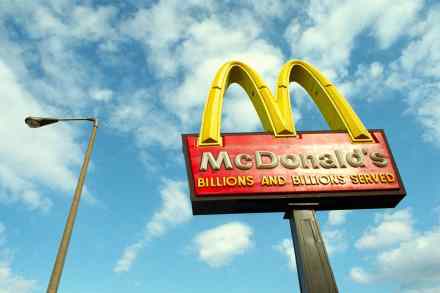
Ah, well, it was a lovely idea, born of the age of liberal-democratic triumphalism that was the 1990s: the ‘Golden Arches theory’, which held that no two countries that had McDonald’s franchises had ever been – or would ever go – to war. Remarkably, it wasn’t the product of McDonald’s PR department but the work of New York Times columnist Thomas Friedman. He argued that the arrival of McDonald’s signified a society that had become so consumerist that enough people had enough invested in economic stability to ever risk a war. Armed conflict ain’t good for the hamburger trade The final nail in the coffin of the Golden Arches theory has come with the news that McDonald’s is to abandon Russia permanently.

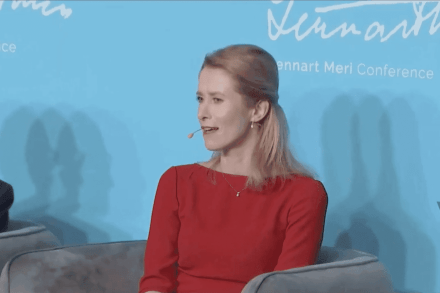
Stop calling Putin! Macron appears to be scolded by the Estonian PM

For a man who likes to present himself as a Jupiter-like statesman, gliding across the world stage, Emmanuel Macron’s efforts at diplomacy have fallen remarkably flat in recent months. While Britain spent the weeks before the Russian invasion of Ukraine shifting weapons to Kyiv – to demonstrable effect now – Macron instead responded to the troop build-up by going on a doomed diplomatic mission to Moscow. Unsurprisingly, his face to face with Putin, across an absurdly long table in the Kremlin, did not work out. Undeterred, Macron has spent the weeks following the invasion keeping up a close relationship with Putin, and has spoken a number of times to the bloated authoritarian on the phone.

Does Putin have blood cancer?

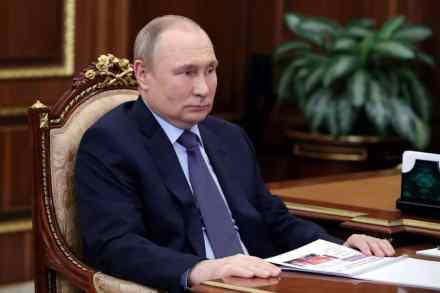
Suddenly, we are all diagnosticians. Clips of a puffy Putin slurring his words, his hands twitching or clutching a table for grim death, have led to all kinds of speculation about his health. It does seem probable that he is suffering from some ailments, to be sure. However, we need to be careful we do not get carried away with the speculation. Putin is notoriously private and his health is considered well off-limits. For a man who built much of his personal brand on his judo-fighting, ice hockey-playing, bare-chested horseback-riding persona, illness and ageing are obviously sensitive topics. Nonetheless, it has long been known that he suffers from recurring back problems, and appears to have undergone surgery more than once.

Why are Putin’s propagandists so bad at their jobs?

From our US edition

During the Cold War, the Soviets would place defectors from the West under house arrest as soon as they arrived in Russia. The assumption was that, as soon as they realized what a dump the USSR was, they would try to sneak back home. And they were probably right. Still, it’s a credit to the Soviet propaganda machine that they showed up in the first place. Back then, Russia did a great job of marketing itself. They paid top dollar to seduce high-ranking scientists and intelligence officials, while young radicals lined up to do the Kremlin’s bidding. Their disinformation was second to none. And today? Well, put it this way. Last week, Russian foreign minister Sergei Lavrov said that Ukraine’s Jewish president, Volodymyr Zelenskyy, is a Nazi.

Pussy Riot’s daring escape from Russia

From our US edition

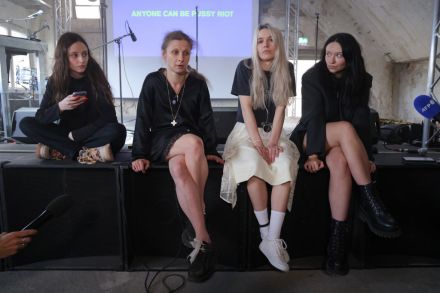
It is a story of ingenuity, cunning and farce that would have done credit to Mr. Toad, escaping his prison bondage by dressing as a washerwoman. Lucy Shtein, one of the members of the Russian protest art collective Pussy Riot, recently revealed how she managed to flee the country while dressed in the bright green attire of a food delivery company. Along with her constant familiar Mr. Rat — a pet rodent who, as is often the way of these things, has become a social media breakout star — Shtein managed to leave her flat in central Moscow, where she had been under house arrest for more than a year.

Ukraine vote shows Republicans still don’t get it

From our US edition

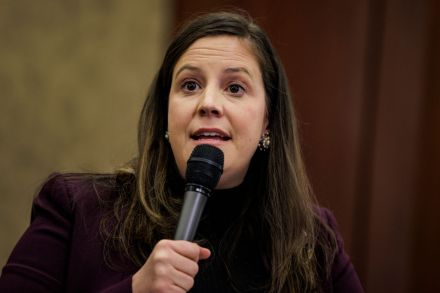
"I am 'Ultra MAGA'," House Republican Conference Chair Elise Stefanik defiantly told a reporter Wednesday, "and I'm proud of it." Republicans should be embracing the badass nickname Biden bestowed upon them, just like Trump should accept being crowned the "great MAGA king." The only problem is that Stefanik is not "Ultra MAGA." Far from it. Just one day before Stefanik declared herself part of the cool kids' lunch table, she voted with 149 other tone-deaf Republicans to send an additional $40 billion in aid to Ukraine. Congress had already approved $13.6 billion in emergency spending after the Russian invasion back in March.