Russia

Ukraine in black and white

From our US edition

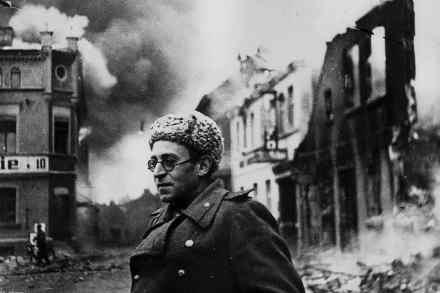
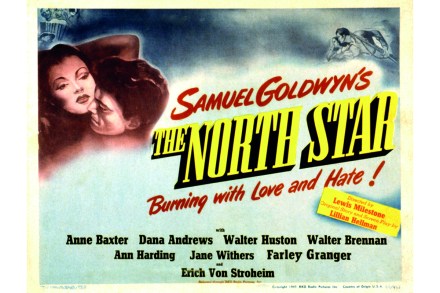
Displays of wanton brutality and heroic resistance in the Russo-Ukrainian War of 2022 have prompted some in the West to proclaim a moment of “moral clarity.” Some caution might be wise here, since moral clarity in world affairs is not always as clear or as moral as its claimants think. It was Soviet ideology, succeeding czarist imperialism, that for so long smothered Ukraine, along with the other captive nations consigned to Stalin at Yalta. As Ukraine may now be slipping captivity at last, the West rejoices. But how clear is the clarity? History’s players sometimes switch roles even from one act to the next. It has not, for example, always been brutal Russians that heroic Ukrainians went up against. Eighty-one years ago, it was brutal Germans.

North Star

Iran and Russia: the new Axis of Evil?

From our US edition

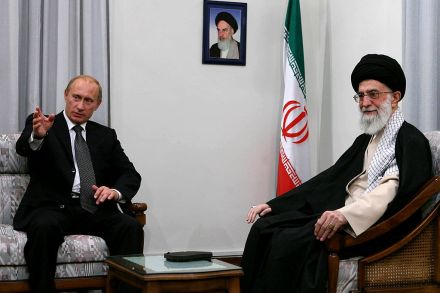
Russian President Vladimir Putin’s visit to Tehran last week brought attention to a growing partnership between Russia and Iran. The Russian shook hands with Iranian Supreme Leader Ali Khamenei, a rare gesture since both men are notorious coronaphobes. The old cleric expressed support for the Russian invasion of Ukraine, while the old KGB man offered Iran supplies of grain. US intelligence even claims Iran will open its drone arsenals to Russia. This strange friendship has its limits, but its growth could spell trouble. History does not suggest this is a natural partnership. The list of grievances between Iran and Russia is long. Great powers are often rough with middle-power neighbors.

The Zelenskys’ Vogue publicity misfire

From our US edition

The legendary nineteenth-century showman P.T. Barnum is credited with first uttering the words, “all publicity is good publicity.” Barnum had the good sense to die a century before he had the chance to see the Zelenskys’ Vogue photo shoot. https://twitter.com/MayraFlores2022/status/1552267933501489152 Ukrainian president Volodymyr Zelensky and his wife posed for renowned photographer Annie Leibovitz. In one shot Olena stands near Ukrainian female soldiers at the Antanov airport. In another she holds hands with her husband in the presidential office compound in Kyiv as the pair stare pensively at the camera.

zelensky vogue

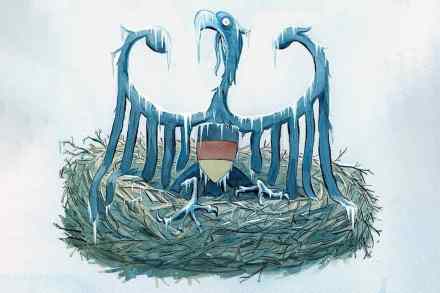
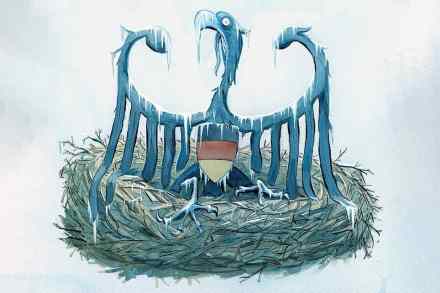
Germany’s energy crisis is a warning to Britain

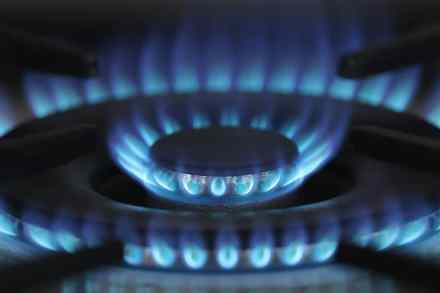
During the eurozone crisis, southern European states had to go cap in hand to Germany to stave off national bankruptcy. A decade on and it is Berlin doing the begging. Europe has reluctantly agreed a 15 per cent cut in gas use this winter in the hope that German factories can stay open and German citizens can keep from freezing. Meanwhile, Russia’s state-controlled energy giant Gazprom threatened to reduce the gas flowing through the Nord Stream 1 pipeline yet again so that Germany would receive only a fifth of the amount it did before the Ukrainian invasion. While Berlin has said it plans to wean itself off Russian gas over the next few years, Vladimir Putin is taunting Europe by cutting supplies faster than Germany can cut its dependence.

Portrait of the week: Sunak vs Truss, London dodges a blackout and 94st walrus capsizes boats

Home In a television debate between the two contenders for the leadership of the Conservative party (and hence the prime ministership), Rishi Sunak said it would be irresponsible to put the country in even more debt by cutting taxes and Liz Truss said that the tax rises he approved would put Britain into a recession. Mr Sunak was criticised for interrupting. A later proposal he made to cut VAT when the price cap on energy bills rose above £3,000 only brought accusations of a U-turn. He agreed to be interviewed by Andrew Neil on Channel 4, but Ms Truss didn’t. Opinion polls put Ms Truss well ahead among Conservative voters; Labour voters preferred Mr Sunak.

Is self-loathing the British disease?

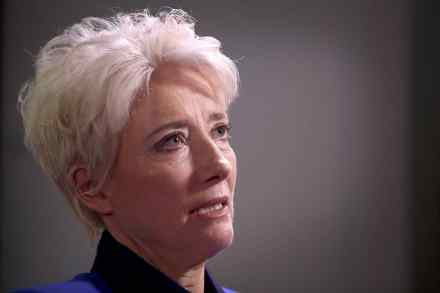
Whatever one thinks of the government’s plans to send refugees to Rwanda, it was amusing to see this country’s left suddenly finding all sorts of reasons why only the UK – ‘a cake-filled, misery-laden, grey old island’ according to Emma Thompson, patron of the Refugee Council – would do as a final destination for these poor people. It was especially ironic that the place which the great and the good decreed unfit for humane habitation was a country of which liberals have historically approved: France. The phrase ‘French flu’ was coined in the 1950s to describe the cultural cringe of British progressives towards France as the source of all things civilised.

Putin has Europe where he wants it

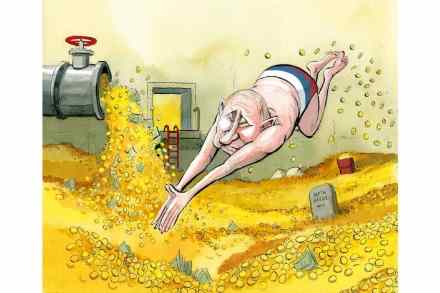
Have we reached the endgame of Vladimir Putin’s energy war against the West, the point at which he turns off the gas for good? This afternoon, Gazprom announced that from Wednesday morning it will cut the quantity of gas flowing through the Nord Stream 1 pipeline to Germany to 33 cubic metres per day. This will halve the current flow of 67 million cubic metres and is just 20 per cent of the 167 million cubic metres which flowed through the pipeline before the Ukraine invasion. Ostensibly, the cut is for reasons of ‘maintenance’. That is unlikely to wash. Nord Stream 1 relies on a compressor station powered by six turbines, but Russia was supplied with two spare turbines to prevent any need for reduction in flows during maintenance periods.

The Ukraine war enters its sixth month

From our US edition

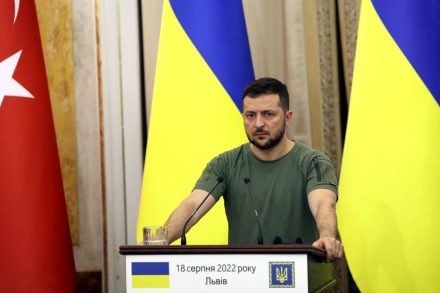
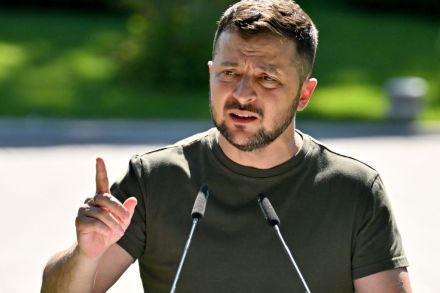
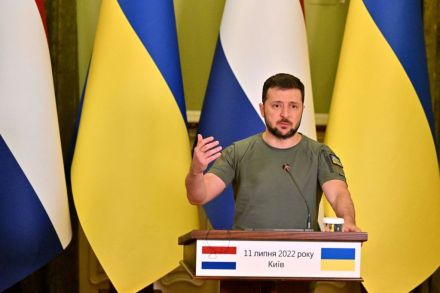
On February 24, Volodymyr Zelensky, the comedic actor-turned-president of Ukraine, addressed his countrymen at the same hour Russian missiles were landing in multiple Ukrainian cities simultaneously. Clad in olive garb and sporting a light stubble on his face, Zelensky promised his citizens victory for Ukraine and defeat for the Russians — and he implored the Russian people to protest the actions of their government in Moscow and St. Petersburg. As the war entered its sixth month this Sunday, Zelensky — this time dressed in a camouflage army uniform with a full beard — is just as defiant and sure of victory today as he was on that depressing February night. "Even the occupiers admit that we will win,” Zelensky boasted during his daily speech to the nation.

Ukraine and Russia sign grain deal – what next?

This afternoon Kyiv and Moscow signed a UN-backed agreement to free up at least 20 million tons of grain from blocked ports. Ukraine said it would not sign a deal with Russia directly, only with Turkey and the UN. As Wolfgang Münchau noted this morning, it marks the first successful mediation between the two sides since the start of the war. This deal will complicate Vladimir Putin’s efforts to strangle the Ukrainian economy. But the Russian leader needs to show countries that are neutral – or more inclined towards Russia (in Africa and Asia) – that he saved them from hunger and rising food prices. Otherwise, Algeria could increase gas supplies to Europe and Egypt could supply Ukraine with hundreds of units of Soviet weapons and military equipment.

How Germany’s energy crisis could bite Britain

For now, Berlin can breathe a sigh of relief: after a ten-day shutdown for maintenance, the Nord Stream 1 pipeline is back online. Russia is once again heating German homes, fuelling German industry, and using German money to finance its war in Ukraine. But this happy exchange may not continue; the pipeline is still operating at just 40 per cent of its usual capacity, and Vladimir Putin is warning this could fall to 20 per cent next week.

The next PM must be ready for Putin

Westminster is understandably obsessed with the question of who makes the final two of the Tory leadership race, but today has also brought a reminder of the crises that the new Prime Minister will have to deal with from day one.  The European Commission is calling on all EU member states to cut gas use by 15 per cent to prepare for supply cuts from Russia through Nord Stream 1, which reopens tomorrow. With the pipeline only flowing at limited levels, and the heatwave leading to higher energy use than usual, Germany will not be able to lay in stores for the winter. This means that Vladimir Putin will constantly try and use energy as a weapon in the coming months, threatening to cut off supplies completely if the West does this or that in support of Ukraine.

Why Putin still might shut off Europe’s gas

From our US edition

There was a time in the not-so-distant past when Europe and Russia had a mutually beneficial relationship with each other — at least in the energy field. Europe, a major oil consumer, received reliable supplies of crude and natural gas from Moscow, while the Russians received tens of billions of dollars in return. The European Union imported 155 billion cubic meters of natural gas from Russia last year, equivalent to about 45 percent of its total gas imports. There was an ingrained assumption in European capitals that, even if relations with the Russians were thorny, fossil fuels would continue to head west. War, however, can change things in a flash. European and Russian officials now talk past each other, and sometimes they leave the room when the other is speaking.

sanctions putin russia davos oligarch

How Justin Trudeau caved to Putin

When Russia invaded Ukraine, the West was certain that its sanctions were worth the pain. But there always was a question as to whether this resolve would last once the domestic difficulties actually started. This week, western countries moved closer to admitting it might be too much to bear. At the time of the invasion in February, a massive Russian turbine was being repaired in Montreal. It was one of many turbines used to send gas through the Nord Stream 1 pipeline from Russia to Germany. When the Russians moved into Ukraine, it was kept in Canada as punishment. Over the next few weeks and months Russia replied, cutting off gas supplies to the continent.

Enlarging Nato will ostracise Russia (1997)

It's 25 years this month since Poland, the Czech Republic and Hungary were invited to join Nato. The Spectator’s cover story that week was this essay by Susanne Eisenhower, president of the Eisenhower Group and granddaughter of President Eisenhower. Explore The Spectator’s archive here. Washington, DC When historians, decades from now,  consider the 20th century they will probably be struck by how the major conflicts of the century were ultimately resolved. At the century's end, Germany, the country that wreaked more destruction on the world than any other power, is economically prosperous, unified and firmly locked within Nato — all due to the magnanimity of its victors.

Why it matters that Brittney Griner was ‘wrongfully detained’

From our US edition

The State Department estimates that more than 3,000 Americans are imprisoned abroad, on grounds ranging from small amounts of marijuana to multiple murders. For all but a handful, the government explicitly states they cannot get you out of jail, tell a foreign court or government you're innocent, provide legal advice or represent you in court. The president certainly is not in the habit of making calls to the Russians telling them to please let you go, you didn't mean to have that vape cartridge of hash oil in your suitcase at Customs. The key to getting the full force of the United States government working for your release is to be "wrongfully detained," a qualification that applies to fewer than 40 out of those 3,000-some Americans locked up.

Don’t blame America for Brittney Griner’s fate

From our US edition

I sympathize with Brittney Griner. The WNBA star currently detained in Russia is arguably the face of her sport. This week Griner pleaded guilty in court to possession of hash oil upon her entry to Russia. She has been detained for several weeks now; her and her family have made several pleas to the Biden administration to step in and free her, which they should — without giving up notorious Russian arms dealers or criminals. (President Biden, meanwhile, has been remarkably lenient towards the Russian nationals who use illicit substances with his son — but that's a tale for another time.) The conflict in Ukraine and the Biden administration’s proxy war against Russia complicates this matter further — once again, Biden and his State Department find themselves in a jam.

brittney griner

An existential war: even wealthy émigrés are prepared to fight for Russia

If you’re wondering where all those urbane, clever, westernised Russian travellers have gone since the onset of the Ukrainian war – a war which has largely barred them from the West – I can tell you that at least two of them will be found in the tiny Armenian hamlet of Gnishik, high in the summery peaks of the Caucasus. I know this because I met them there last week. And what they told me – about Russia, the war, their lives since the war – was illuminating. This meeting wasn’t planned.

Turkey’s grain diplomacy

Recep Tayyip Erdogan is once again using Turkey's geopolitical position for his own ends, this time dictating grain shipments from Ukraine through the Black Sea. Turkish customs authorities detained a Russian cargo ship carrying Ukrainian wheat on Sunday, following a request of Kyiv. The Russian cargo ship Zhibek Zholy left the south-eastern port of Berdyansk over the weekend carrying 7,000 tons of grain, worth about £1.75 million. The Russian-appointed head of the occupied region had hailed it as the first commercial ship to leave a Ukrainian port after months of war. He said this would take desperately-needed supplies to friendly countries, according to Politico. The reality is, of course, that the shipment is a provocative move from Russia given it isn't Moscow's grain.

Russia’s referendum weapon

Preparations for a ‘referendum’ have begun in Kherson Oblast, the Russian-occupied region north of Crimea, according to Kirill Stremousov, deputy head of the Kherson regional administration and one of Moscow’s puppet governors. ‘Kherson Oblast will never return to an environment of Nazism, debauchery, and cynicism,’ he said. A date for the referendum has not yet been announced, but Stremousov previously mentioned that it could take place in the autumn.
 The residents of Kherson are currently forced to have Russian passports or their salaries and pensions will be cut off Russian troops went into the region at the beginning of March. Since then, the Kherson city has been under occupation.

The recapturing of Snake Island shows what Ukraine can do

After days of missile strikes, Ukrainian forces have forced Russia off Snake Island in the Black Sea. ‘The enemy hastily evacuated the remnants of the garrison in two speedboats and left the island’, according to the Ukrainian Operational South Command. Russia's defence ministry appeared to concede defeat, saying that ‘Russian forces have completed the assigned tasks and withdrew as a step of goodwill’. The retreat is huge news in Ukraine, as Snake Island is not only important strategic territory, but has acquired a cult status as a representation of Ukraine’s resistance. Snake Island became world famous on the first day of the war when Ukrainian troops broadcast a message saying: ‘‘Russian warship, go fuck yourself’.