Russia

Zelensky’s peculiar Glastonbury appearance

Volodymyr Zelensky didn’t quite make it onto the Glastonbury line-up posters. Perhaps Michael Eavis, the owner of ever-so Worthy Farm, had last-minute difficulties with the Ukrainian President’s booking agent. No matter. An eight-foot-high image of President Zelensky’s face graced the Pyramid Stage on Friday, right before ageing indie rockers The Libertines belted out their two-decades-old bangers. ‘Time for Heroes’, but not before festival-goers had enjoyed a brief set by Europe’s very own hero. You’d be forgiven for thinking the shtick’s getting a bit tired – but at least Pete Doherty can just about hold a tune. ‘Glastonbury is the greatest concentration of freedom these days,’ Zelensky told the festival.

Portrait of the week: Rail strikes, rates rise and a record-breaking stingray

Home A rail strike on three alternate days, bringing the system to a standstill for a week, was organised by the Rail, Maritime and Transport workers’ union. On the first day, the London Underground came out too. Tram drivers in south London arranged a strike of their own. Sir Keir Starmer, the Labour leader, instructed his frontbenchers not to join strikers’ picket lines, but some did. EasyJet announced plans to cut 7 per cent of its 160,000 flights scheduled between July and September after Gatwick, easyJet’s main airport, said it would reduce the number of flights taking off. Flights carrying up to 5,000 passengers were cancelled at Heathrow airport on one day because of trouble with baggage-handling.

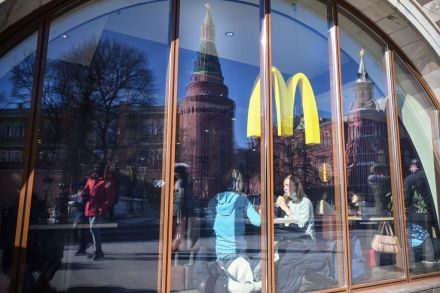
Can the Big Mac save Russia?

From our US edition

Cockburn has rarely seen eye to eye with de-celebrated New York Times columnist Thomas Friedman. He's particularly irked over Friedman's habit of quoting conversations he's had with cab drivers, given that Cockburn never remembers his taxi rides the next morning. Yet today he can't help but think there's something to Friedman's pro-globalism parachute journalism after all. During the 1990s, Friedman became famous for touting what he called the Golden Arches Theory of Conflict Prevention. This held that "no two countries that both have a McDonald’s have ever fought a war against each other." The thinking behind this idea was simple: as American corporations expanded globally, as nations consolidated and opened up their markets, war became bad for business.

Russia is sidestepping American oil sanctions

From our US edition

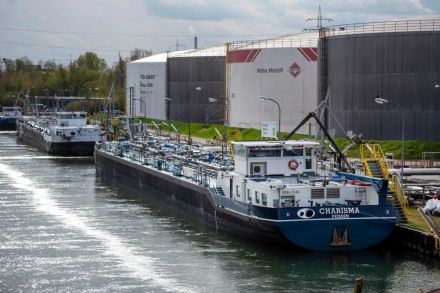
When the European Union finally made the decision to ban 90 percent of Russia’s crude oil imports by the end of the year, the bureaucrats in Brussels were jubilant. The EU’s adoption of oil sanctions was thought be a big blow to Russian President Vladimir Putin, who depends on the revenue generated by his country's oil exports to fund his war in Ukraine. It doesn’t take a genius to figure out why European officials were so thrilled. The EU imported 2.2 million barrels per day of Russian crude last year, amounting to tens of billions of dollars in profits for the Kremlin every month.

Biden dumps weapons into Ukraine

From our US edition

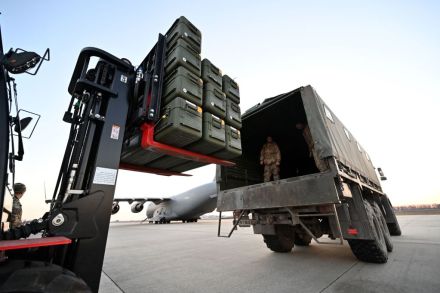
Over the last four months, the Biden administration has assured us that it is only sending “defensive weapons” to Ukraine. It's a claim that's become more difficult to believe as more sophisticated systems are announced seemingly every week that do not require further congressional approval. Take the most recent example. The White House announced a fresh $1 billion last week for 18 more Howitzers, more long-range missiles for the HIMARS rocket systems announced earlier this month, and a new weapon, Harpoon anti-ship missiles. These are systems that can strike at the more than 20 Russian naval vessels accused of blockading Ukraine’s eastern ports.

How Russia’s cartoon heroine turned on Vladimir Putin

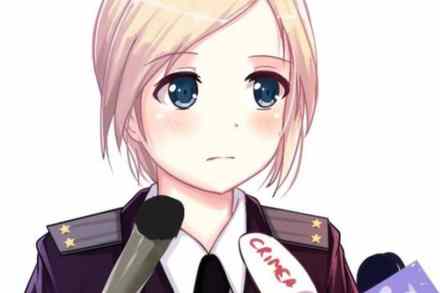
Vladimir Putin’s regime has a track record in building up public heroes whom it hopes to use, only to find the ungrateful wretches unwilling to play the roles it intends. The most recent is Natalia Poklonskaya, a woman whose trajectory from cartoon heroine to legal adviser has starkly illustrated the way Putin faces criticisms not just from remaining liberals at home, but also nationalists. Poklonskaya shot to fame amidst the Russian take-over of Crimea. A Ukrainian, she had been a senior prosecutor in Crimea, then in Kyiv, until she resigned in the wake of the ‘Euromaidan’ rising, ‘ashamed to live in the country where neo-fascists freely walk the streets.’ She returned to Crimea and after it was annexed by Moscow was appointed its Prosecutor.

Is the war slipping away from Ukraine?

After the decisive failure of Russia’s attempt to overthrow the government of Ukraine by seizing Kyiv, Kharkiv and other key cities in February and March 2022, Russia has concentrated its depleted forces in the Donbas and set itself far more limited objectives. In the two months since its retreat from the north of Ukraine, Russia has finally subdued the besieged defenders of Mariupol – who had been surrounded since the second day of the invasion – and slowly gained territory in Donbas. Since then Russia’s most notable conquest has been the small but important town of Popasna and the surrounding high ground that overlooks key supply routes into the city of Sievierodonetsk.

Following the seam of the Iron Curtain

From our US edition

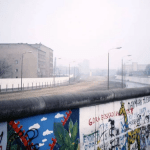
Just before the pandemic, I spent several months traveling through Europe, from the north of Norway to Istanbul and beyond to Azerbaijan. I saw unforgettable sights: the endless daylight of the Arctic summer; the vast Hammershus castle on the Danish island of Bornholm; Vienna’s ornate Prunksaal library; and the sandy beaches of Corfu. But the focus of my journey was precisely those things that most travelers to these places often ignore. I was following the route of the Iron Curtain. My aim was to visit every part of that old great divide, all the places where NATO once abutted the Warsaw Pact, where overwhelming military might stood constantly primed for apocalypse.

Russia slogs through the Donbas

From our US edition

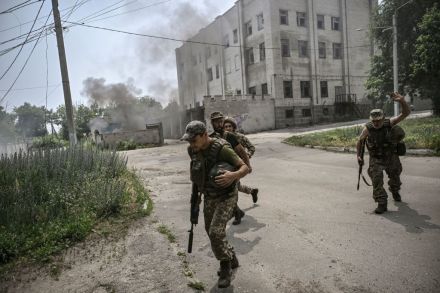
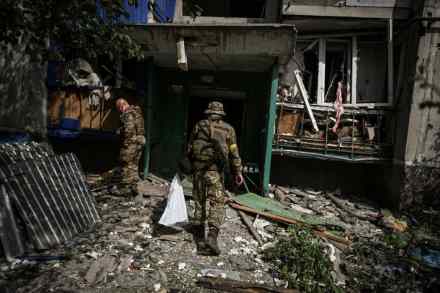
A brutal artillery battle: that’s what the latest phase of Russia’s war on Ukraine has become. Vladimir Putin failed in his original goal of seizing the entire country swiftly, beginning with the capital of Kyiv, and installing a puppet government. When Ukrainian resistance prevented that, Putin shifted to a smaller, more achievable objective: establishing complete control over two eastern provinces, Luhansk and Donetsk, which border Russia and are jointly known as the Donbas region. That’s where the war is being fought now, with an uncertain outcome. Victory will depend on who wins the artillery battle. Russia has more blunt firepower; Ukraine has more precise, longer-range weapons — or at least it will have them when more NATO supplies reach the frontlines.

artillery

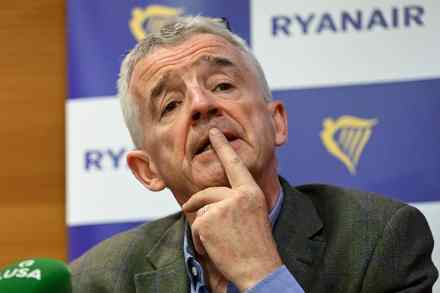
How Michael O’Leary can stop the flying blame game

Stock markets are tumbling, but given the tide of economic news, that’s hardly surprising. The S&P 500 index dived into bear market territory – 20 per cent down since January – after a rise in US inflation for May. Our own FTSE indices reacted badly to an unexpected 0.3 per cent drop in UK GDP for April. Interest rate rises predicted on both sides of the pond this week will make investors jumpier still. So expect further falls in markets that have been driven by weight of cheap money to stay unnaturally high despite an increasingly bleak backdrop. And wait for the turn. When might that be? When investors think they can see beyond the inflation spike and pick value among depressed stocks.

Biden of Arabia

From our US edition

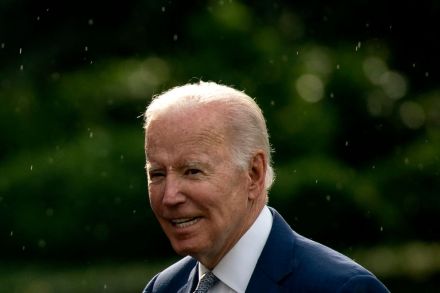
When news broke that President Biden was planning a trip to Saudi Arabia to visit the crown prince Mohammed bin Salman (known as MbS), members of his party were horrified. Representative Adam Schiff, the chairman of the House Intelligence Committee, was especially disturbed and recommended the White House cancel it outright. "I wouldn't go. I wouldn't shake his hand,” Schiff told CBS on June 5. "This is someone who butchered an American resident, cut him up into pieces in the most terrible and pre-meditated way.” That resident was Jamal Khashoggi, a former Saudi royal family insider who used his perch as a columnist at the Washington Post to raise awareness about the crown prince’s ruthless ways.

arabia

Putin is no Peter the Great

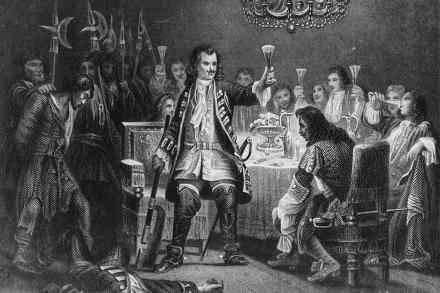
Putin has a penchant for history, but only insofar it flatters him and his views. Last year, he gifted the world a 5,000 essay that essentially pre-justified his invasion of Ukraine with amateurish fantasy history, and now he is comparing himself with Tsar Peter the Great. It is not a comparison that fits or flatters. Peter the Great is one of the, well, greats of the Russian historical pantheon. He ruled from the late 17th to the early 18th century, and in that time became the first tsar to travel in Europe, built a new capital at St Petersburg, and was both founder of the Russian navy and victor, on points, of the 20-year Great Northern War against the Swedish Empire, leaving Russia a dominant Baltic power.

Ron DeSantis’s aide is no Russian agent

From our US edition

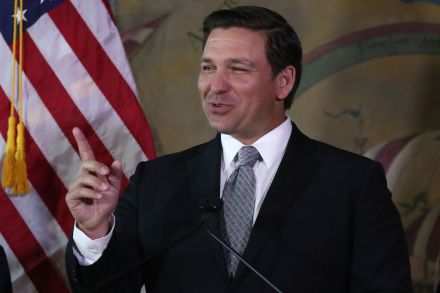
The recent retroactive registration of Christina Pushaw — Florida governor Ron DeSantis's press secretary — as a foreign agent has led to an ignorant backlash. A quick glance at any article on the story leaves readers thinking this is Cold War stuff, a "foreign agent" reaching all the way into the halls of Floridian power. The comments suggest that readers have lapped this up. “Trump + DeSantis = Russian money,” says one. “Trumpian Republicans have a fond affinity for Russians,” writes another, finishing with “such fools.” Clearly, they knew this sort of thing was going on all along: "The Kremlin have done it again!" they think, shaking their fists at the memory of the Russian interference which they've convinced themselves won Trump his election back in 2016.

ron desantis

Who dares ask how far Brexit is to blame for UK inflation?

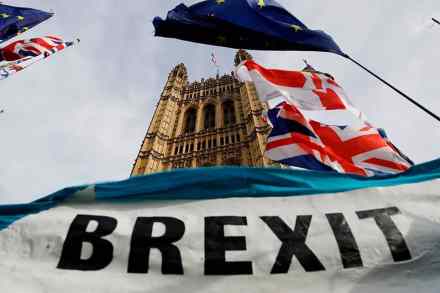
After the Jubilee dream of a lovely lost Britain, back to reality with a face-slap: the reality of the £8 pint of beer, the £8-plus gallon of diesel and the death throes of a Downing Street regime that has no discernible answers to the cost-of-living crisis. All of which takes me back to some questions I’ve been pondering for a while: whether the UK faces higher inflation and a deeper downturn than the rest of the western world, if so why, and who we should blame. By way of caveat, let’s recall the shifting pattern of Covid statistics over time: just because the UK topped April’s G7 inflation table – at 9 per cent, ahead of 8.3 per cent in the US and 7.4 per cent in Germany – doesn’t mean we’ll still look worst when this is all over.

What if the Ukraine war is never won?

In late March, roughly a month into Russia’s invasion of Ukraine, an unnamed Nato official told NBC News that the conflict was turning into a meat grinder for both sides. ‘If we’re not in a stalemate, we are rapidly approaching one,’ the Nato official said at the time. ‘The reality is that neither side has a superiority over the other.’ Sure enough, a month and a half later, the Pentagon’s top intelligence official testified to the Senate Armed Services Committee that ‘stalemate’ is exactly what is occurring.

‘Famine is part of Russia’s strategy’: Zelensky’s economic adviser on Putin’s tactics

Alexander Rodnyansky has a desk waiting for him back at Cambridge, where he’s currently on sabbatical from his role as a junior economics professor. But he won’t be returning for some time. He’s working from Kyiv, prioritising his other job: as economic adviser to Volodymyr Zelensky. Rodnyansky was in Ukraine when the war broke out and he could easily have returned to the UK. ‘That wasn’t really much of a thought,’ he says. ‘I’m sixth-generation Kyiv. I was just going to stay.’ He became a full-time presidential adviser two years ago, hired to help reform Ukraine’s financial institutions, including the privatisation of state-owned commercial banks. ‘About 55 per cent of our banks are government-owned,’ he says.

Which monarchs have had the longest reigns?

Long to reign over us The Queen is the world’s current longest-serving monarch, but two in history have had longer reigns. – Louis XIV of France ascended the throne aged four in 1643 and served until his death in 1715 aged 76 – 72 years, 110 days on the throne. He was succeeded by his five-year-old great-grandson. – Rama IX was king of Thailand from 9 June 1946 until his death on 13 October 2016 – a period of 70 years, 126 days. – The Queen will overtake Rama IX on 12 June this year, but will have to reign until 21 May 2024 before she eclipses Louis XIV to become the longest-ever reigning monarch. Set in stone What should the next jubilees be called (to go by a selection of jewellers’ websites)?

Letters: Who’s responsible for Putin’s rise if not Russians?

Russian misrule Sir: Your editorial (‘Sanction Schroder’, 21 May) laments that western sanctions may be harming ordinary Russians, given that they too ‘are victims of Vladimir Putin’s corruption and misrule’. Yet who if not the Russian people themselves are more culpable for the rise of Putin? The unpalatable fact that both he and his assault on Ukraine still enjoy such considerable popular domestic support cannot be put down merely to his iron grip on the levers of coercion and propaganda. For most of the last century the Russian people have allowed themselves to be misruled and oppressed by a succession of malevolent tyrants and despots. There comes a point when the people of a country have to take responsibility for their leaders.

‘Putin may be prepared to go to the limits’: Antony Beevor and Serhii Plokhy in conversation

The military historian Antony Beevor joins Serhii Plokhy, professor of Ukrainian history at Harvard, on Spectator TV this week to talk about the war in Ukraine. This is an edited transcript of their discussion. Putin’s plan ANTONY BEEVOR: I’m alarmed by the latest developments. The encirclement or imminent encirclement of Severodonetsk could cut off a large number of Ukrainian troops, leaving them in an impossible position. It’s a move that suggests Russia’s real attempt at the moment is to seize Severodonetsk and the area around it, and to cut off Ukraine from the Black Sea entirely. This is deeply worrying because it means that Putin could then say, right, we will negotiate on this basis – and Ukraine will be totally vulnerable.

The stench from the Sussmann verdict

From our US edition

Democracies cannot survive without public trust. Citizens must be confident that their elected officials represent their interests, at least in broad terms, and are not corrupt, self-dealing con men. They must believe the courts dispense justice fairly and equally, that there’s not one set of rules for insiders and another for everyone else. They understand that complex societies require bureaucracies and that bureaucracies are inherently non-democratic, but they want the bureaucracies’ rules and procedures to be subject to laws, passed by elected officials, overseen by them, and applied evenly. For transparency, they depend on newspapers and television and, in recent years, on websites and social media.

sussmann