Russia

Why Crimea could be key to Ukraine winning the war

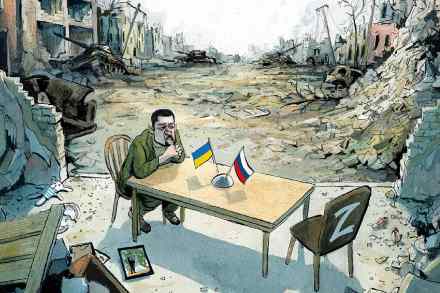
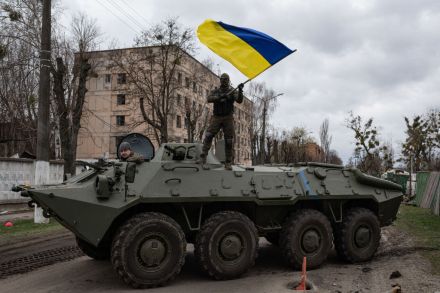
Over the six months since Russia invaded Ukraine, the ambitions of President Zelensky and his compatriots have only grown. From an early readiness to engage in talks – first in Belarus and then in Istanbul – Kyiv has progressed to an insistence that Ukraine can win, and from there to a definition of victory that includes not just a return to the status quo before the war, but the restoration of Ukraine’s post-independence borders, and now also the recovery of Crimea. Zelensky himself has often seemed slower than some in his entourage to expand the mission. But he has been adding his voice to those calling for the recovery of Crimea for a few weeks now, with Independence Day prompting these ringing words: ‘Crimea is Ukraine. And we will return it.

How high will energy prices go?

When dozens of energy companies started going bust in 2021, the government knew it had a crisis on its hands. The rise of the energy price cap from £1,277 to £1,971 in April – an increase of nearly £700 – led to not one but two emergency support packages. By the end, £15 billion worth of subsidies and support broadly covered the price rise for Britain's eight million poorest households. This, it now seems, is just the start of what’s needed to get them through winter. Starting in January, the price cap will be updated every three months instead of every six months to better reflect the wholesale price of energy This morning, Ofgem has announced the cap will rise from £1,971 to £3,549: an 80 per cent increase.

Are sanctions against Russia actually working?

From our US edition

Six months ago this week, the United States and its European allies enacted one of the most comprehensive, stringent sanctions regimes against a major economy in history. Russia’s unprovoked invasion of Ukraine on February 24 not only shocked the West’s sensibilities, but pushed Washington and Brussels to take actions that would have been unthinkable only a few weeks prior. As far as the West is concerned, Vladimir Putin’s Russia is nothing less than a dangerous pariah state — and its aggression against a neighboring country meant it had to be treated as one.

Letters: How to reform the GMC

Overhaul the GMC Sir: Max Pemberton’s cogent criticism of the GMC (‘Unfit for purpose’, 20 August). is one of the more nuanced and on the nose of those that I have read. A client of mine was reprimanded and subjected to a fitness-to-practise investigation after an attempted suicide following a financial crisis. The experience worsened his mental health, which then prolonged the investigation. Other clients have been forced to sell their homes or relocate. Some initial steps I implore the GMC to take include limiting the length of investigations, improving mental health reporting, providing more support for doctors about fitness-to-practise issues, and overhauling how evidence is handled.

Daria Dugina has become a martyr for Putin

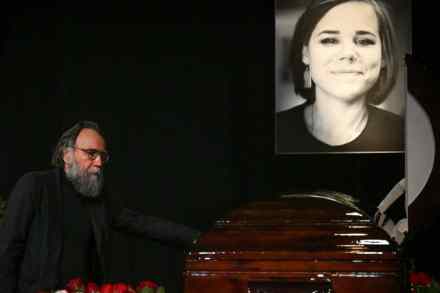
There was something menacing yet vaguely absurd about the Tuesday memorial service held to commemorate the life and fascist times of the prominent ultra-nationalist Daria Dugina, the daughter of the Kremlin propagandist Aleksandr. The 29 year old Daria Dugina, who died in a car explosion on August 20, was put on display in an open coffin, with guards wearing black and red armbands by her side. The sombre attendees filed past.

The stalemate in Ukraine won’t last forever

Addressing the vexed question of who is winning the war in Ukraine, six months on, is a task to challenge military strategists, geopolitical analysts – and semanticists, because so much depends on what ‘winning’ means. On one level, after all, one could suggest everyone is losing. That said, we cannot escape the fact that both Moscow and the West had essentially written Ukraine off at the start of the war. The conventional wisdom was that it would take perhaps a fortnight for Vladimir Putin’s much-vaunted war machine, the product of two decades of heightened military spending, to defeat its Ukrainian counterpart.  Instead, the Ukrainians proved determined and disciplined in the defence, and imaginative and impassioned in the attack.

Ukraine is the first streaming service war

From our US edition

Russia has invaded Ukraine, and the images are all over the news. CNN has gone to round-the-clock coverage of bombs falling near Kyiv, refugees pouring into Hungary, Putin’s war machine rolling down a misty highway. We’re outraged by this, roused to action, as we righteously hang a blue-and-yellow Ukrainian flag off the porch and learn to spell the names of places like Kherson and Mariupol. The West, listless and fractured, seems suddenly united again as opposition to Russian imperialism grows and... ...and it’s summer. The weather is warm and a gentle breeze is tinkling through the chimes. The kids are off from school, horsing around the kitchen, and the lawn isn’t going to mow itself.

war

The strange morality of sponsoring weapons

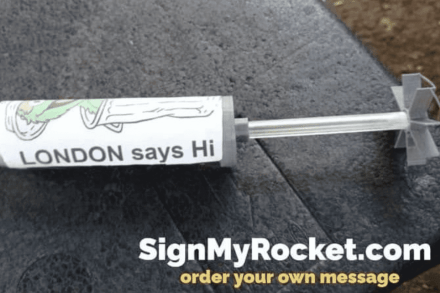
Forget fund-raising concerts donating spare clothes and offering your spare room to a refugee family. There’s a better way of showing your sympathy for Ukrainians: you can now sponsor weapons, and arm it with your very own message. For up to £2,500, Brits can send a personalised message to the crowdfunding site Sign My Rocket, who will then write it on a missile destined for the Russian army. Sending hostile messages to the enemy, of course, is not new, and may be as old as war itself. Dropping black propaganda leaflets from planes for the benefit of the enemy beneath has long been standard practice. Nor was it unusual for those on the production line at armaments factories or even those loading the ammunition to add their own special something.

How Ukraine is sabotaging Russia’s army

Ukrainian Special Operations Forces (SOF) or possibly partisan fighters have conducted successfully attacks on three significant targets in occupied Crimea since 10 August. An initial attack on the Saki airbase caused a fire that quickly spread to stored ammunition and fuel, resulting in multiple huge secondary explosions. These destroyed at least nine Russian fast jets and inflicted extensive damage to the base’s facilities and surrounding buildings. On 16 August further attacks were carried out on a large ammunition and equipment depot at the strategic railroad junction town of Dzhankoiskyi and another Russian airbase at Gvardeyskoye causing further fires and secondary explosions.

ukraine

Is the Ukraine conflict a civil war?

From our US edition

The strategic Ukrainian port city of Mykoliav, that has been under constant Russian bombardment since the onset of war, was locked down for an entire weekend in early August as troops searched for Russian collaborators that had been calling in locations of Ukrainian troops and ammunition. The government arrested scores of traitors during their house-to-house search. Meanwhile in the capital Kyiv, President Volodymyr Zelensky has also been sounding the alarm over Russian collaborators after firing both his prosecutor-general and head of the intelligence agency for treason. The former spy chief was a close childhood friend of the president. There are allegations that the entire intelligence agency is riddled with spies, with many defecting to Russia in the early days of the invasion.

Ukraine is convinced that time is on its side. So is Russia

From our US edition

As the war in Ukraine approaches its six-month anniversary this coming Wednesday, the fighting shows no sign of stopping. Peace talks are a figment of the imagination, as Russian president Vladimir Putin and Ukrainian president Volodymyr Zelensky remain just as committed to achieving their objectives today as they were when the war first broke out. The Russians continue to pound residential areas with artillery in the Donbas, hoping to slowly capture more territory after months of slow, high-cost maneuvering in the Donetsk region. The Ukrainians, meanwhile, are settling on a new strategy in the south, harassing Russian supply lines deep into Russian-occupied territory.

ukraine

Blaming Saudi won’t make energy cheaper

How outraged should we be that Saudi Aramco has reported a world-record quarterly profit of $48 billion, representing a giant bonus from the global oil price spike provoked by the war in Ukraine? Well, that’s how the cookie crumbles when you’re sitting on oil reserves so abundant and so easily accessible that your marginal cost of producing the next barrel is less than $10 when the market price has just doubled to $130 – as it did in March, before settling back to around $95 today. And you might think that this recent price retreat is likely to continue as oil demand begins to shrink with the onset of recession in developed economies – just as you worry that your own reserves will one day dwindle.

Propaganda from the Russian Front: The People Immortal, by Vasily Grossman, reviewed

On its posthumous publication in 1980, Vasily Grossman’s Life and Fate was widely compared with War and Peace. For all the novel’s many virtues, the comparison was hyperbolic. In one respect, how-ever, Grossman’s was the more remarkable achievement. Whereas Tolstoy wrote about historical events with the benefit of hindsight, Grossman wrote about ones that he had recently endured. Life and Fate was the third of Grossman’s novels set during the Nazi invasion of the former Soviet Union. The first was The People Immortal, which, like the second, Stalingrad, is now available in an unexpurgated edition, superbly translated by Robert and Elizabeth Chandler.

Celebrities embark on a Ukraine safari

From our US edition

The saying goes that there is nothing that celebrities can’t make about themselves. As it turns out, that includes a war in Ukraine caused by an invasion of Russia that's already seen thousands of casualties. It's almost as though there are two wars happening at once: one on social media, where guerrilla clips from the front lines show bodies, shelling, and damage to homes, and one playing out in the pages of Vogue magazine. This week, it was revealed that Oscar-winning actress Jessica Chastain had visited with Ukrainian president Volodymyr Zelensky. The photo was posted to his official Telegram account and was taken from his presidential palace. There were also several shots of Chastain seated at a table with Zelensky having a discussion of some sort.

Do ‘ordinary Russians’ support the war?

There was a whiteboard in the BBC Baghdad bureau for noting down phrases we hoped to ban from the airwaves. It had nothing to do with political correctness or self-censorship. This was all about self-improvement. The list of words was titled ‘Not Martha Gellhorn’, in honour of the veteran war reporter who wrote so well – especially when compared with us. We were perfectly aware of our shortcomings, though, and strove to do better, with the whiteboard serving as an aide memoire. It helped keep the prose fresh when deadlines were hectic, and when the temptation was to reach for the cliché closest to hand.

Sanctions are working – whatever Putin says

Don’t believe Vladimir Putin’s hype. The Russian economy is not OK. With western sanctions jeopardising up to 40 per cent of the country’s GDP, Putin’s assurances of an economic pivot to the East are a sham. And his weaponising of gas supplies to Europe is the financial equivalent of strapping on a suicide vest. That, roughly, is the message of a major new study published last week by the Yale School of Management about the impact of sanctions on Russia. Yale, working with a team of international economists, has looked past a wall of Russian obfuscation and used real-world data from retailers, energy traders and investors to reveal a picture very different from the rosy image presented by Putin at the St Petersburg Economic Forum in June.

Russian escapism: Telluria, by Vladimir Sorokin, reviewed

Vladimir Sorokin, old enough to have been banned in the Soviet Union, flourished in the post-Gorbachev spring, and he fled to Berlin several days before Russia attacked Ukraine. He writes phantasmagorias, as so many Russians do, because Russia is a nation that has never allowed its writers to examine society directly. Solzhenitsyn said: ‘Russian literature gives a poor notion of Russia, because after 1917 all truth was suppressed.’ But even in the so-called Golden Age, the Tsar’s censorship was brutal. Voinovich said: ‘Depicting reality as it is, it’s very alien to Russians.’ Gogol provided one way out – satire – but he escaped to Rome. Later writers escaped into the historic past, romantic passivity, surrealism.

Is Biden giving Brittney Griner special treatment?

From our US edition

The rule is simple: abroad, Americans are subject to the host country's laws and legal system, whether that be Great Britain or Russia. The Bill of Rights does not follow Americans to foreign countries, nor will the US government intervene with the host country on their behalf. Try and bring some weed into Japan, and if you're caught, you're looking at years behind bars. No matter if it's a small amount for personal use back home. In Japan, anything over about an ounce means you intended to sell it, and the punishment is accordingly lengthy. I should know: I spent seven years in Japan visiting American prisoners as part of my State Department job. The top three reasons for their arrests were drugs, drugs, and drugs. Just like Brittney Griner.

Pelosi is right to put China on notice

From our US edition

House speaker Nancy Pelosi has always had a flair for the dramatic. During the Trump presidency, for example, she ostentatiously tore up his State of the Union speech. But for sheer spectacle, it will be hard for Pelosi to top her “will she, won’t she” visit to Taiwan this week. In spite of the suspense, there was never really any doubt about it. For weeks China has issued dire warnings about the perils of her visit. So, as it happens, have several commentators, including The Spectator’s Freddy Gray, whom I debated on the Americano podcast, and who seems to have a bad case of the collywobbles about the Pelosi trip.

Is war brewing between Serbia and Kosovo?

Serbia and Kosovo are close to conflict. Of all things, a dispute over car number plates is threatening the fragile peace won 23 years ago, after a Nato bombing campaign against then-Yugoslavia. For that, Serbs have never truly forgiven the West. On Sunday night, roads were blockaded by Serbs in northern Kosovo. Their anger was directed at an edict from the Kosovan government requiring Serbs to re-register their cars with Kosovar number plates. Serbs currently use number plates with acronyms of Kosovar cities, just one example of Serbia’s ongoing refusal to accept Kosovan independence. New documentation requirements were also to be imposed on Serbs entering and leaving Kosovo. Some have claimed that tensions have calmed, but they are only on hold.