William Nattrass

William Nattrass

William Nattrass is a British journalist and Visegrád Four current affairs commentator based in Prague.

Czech Foreign Minister: Ukraine needs to ‘transform’ before it can join the EU

From our UK edition

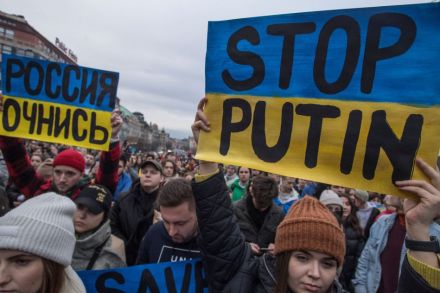
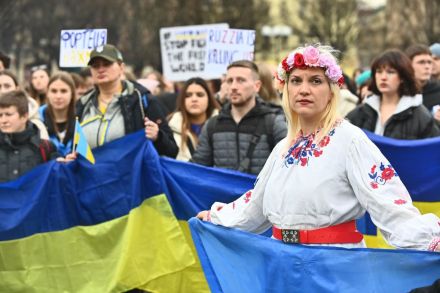
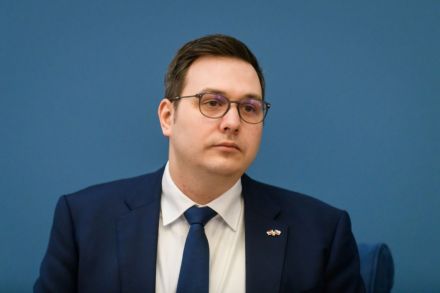
It doesn't take long for visitors to Prague to figure out how the locals feel about Russia’s invasion of Ukraine. Fifteen months since the war started, yellow and blue flags still seem to flutter in almost every city centre street.   The current Czech government – an ideologically varied five-party coalition united by its pro-EU and pro-western outlook – has played its part in supporting Ukraine’s successful war effort. As a proportion of GDP, Czech military aid to Ukraine has been among the most generous in the world. And when I meet Czech Foreign Minister Jan Lipavský, who is set to meet UK Foreign Secretary James Cleverly this week, he is unequivocal about what a Ukrainian counteroffensive should aim to achieve.
Ukraine could lose one of its closest allies in Europe

From our UK edition

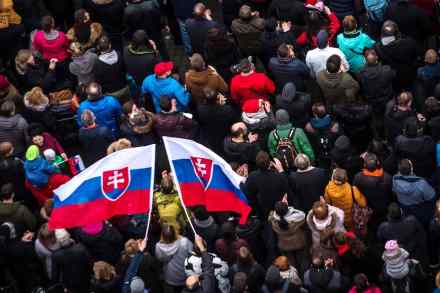
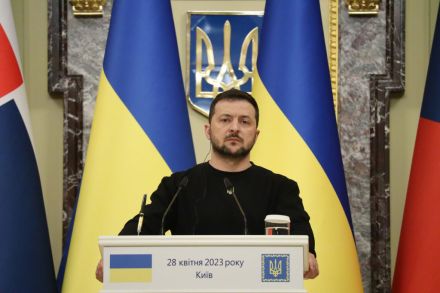
Could one of Ukraine’s staunchest allies in Europe soon flip to become one of the most sceptical nations in the West when it comes to military and political aid? That question is troubling Kyiv and the EU, as a political crisis in Slovakia leaves the door wide open for a party to take over which is more hostile to Ukraine.  It was announced on Sunday that a technocratic caretaker government will be formed next week following the resignation of the Slovak prime minister, Eduard Heger. An election is expected in September, which the left-wing populist and Ukraine-sceptic Robert Fico is now favourite to win.

It has become illegal to support Russia in the Czech Republic

From our UK edition

Supporting Russia’s brutal invasion of Ukraine is now socially and morally beyond the pale in most of the western world. Even being wary of arms deliveries to Ukraine is, in most places, considered wrong. But in the Czech Republic things are being taken a step further, as those who express controversial views of the war are prosecuted under legal restrictions on free speech.

Can Hungary resist international pressure over its LGBT stance?

In an off-the-cuff monologue delivered during a press conference in Sarajevo, Hungary’s Foreign Minister Péter Szijjártó summed up his government’s growing fury over international efforts to influence Hungarian domestic affairs. Asked about the US State Department’s latest Country Reports on Human Rights Practices, which includes extensive criticisms of Hungary, Szijjártó pulled no punches.   “I am appalled, and I am appalled again and again every year, that the US State Department has the courage to make such excoriating statements about the internal issues and situations of other countries,” Szijjártó said.

The Ukrainian refugees who are returning home

Prague is still draped in blue and yellow flags, but with no end to the Ukraine war in sight, there’s growing uncertainty in Eastern European countries like the Czech Republic. As governments gear up to support Ukraine for the long haul, attitudes are also shifting among the millions of refugees who have found shelter in the EU since the war began.  Last year, the Ukrainian refugee crisis became part of everyday life in the Czech Republic, the EU country hosting the highest number of Ukrainian refugees per capita. At first, it seemed refugees were fleeing a country that would soon fall under the sway of the Kremlin. Later, the mood changed as Ukrainian gains on the battlefield raised hopes that the war could be won sooner than anyone had expected.

Should Hungary be punished for its stance on Ukraine?

From our UK edition

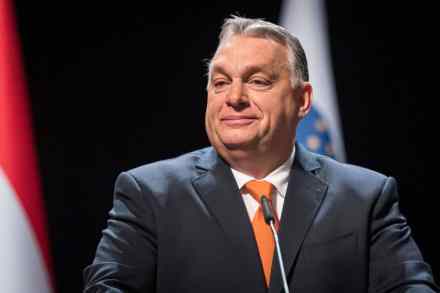
After months of delay, the Hungarian parliament finally started the process of approving Finland and Sweden’s Nato membership this week. Prime Minister Viktor Orbán’s Fidesz party announced that it would back the two countries’ membership bids, but with Hungary the only country besides Turkey to have dragged its heels on the issue, he is again being accused of being the black sheep of the EU.  If western powers have an enemy in Orbán, it is arguably one they created themselves Orbán claims that despite his personal endorsement of Finnish and Swedish Nato membership, his ‘MPs aren’t very enthusiastic.

Novak Djokovic and the real reason many Serbs support Russia

From our UK edition

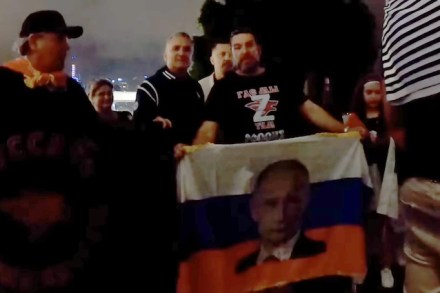
Novak Djokovic is no stranger to controversy. A year ago, the Serbian tennis star was deported from Australia after failing to comply with the country's covid vaccination rules. Organisers of the Australian Open are once again fighting fires relating to Djokovic.  This time, it is Djokovic’s father, Srdjan, who is in trouble after he posed with supporters of Russian president Vladimir Putin outside the Rod Laver Arena in Melbourne. Djokovic senior was pictured with a man holding a Russian flag emblazoned with Putin's face, and wearing a T-shirt printed with the pro-war Z symbol. In a video recording of the incident, Srdjan appears to say 'Long live the Russians'.

Serbia’s membership talks should embarrass the EU

From our UK edition

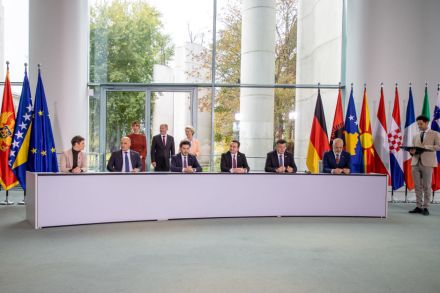
European Commission President Ursula von der Leyen and German Chancellor Olaf Scholz looked on with uneasy pride as leaders from six western Balkan aspiring EU members gathered in Berlin to sign new agreements this Thursday. British Foreign Secretary James Cleverly also attended the summit, which aims to encourage friendlier ties in this fractious region.  Agreements on the mutual recognition of ID documents and educational qualifications to facilitate travel and work should have been a moment for the Balkans to celebrate. But the mood was dampened as back in Serbia troops were deployed to the Kosovo border, the army's alert level was raised, and a drone was shot down near military facilities at the border by Serbian forces.

Viktor Orban is facing pressure from the right on abortion

From our UK edition

Hungarian prime minister Viktor Orbán has become a towering figure in European politics over the past 12 years thanks to his promotion of ‘Christian democracy’ as an alternative to western liberalism, which he claims has lost its way. But a change to abortion laws introduced by the Hungarian government this week may indicate an alarming shift in his methods. The new regulation, brought in with little warning or debate, requires pregnant women to listen to their foetus’s heartbeat before they can access abortion services. Coming into force on Thursday, it strengthens abortion laws which have remained liberal throughout Orbán’s leadership.

Why Poland wants Germany to pay war reparations

From our UK edition

Poland commemorated the 83rd anniversary of its invasion by Nazi Germany this week. To mark the occasion the leader of the country’s ruling Law and Justice (PiS) party, Jarosław Kaczyński, announced that Poland was once again seeking reparations for the invasion from Germany. Speaking from the Royal Castle in Warsaw, Kaczyński unveiled a report which put the damages inflicted on Poland by the Nazis at over $1.3 trillion. He did not specify the period over which Germany is expected to pay, only saying the path to obtaining reparations 'will take a long time and will not be easy.

Is war brewing between Serbia and Kosovo?

From our UK edition

Serbia and Kosovo are close to conflict. Of all things, a dispute over car number plates is threatening the fragile peace won 23 years ago, after a Nato bombing campaign against then-Yugoslavia. For that, Serbs have never truly forgiven the West. On Sunday night, roads were blockaded by Serbs in northern Kosovo. Their anger was directed at an edict from the Kosovan government requiring Serbs to re-register their cars with Kosovar number plates. Serbs currently use number plates with acronyms of Kosovar cities, just one example of Serbia’s ongoing refusal to accept Kosovan independence. New documentation requirements were also to be imposed on Serbs entering and leaving Kosovo. Some have claimed that tensions have calmed, but they are only on hold.

Hungary’s revenge: Orban is sacrificing EU unity for Russian gas

From our UK edition

Russian foreign minister Sergei Lavrov spoke magnanimously while receiving his Hungarian counterpart Péter Szijjártó in Moscow this week. He promised that the Kremlin would ‘consider’ Hungary’s request for significantly increased gas deliveries, after Viktor Orbán’s right-hand man said his country won’t manage without more Russian resources as Europe faces a deep-freeze this winter. It's hard to imagine a more humiliating scenario for the EU: a member state supplicating Vladimir Putin’s regime to keep its people warm after years in which the bloc laughed off criticisms about its energy dependency on Moscow.

What’s behind the mysterious wave of bomb threats terrorising Serbia?

From our UK edition

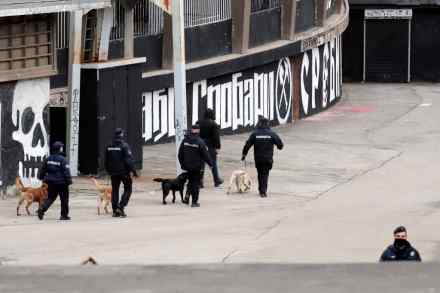
Is Serbia being terrorised into supporting Ukraine? The question may sound like it comes from the fevered imagination of a Kremlin propagandist, but it’s being asked with increasing urgency in Serbia. The country has been buckling under a tsunami of fake bomb threats which the government claims is being orchestrated by pro-Ukrainian forces after Serbia refused to sanction Russia. Thousands of threats have targeted Serbian schools, hospitals, shops, tourist attractions and airports since Russia’s invasion of Ukraine began. So far no bombs have gone off. But the threats are spreading fear and putting an enormous burden on public resources, with evacuations and top-to-bottom police searches becoming a part of everyday life.

How Hungary torpedoed the EU’s sanctions crackdown on Russia

From our UK edition

'Hungary’s stance on oil and gas sanctions on Russia remains unchanged,' Hungarian government spokesperson Zoltán Kovacs said on Monday. 'We do not support them.' Cue panic in Brussels as European Union ministers discussed a potential embargo on Russian oil imports, plans for which were presented to the European Parliament on Wednesday morning. Claims swirled that Hungary might be allowed to continue buying Russian oil for a year longer than other member states to stop it from vetoing the bloc’s new sanctions package, but Kovacs quickly torpedoed this idea too.

Is Slovakia a mafia state?

From our UK edition

As soul searching in Britain continues over Boris Johnson’s alleged proximity to a slice of cake, a different sort of rule-breaking has apparently been going on in Slovakia. The country’s former leader Robert Fico has been charged by police with leading an organised crime gang from his prime ministerial office.  The Slovak police’s ‘Twilight’ operation, investigating corruption at the highest level of politics, saw Fico’s former interior minister Robert Kaliňák taken into custody last week over fears that he would intimidate witnesses. Fico himself is likely to be arrested as soon as his parliamentary immunity is waived. The allegations against the former prime minister and his right-hand man are shocking.

How many refugees can Eastern Europe take?

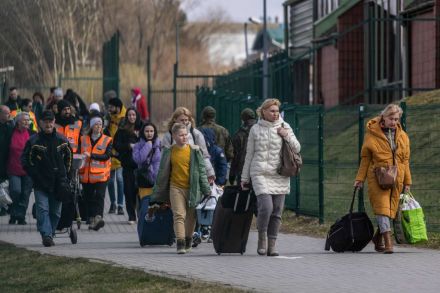
Hundreds of thousands of Ukrainian refugees have already streamed into Slovakia, Hungary and the Czech Republic. Head north to Poland, and the numbers go from the unprecedented to the jaw-dropping: two and a half million refugees have entered the country with a total population of 38 million since the war in Ukraine began. In the Czech Republic, where I live, official estimates put the current number of refugees at over 300,000, a figure expected to rise to between 500,000 and 600,000 in the coming months. In a country of less than eleven million, that’s five percent of the population. In Poland, a proportion closer to ten percent is possible. At the moment, most of the Czech Republic’s refugees are concentrated in Prague.

Why Viktor Orbán keeps winning

From our UK edition

Viktor Orbán took the stage for a victory speech in Budapest last night with supporters chanting his name. Not long after polling stations had shut, it was already clear that the Hungarian prime minister’s Fidesz party had won a stonking victory against the United Opposition, a group of six parties led by small-town mayor Péter Márki-Zay. This morning, with 99 per cent of the votes counted, Fidesz has more than 53 per cent and the United Opposition has only 35 per cent – a much lower total than predicted. Surprisingly, the far-right party Our Homeland also gained enough votes to enter parliament.

Hungary’s ‘patriotic fight’ with the EU: an interview with justice minister Judit Varga

From our UK edition

Budapest is racked with tension. As Russia’s invasion of Ukraine sends a stream of refugees to Hungary’s eastern border, Viktor Orbán’s Fidesz party has scrambled to respond to the humanitarian crisis while turning his back on his previous pragmatic relationship with Moscow. Fidesz’s unequivocal condemnation of Vladimir Putin’s actions will have come as a relief to Brussels. But a bitter argument still rages over Hungary's opposition to the bloc’s new ‘rule of law’ budget mechanism, which allows EU funds to be made dependent on adherence to legal and democratic norms.

The crisis in Ukraine is strengthening the EU

From our UK edition

The EU has a knack for turning a crisis into an opportunity. The Eurozone crisis led to the centralisation of economic powers in Brussels; Brexit consolidated the Franco-German push for EU integration; and Covid became the pretext for EU funds being made dependent on members adhering to the ‘rule of law’ for the first time. It's looking likely that the bloc will repeat this trick with the war in Ukraine. Prior to Russia’s invasion, the EU was being mocked for its divisions: on Russian gas dependency, on proposed economic sanctions, and on political links with the Kremlin. Now, the bloc is trumpeting its unity.

Hungary is standing by the EU on Ukraine

From our UK edition

Thursday marked the beginning of a new era in European politics. Nowhere has Russia’s invasion of Ukraine been met with greater fear and trepidation than in central and eastern Europe, a region all too familiar with ‘brotherly help’ in the form of military occupation by a looming eastern power. It may be a new era for Europe, but some things never change. In Hungary, which shares an 80-mile border with Ukraine, a tense atmosphere is laced with disbelief at the West’s ongoing portrayal of the country as a dubious ally threatening to sink EU sanctions. It’s become a cliché of western analyses that Hungary is constantly looking to throw a spanner in the works of a joint EU response.