Poland

How Poland and Ukraine can repair their broken relationship

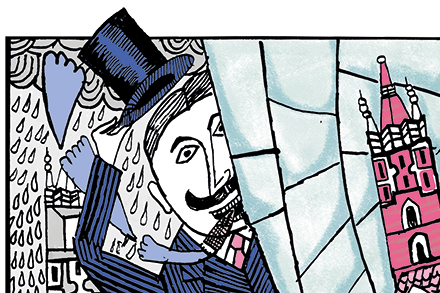
Poland was once a staunch ally of Ukraine. But President Zelensky's decision to name a unit of the Ukrainian Special Forces after the “Heroes of the UPA” appears to have shattered the relationship forever. Help may be at hand, though: in the form of the humble British historian. Others want Poland to go further: there are calls to close the border with Ukraine While Polish and Ukrainian politicians have their own agendas and aren't trusted by the other side, some British historians have near-mythological status in eastern Europe.

poland

Why is America determined to pick a fight with Poland?

Until very recently it was hard to find more stalwart allies of America in Europe than the Poles. Poland was an early supporter of Washington’s policy to expand Nato and actively pushed for a stronger US role in central and eastern Europe. The Poles also stood up as an enthusiastic member of every US-led military coalition, taking leading roles in Afghanistan and Iraq. It was to Warsaw that US President Joe Biden traveled – twice – in the wake of Putin’s invasion of Ukraine to give barnstorming speeches affirming that America would stand by Kyiv.  All the more surprising, then, that the recently-appointed US ambassador to Warsaw chose to pick a diplomatic fight that threatens to snowball into a profound rupture between the two onetime allies.

The Kremlin’s plan to create a new wave of Ukrainian refugees

What is the limit of Ukrainian civilians’ endurance? In nearly four years of relentless war, Ukraine’s people have faced summary executions, ‘drone safaris’ where unmanned aerial vehicles hunt people down city streets and constant bombardment of cities by swarms of drones and missiles. This winter their remarkable resilience faces its severest test yet as Russian forces reach a tipping point in their systematic attempt to knock out the country’s energy infrastructure. In each of the past three winters, Vladimir Putin has attempted to render Ukraine’s cities uninhabitable by plunging them into darkness and cold, without success. But this time it looks like the Kremlin’s campaign to weaponise winter may be succeeding.

Ukraine must stand as a fortress of European freedom

It is 35 years since I was last in Warsaw and the city is unrecognisable. Back then it was grimy and depressing, full of buildings still pockmarked by bomb damage. Nothing worked and nobody smiled. Now it gleams. The historic Old Town has been lovingly rebuilt and restored. Everything else is new: the cars, the shops, the office blocks and apartment buildings. The fashions are sharp and the teeth are white. It is a powerful tonic for beleaguered liberals. Don’t let the democracy-in-decline-mongers deceive you. Economic and political freedom work. And what the world needs is more of both.

Portrait of the week: Angela Rayner resigns, Poland downs Russian drones and Israel bombs Qatar

Home The government shuddered when Angela Rayner resigned as housing secretary, deputy prime minister and deputy leader of the Labour party after being found to have breached the ministerial code by Sir Laurie Magnus, the independent adviser on ministerial standards. He said she had followed advice from a legal firm when not paying enough stamp duty on her new flat in Hove, but ignored a recommendation to seek expert tax advice. Sir Keir Starmer, the Prime Minister, called her ‘the living embodiment of social mobility’. He then threw himself into a great big cabinet shuffle, in which Yvette Cooper became Foreign Secretary and was replaced as Home Secretary by Shabana Mahmood, who was replaced as Justice Secretary by David Lammy who also became Deputy Prime Minister.

Poland’s Nawrocki heralds a more mature populism

From our US edition

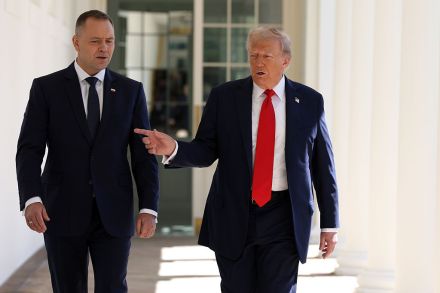
Yesterday, September 3, President Trump welcomed Karol Nawrocki, the newly inaugurated president of Poland to the White House. It was a stirring occasion, replete with a surprise military fly-over of F-16 and F-35 fighter jets flying in “missing man” formation to honor  Major Maciej “Slab” Krakowian, the Polish pilot who died in a crash in Radom, Poland, last Thursday.  Nawrocki, who narrowly won the presidency in June, is often described as “the Polish Trump.” It’s an accurate epithet. Nawrocki is as much a “Poland First” president as Trump is an “America First” president. The 42-year-old historian (Nawrocki holds a PhD in history) supports a list of policy initiatives that could have come right out of the MAGA playbook.

Nawrocki Trump

True winners steal from children

From our US edition

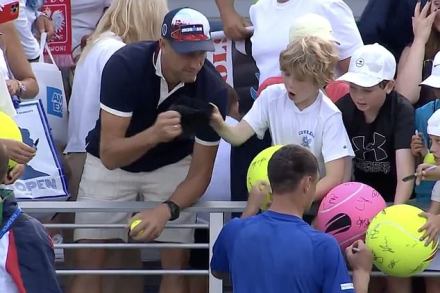
“Sack of garbage,” “common thief,” “shameful jerk” – but a few of the choice words tennis fans had for the man who swiped an autographed hat from a child at the US Open over the weekend. Sure, the alleged thief is no saint. But now that he’s reportedly been identified as a self-made millionaire, I’d rather just call him a shark. The video of the courtside incident quickly went viral, showing a grown man snatch the hat away as Polish tennis star Kamil Majchrzak passed it up to a boy who pleaded in vain. The internet did as it wont, and identified the alleged thief as pavement plutocrat and fellow Pole, Piotr Szczerek. What is this world coming to? A man can’t even steal from a child anymore without having his whole life dissected by an internet mob.

Kamil Majchrzak

The mixed legacy of Zbigniew Brzezinski, strategist of the Cold War

In the autumn of 1938, within nine weeks of each other, two boys arrived in New York, fleeing the gathering storm: a 15-year-old Jewish German and a ten-year-old Catholic from Poland. Both would repay the mortal debt they owed by dedicating their lives to the Land of the Free. The older boy was, of course, Henry Kissinger, later Grand High Poobah to Richard Nixon and Gerald Ford. The younger was Zbigniew Brzezinski, Jimmy Carter’s national security adviser from 1977 to 1981 and the subject of a magisterial biography bythe Financial Times’sWashingtonsupremo, Edward Luce. From the first, Zbigniew Brzezinski (pronounced ‘ZbigNieff BreshinSki’, as Carter helpfully informed his team) sat in Kissinger’s shadow, always a step or two behind the great Bavarian.

Can freedom of movement survive Europe’s migrant crisis?

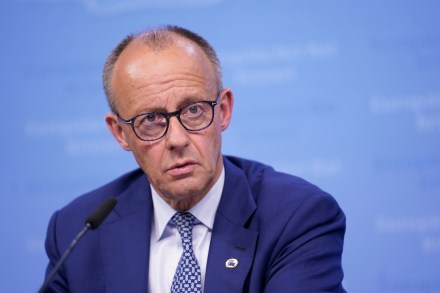
Freedom of movement in the EU received another nail in its coffin yesterday after Poland became the latest European country to introduce checks along its shared borders with fellow member states. As of next Monday, Warsaw will start enforcing border controls at crossings shared with Germany and Lithuania.  The Polish Prime Minister Donald Tusk said that he felt compelled to introduce border checks in particular to ‘reduce the uncontrolled flows of migrants across the Polish-German border to a minimum’. The source of Tusk’s angst is the tougher border regime introduced by new German Chancellor Friedrich Merz less than two months ago.

Olenka Hamilton, Melanie McDonagh, Hannah Moore, James Delingpole and William Atkinson

31 min listen

On this week’s Spectator Out Loud: Olenka Hamilton ponders whether Poland’s revival is a mirage (1:24); Melanie McDonagh asks who killed the postal service (9:52); Hannah Moore argues that family cars aren’t built for families any more (14:35); James Delingpole reviews Careme from Apple TV and Chef’s Table from Netflix (21:15); and, William Atkinson provides his notes on Thomas the Tank Engine (26:48).  Presented by Patrick Gibbons. Produced by Oscar Edmondson and Patrick Gibbons.

Is Poland’s revival a mirage?

In 1988, when I was six months old, my British father and Polish mother took me to meet my family in Krakow. My parents brought an extra suitcase filled with disposable nappies because such luxuries weren’t sold on the other side of the Iron Curtain. At the time, there was only one shop in Krakow that sold foreign goods, but my father was pleased to discover that a gallon of whisky could be bought for only $8. He was a member of the House of Lords and, I’m told, we were trailed for our entire stay. Everywhere we went, a large Polski Fiat 125 driven by a suited man followed us. My parents always said that apart from drinking in people’s homes, there wasn’t a lot to do in Krakow back then. There were a couple of run-down cafés in the main market square but that was it.

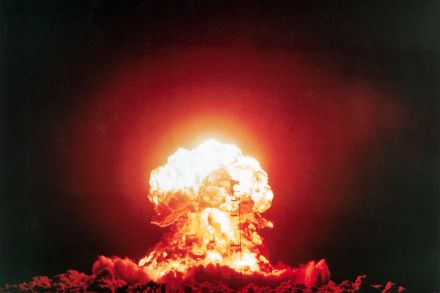
The problem with putting US nukes in Poland

From our US edition

Nuclear weapons are becoming a major issue for Poland. One way or another, both the Polish president and prime minister want their country to host tactical nuclear weapons as a deterrent against President Putin’s Russia. In the latest — but by no means the first — statement on this issue, President Andrzej Duda revealed that he recently discussed stationing American tactical nuclear weapons in Poland with Keith Kellogg, the US special envoy for Ukraine. In an interview with the Financial Times, Duda said: “I think it’s not only that the time has come, but that it would be safer if those weapons were already here.

A war of words: circulating forbidden literature behind the Iron Curtain

If James Bond, now in American hands, re-emerges refreshed as an agent of the CIA, then it will be a homecoming of sorts, given that his creator played a role in drawing up the blueprint for America’s first foreign intelligence service. In May 1941, Commander Ian Fleming sat down in Washington with Colonel William (‘Wild Bill’) Donovan to sketch out an agency modelled on British naval intelligence. Under Donovan’s stewardship, this became the Office of Strategic Services and, in 1947, the CIA. The two men got on well and were not afraid to try things that had not been tried before.

Poles are tiring of Donald Tusk

In December 2023, a new coalition government led by Donald Tusk – former Polish prime minister, former European Council president – was sworn in, ending the eight-year rule of the right-wing Law and Justice party. Tusk leads the liberal Civic Platform, and his new coalition includes the eclectic Third Way alliance made up of the Polish Peasant party and Poland 2050, along with the smaller New Left party. Last month marked the first anniversary of the Tusk government taking office, and opinion surveys say that most Poles are disappointed with its performance. A United Surveys poll found that 51 per cent of respondents see the Tusk government negatively (21 per cent very negatively) compared with only 40 per cent who held a positive view (6 per cent very positive).

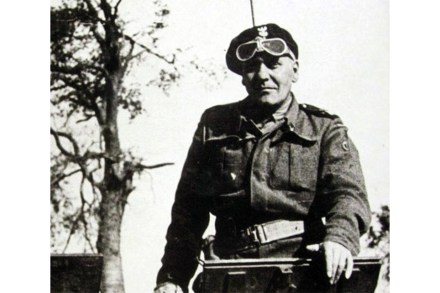
The good soldier Maczek – a war hero betrayed

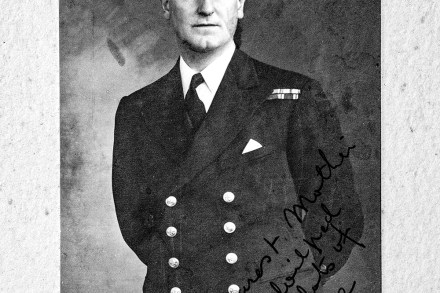
Who could forget the Polish squadrons in RAF Fighter Command when, in the 1969 film The Battle of Britain, a British squadron leader, frustrated by the excited radio chatter on being allowed into action at last, orders ‘Silence! In Polish!’ Or the Polish Parachute Brigade at Arnhem, whose commander, Stanislaw Sosabowski, played by Gene Hackman in A Bridge Too Far (1977), thinking the venture disastrous, growls ‘God Bless Field Marshal Montgomery’ as he jumps from his Dakota? Commander Eugeniusz Plawski, the captain of the Polish destroyer Piorun which first spotted the Bismarck and charged at her to draw fire, might be better known if he had featured in the 1960 film Sink the Bismarck! – but that wasn’t expedient, with the honours going instead to a Royal Navy officer.

The powerful, brutal story of Polish resistance fighter Elżbieta Zawacka

From our US edition

In May 1942, Agent Zo was in the home stretch after a long and risky mission that had placed her in Berlin, at the heart of Nazi Germany. As usual, she picked up a small stone and threw it at the second-floor window of her sister’s apartment in a grimy industrial city in occupied Poland, south of Warsaw. But no one in the flat turned on a light, the agreed signal. She threw another. Nothing happened. With a mounting sense of unease, she knocked at the door of a first-floor apartment, and a pallid face appeared. The terrified neighbor told her that the Gestapo had appeared two days ago and arrested the occupants. “Get away, by God. They are here!” she urged.

Zo

The spy with the bullet-proof Rolls-Royce

‘Biffy’ Dunderdale (1899-1991) was a legend in his own lifetime within MI6. Born in Odessa to an Austrian countess and a British trader representing Vickers, his cosmopolitan upbringing endowed him with English, Russian, German, Turkish, French and Polish. His real first name was Wilfred, Biffy being acquired through youthful handiness with his fists. Biffy played an important role in smuggling the Polish copy of the Enigma cipher machine to London Education and family connections made him intimate with prominent Levantine trading families such as the Whittalls, Keuns and La Fontaines. Members of each served with him in MI6 and two into modern times.

The curious life of a foreign minister’s wife

The Polish constitution delineates no role for the foreign minister’s wife. In fact, the foreign minister’s wife is not mentioned in Polish state documents of any kind. Nevertheless, there are times when, as the Polish foreign minister’s wife, I find that I have no choice but to bear witness to great historical events. On the Friday following the British election, the Polish foreign minister – better known as an occasional Spectator diarist – was informed that the new British Foreign Secretary planned to visit Poland on his first trip abroad. Because we had planned to spend that weekend at our country house, north-west of Warsaw, and because there is a nearby airport, it was suggested that the official talks be organised there.

(Getty)

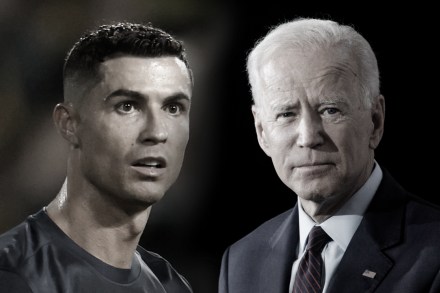
Letters: what Biden and Ronaldo have in common

True conservatism Sir: Douglas Murray claims that the Conservative party ‘will need to have some people who are actually right-wing’ (‘The Tories only have themselves to blame’, 6 July). Why? Its name isn’t ‘the right-wing party’. It has no foundational obligation to be right-wing for the sake of it. Rather its mission is to be conservative, and the people who now identify as ‘right-wing’ seem to have no interest in conserving anything, whether it’s our countryside, rivers, values, place on the international stage, parliamentary system, cultural institutions, national life expectancy, economic stability – or anything other than their own positions and status, which many have lost regardless.

Brexit has helped the EU

There was hardly an election poster to be seen on the roadside during a two-hour drive from London to the country. The British do not appreciate this miracle. In Poland five days before an election, every other fence would be disfigured with photoshopped faces. Our lovely lunch hosts seemed resigned to the coming Red Terror: a purge of the remaining hereditary peers in the House of Lords, a new relationship with the European Union, inheritance taxes. I tried to cheer them up with a piece of Central European wisdom: there is always time for a magnum of champagne between the revolution and the firing squad.