Piotr Wilczek

Piotr Wilczek is a diplomat, author and academic. He served as Poland’s ambassador to the United States and the United Kingdom

The joy of the British euphemism

From our UK edition

In the midst of a quiet afternoon tidying my home library – that noble pursuit which always begins with ambition and ends in nostalgia – I unearthed what must surely be the most British book I own: How Not to Say What You Mean: A Dictionary of Euphemisms, published 30 years ago by Oxford University Press. This delightful book contains hundreds of euphemisms for avoiding the truth in every area of life, including work, sex, death, politics, money, and the human body. This is not a dry book; it is a peaceful treatise on the art of implication, a cheerful guide to avoiding the truth with wit and tact. Britain has long prided itself on its understatement as a national characteristic Britain has long prided itself on its understatement as a national characteristic.

The Mandelson scandal is so typically British

From our UK edition

Peter Mandelson's resignation from the House of Lords – and the Labour party – is all rather undignified. The Epstein emails reveal that Mandelson's relationship with the disgraced paedophile amounted to far more than just casual chitchat. Still, there is something ironic and typically British about the current spectacle. Mandelson’s departure from the Lords was announced by the Lord Speaker on Tuesday with the air of someone who regrets something rather minor, like a faux pas at high tea rather than a resignation from such a senior position. No midnight raids, no congressional hearings, just a police investigation and a few pointed questions in parliament.

The culture wars are exhausting Britain – and puzzling the country’s friends

From our UK edition

As an outside observer sitting in Warsaw, there is a peculiarly persistent oddity in the culture wars of Britain. For anyone outside the cycle of outrage that provides the fuel for the culture wars, they are increasingly difficult to follow. The level of apocalyptic seriousness is high – the stakes are always life or death – but the subject matter itself is often remarkably parochial. Britain appears to be having a fierce conversation with itself.

What Agatha Christie’s migrants teach us about Britain

From our UK edition

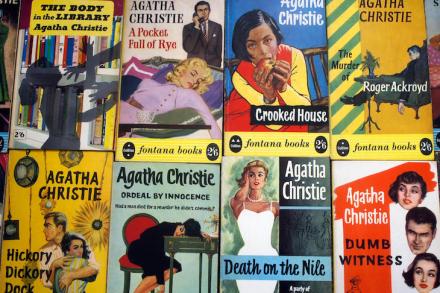
Agatha Christie, who died fifty years ago today on 12 January 1976, possessed a genius for making the ordinary strange. In her imagination, the sleepiest lanes of the English countryside could, at any moment, become the setting for murder. Yet alongside the vicars, the colonels and the gossipy spinsters, another set of figures appears again and again: the excitable foreign maid, the prim continental governess, the French girl with a secret, the nervous Polish refugee working in the kitchen. Alongside the vicars and gossipy spinsters, another set of figures appears again and again: the excitable foreign maid, the French girl with a secret Foremost among them is, of course, the Polish housekeeper Mitzi in A Murder is Announced (1950).

Britain doesn’t need to become great again – it already is

From our UK edition

After three-and-a-half years as Poland’s ambassador in London, I’ve come home with two strong impressions. The first: the United Kingdom remains one of the most astonishing places in the world. The second: the British are suddenly, and oddly, intent on convincing themselves it isn’t. Everywhere I went — dinner parties in Hampstead, conversations with taxi drivers — the refrain was the same: 'This country is finished' Everywhere I went — dinner parties in Hampstead, opinion columns in the Guardian, even conversations with taxi drivers — the refrain was the same: 'This country is finished.' The trains are late, the NHS is on its knees, the education system is in meltdown, the politicians are hopeless. You might think you’d wandered into group therapy.

Polish plumbers and the problem with national stereotypes

From our UK edition

In 1614, the Scottish writer John Barclay published a slim Latin book with the grand title Icon Animorum, or The Mirror of Minds. In it, he marched the nations of Europe across the stage: the proud Spaniard, the scheming Italian, the frivolous Frenchman, the solemn German, the valiant but volatile Pole. It was caricature rather than anthropology, closer to pantomime than scholarship. Yet it stuck. Europeans have always loved pinning people like butterflies, neatly labelling them with adjectives. The trouble is that these stereotypes don't always stack up. The more Europe laughs at others, the more it risks being trapped in its own cartoon Look at recent European history.

No, Nigel Farage: Eastern Europeans like me aren’t eating swans

From our UK edition

The Royal Parks have spoken: no, London’s swans are not being roasted for supper. Their cygnets are intact, their lakes tranquil, their wildlife officers alert. Yet for a moment this week the nation was asked to imagine Eastern Europeans stalking Hyde Park by moonlight, stuffing swans into shopping bags. Nigel Farage, on LBC, suggested as much. It is a fine fantasy. One can picture Henry VIII applauding from the bank of the Serpentine, fork in hand, as the birds are borne aloft like Tudor delicacies. But times have changed. The swan has slipped the spit and become untouchable: a symbol, a ballet, a subject for poetry rather than pies. The only things actually consumed in the parks are 99 Flakes, picnic sandwiches and the occasional Pret salad.

Lazy Polish stereotypes are spoiling British films

From our UK edition

Netflix’s film of The Thursday Murder Club has all the makings of a British export hit: a cosy crime plot, a cast of national treasures, a backdrop steeped in English eccentricity. And then comes Bogdan Jankowski, a Polish labourer with a confiscated passport – a character who could have been lifted straight from a tabloid cartoon. The Pole has too often been cast as brute, victim or buffoon It is hardly a new trope. Since the post-war years, the Pole has too often been cast as brute, victim or buffoon. Tennessee Williams’s Stanley Kowalski set the mould in A Streetcar Named Desire: sweaty, violent, his foreignness exaggerated for the audience’s unease. British culture has not resisted the temptation. Guy Ritchie presented Polish heavies in RocknRolla.