Olenka Hamilton

Who was the real winner of Poland’s presidential election?

From our UK edition

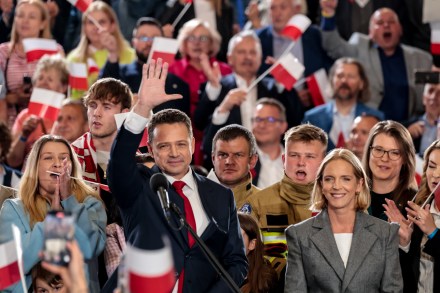
The latest exit polls in Poland suggest that liberal Warsaw mayor, Rafal Trzaskowski, has won the first round of the presidential elections, with 31 per cent of the vote. Trzaskowski is a career politician, the heart-throb son of a jazz musician. He ran on a pro-European platform and has pledged to defend the independence of the judiciary and rebuild Poland’s democratic institutions. He is the candidate for Donald Tusk’s Civic Platform party, and is seen as a progressive and a ‘moderniser’ who represents a more cosmopolitan and outward-facing Poland. His rival, conservative candidate Karol Nawrocki, came in second with 29 per cent of the vote.

Olenka Hamilton, Melanie McDonagh, Hannah Moore, James Delingpole and William Atkinson

From our UK edition

31 min listen

On this week’s Spectator Out Loud: Olenka Hamilton ponders whether Poland’s revival is a mirage (1:24); Melanie McDonagh asks who killed the postal service (9:52); Hannah Moore argues that family cars aren’t built for families any more (14:35); James Delingpole reviews Careme from Apple TV and Chef’s Table from Netflix (21:15); and, William Atkinson provides his notes on Thomas the Tank Engine (26:48).  Presented by Patrick Gibbons. Produced by Oscar Edmondson and Patrick Gibbons.

Is Poland’s revival a mirage?

From our UK edition

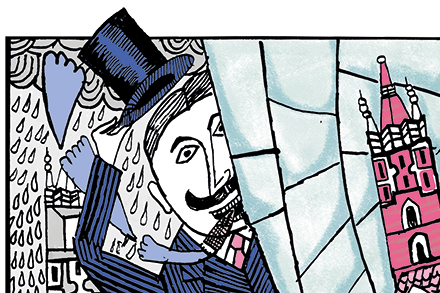
In 1988, when I was six months old, my British father and Polish mother took me to meet my family in Krakow. My parents brought an extra suitcase filled with disposable nappies because such luxuries weren’t sold on the other side of the Iron Curtain. At the time, there was only one shop in Krakow that sold foreign goods, but my father was pleased to discover that a gallon of whisky could be bought for only $8. He was a member of the House of Lords and, I’m told, we were trailed for our entire stay. Everywhere we went, a large Polski Fiat 125 driven by a suited man followed us. My parents always said that apart from drinking in people’s homes, there wasn’t a lot to do in Krakow back then. There were a couple of run-down cafés in the main market square but that was it.

Katy Balls, Olenka Hamilton, Damian Thompson

From our UK edition

24 min listen

This week: (01:08) Katy Balls on the tricky relationship between Labour and the Unions, (07:11) Olenka Hamilton on why Poland is having a row with Brussels over migrants and asylum seekers and (15:29) Damian Thompson asks whether the Vatican is turning its back on tradition and beautiful art.

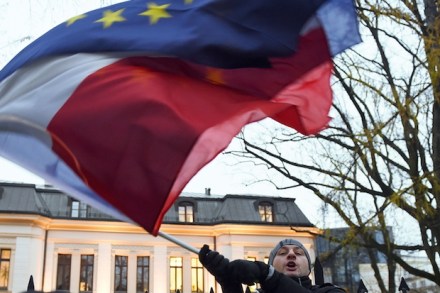
Poland’s battle with the EU over migrant quotas

From our UK edition

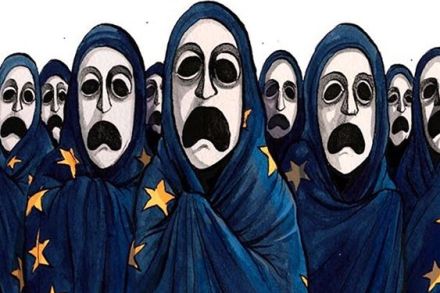
Another day, another spat between Warsaw and Brussels. This time, Poland has declined to participate in the European Union’s latest plan to relocate migrants and asylum seekers within the bloc, with countries who refuse being expected to pay €20,000 per refugee. Hungary has also voted against the pact, while Malta, Lithuania, Slovakia, Bulgaria have quietly abstained.  On 15 June, the Polish parliament (the Sejm) went further and passed a resolution opposing the plan, with the ruling conservative Law and Justice party (PiS) announcing a national referendum on the matter. The referendum will take place on the same day as the general election in either October or November this year.

Poles apart: why the Polish community doesn’t want the vaccine

From our UK edition

There is a joke going around Poland at the moment which encapsulates the national character perfectly. A German is told he has to have the Covid vaccine. He is uncertain. ‘It’s an order,’ the doctor says, and so he agrees. A British man is told the same. He wavers. ‘Do it for Queen and country,’ the doctor says. He agrees. A French man is told ‘It’s the fashionable thing to do’, and he agrees, too. Finally, a Pole has his turn. The doctor says: ‘You’re Polish, you definitely won’t take the vaccine.’ The Pole replies: ‘Don’t tell me what I think. Give me that vaccine!’ Anyone who knows Poles (I’m half Polish, so I do) will find it unsurprising that they are sceptical about the vaccine.

Meet the British Poles who back Brexit

From our UK edition

Britain’s Poles appear to be struggling with a sort of Brexit-induced identity crisis. Earlier this month, BBC News showed Poles in Leeds expressing support for Brexit. I’m sure many people would have found this confusing. Aren’t a lot of these Poles in Britain thanks to an EU work permit and therefore benefitting directly from Britain’s EU membership? Witold Sobkow, Britain’s Polish Ambassador, says Britain’s exit would be problematic for Polish people living in Britain. 'EU labour rights of 800,000 Poles in the UK would become void if the UK left the EU,' he says. Their future in Britain would be in the balance. So why are they in favour of Brexit?

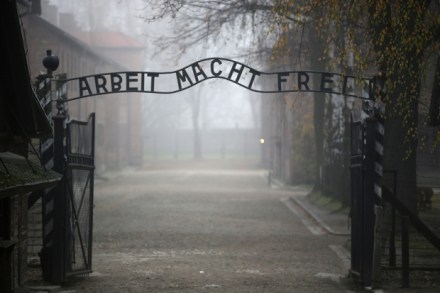
Is it any wonder Poles are sensitive about the phrase ‘Polish death camps’?

From our UK edition

Poland’s new government, which is described as right-wing and nationalistic, is in the news again. This time it wants to make it a criminal offence, punishable by up to five years in prison, to implicate Poland in the atrocities committed by Nazi Germany on Polish soil. Uproar has ensued: the Law and Justice party is suppressing freedom of speech again. First the courts, then the media, now this! And while I agree that reference to 'Polish death camps' should not be made a criminal offence - people should be allowed to say what they want - I do, however, understand what lies at the root of this proposal.

‘The situation in Poland’ — Europe’s new scapegoat

From our UK edition

When an EU country elects a government with nationalist or Eurosceptic policies, the European Parliament calls an urgent investigation into 'the situation' in that country. When Victor Orban became Prime Minister of Hungary in 2010 for example, the European Parliament called a debate entitled 'the situation in Hungary'. Orban’s Fidesz party is known for its conservatism and its regard for national sovereignty. When Orban was democratically elected with a two thirds majority in the Hungarian Parliament, he was elected with a mandate to reform the state institutions, which had become corrupt under communist rule and had been stagnating ever since.

The EU’s asylum policy is to blame for the tragedy unfolding in the Mediterranean

From our UK edition

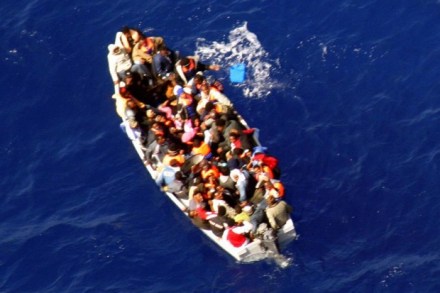
As the leading article in The Spectator this week pointed out, thousands of people are fleeing war and anarchy in Africa and setting sail across the Mediterranean bound for Europe. The latest tragedy comes today, after a boat carrying between 500 and 700 migrants from Libya capsized. So far, only 28 people have been rescued. Coaxed by traffickers who demand huge sums, refugees have been piling into rickety boats which often disintegrate en route. Aid groups, human rights activists, the pope and the EU itself all say the EU-funded rescue operation Triton is inadequate. Well, they're right in a way, but they're also missing the point. The real culprit isn't Triton but the EU's tragic asylum and immigration policy.