New york

Kaiseki-style menus are taking over fine dining

From our US edition

Four peachy-pink snow crabs lie in a row, waiting to be cooked. They could be dead, were it not for the flickering of an antenna or the occasional terrified roving of a beady eye. Tonight, the crabs, which have been sourced from Fukui, Japan, and are prized for their sweetness and silky texture, will be ceremoniously shown to diners at Muku, a Michelin-starred restaurant in New York. They will then be split in half (still alive – fresh is best!) and cooked on a handsome hibachi-style ceramic grill. The crabs are one course in the fancy and formal kaiseki-inspired menus taking America’s coastal cities by storm.

How the Ramones redefined punk rock

From our US edition

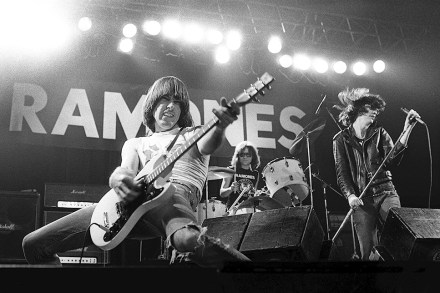
Is popular music truly an art form? This question has never met a straightforward answer, either from the musicians themselves or the public, and it hangs over the exhibitions currently commemorating the 50th anniversary of punk rock. Among others, there’s the Outsiders, Outcasts, Rebels + Weirdos show on at the Skirball Center in Los Angeles, while the Rock and Roll Hall of Fame in Cleveland is hosting its own celebration under the name Hey! Ho! Let’s Go! Punk at 50. Somehow I’m put in mind of the quote attributed to Jean Cocteau about “Ameri-cans being a funny people – first you shock them, then they put you in a museum.

The meaning of the lemonade stand

From our US edition

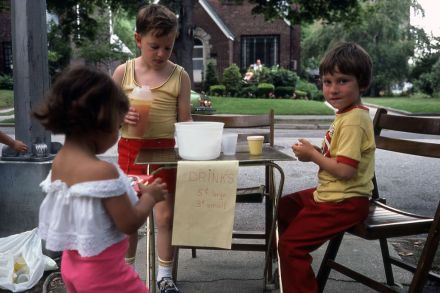
It’s a big week in my household. My London-born, New York City-raised eight-year-old is taking an initial tentative step into the glorious, promise-filled world of American capitalism: she’s setting up her first lemonade stand. If you’re not American, or you haven’t spent much time here, you may be wondering why I’m announcing this with the fanfare of an Ivy League acceptance letter. And sure, perhaps it’s evidence that I’m slowly morphing into the Type A Manhattan parent I so like to mock. But also: the lemonade stand occupies a somewhat mythical space in American culture. As well as a way for children to earn a few dollars during the summer holidays, it’s a rite of passage.

lemonade

Mamdani’s reparations talk is risible

From our US edition

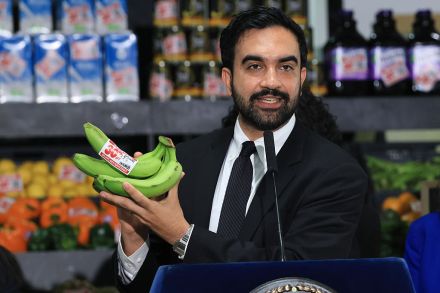
When asked on The Root whether he'd support cash reparations for black New Yorkers, Mayor Mamdani said he wouldn't rule it out: "Here in New York City, we were very complicit." The mayor promised an answer once the city's Commission on Racial Equity reports back in 2027. Slightly inflammatory and highly performative, his answer hit his sweet spot perfectly. He is teasing his supporters with a radical, racialized policy that has no price tag and no implementation plan, just outrage. Zohran Mamdani is a better content creator than mayor. He knows exactly which topics will generate clicks, articles and outrage. That's a valuable skill for an influencer or a campaigner – earned media is the best priced media, but less so for a mayor who actually has to govern a major American city.

Mamdani

Legal organ harvesting is just a PR campaign away

From our US edition

Summertime, and the living isn’t as easy as it used to be. The dying, though, is getting easier, especially if you’re in France, Canada or New York. New York’s MAID law will come into effect August 5: supposedly only for those whose deaths are expected within six months, supposedly through self-administered doses only. But the details don't matter. The important part is this: in New York, the state can now authorize the taking of innocent human life. In early July, the French Senate rejected euthanasia for the fourth time in a row. But the government invoked Article 45 of the French constitution and forced the legislation through, "creating a right" to assisted suicide (as if the state were the divine origin of rights, and could create them at the snap of a finger).

Euthanasia

New York crime caper: Cool Machine, by Colson Whitehead, reviewed

Cool Machine, the final novel in Colson Whitehead’s Harlem trilogy (following Harlem Shuffle and Crook Manifesto), is another tour de force and a fitting conclusion to the Uptown peregrinations of his endearing protagonist Ray Carney, a successful Harlem furniture salesman and part-time fence. It’s an old-school crime caper, set in 1980s New York against the backdrop of Mayor Koch’s rapidly gentrifying city, told in three interconnected sections excoriating Reagan-era capitalism. The ubiquitous construction works, graffiti and corruption are fuelled by the twin deities of power and money.

Trump is smoke-signaling with his forest fire tariff

From our US edition

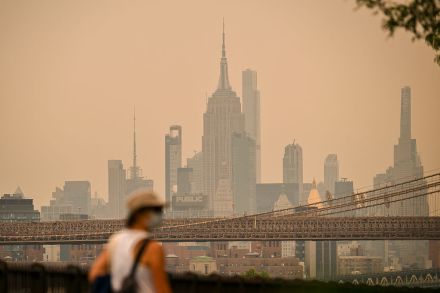
The latest incursion into American airspace is forest fire smoke from Canada. An invasion, according to President Trump. And the man with a tariff for every occasion does not disappoint “We are holding Canada responsible for the fact that they are not properly maintaining their Forests, and Brush therein, and the United States is being unnecessarily invaded by filthy, polluted, and unhealthy air, the quality of which is dangerous, and totally unacceptable! I will call the Prime Minister,” promised Trump. “(…) This is Willful Negligence, and becoming a yearly occurrence, costing the United States Billions of Dollars, which cost of this pollution must of necessity be added to the TARIFFS Canada is currently paying.

Smoke

The art of betrayal: Exhibition, by Alex Hyde, reviewed

Exhibition, Alex Hyde’s second novel, recounts the intimate, messy, ambiguous and ultimately ill-fated relationship between two fictionalised Young British Artists in the early 1990s. Rosie ‘Rabble’ Stone, the narrator, is a gifted but grounded Mancunian photographer, newly arrived in London to begin her studies at a prestigious art school. There she meets, and soon moves in with, a beautiful and accomplished (and throughout nameless) figurative artist destined for greatness. They are inspired by, though very different from, Tracey Emin and Sarah Lucas and the works they produced in this period. The story begins in Brixton, at an ‘upside-down’ house to which Rabble has been directed to find lodgings.

The vulgarity of the Swift-Kelce wedding

From our US edition

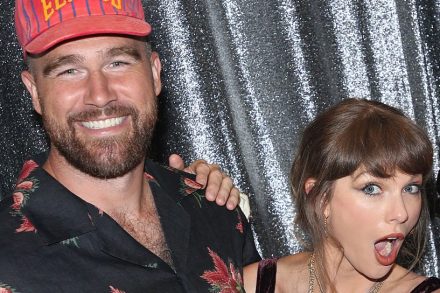
When Taylor Swift, the billionaire pop star, announced her engagement to Travis Kelce, the rather less wealthy (although still multi-millionaire) NFL player, she chose to mark the occasion by declaring, “Your English teacher and your gym teacher are getting married.” It was rather a nice way for Swift to refer to herself and her forthcoming nuptials. Those who, like me, have always been fans of both her and her music had hopes that her wedding to Kelce would not become the usual hideous exercise in celebrity tackiness. Boy, was I wrong.

Taylor Swift

Why socialism will fail

From our US edition

The philosopher David Hume warned us not to mistake “constant conjunction” for causation. It’s good advice, though it is not the sort of universal disturbance in the force that some philosophers, eager to jettison old certitudes, believe it to be. Hume himself eventually rejected that “pretended skepticism” as a juvenile affectation. Like the rest of us, he recognized that reasoning from induction, from observed realities, introduces us to that great guide in the cognitive adventure of life – probability. Don’t let the appearance of a black swan down under disturb you: good mental hygiene and faith in the soundness of inductive reasoning go together. I indulge in this preliminary expectoration (apologies to Søren Kierkegaard) because I arrived in London on June 22.

Why Jack Schlossberg lost

From our US edition

Jack Schlossberg was, until yesterday, a high-profile candidate in New York’s 12th congressional district who seemingly had everything you might need for a modern political career: a winning smile, a Kennedy connection, an engaging social media presence. The only thing he was missing? Actual policies on which to predicate his campaign. He came third in yesterday's primary, after securing just over 10 percent of the vote. “Jack didn’t have a message other than, ‘It’s time to shake up politics,’” Democratic consultant Chris Coffey told the New York Times.

jack schlossberg

Will Janeese Lewis George be the Zohran Mamdani of DC?

From our US edition

Eight months after New York handed City Hall to a democratic socialist, Washington, DC appears ready to follow suit. Janeese Lewis George, a former prosecutor, leads the field, preaching the same message of affordability that carried Zohran Mamdani to power. DC residents head to the polls today to vote in the mayoral primary after Muriel Bowser decided not to stand for reelection. In the deepest of blue areas, the winner of the Democratic primary race is almost certain to be its next mayor. The primary has become an ideological tug-of-war between the Democratic party's socialist wing and its business-aligned establishment. Lewis George runs as the candidate of the progressive coalition.

Janeese lewis george

Trump or Hochul: who knows ball?

From our US edition

The New York Knicks clinched an NBA championship spot Monday – and President Trump shared his excitement over his home team’s progress and his hopes to attend an NBA Finals game during today's cabinet meeting “Boy, what a team. They win all their games," Trump said. "They really, they have some great players. I think I will be going to one of their games.” He also congratulated Knicks owner Jim Dolan, who he counts as a longtime friend. https://twitter.com/atrupar/status/2059684404973236616 Trump has been a Knicks fan for years, with recently surfaced photos showing him sitting courtside back in 1991. If his plans work out, he will be the first sitting US president to attend an NBA Finals game.

hochul ball

Was Marcel Duchamp’s notorious ‘Fountain’ even his own work?

This slim volume has only one fault. It has no illustrations. So you’ll have to do some Googling or visit the current Duchamp exhibition at MoMA (until 22 August) if you want to know what ‘The Bride Stripped Bare by Her Bachelors, Even’ looks like. Otherwise it’s perfect – wittily written and packed with many fascinating characters besides the ever intriguing Marcel Duchamp. He didn’t actually arrive in New York until 1915, but when he did he found himself already famous. His ‘Nude Descending a Staircase, No. 2’ had been included in the 1913 International Exhibition of Modern Art, alongside works by Picasso, Van Gogh, Gauguin, Matisse and Braque, and completely stole the show. Duchamp didn’t even know the painting was being exhibited.

Down with the children’s birthday-industrial complex

From our US edition

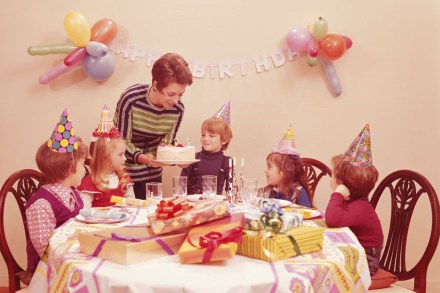
Recently, I’ve been thinking a lot about birthdays. For one thing, I’m writing this on the very day I turn 37. For another, you might’ve heard that America’s got a big one coming up later this year: 250. Old enough to stop squabbling and act its age. But right now, the only birthday that matters in our household is my daughter’s, and it’s coming up in two weeks. New York City children’s birthday parties – at least many of the ones I’ve witnessed – are unlike anything you’ve ever seen. Not so much parties as highly coordinated tests of moral conscience. They’re diplomatic summits involving balloons, sugar and, yes, perhaps a touch of low-level psychological warfare.

Meeting Jay McInerney, Manhattan’s sassiest social novelist

From our US edition

Since his debut novel Bright Lights, Big City appeared in 1984, Jay McInerney has been one of the best-known writers whose work is mostly grounded on the long, skinny, granite-bedrocked river isle the Lenape called Manahatta, “island of hills.” He has lived in town for most of the past four decades too, and currently divides his time between a Village penthouse apartment and Water Mill in the Hamptons. McInerney walks into the lobby of the Marlton Hotel on West 8th Street, just paces from Washington Square, and heads turn. Young lovelies on their laptops with Mission Control Center-sized cans over their ears and chic hairstyles look up and blink, appealingly. Waiters slide swiftly to his side.

The American dream is dying. Good

The American dream is dying, according to the Times of London. To mark the US’s 250th anniversary, the paper commissioned YouGov to explore whether the country’s citizens still believe that if you “work hard and play by the rules” you will eventually be successful. Turns out, only 38 percent of the respondents think this applies to all Americans, while 59 percent think the American dream is now less attainable than it was when they were growing up. In addition, 38 percent rated today’s quality of life as “excellent” or “good,” compared with 60 percent who said the same about 1976, the bicentennial year.

dream

Mamdani vs monarchy

From our US edition

Mayor Zohran Mamdani of New York has faced what others might consider awkward moments in office, as when two Islamists, inspired by ISIS, tried to immolate anti-Muslim protesters outside Gracie Mansion. He passed it off with aplomb by saying the two bomb-carrying individuals were “suspected of coming here to commit an act of terrorism.” In a later statement he acknowledged that the two men had proclaimed “their allegiance to ISIS.”  That counts for boldness on Mamdani’s part. He is considerably more comfortable denouncing Israel, defending the “globalize the intifada” slogan and lamenting anti-Muslim bigotry, than he is in acknowledging New York’s history of terror attacks by Islamists.

zohran mamdani

Farewell to the Calloways: See You on the Other Side, by Jay McInerney, reviewed

Many of Jay McInerney’s characters had their glory days in the 1980s and 1990s of his vivid early novels, with all of the excesses and freedoms that he captured, most famously in his 1984 debut Bright Lights, Big City. As familiar as New York’s landmarks and favourite haunts remain, the city of 2020 can seem a bewildering landscape for his creations, even before the darkened lights of the pandemic. The Calloways are the literary ‘It couple’ about whom McInerney first wrote in the elegiac Brightness Falls (1992). Now, in See You on the Other Side, friends and acquaintances get hit by #MeToo with the kind of randomness reserved for corked wine or a careless investment.

Adieu, Dinosaur the pigeon

From our US edition

On one of the first warm Saturdays of this year, hundreds of New Yorkers flocked to the popular High Line, the railway-turned-public park that extends over 22 blocks of Manhattan, to bid farewell to a T-Rex-sized pigeon. The pigeon, cast out of aluminum and named “Dinosaur,” had been a resident of its elevated perch since 2024. As so many New Yorkers will tell you, though, part of what’s magical about living in this city is that the experience is often transient. In the words of Baz Luhrmann, you should “leave before it makes you hard.” There’s nothing worse than a hard pigeon and so it was that on that glorious day last month, I joined throngs of people eager to get one last look at the monstrous, departing bird.