Clarissa Sebag-Montefiore

Liberation is a witty, genuine snapshot of second-wave feminism

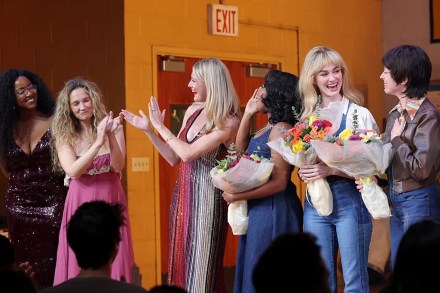
In the second act of Liberation the main cast quietly, and without fuss, starts to undress. By the time the lights go up, all six women are naked. In this masterful play by Bess Wohl, the moment does not feel shocking or gratuitous but somehow comforting. In 1970s Ohio, a group of women meet weekly to fight for equality through “consciousness-raising.” Mostly that consists of free-ranging conversation, of which the women have a lot and which is always smart, funny, vulnerable and eye-opening. But after reading an article about body positivity in Ms. magazine, they meet in the nude.

liberation

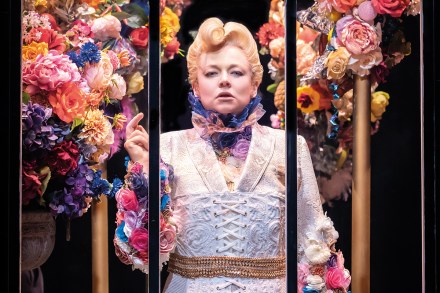
A new Phantom comes to Broadway

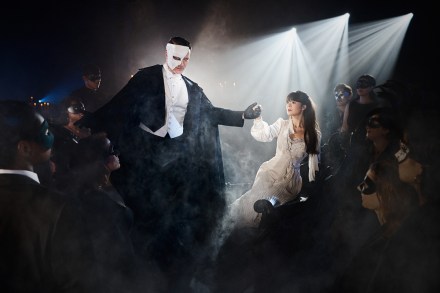
Around midway through Masquerade – the new immersive adaptation of The Phantom of the Opera, which sees a small audience whirled through a labyrinth of rooms and sets – I feel a hand on my shoulder. Smiling, I turn, expecting to see my friend – and immediately recoil. A tiny circus freak grins at me, revealing teeth like sharpened screwdrivers and a painted face lifted straight from Día de los Muertos. Later, in a carnival scene, that same freak hammers three nails into her face and an ice-pick up her nose. The carnival sequence is not in the original Phantom. It is one of the largest and perhaps most important of Masquerade’s additions.

phantom

It’s a shame that Crooked Cross isn’t better

It’s Christmas Eve in a small German town. In a cozy wood-paneled living room, a brother and sister named Helmy and Lexa are decorating the tree, half chatting and half squabbling, the way siblings do. As they light candles, Lexa’s fiancé, Moritz, pounds on the door, demanding jauntily to be let him. He’s as excited as a small child to see the festivities – and to kiss his bride to be. So opens the off-Broadway production of Crooked Cross.  It's a joyous scene, full of promise. Quickly, though, things begin to go south. Moritz Weissman, a surgeon, is accomplished, smart, and well-liked. But while he was raised Catholic, his name, taken from his professor father, is Jewish.

Crooked Cross

Is OCD hip?

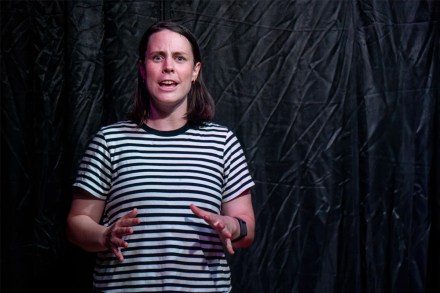
About half-way through the one-woman show Unstuck, the American comic Olivia Levine admits that it’s “hip” to talk about one’s obsessive-compulsive disorder.   She’s right. In Unstuck – which tracks Levine’s at times paralyzing battle with the illness – Levine is following a well-trod path, seen on many a movie and television show. The OCD character can’t stop counting or washing their hands or looking over their shoulder. Often their symptoms are played for laughs or sympathy or to showcase their weird but essentially charming quirkiness. Rarely is the more menacing side of OCD shown.  Levine is here, then, to disrupt the stereotypes and, with humor and likability, discuss the symptoms that are less often depicted in media.

Olivia Levine (Bryan Berlin)

Viola’s Room is beguiling

What is theater? For most people it’s live performance, whether solo or in a troupe. Punchdrunk, the immersive theater company led by Felix Barrett, is not most people. Take its latest iteration now on at the Shed: Viola’s Room features no real-time actors. There is no stage and no seated audience. In this creepy gothic fairy tale, the story is narrated through headphones; the audience moves (sometimes walking, sometimes crawling) through a maze of spaces and the senses – including touch, smell, sight and sound – are as central as the script. Viola’s Room is intimate, small and contained. Every detail, every sound, every object feels intentional. Indeed, much of what makes Viola’s Room so beguiling is the rare sensation of giving up control.

Viola's Room

The problem with Heathers: The Musical

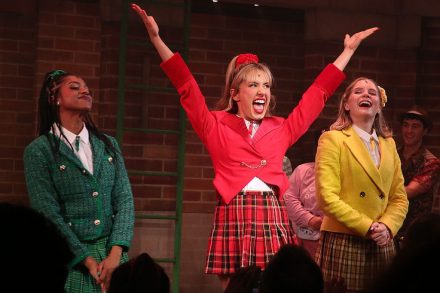
There is a euphoric moment in Heathers: The Musical, based on the cult 1989 film of the same name, when anything seems possible. It happens when 17-year-old Veronica – facing ostracism from the popular clique for barfing on the group’s tyrannical leader, Heather Chandler – climbs through the bedroom window of her crush, J.D. He’s in bed, asleep. As she mounts him, she sings the sassy, come-hither “Dead Girl Walking.” She’ll be toast come Monday morning, she’s “hot and pissed and on the pill,” and J.D. is her “last meal on death row.” Cue the boldest sex scene I’ve ever seen on stage. Veronica straddles J.D. and takes charge, ripping open her shirt to reveal her bra.

Heathers

The Rockefeller Wing reopens

Of the 1,800 objects on display at the newly reopened Michael C. Rockefeller Wing at The Metropolitan Museum of Art, the funerary poles of the Asmat people stick out.  At 15 feet tall, they tower above the swarm of visitors and nearly touch the newly rendered, gorgeously curved ceilings. The poles, decorated with carvings of haunted-looking faces and bodies, were traditionally made to mark a violent death. Once that death was avenged, the poles were removed to the woods, where they were left to decay.  These particular poles have further meaning, though, beyond their eerie beauty and the symbolism they confer of the cycle of life. They were collected by Nelson Rockefeller’s son, Michael, on a trip to spend time with the Asmat in New Guinea in 1961.

Rolling Thunder falls flat

April this year marked the 50th anniversary of the end of the Vietnam War. Celebrating this milestone – or perhaps cashing in on it – is Rolling Thunder, an off-Broadway musical imported from Australia now playing at the New World Stages.  Marketed as “part rock concert, part documentary,” Rolling Thunder is all cliché – and not in a good way. The two-hour jukebox musical uses a razor-thin plot and woefully undeveloped characters to connect various popular songs of the era, from “Born to Be Wild” to “We Gotta Get Out of This Place” and "Bridge over Troubled Water," supported on stage by a five-piece band.

Chet Sharma: chef, DJ, PhD

Chet Sharma – physicist, DJ and award-winning chef – only needs to sleep for four hours a night. “I inherited [this gift] from my mother,” shrugs the Londoner when we talk one morning before lunchtime service at his restaurant, BiBi. “She has unlimited energy!” Raised in Berkshire, England, to parents with Indian heritage, Sharma has a master’s degree in clinical and experimental medicine from University College London, as well as a master’s in physics and a PhD in condensed-matter physics from the University of Oxford. It was during those seven years studying that he also moonlighted as a cook and a DJ. “I’d do university in the morning, dinner service at a restaurant [at night], and at 11 p.m.

Dead Outlaw is sharp-witted and irreverent

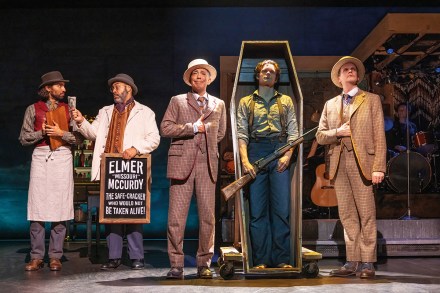
In 1976, the TV series The Six Million Dollar Man arrived to shoot at an amusement park in California. A central attraction was the funhouse ride, where screaming thrillseekers hurtled past a red mannequin hanging garishly from a noose. It was only when a crew member touched the body – and an arm fell off, revealing bone – that they realized the mannequin was, in fact, a corpse. Painted in phosphorus and slathered in wax, it had been suspended, unnoticed, for years. So began a frenzied investigation into who this mystery cadaver was. An autopsy revealed that the man had died from a bullet wound. His jaw was wired shut; inside his mouth were ticket stubs to a crime museum and a penny dating back to 1924. He had been preserved using arsenic.

Dead Outlaw

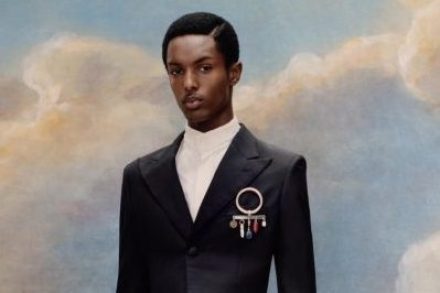
The Met’s ‘Superfine: Tailoring Black Style’ is equally horrifying and inspiring

One of the first pieces exhibited in Superfine: Tailoring Black Style – The Met’s annual spring Costume Institute exhibition – is a small and faded tan wool livery coat, most likely created by Brooks Brothers, the oldest apparel brand in continuous operation in the States. On its website the New York-based Brooks Brothers proudly claims that since it was founded in 1818 it has dressed no less than “39 presidents, along with industry leaders and cultural innovators.” What it doesn’t say it that it also dressed southern slaves. The mid-19th century tan coat was worn by a black enslaved child, just before the Civil War, at a time when household servants reflected their owner’s status.

The Picture of Dorian Gray is headache-inducing

The Picture of Dorian Gray begins on an unadorned note. Sarah Snook sits alone on an otherwise empty stage, facing a camera which projects her image on to a giant vertical screen. Chameleon-like, she switches instantaneously between two characters: the awkward but sincere painter Basil and his more debonair – and dastardly – friend Lord Henry. Snook may be Australian and a woman, but borne on her considerable gifts we are transported to Victorian England. With no props save a paintbrush for Basil and a cigarette for Lord Henry, Snook chops and changes between the two men: she contorts her face into nervy, painful subservience for Basil and her voice into a high, febrile whine.

Dorian

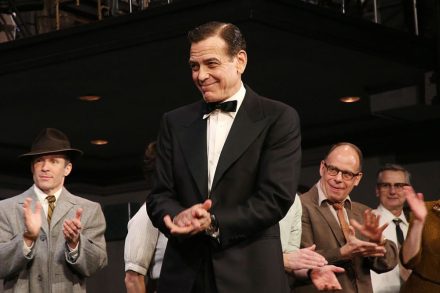
George Clooney’s Good Night, And Good Luck is a communal experience

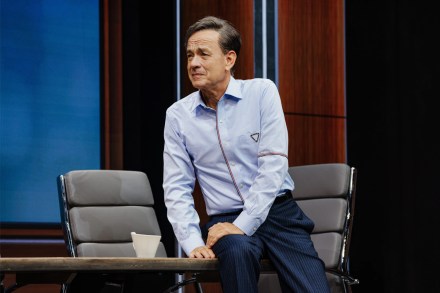
George Clooney isn’t afraid to politic. And last July he showed himself willing to speak truth to his own party’s power: by voicing the dramatic decline in Biden’s facilities in a New York Times op-ed, Clooney, a lifelong Democrat, helped force ole’ Joe out the race. Is it any surprise, then, that Clooney has chosen to make a splash on Broadway in a play that is explicitly political? Clooney’s resurrection of his critically acclaimed 2005 film Good Night, and Good Luck for the stage is timed for maximum impact. Good Night, and Good Luck dramatizes Edward R. Murrow’s historic takedowns of Joseph McCarthy on his beloved CBS show See It Now.

Clooney

Veteran journalist Edward Wong on his memoir of food and feud

From 2008 to 2016, Edward Wong reported on China for the New York Times, heading up its Beijing bureau. Last year, the veteran journalist, now the Times’s diplomatic correspondent, published his first book: a blend of family memoir, narrative history, political observation and personal reckoning. At the Edge of Empire tracks Wong’s father, Yook Kearn Wong, as he moves from fervent support of the Chinese Communist Party and its ideological goals to disillusionment and disappointment. It is also a book about what makes an empire. Born in Hong Kong before moving to Guangdong Province as a child, after joining the military as a young man Yook Kearn was posted to remote Xinjiang province, in China’s northwest corner.

Wong

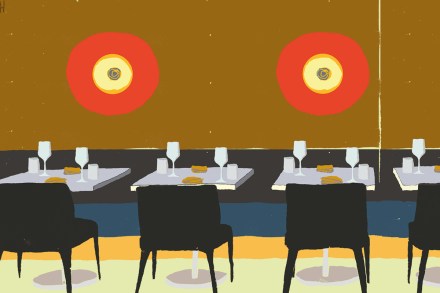
Dining with the Chinese food pioneers of New York

For first-time restaurateur Bolun Yao, New York is a city to experiment in: “I feel like New York is the city that is always exploring new things. If you have a new idea, you put it here.” The Chinese-born entrepreneur — who has also spent significant time in New Zealand — came to NYU to complete a master’s degree in food studies. He quickly fell in love with the fine-dining Korean scene, including the two-Michelin-starred Atomix and COTE, America’s only Michelin-starred Korean steakhouse. Both merge contemporary and traditional techniques and ingredients. “Wow, that’s really, really smart and really creative,” the twenty-eight-year-old recalls thinking. “Why is there not a Chinese restaurant that does the same thing?

Chinese

A new adaptation of The Great Gatsby is enrapturing and impressive

In F. Scott Fitzgerald’s classic 1925 novel The Great Gatsby, Daisy Fay is a mercurial character. The popular rich girl from Louisiana — married to Tom Buchanan, an adulterous brute — is ravishing and entrancing and, at times, cruel. It is her voice that most draws Jay Gatsby to her years after their initial fling when he was a poor officer, as he longs for her across the bay. As Fitzgerald describes it, Daisy’s is a voice that rises in dramatic swells and falls to intimate murmurs, coaxing its listeners to draw closer. Gatsby, the nouveau-riche rumored bootlegger from an impoverished farming family, is obsessed with Daisy: her class, her beauty, her unattainability, her voice. It is a voice, he tells the book’s narrator Nick Carraway, that is “full of money.

Gatsby

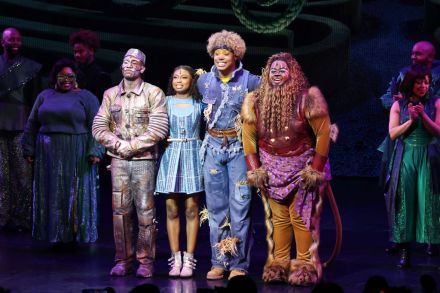
The new revival of The Wiz is psychologically bland

When The Wiz first graced Broadway in 1975 it positioned itself as a gutsy ode to black culture. The adaptation of The Wonderful Wizard of Oz, with a book by William F. Brown and music and lyrics by Charlie Smalls, not only featured songs infused with R&B, gospel and soul but a fully black cast.It became a long-running hit, won seven Tony Awards, including Best Musical, and inspired a 1978 movie of the same name, starring Michael Jackson and Diana Ross. The Wiz’s storied beginning and genre-busting premise only makes this revival feel more deficient. Directed by Schele Williams, with updated writing by comedian Amber Ruffin, The Wiz comes to the money-spinning Marquis Theatre following a national tour which visited thirteen cities.

Wiz

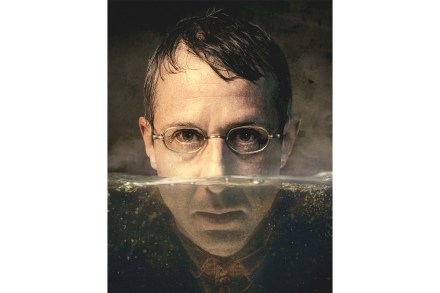
An Enemy of the People is hit-or-miss

As I entered the lobby of Circle in the Square Theatre, now showing Broadway’s hottest ticket, An Enemy of the People, staff were upselling booze. “Do you want to buy a shot?” offered one enthusiastic barman, waving a bottle of bracing Linie aquavit. He added, grinning: “It’s what the actors drink on stage.” Sam Gold’s revival of Henrik Ibsen’s didactic and stuffy morality play aims to draw direct comparisons between past and present, including what alcohol we consume (more on that later). In late nineteenth-century Norway, a town finds itself prosperous by selling access to the local spa baths, which supposedly have curative properties. When Dr.

jeremy strong enemy people

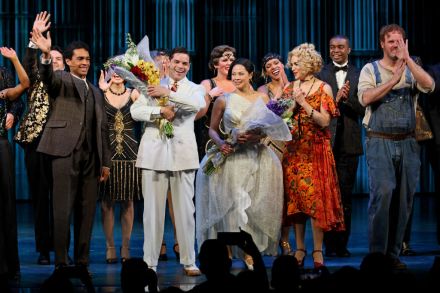
Finally, a version of Merrily We Roll Along that works

Merrily We Roll Along starts in 1976, at a party held by big-shot Hollywood producer Franklin Shepard, who is surrounded by stars (not least his second wife, a veteran Broadway siren, and his young lover, the nubile leading actress of his latest hit movie). It ends in 1957, with stars of a different kind: constellations in an inky sky that provoke awe and inspiration for a younger, more naive Frank, as he sits on a rooftop with friends Mary and Charlie, dreaming about their future. The juxtaposition — of celestial bodies with shiny, obnoxious celebrity — helps to frame this musical about the loss of innocence.

Merrily

One-on-one with Broadway powerhouse Betsy Aidem

For the last few years, Betsy Aidem has immersed herself in historical trauma. In 2022, the Broadway powerhouse starred in Leopoldstadt, Tom Stoppard’s Tony Award-winning play, which follows the lives of a Jewish family in Vienna in the first half of the twentieth century.  The same year, she took on a part in a similar vein: that of the feisty Marcelle in Joshua Harmon’s Prayer for the French Republic, which ended its Broadway run on March 3. The action flits between 2016 France, when antisemitism is on the rise and the far-right Front National leader Marine Le Pen is gaining traction as a presidential candidate; and the 1940s, when Marcelle’s grandparents hide from the Nazis in their Parisian apartment.

betsy aidem