Kelly Chapman

Kelly Chapman is a culture writer based in Washington, DC. She writes under the pseudonym Audrey Horne on Substack.

No one in the DC political class is cool

No one in the DC political class is cool. For all our American spirit of independence, democracy still defers to the majority, and power compels even the most singular, Machiavellian mind to mold itself in the image of the people. Politics drains the blood out of the individual, replacing him or her with a bland and legible product, flattened into the image of at least 50 percent of the population. Prediction markets are a perfect example of this effect, shining the brightest lights into the caverns of cool, calcifying opinions into trends, trends into probabilities, and probabilities into certainties. There is nothing that poses more of a threat to cool than this, and no market hungrier for it than the politicos of Washington, DC.

Enough with the woman-loathing sex-confessionals

The first thing you learn as a young woman, without anyone telling you a word, is that men love sex. Men want to have sex with you and men want to have sex with every woman. They love sex so much they will do anything to get it. They will trick you into having sex with them. They will flatter. They will lie. They will do whatever they can to get you into bed. This is the foundational myth on which the fantasy of male vitality is built – the red-blooded American man, always on the verge of losing control. Now it may be true that our late-liberal order has neutered this impulse. Blunted it. We may be seeing a new generation of dysfunctional, BlueChew-popping eunuchs.

sex

The sinister side of Grok

The X-native AI Grok exploded in popularity this weekend – as users discovered that its media tab was filled with requests to generate disrobed and scantily clad versions of images of women and children that people had posted publicly. "Put her in a bikini," users asked the AI. Grok complied with these requests freely, with no meaningful oversight or guardrails in place, automatically generating images corresponding to every prurient prompt. The ensuing discourse quickly polarized. On one side were tech nihilists, arguing that this use of AI was inevitable and therefore unsurprising. After all, anyone can already download publicly posted images and manipulate them privately.

grok

Why DC loves to hate Partiful

If you’re under 50, you may have noticed that Partiful has quietly annexed the American social calendar over the past year or two. The event-planning app, founded by former Palantir employees, began as another Silicon Valley toy, but it didn’t stay regional for long. Its loud dashboard aesthetic spread quickly through the Bay Area and then achieved escape velocity in Washington, DC. I wouldn’t be surprised if the strong cultural current between tech and defense is what created near-perfect conditions for a social revival in nerd world. While I understand a bit of snobbery over the aesthetics, I’ve been surprised by the constant performative disdain I’ve observed accompanying its rise. Everywhere I go, I hear people say they “hate” Partiful.

partiful

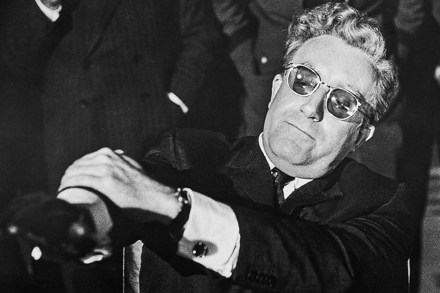
The Dr. Strangelove taxonomy of DC types

I tweeted the other day that my social life in Trump’s DC is just getting dinner or drinks with a different Dr. Strangelove character every week. It sounds like an exaggeration, but it’s not. Not really. Every week brings its own apocalypse – and the cast of characters responds accordingly. Find here a taxonomy of DC types: Dr. Strangelove (The theorist) The end of the world approaches and only the strong will survive it. Hands trembling slightly from too much caffeine and suppressed grandeur, he (it’s always a he) declares his grand theory of the world in so many words. Women, of course, will be spared. Perhaps you, too, will be counted among the lucky ones. Oh, you’re over 30? If you just read a little more Spengler. Learned a little more about semiconductors.

dr strangelove

The cruel, cold intellect of DC and San Francisco

New York vs Los Angeles is done to death. Those cities have already captured the American heart on stage and screen. The next great rivalry (or is it an alliance?) is unfolding between the bastions of the nerds: Washington, DC, and San Francisco. Each prizes a different facet of intellect – DC the operator, San Francisco the inventor, functioning as co-architects of a new American order. We tell ourselves SF and DC represent different values: disruption and order, innovation and stability. And yet the cities are locked in a symbiotic embrace. San Francisco builds new worlds in the image of its algorithms; Washington manages those worlds through policy and process. But this is a cold comfort. While both claim to act in the public interest, each sees the human as a problem to be solved.

san francisco

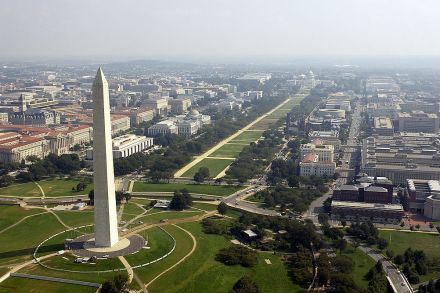
The devil over Washington

It is difficult to romanticize the political theater of Washington, DC, when you live so close to it. The absurdity feels routine after a while. You grow desensitized to the Machiavellian scheming, the name-calling, the ceremonial outrage. News outlets blast cinematic plot twists to the American public while quieter forces go unnoticed. With September growing late and the humdrum heat and headlines of Washington refusing to break, I turned to film in an attempt to re-enchant myself with the city in which I live. I rewatched two movies which capture its deeper moods. In spite of their tonal differences, both struck me in their portrayal of life just apart from the curtain – Washington not as the center of power, but as a place shadowed by it.

Washington

The pace is quickening in DC

September in DC is the real new year. The heat hasn’t broken, but the air feels heavier. Congress regroups, summer travelers return to the city and the Hill drones descend on the cafés in their blazers and button-ups, sweating through 80-degree weather. A distinct tension hangs in the air, a carryover from late summer. Donald Trump’s declaration of a crime emergency last month transferred control of the local police to federal authorities, and now, as I make my way down 14th Street, I regularly shoulder past protesters and pass clusters of National Guard soldiers milling beside the wine bars and coffee shops where my friends and I still meet. Couples walk past without breaking stride, avoiding eye contact. I, too, avert my gaze.

DC

What your choice of drink says about you

In my early twenties, nothing felt more sophisticated than drinking a French 75 at the bar. No matter that it went down like a piece of sour candy: ordering it made me feel like a real lady, a grown-up woman who knew what life was about. It was a cocktail with history, two kinds of alcohol and – most importantly – I felt it imbued me with the aura of a dame in a film noir. It was fun but classic; stylish without being too obviously trendy. Not try-hard like Carrie Bradshaw’s worldly Cosmopolitan. Certainly not like ordering a Martini. Even I knew that ordering a Martini at age 21 would have been an affectation. No, a French 75 was the perfect cocktail for me. I knew my place. Not much has changed since then.

drink

MAGA tourism in the heart of DC

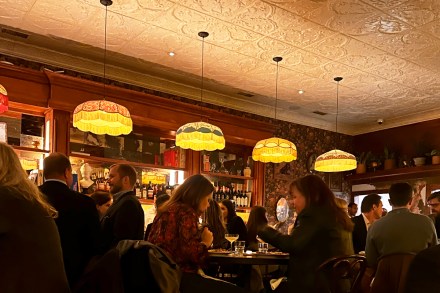
On Friday night I arranged for a group to meet at Butterworth’s for a small dinner. I joke that I’ve become the Butterworth’s Whisperer, chaperoning curious and skittish liberal friends to DC’s Trump-era living museum for lamb tartare, cozy lighting and dissident ambiance. I needn’t waste too much time describing the scene. The restaurant has been profiled more often than the new Pope. Suffice it to say the fries are sliver-thin and seed-oil-free, the martinis flow like water and there are always at least a couple of Republican who’s-whos to point at in the dining room. Nothing to be afraid of. Some nights there’s even a party if you show up at the right time, as I did a couple of months ago during the Conservateur’s “Make America Hot Again” event.

Butterworth's
seafood

The decadence of seafood towers

Whether or not it is your intention to see and be seen, you cannot avoid the latter when you order a seafood tower. I can say this definitively, having experienced one side more than the other – the mere glimpse of a spire of glistening seafood floating through the brasserie will not only draw the attention of fellow diners, but stir up burning envy in their hearts. The seafood tower takes the experience of eating an oyster and scales it up tenfold into an exercise in excess, sometimes three or more tiers high.

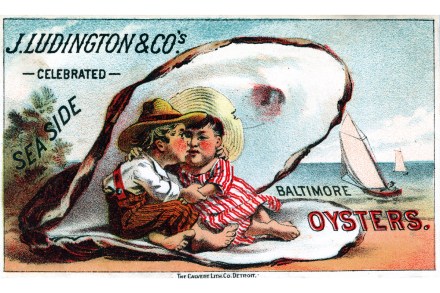
The oyster is your world

Oysters have recently achieved near-meme status as one of several “pick-me” foods alongside the dirty martini, pickles, tinned fish and other briny staples popularized online by Gen Z. These foods are noted for their slightly polarizing air – expressing a preference for them communicates an evolved palate, a niche preference, a willingness to see past an aesthetically questionable facade (the bumpy pickle, the barnacle-encrusted oyster). However, unlike its fellow “pick-me” travelers or its late, meme-ified millennial predecessor, avocado on toast, the oyster itself cannot be readily dismissed as a passing fad.

oyster

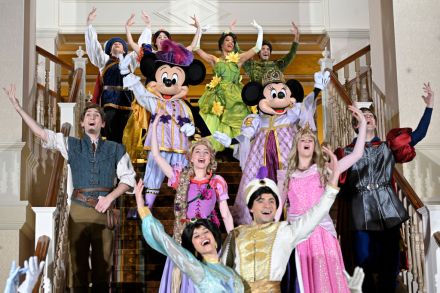
In defense of the Disney Adult

For too long derision of the Disney Adult has gone on unchecked. The world has been all too eager to sneer at the oblivious saccharine happiness of the woman – for it is always a woman – who dares to freely enjoy the most magical place on earth. It's easy to place the blame for the ills of modernity on this mouse-ear-bedecked scapegoat, for she embodies all the cringing mannerisms of the aging millennial, from their too-insistent sincerity to their generational refusal to put away childish things long after childhood has passed them by. Despite sharing their normative age and sex, I too have always counted myself among the haters, defining myself against type. “Not like other girls,” I said. “Not like other millennials.” Until this week.

disney adult