Mexico

Roma is being celebrated for all the wrong reasons, writes Slavoj Žižek

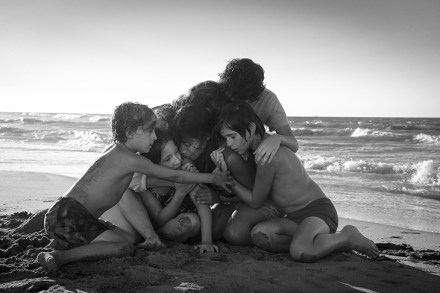
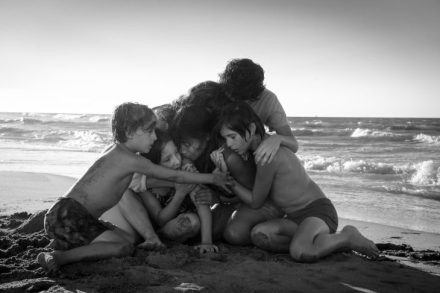
My first viewing of Roma left me with a bitter taste: yes, the majority of critics are right in celebrating it as an instant classic, but I couldn’t get rid of the idea that this predominant perception is sustained by a terrifying, almost obscene, misreading, and that the movie is celebrated for all the wrong reasons. Roma is read as a tribute to Cleo, a maid from the Colonia Roma neighbourhood of Mexico City working in the middle-class household of Sofia, her husband Antonio, their four young children, Sofia's mother Teresa, and another maid, Adela. It take place in 1970, the time of large student protests and social unrest.
Everyone’s a victim

From the very first pages of Among the Lost, we’re engaged, and compromised. Estela and Epitafio are our main anchors, their experiences and relationship driving the story’s developments, but these magnetic central characters are people-traffickers and kidnappers, capable of startling violence and dehumanising cruelty. And truly, they’re very much in love. For most of the novel, Estela and Epitafio are apart, having left the jungle clearing where the book opens to drive their respective consignments of human cargo to their destinations. Theirs is a single story — what happens to one has consequences for the other — told along parallel tracks.

There’s no place like Roma

Roma is the latest film from Alfonso Cuaron (Gravity,Y Tu Mama Tambien, Harry Potter and the Prisoner of Azkaban) and you’ll probably already have heard that it’s wonderful, a masterpiece, magnificent, Oscar-worthy. But as I know you won’t believe it until you hear it from me (sigh, the responsibility is too much sometimes) I can confirm all of the above. At this point I should note that many cinephiles have complained that it deserves to be seen at the cinema, on a full-sized screen with full-sized sound, but as it’s a Netflix film (sneer, sneer) most won’t be able to watch it this way. I did see it at the cinema, at one of the very limited London showings (£18.50!

If you don’t believe in borders, should you be deciding US immigration policy?

From our US edition

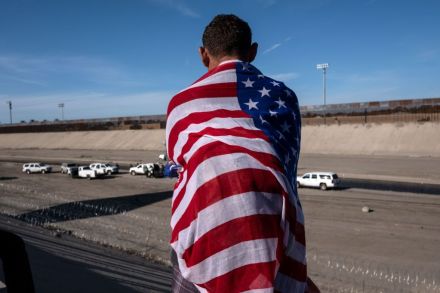
As the teeming mass of mostly male, partly criminal, humanity stews about on Mexican side of our Southern border, entertaining itself by throwing rocks at US border officials, emoting for CNN cameras, and periodically rushing the fence in an effort to break through to America, it is worth stepping back to ask a few large questions. But first, let’s step out of the rancid pool of sentimentality with which the media, in its anti-Trump frenzy, has surrounded this episode.

immigration border

The caravan of the saints

From our US edition

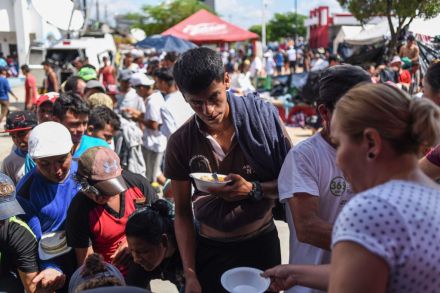
You can feel the excitement in Fox News’s reports that a DHS spokesman, backing the claims that Trump has now walked back, has confirmed that the migrant caravan that has just entered Mexico includes ‘gang members’ and people with ‘significant criminal histories’, as well as people from the Middle East. How hot and uncomfortable they must be, walking all that way in an explosive vest. You can feel the disappointment in CNN’s report that by November 6, the migrant caravan ‘could still be somewhere in the middle of Mexico’, and well short of what CNN recommends as the ‘safest route’, to San Diego via Tijuana.

migrant caravan honduras food

Donald Trump’s US-Canada-Mexico trade deal is YUGE

From our US edition

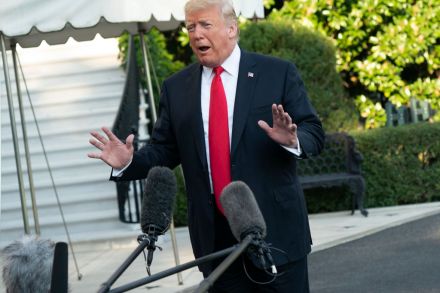
As Kamala Harris presents evidence that Brett Kavanaugh habitually exposed himself to several nurses upon being born and then to other females for months, nay, years afterwards, Donald Trump just secured a new trilateral trade deal between the United States, Canada, and Mexico. This, friends, is yuge, yuge! The deal replaces, or amends, the 24-year-old North American Free Trade Agreement between the three countries. From the moment he announced his candidacy, way back in 2015, until the day before yesterday, President Trump has assailed the original Nafta as ‘the worst deal ever.’ The fact that US trade with Mexico has gone from a modest surplus in the early years of Nafta to a $68 billion deficit now highlights his concern.

donald trump trade

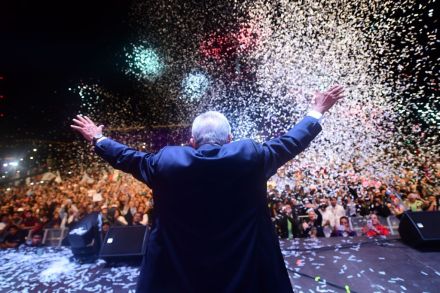
Why won’t the BBC call ‘Mexico’s Corbyn’ a populist?

The career of the new President of Mexico, Andrés Manuel López Obrador (‘Amlo’), suggests he is a populist. He jumps from party to party and ends up founding his own. He advocates price ceilings for tortillas. Disputing his defeat in the presidential election of 2006, he proclaims himself ‘legitimate President’, wearing a presidential sash. Yet the BBC — with the honourable exception of Justin Webb on Today — avoids calling Amlo a populist, attributing the word only to his enemies (‘His critics call him a cheap populist’). This contrasts with its ready application of the word to Trump, Orban and Salvini. Amlo, of course, is left-wing, and the three just mentioned are not.

A self examined

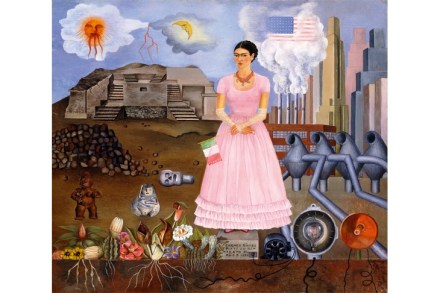
In 2004 Mexican art historians made a sensational discovery in Frida Kahlo’s bathroom. Inside this space, sealed since the 1950s, was an enormous archive of documents, photographs and personal possessions. This hoard forms the basis of Frida Kahlo: Making Herself Up, an exhibition at the V&A. Oscar Wilde once remarked that ‘one should either be a work of art or wear a work of art’. Kahlo opted for both, and she didn’t stop there. Though she was a Marxist who numbered Trotsky among her many lovers, she also channelled the role of saint and martyr. She was neater than Francis Bacon, whose studio-floor detritus has also been subjected to zealous forensic analysis — but the clutter Kahlo left behind her was similarly eclectic.

The return of walls

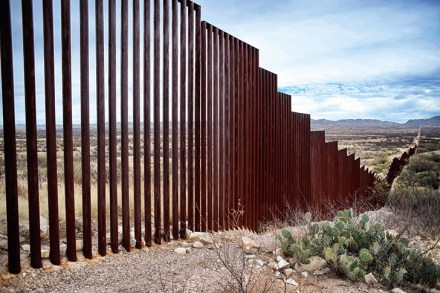
What kind of a president would build a wall to keep out families dreaming of a better life? It’s a question that has been asked world over, especially after the outrage last week over migrant children at the American border. Donald Trump’s argument, one which his supporters agree with, is that the need to split parents from children at the border strengthens his case for a hardline immigration policy. Failure to patrol the border, he says, encourages tens of thousands to cross it illegally — with heartbreaking results. His opponents think he is guilty, and that his wall is a symbol of America closing in on itself. In fact, building a wall would make Trump the norm, not the exception.

They shall not pass

Francisco Cantú’s mother is surprised when he announces he’s joining the Border Patrol and going to work in the Arizona desert. He has just received a college degree, studying international relations. His response to her bafflement — and concern — is that he wants to see the reality, what it’s like ‘in the field’. This will help him better understand the issues, so he can later use the power that this understanding gives him... for what? To attend law school? Become a policy maker? But first: to write this book.

A true original

Leonora Carrington was strikingly beautiful with ‘the personality of a headstrong and hypersensitive horse’ (according to her friend and patron Edward James); and she fled from her family, renouncing a life of privilege and ease to pursue her calling as an artist. Joanna Moorhead deplores the fact that she is ‘not much more than a footnote in art history’. But she has long been a legendary figure (among recent devotees, apparently, Madonna and Björk); in Mexico, where she lived and worked for most of her life, she is a national treasure; and for the feminist she is a heroine and her art ‘a modern woman’s codex’.

Wall eyed

Any impressively long wall is bound to cause us to recall the midfield dynamo and philosopher John Trewick. In 1978 Big Ron Atkinson took his bubble-permed West Bromwich Albion team to China on some sort of goodwill tour. The lads’ diplomacy evidently rested in their feet, for when Trewick was asked by the BBC crew documenting the tour what he thought of the Great Wall, he replied: ‘When you’ve seen one wall you’ve seen them all.’ Good try, John, but not quite accurate. He would, however, have been on the money had he alluded to the common state of mind among men who commission immense walls (paranoiac) and to the loss of life that is, without exception, occasioned by the construction of the things (considerable).

Is Trump rowing back on his threat to make Mexico pay for the wall?

When Donald Trump began his run for the White House, he put building a wall with Mexico at the heart of his campaign. 'I will build a great, great wall on our southern border, and I will make Mexico pay for that wall. Mark my words', he cried after gliding down his golden escalator way back in June 2015. Mark his words indeed. For while the wall is still very much the backbone of his plans for government all the indications are that he will use a rather more prosaic form of funding to achieve it, using the standard Congressional appropriations procedures rather than a brazen cross-border raid. House Republicans have begun preparing the ground.

Writing on the fly

Bogotá airport, immigration form in hand. Tourist, migrant, businessman? Andrés Neuman ponders the descriptors, unsure which to tick. He opts for the second. ‘I’d like to be a migrant.’ The decision is telling, and frames much of what follows in this curious, delightful, if disjointed book. Neuman is hot property in contemporary Latin American literary circles. A former winner of Spain’s prestigious Alfaguara Prize and the National Critics Prize, he is tipped (by Roberto Bolaño, no less) to be one of a select ‘handful’ to take up where the ‘boom’ generation of Márquez, Cortázar, Fuentes and Borges left off.

Trump’s immigration rhetoric is more subtle than his opponents realise

To say Donald Trump ‘double-downed’ last night on his border rhetoric would be an understatement. He went full anti-illegal immigration throttle, and then some. ‘There will be no amnesty,’ he said, and he promised to deport criminal illegal aliens within one hour of his arrival in office. 'We will build a great wall along the southern border,’ he said. 'And Mexico will pay for the wall, 100 per cent. They don’t know it yet, but they’re going to pay for it.' He also invited on to the stage a group of women whose children have been killed by illegal immigrants, the 'Angel Moms’ — a typical, mawkish Trumpian touch. ‘If you don’t vote Trump, we won’t have a country,’ said one of the Moms.

Grubby, funny shaggy dog story

The Mexican author Juan Pablo Villa-lobos’s first short novel, Down the Rabbit Hole (Fiesta en la madriguera), was published in English in 2011. It was narrated by the young son of a drug baron living in a luxurious, if heavily guarded palace, whose everyday familiarity with hitmen, prostitutes and assorted methods of disposing of unwanted corpses was both hilarious and unsettling. The novella was the first work of translated fiction to be shortlisted for the (now sadly defunct) Guardian First Book Award and was described admiringly by the writer Ali Smith as ‘funny, convincing, appalling’. Villalobos’s new novel, his third, has again been translated by Rosalind Harvey, whose work on Down the Rabbit Hole was nominated for the PEN translation prize.

Desperate liaison

Six years ago, the Canadian author Clancy Martin made a splash with his autobiographical novel How to Sell, based on the hard-drinking years he spent as a jewellery salesman before going to college and beginning the brilliant academic career he currently enjoys as a philosopher. Now he has come up with a weird, densely focused novella about an adulterous affair being pursued by an alcoholic female writer, who is the one doing the narrating. It’s beside the point to wonder if this too is autobiographical. In his acknowledgements, Martin thanks the people who ‘together convinced me to rewrite what began as a memoir into fiction’.

A choice of crime novels | 30 June 2016

Pascal Garnier’s novella Too Close to the Edge (Gallic, £7.99, translated by Emily Boyce) deals with the boredom of middle age and how passion and violence can take on the guise of salvation. Éliette has moved to the French countryside following her husband’s death. She seeks an ‘atom of madness to stop herself sliding into reason’, and finds it in the form of Étienne, a man who helps her when her car breaks down. She invites him into her lonely home, and her life. When her neighbour’s son is killed in a road accident, it becomes obvious that her new lover is linked to this tragedy in some way, and yet Éliette reacts strangely: she welcomes the criminal behaviour, and in fact becomes criminalised herself.

There may be trouble ahead | 21 April 2016

Jane Got a Gun is being sold as a rousing feminist Western although the truth is that it’s about as rousing and feminist as my cat, Daphne, who is 17, and now barely moves but who, back in the day, made herself available to every passing Tom. So you don’t look at Daphne and think ‘rousing feminist’, just as you don’t come away from this film and think ‘rousing feminism’ — assuming you are minded to think anything at all, and haven’t just been bored to death. Produced by Natalie Portman, who also stars, the film has had its troubles.

Poverty + anarchy + drug dollars = Mexico

You may not have heard of the Maras. Or Barrio 18. Or the Jalisco New Generation Cartel, or the Zatas, or the Knights Templar, or the Shower Posse. But you should have heard about them, says Ioan Grillo in his new book about transnational drug and crime gangs, because any one of them may have played a profitable and blood-drenched role in bringing you not only your weekend baggie of recreational powder, but also the gold in your earring, the lime in your gin and tonic, the avocado in your salad and even the steel in your Volvo. These ‘gangster warlords’ are the new century’s international mafias. They originate in Central America, Mexico and the Caribbean, although now they have trading subsidiaries everywhere from Bombay to Brixton.