Mexico

One holy mess

This novel, John Irving’s 14th, took the sheen off my Christmas, and here are the reasons.   The comments on the back of the book (‘Irving is the wisest, most anguished and funniest novelist of his generation’ — Chicago Sun Times) made me feel lonely. He might have been wise, anguished and funny in The World According to Garp, 33 years ago. But never once in these 458 pages did I laugh, sympathise, or glean an ounce of wisdom. Instead, I lost confidence that reading novels could ever be a pleasure.   Take the main character, Juan Diego, a ‘dump kid’ growing up on one of the vast rubbish dumps on the edge of Oaxaca (‘Wahaca’). I enjoy reading about a dump as much as the next person, so was hopeful.


The murderous gangs who run the world

Rosalio Reta was 13 years old when recruited by a Mexican drug cartel. He was given a loyalty test — shoot dead a man tied to a chair — then moved into a nice house in Texas. Soon he was earning $500 a week for stakeouts and odd jobs, but the big money came from slitting the throats of the gang’s enemies, which paid a $50,000 bonus. Four years later he was arrested after 20 murders; his only remorse was over accidentally sparking a massacre that left him fearing his bosses might exact revenge on him. Such bloodstained stories of obscene violence in pursuit of obscene wealth fill the pages of the Italian journalist Roberto Saviano’s investigation into the cocaine trade.

Mexican wave

Tours that start in Mexico have a nasty habit of repeating on one. Of all the British groups touring in the United States at the moment, we were the only one to launch our efforts there. But the upshot is that, two weeks later and safely in New York, I am still directing a sea of unnaturally white faces. I am often asked what happens when someone falls ill on stage. The answer is that they leave it, while trying to give the impression that this is all part of the evening’s entertainment. The resulting sense of unease can be felt by everyone in the room, but is perhaps worst for the conductor, whose job it is to fashion an interpretation out of people whose minds are surely elsewhere.

James Bond

For fans of the franchise who remain unconvinced by Daniel Craig’s time on her majesty’s secret service, the stories leaking from the production of the latest film Spectre are further evidence that the time has come to hand 007 a glass of scotch and a revolver. Craig’s Bond always had less of an air of an expense-account gentleman spy and more the demeanour of a spornosexual plumber. This is a Bond who’d sooner take photographs of his abs in the bathroom mirror than go bird-watching. Stumbling after the surefooted remake of Casino Royale, there is no disguising the tedious drivel that was Quantum of Solace, nor that Skyfall borrowed heavily from the Home Alone franchise.

What’s to become of Pedro Friedeberg’s letters?

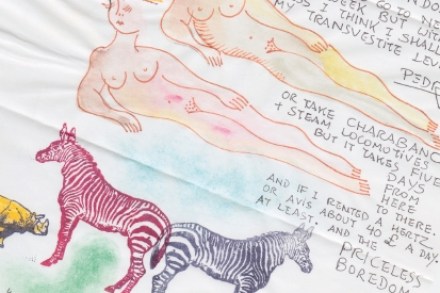
The year 2015 has been designated one of Anglo-Mexican amity, with celebrations planned in both countries by both governments. But it looks as though one name will be missing from the list: Pedro Friedeberg’s. ‘Who?’ you may ask. Well, in 1982 I was in Mexico City to interview Gabriel García Márquez after he’d won the Nobel Prize for Literature. At a party given by a Mexican art-collector, I noticed several zany pictures on the wall. ‘They’re all by Pedro Friedeberg, my favourite Mexican artist,’ said the collector. I stared at one large framed square after another, at pictures in which the Old World and the New seemed conjoined in a frantic, electrified marriage. The following week the Mexican currency collapsed.

A mad menage — and menagerie – in Mexico: the life of Leonora Carrington in fictional form

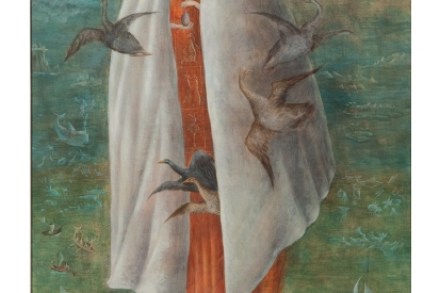
Leonora Carrington is one of those jack-in-the-boxes who languish forgotten in the cultural toy cupboard and then pop up every few years to a small flurry of excitement. Born in 1917, the child of a rich Lancastrian industrialist, she ran away to Paris to paint and there became the lover of Max Ernst. She lived at the heart of the Surrealist group, fleeing war-torn Europe with a gaggle of artists to sail to New York, where she kept company with Peggy Guggenheim, Dalí, André Breton, Marcel Duchamp et al. Raven-haired and chain-smoking, she spent time in a Spanish lunatic asylum, married a Mexican, painted and wrote. There were lovers, a second husband — this one a Hungarian photographer — children and a menagerie of animals.

The Etonian peer who became an assistant to a Mexican commie

The lefty hereditary peer has few equals as a figure of fun, in life or literature. The late Tony Benn comes inevitably to mind here, as does the Earl of Warminster — ‘Erry’ — in Anthony Powell’s A Dance to the Music of Time. As his name would suggest, Francis John Clarence Westenra Plantagenet ‘Jack’ Hastings, the 16th Earl of Huntingdon, emerged into the world bedecked with promisingly absurd trappings. And for a time it looked as if his life would follow a predictably conventional path. But then everything changed. After some routine torturing by his nanny — she branded him with an iron — he went to Eton.

In the empire stakes, the Anglo-Saxons were for long Spain’s inferiors

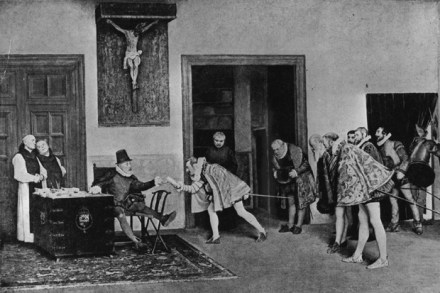
‘Every schoolboy knows who imprisoned Montezuma and who strangled Atahualpa.’ Macaulay, anticipating Gove, was complaining that the schoolboys by contrast did not get enough about Clive and the British conquest of India. Hugh Thomas, in this and in the two previous volumes of his trilogy on the Spanish empire, presumes that we have all forgotten about Montezuma and Atahualpa, and argues that we do not appreciate Spain’s imperial achievements. He is probably right, and he sets one off to speculate why. Take Philip II himself. He was musical, owning ‘ten clavicords, thirteen vihuelas, and sixteen bagpipes’. He had a library of 14,000 books, which we would consider more to his credit than his 6,000 holy relics, and an eye for Titian and Bosch.

World Cup diary: now we know how utterly shite England were

I’ve been cheering for the Dutch as a sort of thank-you for them humiliating Spain. But there was something thoroughly unpleasant about the way they dispatched Mexico, the world’s great footballing under-achievers. The fairly horrible, if undoubtedly talented, Arjen Robben dived for the penalty which won the game. It may have been a foul, of a sort – although I don’t think so, and mere contact should never be enough to warrant a foul – but whatever, the bald Dutchman dived, and should have been booked. Previously, toothless Uruguay had deservedly lost to Colombia: we are beginning to understand just how utterly shite England were, no? England bottom of a group in which the triumphant top two all go out in the next round (probably).

Forget the MINTs, the next economic success story will be in the BALLS

Jim O’Neill, the Mancunian former chief economist of Goldman Sachs in London, commands attention whenever he speaks and has a claim to fame as the coiner in 2001 of the acronym ‘Bric’ for the four rapidly developing countries — Brazil, Russia, India, China — to which economic power looked set to shift during the early part of the new century. Undeterred by the hindsight view that he should have gone for ‘Bic’, like the throwaway razor, because Russia has lagged so dismally behind the others on almost every measure of progress, O’Neill has now come up with ‘Mint’, for Mexico, Indonesia, Nigeria and Turkey, as the next cohort of economic giants.

Bye-bye Bric, hello Mint — are Mexico, Indonesia, Nigeria and Turkey really the new boom economies?  

New year new ideas as we woke up on Monday morning to find ourselves in Lagos with Evan Davies trying to convince us that Nigeria really is undergoing an economic earthquake. It’s part of a week-long campaign by Radio 4 to make us believe that the next economic leaders among world nations will be Mexico, Indonesia, Nigeria, Turkey. These new Mint countries are destined, we are told, to take over from the Bric countries, now deemed passé after just a decade in the limelight generated by the economist fashionistas. It’s stimulating stuff for this hibernating time of year.

The many attempts to assassinate Trotsky

Leon Trotsky’s grandson, Esteban Volkov, is a retired chemist in his early eighties. I met him not long ago in the house in Mexico City where his grandfather was murdered in 1940 with an ice-pick. Volkov had grown up in that house surrounded by 20-foot garden walls and watchtowers with slits in them for machine-guns. The protection was no defence against Trotsky’s eventual assassin, the Spanish-born Stalinist Ramón Mercader, who very ably infiltrated Trotsky’s Mexico circle and, on 20 August, struck the revolutionary on the front of his head with that gruesome weapon. Trotsky bellowed in pain but managed to fend off his assailant before collapsing. His bodyguards hurried in and beat off the intruder; Trotsky was rushed to hospital, where he died the following day.

Italo Calvino’s essays, Collection of Sand, is a brainy delight

The Japanese are sometimes said to suffer from ‘outsider person shock’ (gaijin shokku) when travelling abroad. Recently in London we had a lodger from Hiroshima who wanted to practise his karate routines in our back garden. Concerned to see him chopping at our apple tree in full combat gear, a metropolitan police helicopter hovered in close to take a look. Afterwards Mr Kinoto admitted to me that he was lost in London amid alien signs and habits. ‘The object of my time in England is not sightseeing’, he told me ruefully, ‘but home-staying.’ I thought of the Japanese lodger while reading Italo Calvino’s wonderful essays, Collection of Sand, published in Italy in 1984, a year before Calvino died at the age of only 62.

Narcoland, by Anabel Hernandez – review

It is by now surely beyond doubt that those governments committed to fighting the war on drugs — and on paper that’s all of them — face a total rout. To understand the scale of the defeat, all you need to know is that Barack Obama and David Cameron have both been unable to deny that they were once users. The US spends more than a billion dollars a year on international narcotics control and as a result, as a US official in Colombia once told me, has forced up the price of a gram of cocaine in New York by just a few dollars. That must have put drugs beyond the reach of a few potential consumers. But it seems a very modest achievement for a government programme that has enjoyed such sustained, cross-party support for decades.

State-sponsored cultural renaissance in revolutionary Mexico

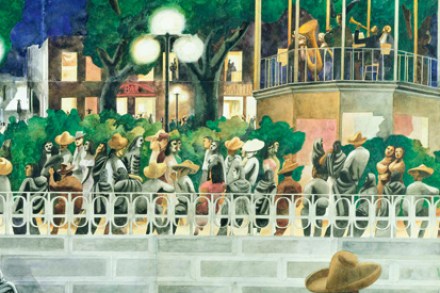
Revolution shook Mexico between 1910 and 1920, but radical political change was not mirrored in the art of the period. In this exhibition, we do not see avant-garde extremes, but witness instead a deepening humanism, as if for once art was interlocking with human need. The cultural renaissance that followed was state-sponsored, and artists were employed by the Ministry of Education to promote the revolution. This was political art at its best, and three artists were active at its heart: los tres grandes, Diego Rivera, José Clemente Orozco and David Alfaro Siqueiros. Their most significant achievements were murals, which remain firmly in place on Mexican buildings and thus are difficult to make an exhibition about.

The Son, by Philipp Meyer – review

Colonel Eli McCullough, formerly known as Tiehteti, is a living legend. The first male child born in the Republic of Texas, wrested from Mexico in 1836, Eli has miraculously reached the age of 100. Captured by Comanche Indians in boyhood, he mastered their survival skills, and was well on the way to becoming the most respected member of the tribe when smallpox struck. The all-powerful Comanches — ‘the earth had seen nothing like them since the Mongols’ — had no defence against this invisible enemy. But Eli/Tiehteti, immunised in infancy, survived. Eli rampages through the next few decades, including a spell as state ranger when he is obliged to hunt down what remains of the people to whom he once belonged.

Mexico must legalise drugs

For the last six months or so, officials on both sides of the US/Mexico border have had their fingers crossed that the appalling violence perpetrated by Mexico’s warring drug gangs might be dying down. The new president, Peña Nieto, has a new, more conciliatory approach so, you know, maybe everyone will start playing nice… No such luck. Intelligence from US officials suggests that the psychotic Los Zeta cartel and the well-established Sinaloas are in fact causing even more mayhem than ever. More than 1,000 people have been killed since Pena Nieto took over it turns out, and Los Zetas planning a bloody take-over of some crucial border towns.

Remember The Alamo!

March 2nd is the anniversary of the Texan Declaration of Independence in 1836. Some of my more left-wing American chums rather wish Texas were still either a part of Mexico or an independent state of its own. Be that as it may, the Declaration is a grand thing that both beats anything the Scottish National Party has yet produced and, for that matter, like most declarations of independence, is a reminder that the differences between the constituent parts of this island are tiny in the grander sweep of things. Anyway: happy birthday Texas! Here, for those of you unfamiliar with the document, is the original Texas charter arguing that The necessity of self-preservation, therefore, now decrees our eternal political separation.

Bush and Reagan on Immigration

The times they change but the questions remain the same. It's the Republican party that has changed. A candidate who talked about (illegal)immigration the way Ronald Reagan and George HW Bush did in this 1980 debate would receive pelters. Now, in part that reflects the fact that 30 years on the problem remains unsolved and I suppose you could argue the Reagan amnesty made matters worse still.

Yes, There Is A War on Drugs. Part XIV.

On the one hand, it's good that Ed Vulliamy is in the Guardian today highlighting the appalling miseries of the Mexican Drug War; on the other it's unfortunate that his piece is so very desperately confused. But this is not just a war between narco-cartels. Juarez has imploded into a state of criminal anarchy – the cartels, acting like any corporation, have outsourced violence to gangs affiliated or unaffiliated with them, who compete for tenders with corrupt police officers. The army plays its own mercurial role. "Cartel war" does not explain the story my friend, and Juarez journalist, Sandra Rodriguez told me over dinner last month: about two children who killed their parents "because", they explained to her, "they could".