Memoir

Where will our inventions lead?

When reviewers say that some new book reminds them of some famous old book, it often ends up as a blurb on the paperback edition, so I want to be clear: when I say that George Dyson’s Analogia reminds me of Robert Pirsig’s New Age classic Zen and the Art of Motorcycle Maintenance, I do not mean it exactly as a compliment. I don’t mean it as a dig, either. I just mean it has the same sense of dreamy, ambitious oddness, of trying to piece together some grand theory from disparate parts, from practical techne as much as academic logos. Pirsig’s book was a theory of philosophy dressed up as a memoir of a motorcycle trip; Dyson’s is a memoir of a strange childhood and youth, dressed up as a theory of —what? Intelligence?


Too many of our children are battling severe depression

Christopher Hitchens once said that women just aren’t as funny as men and Caitlin Moran believed him. But that was many years ago — the great male essayist and orator has been dead for a decade — and Moran has matured into a bold, wise, middle-aged comedienne. When she was growing up in the 1980s, funny women such as Joan Rivers, Roseanne Barr and Victoria Wood ‘were rare and regarded as a freak of nature’. With retrospect, Moran realises that ‘Hitchens and I were, respectively, too male, or too young to have ever been invited into a coven — of which there are millions across the world’. Moran’s new book is dedicated to her coven, also known as Team Tits.

When sexism was routine: the life of the female reporter in 1970s London

This book made me almost weep with nostalgia, but heaven knows what today’s snowflakes will make of it. Fleet Street working conditions were horrendous — the offices were filthy, and covered in a thick pall of cigarette smoke. There’d be frequent wastepaper bin fires when someone threw a smouldering cigarette into a bin full of paper and a male journalist would pee on it to put it out. (Nobody had bottles of water on their desks in those days.) The noise was ear-splitting, with everyone shouting into their phones above the constant clatter of Remingtons. When the presses started to roll around 4 p.m., the whole building shook. ‘Actually,’ Julie Welch observes, ‘that was quite erotic.’ Sexism was routine.

Bringing up Benzene: Charlie Gilmour adopts a magpie

One day a baby bird falls from its nest into an oily scrapyard in Bermondsey, south London and seems unlikely to survive. As the writer Charlie Gilmour and his set-designer fiancée Janina (Yana) find themselves scrutinised by the tiny creature’s ‘gemstone eyes’ they become caught up in an unexpected urge to save the fledgling’s life. As part of the unglamorous, much maligned, even feared Corvid species, Charlie’s foundling magpie, with its sinister ‘undertaker tails’ is not an obvious pet. And yet Charlie has ‘never felt so seen by an animal’. Growing out of this strange first encounter is a magical book of exhilarating complexity, the story of blood, bird shit, tears and hope.

What Barbara Black’s choice of friends says about her

Gstaad I’m not usually nonplussed, but this is very strange: the memoir of Barbara Black, the wife of my good friend Lord Black, simply doesn’t make sense where certain people she writes about are concerned — persons I happen to know well. The list is not long, and I’ll start with David Graham, her third and extremely rich husband who was the biggest bore I have ever met — and believe you me, I’ve met a few in my long life. Out of kindness, no doubt, she fails to mention what a terrific bore he was (he was also the cheapest man I’ve ever come across; he’d be dead before the credits in a cowboy film, being so slow on the draw).

The skeleton is key to solving past mysteries

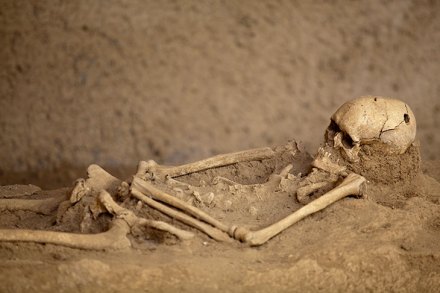
One hot summer’s morning, as a nine-year-old girl living on the rim of a Scottish loch in the hotel owned by her parents, Sue Black was unaware she was about to ‘leave those days of innocence behind’. A man delivering groceries sexually assaulted her. Many years later, Black imagines how this unspeakable childhood trauma might have been written into her very bones. Extreme stress can cause a temporary halt in the growth of a child’s arms or legs, which leaves a ‘Harris line’ that is visible on X-ray. This white mark would have said what she couldn’t. The abuse remained secret for a decade, and when she finally told her mother, she wasn’t believed.

Treasures or clutter? The problem of knowing what to keep

Every so often the past makes a pass at you. An old school report, a train ticket, a curl from a first haircut falls out of an envelope and sends you tumbling back through the decades. For most of us these things are flotsam and jetsam, of momentary interest, but for Rachel Morris they are vital. It is partly that she works in museums, so is deeply invested in the past, and partly that her family history is so mysterious, fragmentary and ‘soaked in sadness’ that she relies on ‘things’ to help her piece together where she came from, and who she is. This book has two strands.

When the King of the Delta Blues came home — the family life of Robert Johnson

Whatever would Robert Johnson, self-styled King of the Delta Blues, have made of the Black Lives Matter movement? His was certainly a life that mattered, but it was lived at a time when black lives mattered not a jot to white America. The circumstances of his death in 1938, at the age of 27 (he was probably poisoned by a jealous rival), demonstrate the disenfranchised existence of any peripatetic black performer in Depression-era USA. The murder was never investigated and his body was dumped in an unmarked grave.

Part Beat, part hippy, part punk: the gay life of John Giorno

John Giorno, who died last year, was a natural acolyte: he needed a superior being to set him in motion. Part Beat, part hippy, part punk, he was a gay, sexually active poet who tells us that he loved to do it ‘endlessly’. He was therefore very popular among New York’s avant garde, many of whom were gay and passive: ‘I was young and beautiful and that got me what I wanted, and all I wanted was sex. I had all the money I needed; my parents gave me an allowance and paid my bills.’ Such boyish candour sets the tone of this memoir, which is a feast of exuberant emotion and indiscretion.

‘I was frightened every single day’: the perils of guarding Stalin

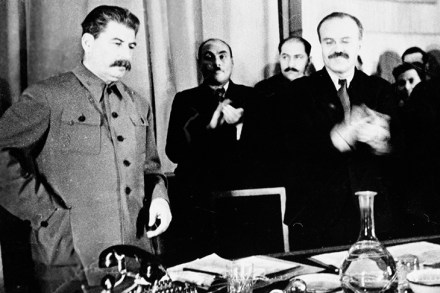
In Russian, the proverb ‘Ignorance is bliss’ translates as ‘The less you know, the better you sleep’. For those who experienced the worst of the Soviet Union’s terrors, this is not just a throwaway adage but a strategy for self-preservation. As Alex Halberstadt’s father — the son of one of Stalin’s former bodyguards — attests: ‘There is no more to be gained from sifting through the past than through cigarette ashes.’ Halberstadt, a Soviet-born American writer, doesn’t agree. Aged nine, soon after leaving Moscow with his family and defecting to the West, he began having a recurring nightmare in which he was chased by a ferocious bulldog, a dream that lingered into adulthood.

The dark underbelly of New Orleans revealed by Hurricane Katrina

Home, as James Baldwin wrote, is perhaps ‘not a place but simply an irrevocable condition’. Sarah M. Broom’s National Book Award-winning memoir The Yellow House is a sweeping social history and condition report of the New Orleans neighbourhood in which she grew up. The youngest of 12 children in a blended household, Broom was born in 1979 in New Orleans East, seven miles from the iconic street lamps and streetcars of the French Quarter. Her mother, Ivory Mae, bought a house in 1961 with insurance money from the death of her first husband. Widowed at the age of 19 with two children and one on the way, Ivory Mae attended night school to obtain her diploma and worked as a nurse’s aide to support her family.

One man’s rubbish is another man’s treasure

All it takes to turn a cast-off into a prized possession can be a bit of imagination. To a passerby, a bookcase left on the pavement might be perfect for that impossible-to-furnish alcove. An empty bottle, once the waves have worn it smooth, could become a precious jewel for a beachcomber. In an instant a bored child will fish a piece of cardboard from the bin and transform it into a rocket, raft or portal to another dimension. One man’s rubbish, as we know, is another man’s treasure. The subject is explored in Rag and Bone by the photographer Lisa Woollett, who has a personal connection with discards. Her grandfather was a dustman and her great-grandfather a professional scavenger on the Thames foreshore.

Good memoir-writing should also be self-critical

A book about breaking confidences, not to mention friendships, rather begs the same in return. Reading Anne Applebaum’s brief memoir of the world going mad around her sparked a memory of my own. It is a couple of days after the Brexit vote, and several hundred of us have gathered in London for the memorial service of a recently departed friend. The ceremony was hardly over before Applebaum and her husband, the former Polish defence minister Radek Sikorski, started picking political fights with the other guests, including some very old friends. ‘Don’t go near Anne and Radek,’ one mutual friend said to me, signalling to the visibly furious couple: ‘They’re absolutely spitting.

Natalie Wood’s death remains a mystery

Are all children of famous parents told they must have a book in them? Since Allegra Huston’s wonderful memoir Love Child in 2009, standards have been slipping. More Than Love is by a minor actress whose only claim to fame is that she is the daughter of Natalie Wood and won’t ever let you forget it. The book begins with Natasha Gregson Wagner waking up on 29 November 1981 and hearing a voice on the radio saying that Natalie Wood’s body had been found in the sea off Catalina Island. Suddenly the house was full of people and there were mobs of cameramen outside. Robert Wagner (who she always calls Daddy, though he was not her father) came home and told her and her half-sister Courtney that their mother had died but that he was there for them always.

If you spent a day at Action Park you took your life in your hands

Before reading this book, the only thing I knew about Action Park was that it had lent its name to Shellac’s 1994 debut album At Action Park. Shellac, one of whose members is the notoriously contrarian music producer Steve Albini, play pummelling, hazardous, post-hardcore rock at ear-splitting volume and occasion much joy in anyone who chooses to attend one of their concerts, at which alcohol will be invariably consumed, pain endured and physical danger defied. After reading it, I was struck by how fitting the title was both to the music Shellac play and the circumstances under which they play it, never mind that the group claim it’s a coincidence and that the drummer came up with the name ‘because it sounded cool’.

Finder and keeper: two family memoirs reviewed

What can we ever know about our family’s past? How do we love those closest to us when doing so brings us to the edge of insanity? Nicole Chung’s All You Can Ever Know and Sam Mills’s The Fragments of My Father explore both of these questions. Chung’s memoir takes on a sleuth-like quality as she describes the process of uncovering her birth family. Born weeks premature, she was put up for adoption by her Korean-American parents, who feared she wouldn’t survive. Throughout her childhood, the reasons behind her adoption were presented as solid and comforting: ‘The doctors told them you would struggle all your life.

Keeping poker-faced is no use – it’s the hands that give the game away

This is not a rip-roaring, gonzo gambling adventure. By page 66 this cautious, thoughtful author has still never played a hand of poker in her life. She has read, re-read, dissected and annotated poker textbooks. She has scribbled notes while trying to keep up with her power-walking mentor, the poker legend Erik Seidel, as he tells her she’ll need to develop the ability to be reckless. This is a swot’s progress, a fish-out-of-water experiment. It’s hard to imagine her taking on, say, Devilfish in Vegas. As she finally joins a charity tournament on page 115, I’ll admit to thinking, this had better go somewhere. And it does. Within 18 months she has turned pro, recruited by Poker Stars after winning an $84,000 trophy and another $60,000 game.

From bashful teenager to supermodel: Susanna Moore’s fairytale memoir

There’s a kind of writing about LA that I am a sucker for. Gossipy, lyrical, with a surface of affectless simplicity but an undertow of melancholy that can be personal (bad love affairs, damaged families) or institutional (the death of old Hollywood, the birth of the new) or, best of all, both entwined. It is reserved in its affiliations, not susceptible to moral fervour, lightly amused by what it observes but not given to wisecracking (it is not Nora Ephron, who I am a sucker for but in a different way). It has the measure of the city’s miraculous lucency and compulsive self-invention. Joan Didion did it; Eve Babitz specialised in it.

How I finally came to terms with my sister’s death

‘Grief is the price we pay for love,’ the Queen once wrote. This memoir is steeped in the pain of unpaid debt. ‘When you were nine, you had a pink coat that you loved so much you wore it all the time, even on the early morning flight to Tunisia,’ Gavanndra Hodge begins, talking to her younger sister Candy, who’s been dead for 30 years. ‘It was long and thickly padded and made you look like a flamboyant Michelin Man.’ Hours after that flight Candy is killed by a virus as inexplicable as the one currently causing hundreds of thousands deaths, and Hodge stares into her coffin, noting the strange softness that comes just before decay.

My mother — as I remember her best

Nine cups of milky Nescafé Gold Blend a day; a low-tar cigarette smouldering; a hot-water-bottle always on her lap; the Times crossword almost completed at the Formica table; knitting on the go; and novels — she always read the last page first. She was one of that generation of women who didn’t go to university but were incredibly well-read and knew poems by heart. This was Kathleen, the mother of Nicholas Royle, novelist and professor of English at Sussex University. In a remarkable and moving memoir he has captured and preserved a loving, kind, impatient woman — and perhaps, with her, all of our mothers in the sweet predictability of their sayings and habits.