Manchester

The Conservatives are strategising regional media out of the grid – and it won’t help their cause

This has, I think we can all agree, been the most stage-managed election ever. Nobody on a soap box, no punches thrown, no bigoted women. Just a seamless marathon of national messaging that starts with the Today programme and ends with Newsnight. It is the regional media, however, that feels the iron grip of the parties’ media machines the most. We work where voters actually live. So how we are treated during political visits can be revealing. And Labour, most regional reporters seem to agree, seem to have chilled out. Ed Miliband and other senior Labour figures are freely giving up their time.

Football in front, infibulation behind

I’m watching Manchester City being taken to the cleaners by Barcelona on the telly, while at the table behind me my Parisian feminist intellectual hostess Natalie is discussing female genital mutilation with her Malian girlfriend Fatou. Football in front, infibulation behind. Fatou: ‘It goes without saying: how can you say that female genital mutilation is not a disgusting and barbaric practice? How, in this day and age, can a woman allow herself to be oppressed in this medieval fashion? The practice is pure evil. The suffering of those little girls is impossible to imagine: infections, gangrene, septicaemia, cysts, fistulae, perpetual bleeding. And in the name of what? It is not a Koranic law. But you know what? I don’t care if it isn’t or if it is.

Will Gordon Brown’s critics finally admit he was right about al-Qaeda’s ‘major terrorist plot’?

There are not many things to celebrate about Gordon Brown’s time in office. He was a vilified leader; often quite rightly so. His Home Secretary, Jacqui Smith, did not fare much better. However, a recent terror trial in New York showed that the criticism they received was not always deserved. On 8 April 2009, a large terrorist cell based in northwest England was arrested. The cell had been dispatched to the UK by al-Qaeda in 2006 in preparation for an attack, the majority entering the UK on bogus student visas. The plot is thought to have involved a car bomb attack against Manchester’s Arndale shopping centre, with a team of suicide bombers ready to detonate their devices among fleeing civilians.

George Osborne interview: smaller government is not enough

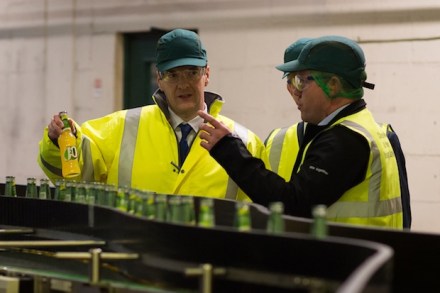
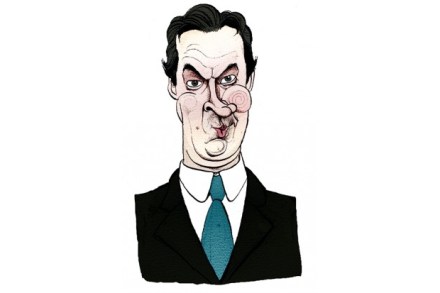
[audioplayer src="http://rss.acast.com/viewfrom22/putin-s-empire-building/media.mp3" title="James Forsyth and Fraser Nelson discuss Osborne's election manoeuvres " startat=839] Listen [/audioplayer]Puccini’s doesn’t seem like George Osborne’s sort of restaurant. It is a pizza-and-pasta place in the safely Labour constituency of Salford and Eccles, Greater Manchester, most notable for the fact that Sir Alex Ferguson once took his whole squad there. (‘Penne alla Giggs’ is still on offer to prove it.) In recent years, however, the Chancellor has become something of a regular — he has even taken the Prime Minister along — and is made welcome to the point that when we met there last Thursday diners queued to be photographed with him.

Labour unsure about health policy its own councils support

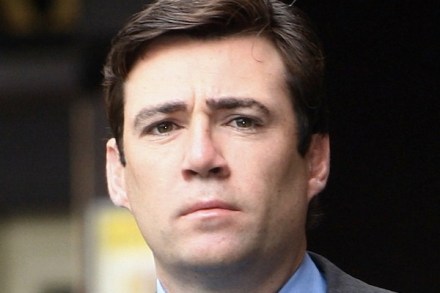
The announcement today that Greater Manchester will receive full control of health spending - worth £6bn - has left Labour in a rather interesting position. On the one hand, it is easy for Andy Burnham to say that this sounds ‘like yet another NHS reorganisation’. But on the other, Greater Manchester includes a number of Labour councils who appear pretty happy to sign up to the provisional deal. Indeed, one of those councils is Wigan, which covers Burnham’s own constituency. Now one of the reasons that spending has been devolved to this area is that councils in Greater Manchester are keen, forward-looking and ambitious.

Say no to devolution without democracy

Imagine if, in one of her first acts as First Minister of Scotland, Nicola Sturgeon announced that, in spite of the result of September’s independence vote, Scotland was to declare independence anyway, on the basis that opinion polls now showed a majority of people in favour of independence and therefore there was no need for the decision to be approved in a referendum. David Cameron and his government would surely treat it as an outrage. Why, then, has the Chancellor this week seen fit to announce that the people of Greater Manchester are to have a directly elected mayor? Two years ago the very same question was put to the people of the City of Manchester in a referendum and the answer was a resounding ‘no’.

Caption Ed Miliband and see Alex Salmond’s face in the Halloween pumpkins

Even the po-faced Associated Press (video above) couldn't but describe as 'toe-curling' Ed Miliband's encounter with a homeless hijabi. Pundits agree that Ed appeared 'terrified' of the beggar in Manchester. Mr S was there, however - on unrelated business, of course - and can confirm that the opposition leader really did only have 2p in his pocket at the time. (Why on earth would he carry more?) Your correspondent was otherwise engaged, however (in discussion with my equine consultant) in the moment this photo was snapped: [caption id="attachment_8909992" align="alignnone" width="506"] Manchester, 31 October 2014 (Photo: Nigel Roddis/Getty)[/caption] What could have been on his mind?

If the idea of disturbing kraut-punk sung by a troll appeals, you’ll love The Fall

I had a fair idea of what I was in for when I went to see The Fall at Brixton’s Electric last Friday. They’re a middle-aged band from Manchester, just like the Stone Roses, or the various incarnations of New Order. In journalese, this almost makes them ‘Heritage Rock’. I can’t remember when people started using this term, but it’s gone from the repertoire of niche music writing to being A Thing. You can’t go a week without some old beat combo or other announcing their re-formation, and in return they get a sort of protected status. Old rock music has become to the British what films about unfaithful middle-class couples are to the French. That is, culturally important but not very interesting. Consummately psychotic: Mark E.

Marriage and foreplay Sharia-style

Needless to say, it’s not uncommon to hear single British women in their thirties and forties saying that all the good men are married. But in The Men with Many Wives (Channel 4, Wednesday) this came with a twist: it turned out to be precisely the reason why you should marry them too. Polygamy may be illegal in Britain, but it’s permitted under the Sharia law that many Muslims here apparently live by — and, as several of the programme’s participants told us, there’s no better guide to whether a man is husband material than the fact that he’s a husband already. Take Nabilah, who came to Britain from Malaysia to do a PhD in engineering at Cambridge. By then she was divorced and wanted someone with a proven track record of staying with his spouse.

Why do we care about the mutts from Manchester and not the chickens from KFC?

[audioplayer src="http://traffic.libsyn.com/spectator/TheViewFrom22_25_Sept_2014_v4.mp3" title="Melissa Kite, Camilla Swift (and Charlie the dog) discuss animal welfare" startat=630] Listen [/audioplayer]We love animals more than we love people. Of course we do. Following the recent fire at a Manchester dogs’ home, people donated £1 million and blocked the M6 with their cars as they arrived in their multitudes to adopt the displaced animals. It would have been heartwarming, it really would, if we hadn’t also demanded the death of the teenaged boy named on Twitter as the suspect in the arson attack. All over the internet apparently normal people, including ‘friends’ of mine on Facebook, called for a 15-year-old boy to be burned alive. I feel sick about the dogs too.

From Burma — or maybe Saigon — to Manchester via Calcutta

England   We dropped off our daughter Eve at her new school in the Midlands and started the long journey home to Africa. On the train we sat down and my wife Claire looked as if she’d seen a ghost when she saw the elderly lady in the opposite seat. After ten minutes Claire said, ‘I’m sorry I keep staring at you, but you look exactly like my grandmother. Where are you from?’ The woman said she was from Trinidad, but her family was originally from Kerala, in India. Claire said her grandmother was from Calcutta. Our son Rider looked puzzled. ‘Where are we from?’ For him the counties whizzing by our train window were foreign lands. After Kenya, Elspeth Huxley said, England was like a ‘castrated leopard’.

Your starter for ten: why do we Brits so love University Challenge?

‘Fingers on buzzers!’ says Jeremy Paxman on University Challenge. But technically this is inaccurate. Only one of the teams actually has buzzers. The other side has push-button bells, instead. I’ve been watching the programme religiously for God knows how many years without ever consciously noticing this. But, once you’ve been told, it’s obvious — in much the same way it’s obvious that the way you tell Thompson and Thomson apart is that one has an upturned moustache and the other doesn’t. Which, come to think of it, would be quite a good University Challenge question. Apparently, one of its main criteria is that every question must have ‘inherent interest’. That is, it must make you genuinely keen to know the answer.

Could a northern ‘supercity’ rebalance Britain’s economy?

George Osborne is drawing up plans for a northern 'supercity', in the hope that it might rival London and rebalance Britain's economy. Neil O'Brien discussed the idea of a supercity in The Spectator in December 2012, before going off to advise Osborne. My career in politics nearly ended the day it began, when I was almost run over by a gang of Nazis in a Mini-Metro. Not a very butch car to be hit by, I know, and a rather pathetic substitute for a Panzer tank. But it was the early 1990s, and supporters of fascist government in Britain had seen their resources dwindle a bit over the decades. I was 14, and attending my first political demonstration, an Anti-Nazi League protest against the BNP in Halifax. I became separated from the crowd.

Sam Neill’s diary: Back in Blighty, remembering drinking binges of yore

I am back in the UK for work. Great time to turn up — after the grim, grey grind of the British winter. Here in Manchester, people stroll in shirtsleeves or T-shirts, though it’s still only 15 degrees. They are, in truth, dazzlingly white. Their semi-nudity strikes me as a tad premature, but then I’ve only just left my Indian summery vineyard in New Zealand via Bondi Beach. I’m here at the behest of BBC2, for a second season of The Peaky Blinders. If you didn’t see the first season, you should. And if you don’t ... I know where you live. And having played Chief Inspector Campbell, I know how to remove your fingernails. Be warned. Campbell is the psycho cop from hell (well, Belfast), and is more fun to play than any part I remember.

One Yorkshireman’s commendable bid for freedom

Richard Milburn, a burglar, broke out of Kirkham Prison near Preston because he was sick to the back teeth of the Scousers in the place. And the Mancs. And the Scallies and the La’s (not my apostrophe; I think it’s a local peculiarity). Richard is a Yorkshireman, even if his surname suggests a still better provenance a hundred or so miles north east of there. But given what he was up against Yorkshire will do just fine. This blog has not always been understanding towards the complaints and aspirations of our criminal underclass. But I think I will make an exception for Richard. The Scousers with their hilarious ready wit, the Mancs skagged out of their brainboxes – I think he had a point.

Could we move all politicians to Manchester?

The Ukip candidate for Wythenshawe and Sale East has come up with a rather interesting idea: he wants to move the Department for Culture, Media and Sport to Manchester, bringing 700 jobs to the city. I imagine that a lot of Ukip supporters would be quite happy to see the department metaphorically sent to Zurich for an appointment with Dignitas, but it’s a valid point. Why shouldn’t we send more civil servants out of London, where the cost of office space and decent housing is much lower, compared to the capital with its chronic shortage of affordable homes. Lots of countries have separate political and financial centres; Italy has Rome/Milan, the Netherlands The Hague/Amsterdam, and the US Washington/New York.

To fix the north-south divide, revive the Council of the North!

These, ranked from first to tenth, are the urban areas in Britain with the highest average weekly earnings in 2012: London, Reading, Crawley, Aldershot, Edinburgh, Cambridge, Milton Keynes, Aberdeen, Southend, Brighton. That's from the latest, fascinating, report (pdf here) published by the Centre for Cities. It can be summarised easily: if you want to make it, head to London or the south-east of England. Or to Scotland. London, as Jeremy Warner observed this morning, is still driving the British economy. Financial services remain vital both to economic recovery and the country's long-term future. Strengthening other sectors remains important; so does the City. But strengthening Britain's other cities is - or should - also be at the top of the agenda.

‘If I can barely speak, then I shall surely sing’

A few weeks ago, I was wandering with a friend around West London when our conversation turned to the reliable and inexhaustible topic of Morrissey. We were discussing his gestures, in particular when he augments the percussive spondee that opens ‘Sheila Take a Bow’ with two magnificent jabs of his right elbow. So back we went to my friend’s flat to study it again. In goes the DVD; bang go the drums; jab goes the elbow, and my dear friend gives a small cheer of delight, dancing his dance of Rumpelstiltskin glee. ‘Genius!,’ he declares. And he is right. It is a small moment, one of those preposterously arcane details beloved of a devotee of the Smiths, but it somehow seems to say everything about our artistic hero.

The Morrissey myth

Drinking in Corbières, a dingy basement bar just off St Ann’s Square, 30 years ago, you could bump into any number of groovy young Mancunians clustered round the jukebox, talking about the bands they were going to form. One night, as the jukey played ‘The Cutter’ by Echo & the Bunnymen, all evening long it seemed, there was talk of an odd duck from Stretford called Steven Morrissey. Nobody knew him but his name was in the wind. Soon he had formed The Smiths with a guitar player, Johnny Marr, whose sweet pop sound complemented, or supplemented, his partner’s predominantly sour words. For three years the collaboration worked, so long as you felt, as many teenagers have always felt, that the world was jolly unfair, and your place in it uncertain.