Neil O'Brien

Neil O'Brien is Conservative MP for Harborough, Oadby and Wigston

Why is it so difficult to fire bad civil servants?

From our UK edition

I have a nice memory of walking into the then Chancellor’s private office at 1 a.m. and everyone just being there, hammering away on their computers, as if that was just totally normal. And nice memories of watching the senior people in the Treasury slice through some very intractable-seeming problems. But during my time in government I also met some people who were… not so amazing. The civil service is a weird mix. You have a bunch of people who are amazing and not paid much. And you have a bunch of people who are not good and should have been managed out ages ago. I worry that too often the good people leave not just because they are underpaid relative to their ability, but because they are sick of carrying the people who shouldn’t be there. Other countries do better.

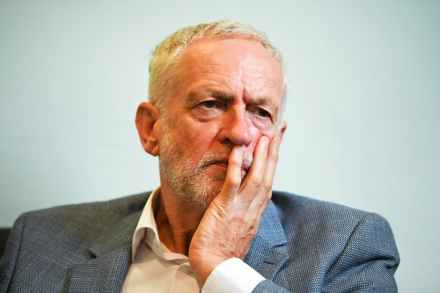
Boris’s secret weapon in the fight against Corbyn

From our UK edition

After nine years cleaning up Labour's mess, things are looking up. Government debt as a share of the economy is starting to fall. For Theresa May's successor, this means there is an opportunity to spend some desperately-needed money on public services: the police, prisons, schools and local government. But it's also vital – and a key Tory weapon in the fight against Corbyn – to cut taxes, putting more money in people’s pockets. Boris Johnson has already made such a pledge, floating the idea of increasing the point at which people pay the higher rate of tax. In the long-term, that would be good to do. Yet given the limited room for manoeuvre, right now we must focus on tax cuts that benefit large numbers of people.

Could a northern ‘supercity’ rebalance Britain’s economy?

From our UK edition

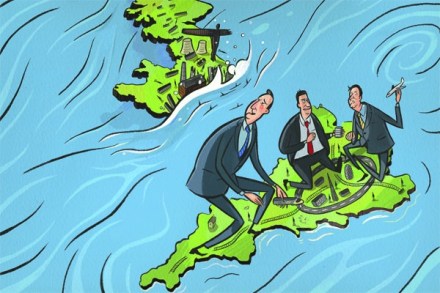
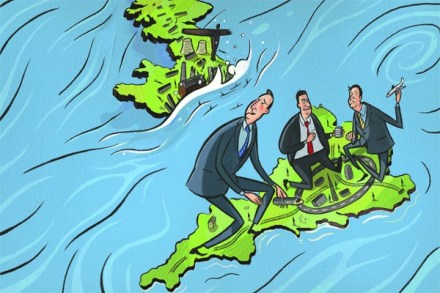
George Osborne is drawing up plans for a northern 'supercity', in the hope that it might rival London and rebalance Britain's economy. Neil O'Brien discussed the idea of a supercity in The Spectator in December 2012, before going off to advise Osborne. My career in politics nearly ended the day it began, when I was almost run over by a gang of Nazis in a Mini-Metro. Not a very butch car to be hit by, I know, and a rather pathetic substitute for a Panzer tank. But it was the early 1990s, and supporters of fascist government in Britain had seen their resources dwindle a bit over the decades. I was 14, and attending my first political demonstration, an Anti-Nazi League protest against the BNP in Halifax. I became separated from the crowd.

The great divide | 29 November 2012

From our UK edition

My career in politics nearly ended the day it began, when I was almost run over by a gang of Nazis in a Mini-Metro. Not a very butch car to be hit by, I know, and a rather pathetic substitute for a Panzer tank. But it was the early 1990s, and supporters of fascist government in Britain had seen their resources dwindle a bit over the decades. I was 14, and attending my first political demonstration, an Anti-Nazi League protest against the BNP in Halifax. I became separated from the crowd. There were some hooligans from the other side screeching around in a car yelling abuse and doing handbrake turns and, as I ran down a street away from them, they drove the car up onto the pavement behind me.

Another country | 14 April 2012

From our UK edition

London’s separateness from the rest of Britain becomes more pronounced every year London has always been different from the rest of the country. But in recent decades the differences have widened to the point that, economically and socially, the capital now has little in common with the rest of Britain. The city may be hosting the Olympics in July, but none of those attending should kid themselves that they have visited Britain. London has effectively left the UK; it belongs instead to a loose international federation of global cities united by their economic dynamism and cosmopolitanism and the people who flit between them. This leads to a big problem: Londonitis.

Little platoons online

From our UK edition

Cameron’s ‘big idea’ is for a ‘Post-Bureaucratic Age’ enabled by the internet. Will it work? Peter Hoskin and Neil O’Brien aren’t sure The future: it’s all about computers. Anyone could tell you that. But not everyone gets quite as evangelical about it as David Cameron. Put the Conservative leader in a room full of tech-heads, web freaks and assorted blue-sky thinkers, and he soon starts to preach his gospel. Computers will catalyse our political evolution, he says. Armed with only an internet connection, the public will start seizing back control from an overreaching state. Everything will be cheaper, faster, better — and we’ll all be happier to boot. Burke’s Little Platoons have just gone digital.

A whole batch of Brownies

From our UK edition

There are some pretty cheeky claims in today’s Pre-Budget Report. One is that “Cyclically-adjusted borrowing is lower than at Budget across the medium-term forecast.” (page 171). That makes it sound like it’s all under got a bit better since the Budget. But in fact the “cyclically adjusted” improvement is entirely because of a redefinition of the cycle - not because of any actual reduction in the deficit.  For example, the PBR forecasts the deficit for 2013/4 as 5.5 percent of GDP - exactly the same as that in the 2009 Budget.   Another claim is that “The annual pace of consolidation set out in this Pre-Budget report is faster than the pace of deficit reduction forecast by the IMF for all other G7 economies” (page 33).

Getting Byrned

From our UK edition

Just when you thought it couldn’t get any more dishonest, it does. I wrote a piece in the Telegraph this morning saying that the Tories should dramatise the scale of the Government’s debt crisis by symbolically dropping their IHT promise. I said: “Dropping such a high profile policy would have shock value. It would send the vital message that the country is going bust. That would allow the Conservatives more room to level with the public about the truly horrific situation they will inherit." Predictably, up pops Liam Byrne MP to say: "Even David Cameron's favourite right wing think tank now believes he is wrong to give £200,000 to just 3,000 of the wealthiest estates.

Ireland votes no, now what’s next?

From our UK edition

1) This was a vote against the Treaty, and against deeper EU integration This was indeed a vote against deeper integration.  The political class are already spinning that it was stuff about abortion, an unpopular government – all the same old claims.  But look at the polls and the top reasons for voting no – they are all perfectly reasonable.  Here is the list of the top reasons from the last Irish Times poll “Can you tell me why you have decided to vote no on the Lisbon Treaty?

Why won’t The Independent print this letter?

From our UK edition

On Thursday, when I saw that The Independent had reprinted almost word for word Foreign Office talking points without attribution or any indication to its readers that this is what it was up to, I sent in a letter to the editor. Oddly enough, it hasn’t yet been published. If the Indy is “completely unapologetic” about what it did, why is it so scared of its readers finding out about it?   ------Original Message------   To: letters@independent.co.uk   Sent: 18 Oct 2007 11:19 AM   Subject: For publication.   How amazing that the Independent should simply reproduce a foreign office briefing note on the EU on page three without any attribution of its source.

How independent is The Independent?

From our UK edition

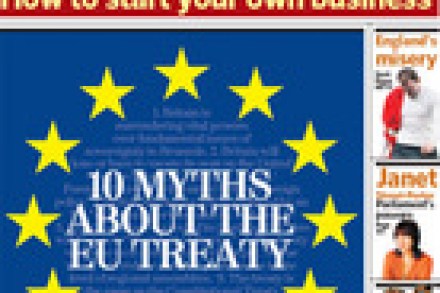
With wearying predictability The Independent splashes today on “10 Myths about the EU Treaty” - and prints a rebuttal of those eurosceptic “myths” on page three. They looked curiously familiar to me.  And then I figured out why.  The piece is an almost word-for-word reprint of a Foreign Office briefing note – but without any attribution that that is the source. Have a look at this thing, circulated by the FCO which Open Europe obtained a copy of. And then read the Indie piece. They are almost exactly the same. (Rather like the relationship between the “new” treaty and the re rejected constitution, you might say…) When we called for comment on this, the editor was not available for comment.

The Independent–surely shome mistake?

From our UK edition

With wearying predictability The Independent splashes today on “10 Myths about the Reform Treaty” - and prints a rebuttal of those eurosceptic “myths” on page three. They looked curiously familiar to me.  And then I figured out why.  The piece is an almost word-for-word reprint of a Foreign Office briefing note – but without any attribution that that is the source. Have a look at this thing, circulated by the FCO which Open Europe obtained a copy of. And then read the Indie piece. They are almost exactly the same.