Robin Simcox

Robin Simcox was the Commissioner for Countering Extremism, 2021-25.

How Gaza became one of the biggest issues of the local elections

From our UK edition

As Tony Blair contested a third election in 2005, the Labour government’s popularity was in tatters. The divisions in the country were running deep, following a United States-led war in the Middle East. The general election, held alongside the locals, saw the emergence of new radical political parties. They seized an opportunity to break the two-party consensus by opposing foreign wars and weaponising an increasingly politicised Muslim vote. Not much is written today about Respect, but it had some success fighting on an anti-Iraq war platform. George Galloway, the party’s leader, won in Bethnal Green and Bow. Although Respect’s staying power proved limited, what is emerging for next month’s local elections might prove more durable.

Will Gordon Brown’s critics finally admit he was right about al-Qaeda’s ‘major terrorist plot’?

From our UK edition

There are not many things to celebrate about Gordon Brown’s time in office. He was a vilified leader; often quite rightly so. His Home Secretary, Jacqui Smith, did not fare much better. However, a recent terror trial in New York showed that the criticism they received was not always deserved. On 8 April 2009, a large terrorist cell based in northwest England was arrested. The cell had been dispatched to the UK by al-Qaeda in 2006 in preparation for an attack, the majority entering the UK on bogus student visas. The plot is thought to have involved a car bomb attack against Manchester’s Arndale shopping centre, with a team of suicide bombers ready to detonate their devices among fleeing civilians.

What are we willing to do to make our intelligence agencies’ job easier?

From our UK edition

Ottawa. Sydney. Paris. Copenhagen. Four major Western cities attacked in five months by Islamist terrorists and all committed by perpetrators with lengthy histories of criminal activity. When the next terrorist attack occurs, there will be those that demand to know why intelligence agencies failed to watch the perpetrators closely enough (as was the case with the murder of Drummer Lee Rigby). However, should we not also ask what we, as a society, are willing to do to make our intelligence agencies’ job easier? Consider the current debate surrounding communications data (the who, when, where, and how of a communication, but not the what – i.e. the content). Access to communications data is not so different to other long-standing forms of state interception.

Moazzam Begg: Islamic bookseller or terrorist trainer?

From our UK edition

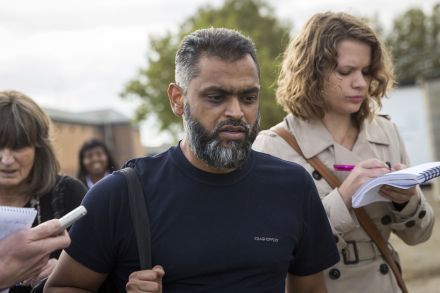
Moazzam Begg’s lawyer once said that the former Guantanamo Bay detainee was ‘an extremist all right - he believes passionately in charity and justice for all.' Many seemed to agree. Despite Begg signing a confession at Guantanamo admitting his links to al-Qaeda and terrorism-related activity (which he says was coerced), Amnesty International promoted the terror suspect widely. At a campaign event in 2007, Shami Chakrabarti of the civil-liberties group Liberty called him a "wonderful advocate . . . for human rights and in particular for human liberty'. In 2006, the New Statesman ranked Begg 21st in its top-50 list of 'heroes of our time' (ahead of Bill Clinton, Bob Dylan and the Queen).

In defence of Control Orders

From our UK edition

David Cameron currently thinks the coalition is heading for a ‘f***ing car crash’ on Control Orders. While the Home Secretary Teresa May is now convinced of their necessity, many Liberal Democrats and some Conservatives disagree. Everyone would prefer potential terrorists be prosecuted, but sensitive counter-terrorism evidence cannot always be used in a criminal court. In addition, the European Convention on Human Rights decrees that terror threats cannot be deported to states where they could be tortured. Hoping to circumvent these problems, the previous government attempted detention without trial. When this was struck out in the courts, Control Orders were the best viable option left.