Manchester

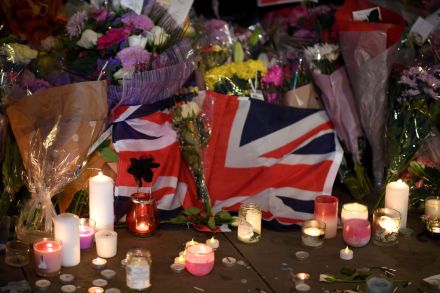
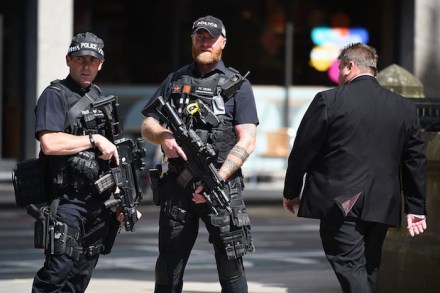
The Manchester attack is especially vile but we must go on

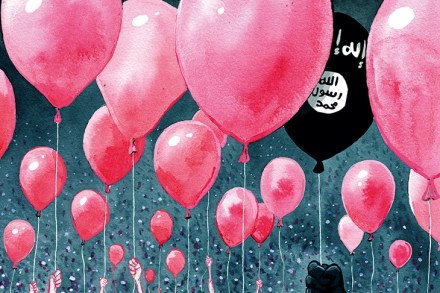
The first victim named was from Lancashire, the second an eight-year old girl. Two girls from the isle of Barra in the Western Isles are among those still unaccounted for. A reminder, if it were needed, that though this was an attack in Manchester, the chains of personal connections to the horror stretch all across Britain. You cannot read the stories of those killed or missing without choking, without tears, without appreciating that even by the standards of contemporary terrorism there was something especially vile about this latest atrocity.

House prices boosted by tram routes

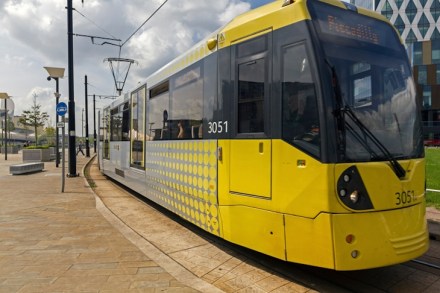
In the wake of Friday's international cyber attack, it was logical to assume that yesterday's complete shutdown of the Manchester tram system was another casualty of malicious ransomware. But bosses at Metrolink say the closure was due to a technical fault in the control network and has now been resolved. For a city that has come to rely on its trams, any glitch is incredibly disruptive, not least because the bus network - to the north of Manchester at least - is a shambles. However, when the Met is working, it's a convenient and efficient means of getting around, if a little pricey. And the multi-billion pound extension of what was once a straightforward replacement for outdated trains and tracks has had a beneficial impact on house prices.

Capping prices to win votes is no substitute for a serious energy strategy

Is capping domestic energy prices an equitable way to help the ‘just about managing’, or an electoral gimmick with a whiff of anti-free-market ideology? When it was Ed Miliband’s idea, it was certainly the latter. Now it’s likely to be included in Theresa May’s manifesto, offering a potential £100 saving for millions of homes on ‘standard variable tariffs’, it is defended by the ever-plausible Sir Michael Fallon as a matter of ‘intervening to make markets work better’. And that, after all, is what the Prime Minister said she would do, wherever necessary, in the interests of fairness.

Andy Burnham and ‘posh coffee’ – a brief history

This evening, Andy Burnham has whipped social media into a frenzy after the Labour MP decided to wade into 'barista-gate'. Following reports that the Home Secretary is considering plans for ‘barista visas’ -- which would allow young Europeans to work in the hospitality industry after Brexit -- Burnham has taken to Twitter to let it be known that he is unimpressed. The former shadow home secretary says the 'right-wing' policy is bizarre as 'God forbid the idea of waiting longer in the morning for their posh coffee'. https://twitter.com/andyburnhammp/status/854035829643255808 Alas (as tends to be the case with flip flop Burnham) the Labour candidate for Mayor of Greater Manchester's comments don't appear to be particularly well thought through.

It’s not grim up North: Manchester tops UK cities for house price growth

'Northern Powerhouse fires up house prices in Manchester' shouts one headline. 'Manchester is at the centre of Britain's property boom' declaims another. 'Manchester top for house price growth', a third declares. As a property-owning Mancunian who has no intention of moving, this is welcome news. According to Hometrack, prices in my home city increased by 8.8 per cent in February, a faster rate than the property market in any other large British city. Also in the top ten are Portsmouth, Bristol, Glasgow and Birmingham. But what of the capital? It is now in tenth place in terms of year-on-year house price growth in Hometrack's list which tracks the movements of house prices across the 20 biggest cities, having recorded 5.

Mirror, mirror | 16 March 2017

The exit signs were switched off and the stalls were in utter darkness. One by one, 15 invisible dancers, their joints attached to tiny spotlights, began to colonise the far end of the hall, forming fresh constellations with every pose. The audience smiled in wonder, like tots at a planetarium. Tree of Codes, which had its London première at Sadler’s Wells last week, was originally commissioned in 2015 for the Manchester International Festival. It combined the talents of Wayne McGregor, resident choreographer of the Royal Ballet, mixer and DJ Jamie xx and the Danish/Icelandic artist Olafur Eliasson.

Pity the Co-op: bank reports fifth consecutive year of losses

If you're a Manchester resident, you'll be familiar with the all-singing, all-dancing, brand-spanking-new Co-op headquarters. In much the same way that London's City Hall squats on the banks of the Thames, One Angel Square looms over Victoria Station, its solid glass bulk in stark contrast to the company's iconic 1960s CIS Tower just over the way. The UK's largest building when it was completed in 1962 (this title was later claimed by the capital’s Millbank Tower), the former home of The Co-operative Group is a relic of a bygone age. To step inside is be transported back to the grey vision of mid-20th century town planners. Once a jewel in Manchester's architectural crown, it is now a depressing reminder of the Co-op's fall from grace. Pity the Co-op.

Magnetic north | 10 November 2016

Years ago, when I met a famous concert pianist, I was surprised when he greeted me in a northern accent. A soft one, mind you, but completely intact. I’d assumed that, by the time a conductor or soloist reached a certain level of fame, the northern vowels would have been erased by Received Pronunciation or some painful mid-Atlantic hybrid. I was such a little snob in those days, affecting a languid drawl that had my old schoolfriends in Reading rolling their eyes. But my social climbing had at least given me a good ear for other people’s doctored accents. London was crawling with northern choirmasters and music critics whose self-taught ‘posh’ accents were about as convincing as home-tinted hair (which, incidentally, some of them also sported).

Andy Burnham named as Labour’s Manchester Mayoral candidate

Andy Burnham has won the race to be named as Labour's candidate in the Manchester Mayoral race. The shadow home secretary's victory was certainly convincing - he won 50 per cent of the vote amongst Labour members; interim mayor Tony Lloyd got 28 per cent, whilst former minister Ivan Lewis won 19 per cent. So what now? Burnham had made himself something of a laughing stock recently with his flip-flopping about quitting the shadow cabinet. He drew derision for staying loyal to Corbyn, so at least after today he appears to have a bonafide reason at last for leaving the shadow cabinet.

An elegy for Oldham

My home town of Oldham is the sort of place people imagine when they think of ‘The North’. It has mill chimneys, redbrick terraced streets and a rain-swept football ground (the third highest in the country) where supporters of the perpetually struggling Oldham Athletic queue for hot Vimto or a bag of black peas. Oldham is now the most deprived town in England, according to the Office for National Statistics. Crime and unemployment are high; investment, wages and prospects generally are pitifully low. Boarded-up shops and dilapidated factories tell a sorry tale of economic woe. It wasn’t always like this. My family’s home, in the leafy suburb of Werneth, was in one of many large houses built around 1900 for the managers of the local textile mills.

The Government must do more to ensure the ‘Northern Powerhouse’ becomes a lasting legacy

The recent Queen’s speech, along with the growing divisions in the Conservative Party over the EU referendum, have focused attention on how this Government will be remembered after David Cameron steps down in 2019. Many mentioned prison reform, improving university standards and tackling extremism, as signs of the Prime Minister’s determination to establish his legacy as a social reformer, guided by the compassionate conservatism which characterised his earliest pronouncements as Tory leader. Less remarked upon, however, was the renewed commitment in the speech to building the Northern Powerhouse, and empowering cities in the North to fulfil their economic potential – another key way in which the Government hopes to leave its stamp long after Cameron has left office.

Northern overexposure

‘The shortest way out of Manchester,’ it used to be said, ‘is notoriously a bottle of Gordon’s gin.’ But that was a long time ago, when ‘Cottonopolis’ was the pivot of the Industrial Revolution, the British empire was expanding and life was cheaper. They tend not to drink gin any more in the bars on Deansgate. It’s cocktails, a tenner a pop. The hub of George Osborne’s ‘Northern Powerhouse’ is a much-changed city. Now they’re queuing to get in, even though the super-duper HS2 rail link may go no further than Crewe, which is in Cheshire, and only southerners think Cheshire is in the north. Andy Burnham is the latest chap to set his cloth cap at the rainy city.

Can Andy Burnham actually win Greater Manchester’s mayoral election?

After months of local campaigning, backbiting and press releasing, the Greater Manchester mayoral election has finally piqued the national attention. Andy Burnham's apparently sudden declaration he will run for the role has thrust the race into the limelight. There may be more than a hint of cockiness to his claim that the competition needs a 'big name' to raise its profile, but there is also more than a hint of truth. Unlike the London race, there has so far been little momentum to its poorer northern relative. But for Andy Burnham the question that really matters, given that the Labour candidacy is likely to determine who becomes mayor of 2.5m people next year, is whether he can actually do it. And it's far from a given.

Don’t cry for John Terry

Just when you were thinking that the Premier League had become a much nicer place without José Mourinho in it, here comes another old friend from Stamford Bridge who can be relied on to pollute the atmosphere. Yes, it’s John Terry again, JT, Captain, Leader, Legend, who issued a tear-stained farewell saying Chelsea didn’t want him any more (sob), it couldn’t be a fairytale ending (sob), and he wasn’t going to retire at Chelsea (hysterical weeping). But so loyal was he that he couldn’t possibly be going to another Premier League club (stately music and solemn applause). Oh please, what a load of tosh.

Diary – 26 November 2015

Scientists are experimenting with growing replacement vocal cords in the lab, as well as transplanting them from dogs. That was the Sun’s imaginative angle on my somewhat croaky debut as a Today programme presenter (only one of mine is working properly). It led me to ponder which species of donor would be fitting for my new role. Rottweiler? Too aggressive. Terrier, perhaps? Annoying after a while. Maybe a shepherd or a pointer would fit better with the mission to explain? All suggestions gratefully received. Bar one, that is. Husky is out. If my first programme had not been dominated by events in Paris, I had planned to talk about the world’s greatest city. I speak of Manchester, of course.

Why I’m in love with Róisín Murphy

Róisín Murphy, the Irish singer-songwriter, is currently touring Europe with her Mercury Prize-shortlisted new album, Hairless Toys. The album, with its odd disco-grooves, dub rhythms and dark, loopy synth sounds, combines pop futurism with a retrospective 1970s edge. The album is tinged with an autumnal sense of loss and the self-examination of an older woman looking back on her life. 'The things I’ve seen', the 42-year-old Murphy sings, in a mournful whisper. Why 'the Irish Grace Jones' (as Vanity Fair called Murphy) is not better known outside her native Ireland is a mystery. On stage Murphy is supremely powerful because she knows how to keep still. She thinks about the slightest raising of her arms or silent snapping of her fingers.

Spittle is the only thing Labour has left

I have started salivating excessively at night. I wake each morning in a pillowed swamp of my own effluvium, a noisome pond which is — I suspect — redolent of rapidly approaching death. I have done the hypochondriac thing and googled the possible causes and there’s a whole bunch of stuff — pancreatitis, close exposure to ionising radiation, rabies, pregnancy, serotonin disease and liver failure, to name but a few. My suspicion is it’s either rabies or pregnancy because I exhibit other symptoms common to both conditions, according to the internet. I cannot abide drinking water, for example, which suggests that I might be hydrophobic, a key indicator of rabies.

Manchester has marvellous wines, and it’s not finished yet

It will seem an ungrateful comment after the lunch which I am about to describe, but Manchester has some way to go. In the Midland Hotel, the principal Tory conference hotel and a grand edifice redolent of civic self-confidence from an earlier era, the northern powerhouse could sometimes be mistaken for a 40-watt light bulb. The business centre had been closed for the duration of the conference. The management person who told me this had enough nous to wilt under my incredulous stare. But it remained closed. At a bar, two girls struggled to do half of one girl’s work. Whenever anyone tried to pay by plastic, inaccuracy and chaos reigned. The girls were not to blame. Increasingly panic-stricken, they looked sweet and were obviously under-educated and under-trained.

Low life | 1 October 2015

Every morning for the past two years, on waking, I’ve reached out for the white plastic tub on the bedside table, shaken out four oval white tablets into the lid, tossed them into my mouth, and washed them down with a pint of water. Initially I counted myself lucky to be selected to take the expensive drug abiraterone for two years as part of a nationwide clinical trial. As I understand it, abiraterone turns off the adrenal glands, thereby depriving prostate cancers of their favourite nourishment, testosterone. (Presumably, I have also been without adrenaline for two years and impervious to loud bangs.) I tolerated the drug easily until about three months ago, when the common side effect of fatigue sneaked up on me and whacked me over the back of the head with a lead-filled sock.

Letters | 20 August 2015

The morality of the A bomb Sir: In questioning whether we should celebrate VJ Day (Diary, 15 August), A.N. Wilson is confusing ‘why’ with ‘how’. The debate on the rights or wrongs of the nuclear attack will continue probably until long after the grandchildren of the last survivors have passed on. What should not be forgotten is the necessity to defeat the cruel, expansionist, militaristic regime that arose in Japan between the wars. Something happened to Japan during that period. The treatment of Allied prisoners of war and the atrocities in China during the second world war are well documented. What is less well known is the Japanese treatment of prisoners of war during the first world war.