Manchester

Takes us deep into an unknown world: Channel 4’s Inside Missguided reviewed

If it’s a test of a good documentary series that it takes us deep into an unknown, even unimaginable world, then Inside Missguided: Made in Manchester passes with flying colours — especially for the more middle-aged viewer. Missguided, it turns out, is a fast-fashion company, which means that it spots what celebrities are wearing online and then designs, makes and sells much cheaper versions within days — all while indignantly denying the outrageous charge that ‘we just rip off other people’s designs’. The target market apparently consists of young women obsessed with Instagram and Love Island. And so, on the whole, does the staff, who have names like Treasure, Zee and Karolina, and are keen for us to understand how excited they are at all times.

It’s the fans wot win it – so stop fleecing them

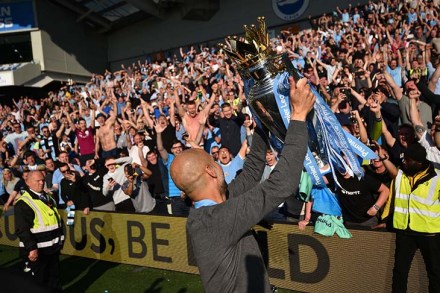
It is always possible to tell the difference between a bunch of Manchester City fans and auditions for the latest Dolce & Gabbana commercial. And in that uproarious packed stand at Brighton on Sunday, there were clearly quite a few folk who hadn’t gone without a meal for some time. But by golly we were a happy, relieved bunch. City supporters have been used to getting kicked in the face at the last moment for so long that no one really celebrated till the result was beyond doubt. ‘Why are you so nervous, you’re 4-1 up?’ ‘I know, but there’s five minutes to go,’ is a joke made for City fans.

Vital statistics

Scientists, it turns out, are really bad at statistics. Numerous studies show that a startling proportion of academics consistently misunderstand the statistics they’re using, and the conclusions that can be drawn from them. A computer algorithm that highlights basic statistical errors was recently set loose on a huge sample of published research papers in psychology  and found that almost half contained a mathematical mistake; 13 per cent had a serious screw-up that meant their reported results might have been completely wrong. If scientists — who use statistics all day to analyse their experiments — are so innumerate, what hope is there for everyone else? Enter Sir David Spiegelhalter, Winton professor for the public understanding of risk at Cambridge University.

High life | 13 December 2018

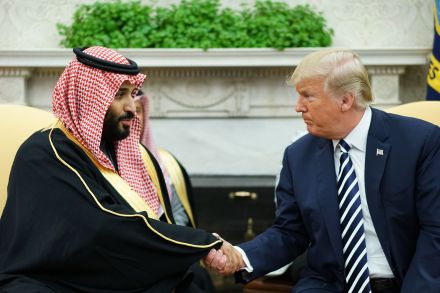
Here we are, 41 years down the road, and I’m once again writing for The Spectator’s Christmas issue. This is a triple one, so I want to make it count. In my sporting days, trying too hard was as counterproductive as not trying hard enough, so let’s see if this principle also applies to the written word. Eighty-five thousand Yemeni children may have died of hunger, and 10,000 men, women and children have been killed, most of them by indiscriminate and disproportionate air strikes targeting civilians, and that murderous megalomaniac Mohammed bin Salman and his Gulf allies are responsible. Just think of the enormity of the crime: 85,000 under-fives starved to death in the cruellest way possible by those overfed criminals in Riyadh. Then picture George W.

Men behaving badly | 1 November 2018

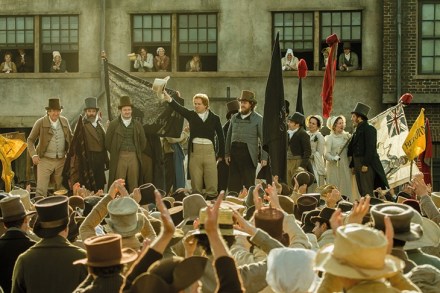
Mike Leigh’s Peterloo is one of those films where you keep waiting for it to get good, and waiting and waiting. It’s Mike Leigh; it’s bound to get good soon. But it never does. It’s essentially two hours of men shouting at each other, followed by a burst of violence. I sincerely wish it were otherwise, but there you are. This is the story of the Peterloo Massacre (16 August 1819), when government-backed cavalry charged a peaceable crowd of around 60,000 who had gathered in St Peter’s Field, Manchester, to demand universal suffrage. Fifteen were killed and hundreds more injured, including women and children. The film has been getting it in the neck from some quarters ever since the project was announced.

Low life | 11 October 2018

I told Oscar to wait outside and I went in and said to the barman: ‘Would it be all right if my grandson came in to watch the football?’ ‘Of course,’ he said. My notion that children aren’t allowed in pubs must be a quaint one because his harassed, hardworking face creased into a bemused smile and a man seated at the bar laughed. We had four screens of various sizes to choose from: one behind the bar, one above the pool table, one above the fireplace and one fixed to the wall at the end of the bar. About a dozen customers were half paying attention to the screens above the fireplace and devoting the other half to obscenity-laden conversation. The swearing in this intensely local bar was unselfconscious, unemphatic and universal.

Lord’s next week is the place to be

Good for Ed Smith. The new national selector can’t just rock a fine pair of sunglasses, he can make bold decisions. Though quite how bold it was to pick Jos Buttler, arguably England’s most gifted cricketer, is a matter of opinion. It would have been remarkable if one of the world’s best players, and a phenomenal striker of a cricket ball, had been left on the sidelines for the Pakistan Tests. Smith has brought an adventurous spirit to this England team, after years of excessive caution. Buttler has illuminated the Indian Premier League for the Rajasthan Royals, who will be scowling into their Cobra beers after losing their best player. The purists will be saying he is just a white-ball basher, but however you look at it, his IPL run has been extraordinary.

The Bilbao effect

Twenty years ago I wrote of the otherwise slaveringly praised Guggenheim Museum in Bilbao: I’m in a minority of, apparently, one. It strikes me as a consummate gimmick… a fantastically elaborate and rather wearisome joke. Has mankind spent all these centuries perfecting Euclidean geometry and orthogonal engineering in order to have it overthrown by massively expensive crazy cottages clad in titanium? Apparently mankind has. So much for the building. What of the ‘Bilbao effect’, an epithet that I am accused of having coined (I can’t remember, but it’s inappropriate because there is, typically, no effect).

A cold front for the Tories in Manchester

It's Theresa May's birthday and the Prime Minister is set to spend it in Manchester where Conservative party conference kicks off today. Alas, rather than celebrate, May finds herself in a perilous position – as MPs on all sides on the party go on the offensive whether it's over Brexit, tuition fees or Boris. To add to the Tories' woes, they are been given a less than friendly reception in the land of the northern powerhouse. On top of a banner calling for Tories to be hung, anti-Tory protesters have today descended on the area surrounding the conference centre. Here are some of the delights on display: https://twitter.com/Mike_Fabricant/status/914094055428063233 https://twitter.com/pplsassembly/status/914455353630347264 https://twitter.

Northern rock

A fortnight ago, the debut album by a young British guitar band entered the chart at No. 6. You might have expected to see this pored over with some interest by the press, for whom the search for the New Arctic Monkeys, the New Oasis and the New Smiths has long been a matter of urgency. Instead, you will scour the daily newspaper arts pages in vain for mentions of the Sherlocks, and you won’t fare much better looking at the specialist music magazines. According to the self-anointed tastemakers of British pop, they might as well not exist.

In defence of Neymar’s transfer fee

A season ticket at the Parc des Princes, home to Paris Saint-Germain, will set you back somewhere between £336 and £2,116, with individual tickets ranging from £25 to over £100, depending on how good your eyesight is. But this is a small price to pay in order to watch footballing luminaries like Edinson Cavani, Ángel di María and Dani Alves light up a league that has long been the sickly cousin of the European superpowers. Indeed, if you’re a PSG fan, this cost will be nothing compared to the phenomenal resurrection, started in 2011, of a European superpower that appeared to be in terminal decline.

High life | 1 June 2017

I feel like an obituary writer, what with Nick Scott, Roger Moore, Alistair Horne — all great buddies — and now my oldest and closest friend, Aleko Goulandris, dead at 90. Mind you, they all had very good lives: plenty of women, lots of fun, accomplishments galore, and many children and grandchildren. And they all reached a certain age — what else can you ask of this ludicrous life of ours? Well, I won’t be writing about the high life this week, but scum life instead. And I’ll tell you why: those innocent young children slaughtered by that Islamist scumbag in Manchester, that’s why.

Fraternity, solidarity and the spirit of 1945 | 28 May 2017

My father worked as a fire warden during the Blitz, trying to contain the damage done by the Luftwaffe, and he witnessed more death and devastation than most soldiers saw on the frontline. Over a million houses in London were destroyed and nearly 20,000 civilians killed. But the horrors of the night were made more endurable by the atmosphere in the capital as day broke. All the petty distinctions that normally characterise life in a large city had fallen away. Strangers would stop and talk to each other. If anyone looked lost or confused, people would offer to help. Most adults had been up all night in makeshift air-raid shelters, often having to cope with restless children, but instead of being tetchy and short-tempered they were full of jokes and good cheer.

Watch: Andrew Neil’s This Week monologue – ‘the time for rhetoric is over’

In the aftermath of recent terrorist attacks in Paris and Nice, the BBC's This Week has kicked off with a speech from Andrew Neil on the tragedies -- and the 'jihadi johnnies' responsible. Last night, in the wake of the Manchester Arena terror attack which left 22 people dead, Andrew Neil adopted a different tone -- as he said 'the time for rhetoric is over': 'I won’t repeat a version of the remarks I made on this programme in the wake of the Paris and Westminster attacks, though I know some of you were hoping that I would. They apply with equal force to what happened on Monday night – even more so, since that involved the deliberate slaughter of the young. But perhaps the time for rhetoric is over, and we need to concentrate on what we’re going to do about it.

The known wolf

The meeting place of the two worlds could not have been more sharply defined. In Manchester Arena, thousands of young women had spent the night singing and dancing at a show in Ariana Grande’s Dangerous Woman tour. Songs such as the hit ‘Side To Side’ were performed: ‘Tonight I’m making deals with the devil/ And I know it’s gonna get me in trouble…/ Let them hoes know.’ Waiting for them in the foyer as they streamed out was Salman Ramadan Abedi, a 22-year-old whose Libyan parents settled in the UK after fleeing the Gaddafi regime. A man whose neighbours said he must have been radicalised in Manchester, ‘all those types’ having been driven out of Tripoli.

Will Corbyn’s supporters blame their election defeat on the Manchester attack?

The Manchester murders have given British politics its first conspiracy theory with a grain of truth in it. It may sound ghoulish to discuss the political consequences of an atrocity. But terrorism is a political crime, and we are in a general election campaign. Everyone is thinking that the Manchester attack passes the advantage to Theresa May. Soon they will be saying it too. It is easy to predict how the killings will be knitted into the left’s explanation for the defeat of 2017. Against the odds, Labour was doing well in the polls, Corbyn’s supporters will say. Why one survey had the opposition a mere nine points behind the Conservatives. (Others had it 14 points down, but trust me, they will be forgotten).

Why Islamists are obsessed with controlling young girls

When the pictures of the dead came in, it was hard to take, even from a distance. There was Georgina Callander, 18, a bespectacled Ariana Grande ‘superfan’ who had tweeted that she was ‘so excited’ to go to the concert in Manchester Arena. There was Saffie Roussos, aged 8 and still at primary school, who went with her mother and older sister. There was Olivia Campbell, aged 15. I looked at their bright faces and thought of all the love their families had carefully decanted into them over the years, their wealth of possibility. Then on Monday night a suicide bomber smashed up all their futures in an instant. What an act of vandalism against humanity. What grubby blasphemy.

The Manchester bombing: what the papers say

The ‘cruel’ attack in Manchester is ‘more proof’ that the ‘liberal West shelters hate-filled enemies set on destroying our way of life’, says the Daily Mail. The bombing, in which 22 people lost their lives, was the worst since 7/7. And while our thoughts are now with the victims and their families, says the paper, ‘we owe them more than defiant declarations that terrorism cannot win’. Although details about the attacker remain sketchy, we know enough already, argues the Mail, to ‘draw vital lessons’ from this attack. ‘How many more returning jihadis and their brainwashed wives must we welcome home to walk our streets freely?,’ asks the Mail.

Theresa May condemns ‘callous’ Manchester attack, full statement

I have just chaired a meeting of the government’s emergency committee COBR, where we discussed the details of – and the response to – the appalling events in Manchester last night. Our thoughts and prayers are with the victims and the families and friends of all those affected. It is now beyond doubt that the people of Manchester and of this country have fallen victim to a callous terrorist attack. An attack that targeted some of the youngest people in our society, with cold calculation. This was among the worst terrorist incidents we have ever experienced in the United Kingdom, and although it is not the first time Manchester has suffered in this way, it is the worst attack the city has experienced and the worst ever to hit the North of England.

UK terror threat level raised to ‘critical’, soldiers deployed to the streets

In her second statement of the day, Theresa May has announced that the national terror threat level has been raised from "severe" to the highest level,"critical". She added that she has also deployed the military to help armed police by triggering Operation Temperer,  a protocol that sends troops to help police with security at airports, rail networks, harbours etc. This is the first time that the level has been at critical since the foiled 2006 Heathrow plot - defined as the prospect of a terrorist attack moving from being "highly likely" to being "imminent". This has been done before, and both times it lasted for just a few days.