Law

Covid has exposed the crisis in our courts

The other night I returned to my Cheshire home following a 500-mile round trip to the south of England to defend a client accused of drink driving. Along the way, I netted eight hours behind the wheel, one cheerless night in a deserted hotel and a surfeit of grisly service station sandwiches. All for the princely return of spending fruitless hours in a draughty waiting room — only to be told very late afternoon that the court had run out of time. How so? Three trials — including mine — had been listed for this particular courtroom. It only took one to get through the egg timer and monopolise the entire ‘court day’. And it wasn't mine.

Britain’s copyright law is a mess

Copyright often seems like a joke. Most of us infringe it constantly, and publicly, without a second’s thought. With the advent of the internet, the public uploads countless videos, music, photographs, art, and a whole host of other things without the permission of the creators. Even large organisations get away with it. A few years ago, for example, the National Trust posted a picture of an unusual, heart-shaped honeycomb to social media, claiming it had been made by bees at one of their properties. It went viral, but it wasn’t actually theirs. Luckily for them, the beekeeper who took the photograph didn’t press the issue. Even creators, whom the system was created to benefit, are often blissfully unaware of the rules.

The legal profession’s troubling relationship with China

There has been considerable agonising in legal circles over the propriety of David Perry QC, who had accepted a brief to prosecute pro-democracy protestors in Hong Kong. One of the defendants in the case is the 82-year-old barrister Martin Lee QC, the founder of a pro-democracy party in Hong Kong, who has been accused of taking part in an ‘illegal assembly’. It seems now that Perry, who has refused to make any public comment since the story broke, has now withdrawn from the case. If so he has made a wise decision. He is not the only lawyer who has had to wrestle with the ethical question of how close you should get to regimes that most of us would regard as disagreeable or even evil. It is certainly not only a question faced by criminal lawyers.

Most-read 2020: Why didn’t the EU punish Germany when it broke international law?

We're closing 2020 by republishing our ten most-read articles of the year. Here's No. 8: Steven Barrett on Germany and international law Boris Johnson's proposal to break international law 'in a specific and limited way' has sparked uproar. But do you remember when the UK broke the Geneva Convention? Oh. Well we did. The government-ratified Geneva Convention on the Sea came into effect in Britain on 10 September 1964. From then the UK was bound forever by the treaty and bound by international law. On 25 September 1964, we were not. No explanation was given. No explanation was asked.

In defence of British institutions

‘Terms and conditions will apply.’ That, or something near it, was Dan Rosenfield's initial response when Boris Johnson invited him to become Chief of Staff in No.10. Naturally, Mr Rosenfield was tempted. But he wanted assurances that he would have the authority to run a serious political outfit. He was not interested in becoming a zoo-keeper. That was not a problem. The zoo has been closed down. The Dominic Cummings era is over. Boris's willingness to hire a completely different character, following the appointment of Simon Case as Cabinet Secretary and Head of the Civil Service, suggests that the PM can recognise and value seriousness in others, even if he himself has problems in displaying it. Yet there are bigger issues in play.

(photo: Getty)

Should Scotland scrap the ‘not proven’ verdict?

Guilty or Not Guilty: for the majority of the English-speaking world these words are synonymous with the two verdicts at a trial. Not so in Scotland. Scotland prides herself on her idiosyncrasies – in food, drink, and inclement weather – and also in the form of a verdict unknown elsewhere: ‘not proven’. In Scotland, this third verdict has been used since the late 17th century as a form of acquittal, alongside ‘not guilty’. A stranger to this arcane tradition would be forgiven for assuming a legal distinction between these two verdicts. Perhaps a ‘not proven’ verdict opens up future avenues for the prosecution, or impacts the appeals process? It does not. There is no legal difference. Acquittal is acquittal. So why do the two forms exist?

Denmark is creating a roadmap for mandatory vaccination

Could British residents be forced to have a Covid-19 vaccine? Yesterday Health Secretary Matt Hancock refused to rule out mandatory inoculation, telling TalkRadio that the government would ‘have to watch what happens and… make judgments accordingly’. His comments have sparked questions about how realistic the prospect of mandatory vaccination is in the UK, or what restrictions people could face – with MP Tom Tugendhat suggesting that the unvaccinated could be banned from workplaces – if they refuse to get inoculated. If a policy of mandatory vaccination were to be carried out in the UK, what might it look like?

Who’s afraid of Amy Coney Barrett?

From our US edition

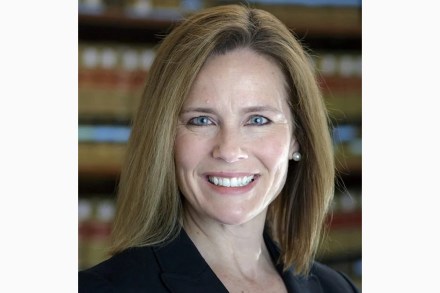
Oooff! If you’re to go by Twitter — not always a good idea — there’s one thing not to like about Amy Coney Barrett, Donald Trump’s potential nominee to replace Ruth Bader Ginsburg and that’s her religion: Catholicism. The Washington Post’s Ron Charles quoted her saying that ‘a legal career is but a means to an end...and that end is building the kingdom of God’. Cue for others to pile in to the effect that there’s meant to be a separation of church and state in the US, and others witheringly observing that it’s not far to go from here to overturning Roe v. Wade. You can expect the quote to be widely circulated in the next few days.

amy coney barrett

Sunday shows round-up: Justice Secretary would resign if UK breaks law in ‘unacceptable’ way

Robert Buckland - 'I will resign' if government breaks law in 'unacceptable' way The Justice Secretary Robert Buckland was put on the spot this morning over the government's proposed Internal Market Bill, which is due to be introduced to the House of Commons tomorrow. The bill intends to override aspects of the Northern Ireland Protocol – a part of the official Withdrawal Agreement – to give ministers the right to modify rules on customs, if there is no final trade deal agreed by December. Andrew Marr quizzed Buckland about whether using these powers would breach international law: https://twitter.com/BBCPolitics/status/1305068709183131648?ref_src=twsrc%5Etfw AM: Is that the moment that [you] resign from the government – if we break international law?

Could possession of the Bible become an offence in Scotland?

For the Scottish National party, the phrase ‘nanny state’ is not so much a criticism as an aspiration. This is the party that wanted to assign a state guardian to every child born in Scotland through its ‘named person’ scheme, only to be thwarted by the Supreme Court. Under Nicola Sturgeon’s leadership, there have been repeated attempts to regulate the eating and drinking habits of people, including proposed bans on two-for-one pizza deals and minimum pricing on cheaper alcoholic drinks. It makes sense, then, that the party’s paternalism should extend to the question of free speech.

The Begum Appeal is a fundamental error of logic

There has been an emotional response to the case of Shamima Begum, quite rightly. It is not clear to me that lawyers are better equipped than politicians to navigate such emotions, but sadly we live in an age which is increasingly demanding legal answers to political questions. What is perhaps surprising is that, with uncharacteristic vigour, our Court of Appeal have jumped headfirst into the maelstrom. The Special Immigration Appeals Commission (SIAC) – created to consider cases like these – found against Ms Begum in February, which seemed largely uncontroversial at the time.

The rule of law is collapsing

From our US edition

It is the law that makes us 'the best of animals.' So saying, Aristotle had a very specific conception of justice in mind: 'The law is reason free from passion.' Committed to live under it, mankind is 'perfected.' There is, however, a flip side. 'When separated from law and justice,' as happens when passion overwhelms reason, mankind 'is the worst of all.' Which would make this the worst of times. The streets of America’s greatest cities are aflame. Some of it is anarchic. Most of it is methodical mayhem. Cultural Marxists are not merely desecrating statuary, they are erasing history. Naturally, this is done under the guise of ideals such as ‘anti-racism’, ‘anti-fascism’, and ‘equality’.

law rayshard brooks

Was Dominic Cummings acting legally?

As a lawyer, I am firmly against the politicisation of law. It is important to remember that we who serve justice do so for everyone - not merely for people we like or to advance political causes. ‘Lockdown’ has so far been three different legal regimes, and for ease, I’ll restrict myself here to the first one. Under that, we all had the power in reg. 6(1) to leave the house whenever we had a “reasonable excuse”. What it said was “During the emergency period, no person may leave the place where they are living without reasonable excuse”. What that means is: provided we had a reasonable excuse, we could leave the house. It was not then for parliament to tell us what a reasonable excuse is. It is for the courts.

Who killed courtroom drama?

The death in February of one of the titans of the Bar, John Mathew QC, cut another link with the post-war period of ebullient criminality and showy trials. Mathew defended one of the Great Train Robbers and David Holmes in the Jeremy Thorpe trials, and prosecuted the Krays and Harry Roberts. He remembered a period when you could park your car outside the Old Bailey and saunter through its grand main entrance unhindered by the tiresome security apparatus lawyers and members of the public are subject to today. But he also recalled a time when jury nobbling and police perjury were common. Any study of the true-crime shelves of Waterstones shows that those years – from around 1945 to the late 1970s – was a glory period of English crime.

Scotland’s new ‘hate speech’ rules are a modern blasphemy law

It is 178 years since the last recorded charge of blasphemy in Scotland, against the Edinburgh bookseller Thomas Paterson for ‘exhibiting placards of a profane nature’ in his shop window in 1842. One of those placards announced that ‘Paterson & Co (of the Blasphemy Depot, London)… Beg to acquaint infidels in general and Christians in particular that… [we] will sell all kinds of printed works which are calculated to enlighten, without corrupting — to bring into contempt the demoralising trash our priests palm upon the credulous as divine revelation — and to expose the absurdity of, as well as the horrible effects springing from, the debasing god-idea.

Could a sex-strike solve Brexit?

Last week the Lawyers Group of the charity Classics for All held its fifth moot (cf. ‘meet’) in the Supreme Court, under the stern gaze of Lady Arden. Previous moots have tried Socrates, Brutus and Cassius, Antigone, and Verres, corrupt governor of Sicily. The Romans put such moots at the heart of their education. The purpose was to teach men how to win the political — and, even more, legal —battles necessary to climb the greasy pole to power. Pupils would be asked to make the best case they could for or against the sides involved in historical or mythical situations (suasoriae, e.g. ‘did Orestes legally kill his mother?’, ‘Should the Romans have destroyed Carthage?’) and invented ones (controversiae).

Donald Trump and the art of the lawsuit

From our US edition

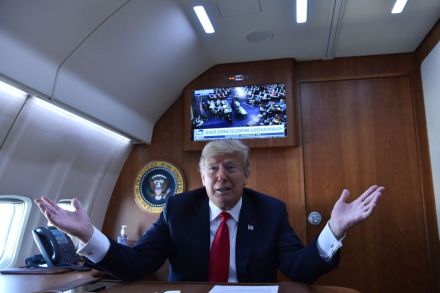
When Donald Trump proffered advice to then-UK prime minister Theresa May in her Brexit negotiations, he told her to sue the EU. It might have seemed a laughable throwaway line; but suing is second nature to Trump. More than that, it’s a whole way of life. Just to what extent the litigation is the man is comprehensively detailed in Plaintiff in Chief: a Portrait of Donald Trump in 3,500 Lawsuits. James D. Zirin, respected lawyer, legal commentator and broadcaster as well as a  litigator himself in federal and US courts, delivers a fascinating insight into Trump’s legal history — exposing his motives and methods, psychology and morals.

lawsuit

The unparalleled entertainment – and heartbreaking reality – of watching a court hearing

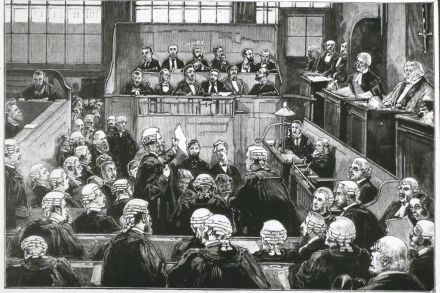
‘Barristers’ speeches vanish quicker than Chinese dinners, and even the greatest victory in court rarely survives longer than the next Sunday’s papers.’ So wrote John Mortimer in Rumpole of the Bailey. While no doubt true, a barrister delivering a well-honed speech is still something to behold. They are the last defenders of a rhetorical tradition that our politicians have all but given up on. Many QCs still use Cicero’s principles of oratory: to teach, to entertain and to move. The public are allowed to watch almost any court hearing, but few ever do. As a court reporter, I have been struck by how empty the public galleries tend to be, beyond a few elderly men who regularly turn up.

How verbal and physical abuse drove me out of the police

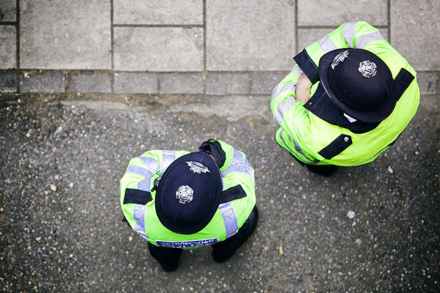
The past decade has not been kind to those we entrust, in the words of Sir Robert Peel, ‘to give full-time attention to duties which are incumbent on every citizen’. Since 2010, police numbers have fallen by more than 20,000, with too many choosing to leave the force owing to physical and emotional assaults in a stressed and underfunded job. I can sympathise, because I had to step away from the front line and the job I loved three years ago. At the time, friends and family repeatedly asked me why I felt I had to leave. Set against the latest news of escalating assaults on police, I’m not so sure they’d ask now. There were approximately 31,000 assaults on officers last year, an increase of almost 5,000 on the year before.

How police can take back control of Britain’s streets

Boris Johnson's pledge to fund an extra 20,000 police officers was a serious sign of intent, a game-changing moment for policing and a huge boost for law and order on Britain’s streets. But how can these new officers quickly reverse the spike in knife and violent crime that has plagued Britain? There are six pressing challenges that the new Home Secretary Priti Patel needs to address if she is to succeed in her strategy to crack down on crime: increasing crime levels, greater demands and reduced budgets for police; decline in neighbourhood officers; new national security threats; a disempowered police workforce and a policing model outpaced by technology. It is clear that neighbourhood policing is where the vast bulk of the new resources need to be focused.