Law

How Ray Tierney brought law and order back to Suffolk County

From our US edition

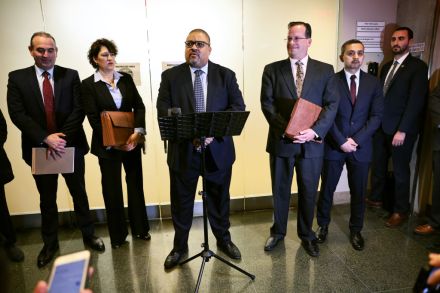
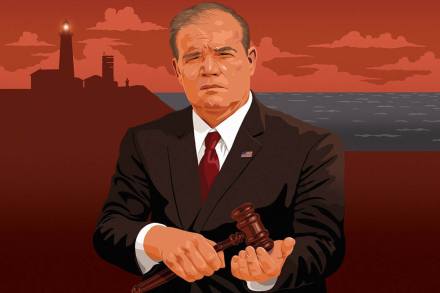
On the day I arrive at the Suffolk County District Attorney’s office, DA Ray Tierney is off meeting with an unnamed witness in the Gilgo Beach serial killer case. In February 2022, more than a decade after police first recovered the remains of eleven victims, then-Suffolk County police commissioner Rodney Harrison announced the creation of a joint task force dedicated to solving the case. The task force, which included investigators from the DA’s office, quickly zeroed in on a suspect as they chased down a tip from a witness that hadn’t been properly investigated the first time around. Fifty-nine-year-old Rex Heuermann was arrested in July on murder charges and police have linked his DNA to several of the bodies.
Tierney

Judgment call: the case for leaving the ECHR

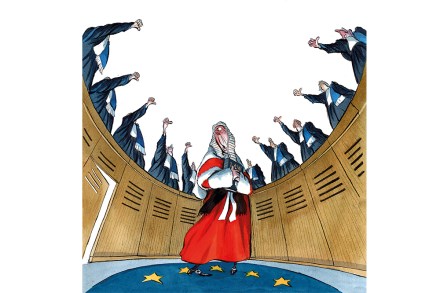
The debate about the European Convention on Human Rights is in danger of being diverted into irrelevant byways. Hostility to the convention has become a trademark of the right wing of the Conservative party, which invites unnecessary partisanship. This is unfortunate, because the United Kingdom’s adherence to the convention raises a major constitutional issue which ought to concern people all across the political spectrum. It is far more important than Suella Braverman’s battles with boat people and ‘lefty lawyers’. Yet so far, the debate has rarely risen above the level of empty slogans, meaningless mantras and misleading claims.

The crucial Supreme Court decisions set to be decided this week

From our US edition

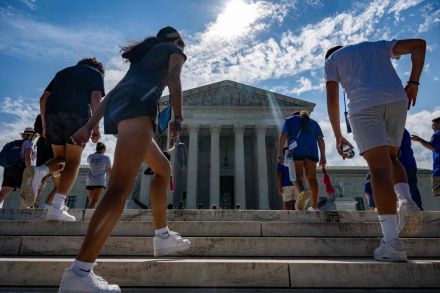
The Supreme Court is entering the home stretch of its session, with just days left before it goes into recess for the summer. Some of the most significant decisions have yet to be issued, teeing up a big week. Here is what some of those cases are. Moore v. Harper This case tackles whether a state’s supreme court can rule on gerrymandering cases. The plaintiffs are testing the independent state legislature theory, which argues that state legislatures have the prerogative in redistricting, and that state supreme courts cannot get involved in the process. North Carolina’s supreme court has since switched its original decision against the state legislature, meaning that the US Supreme Court might drop the case instead of issuing a decision. Students for Fair Admissions v.

supreme court

The Seattle mayor’s CHOP cover-up

From our US edition

Ah, Seattle, that environmentally obsessed city where all is decorous, the sidewalks immaculately swept, the parks rigorously trimmed, proverbial for its shimmering lakes and charming rows of variegated tents housing those of no fixed abode — and recently, too, for a municipal government with much the same level of restraint as a bus being driven downhill by the Marx Brothers. Readers may be familiar with the strange phenomenon of a civic treasury that marries heady rhetoric about its prudent stewardship of public money with a cynical disregard for the suckers who actually foot the bills.

seattle jenny durkan

DeSantis’s abortion bill is brave

From our US edition

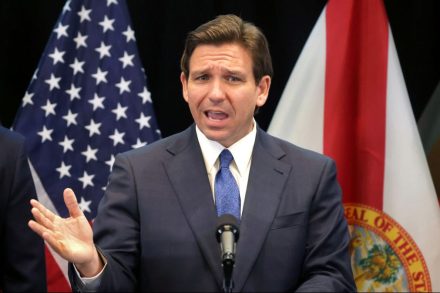
The Republican Party’s fumbling response to the overturning of Roe v. Wade has caused some in the party to plead for a surrender. Disappointing midterms returns, a string of lost referenda and party in-fighting has led some right-wing commentators to tell the pro-life movement — in no uncertain terms — to get with the program and move on. But at least one presumed presidential hopeful didn’t get the memo. Last week, Florida governor Ron DeSantis signed the “Heartbeat Protection Act” into law. Observers were quick to write his political obituary; it’s an aggressive move in the one of the most pro-choice red states. But it confirms his reputation as a principled conservative willing to expend political capital to achieve meaningful victories.

ron desantis

Listen: Emily Thornberry’s car crash interview on Sunak smear

What do you do when you’re in a hole? Stop digging. Apparently Emily Thornberry didn’t get the memo. The Shadow Attorney General was wheeled out on the Easter Monday media round to defend Labour’s attack advert which claims that Rishi Sunak isn’t tough enough on criminals convicted of child sexual abuse. Thornberry did her best to sound authoritative and lawyerly but came unstuck multiple times during her seven-minute grilling on Radio 4’s Today programme. After allowing Thornberry to sound off on the importance of overhauling the sentencing guidelines on child sexual abuse, host Justin Webb asked her about Sir Keir Starmer’s own role in drawing them up.

The right’s two responses to Trump’s indictment

From our US edition

The immediate reaction to the indictment of Donald Trump by Manhattan DA Alvin Bragg has been a run to support the former president from his fellow Republicans, including those who are or soon might be competing with him for the GOP's 2024 nomination. But underlying this unanimity of disgust at the flagrant disregard for historical precedent, and the inflation of glaringly weak charges by Bragg, there is an obvious split in the right's response to this new stage of lawfare against Trump — one which could become more obvious in the coming months. On the one hand, you have the right-of-center Americans who are just plain shocked at this development.

indictment

How to stop law students from blocking free speech

From our US edition

When a federal appellate judge speaks at a major law school, he should expect tough questions from a learned audience. He should not expect to be shouted down. When he tries to speak but is heckled, jeered and disrupted, he should expect a university administrator to step in, read the students the riot act and restore order. He shouldn’t expect that administrator to sympathize with the disruptive students and let the trouble continue, as the feckless bureaucrat at Stanford Law School did.   Her shameful behavior is hardly unique. It’s characteristic of mid-level bureaucrats hired to push “Diversity, Equity and Inclusion” at universities across the country. They show very little concern for free speech, alternative views or robust debate.

stanford law students

In praise of the speeding crackdown

We all needed a laugh, what with the pound tanking and inflation running away, my old pal Kwasi delivering a Budget, probably for a bet, like Milton Friedman’s last cheese-dream, and the threat of nuclear annihilation starting to seem like a welcome turn up for the books. Said laugh has just been obligingly provided by the Metropolitan Police. They have just, without broadcasting the fact, decided to enforce the speed limit with the tiniest bit more rigour – and as a result, they’ve nicked more than two and a half times as many people for speeding in the first six months of this year than they did in the last six months of last year.

The case for theft-tanks

The Conservative party leadership contest is a milestone for diversity and inclusion. This time, we get to choose between someone who studied philosophy, politics and economics at Lincoln College, Oxford and someone who studied philosophy, politics and economics at Merton College, Oxford. I can barely contain my excitement. I find the very idea of an undergraduate degree in politics alarming. It is often seen in business that people who complete an MBA straight after university turn out to be spectacularly useless employees, and it’s possible that this unhappy pattern recurs in politics. The reason is simple: there is an order effect at work. It’s one thing to theorise on the basis of practice; quite another to practise on the basis of theory.

The European court has seriously overstepped over Rwanda

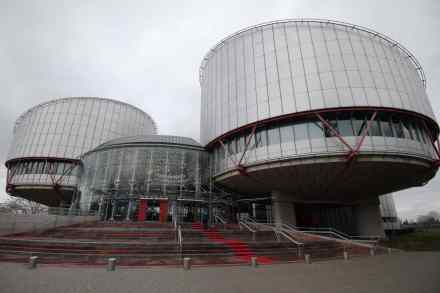
Last night’s abrupt order from the European Court of Human Rights that led to the grounding of the first Rwanda deportation flight delighted progressives everywhere. They will of course say – rather in the fashion of twentieth-century home secretaries calmly refusing to reprieve a condemned murderer – that the law is merely taking its course, and that we should be proud that the rule of law has been upheld. This sounds comforting. It is also wrong-headed. The Rwanda debacle in fact raises very serious questions about the legitimacy of the Strasbourg judges and their interference with national administrations. To remind you of the background, concerted lawfare in the English courts failed to block the flight.

Progressives, don’t cheer Rwanda’s setbacks

The last-minute halting of the first flight to Rwanda is humiliating for Boris Johnson’s government. An urgent interim measure from the European Court of Human Rights prompted a domino effect of domestic court orders that ended with the plane returning to base without passengers. The ECtHR’s order came down to three factors. First, that evidence from the UN High Commissioner for Refugees and others suggested asylum seekers transferred to Rwanda ‘will not have access to fair and efficient procedures for the determination of refugee status’.

Changing the Northern Ireland Protocol won’t break the law

The UK is about to publish a bill that will override parts of the Northern Ireland Protocol. We are doing this unilaterally – the EU doesn't want us to do it, but we're going to do it anyway. Surely that means we’re about to breach international law? It's worth quickly going over why this is happening. The EU wanted to protect its common market, and no one wanted a border down the island of Ireland, so a trade border was placed in the Irish Sea. That has created trade friction between two constituent parts of the United Kingdom. Unionists are unhappy with that arrangement. And unhappy Unionists have led to the suspension of power-sharing at Stormont and therefore a problem for the Good Friday Agreement. So, the UK feels it has to act. But – ah!

My list of Britain’s national character flaws

Before we start, let’s firmly establish my long-standing affection for the United Kingdom. Why, some of my best friends are British. Yet at the risk of overgeneralisation, recent events have exemplified a few shortcomings in the otherwise sterling national character. Nitpicking pettiness. We’ve whole front pages dedicated to the Labour leader’s carryout curry one evening during lockdown; to between which hours (8.40 p.m. to 10 p.m.) the offending curry was consumed (Keir Starmer’s failure to reveal if it was lamb korma or chicken vindaloo is deeply troubling); and to which other eateries were then still open. Thanks to this rigorous coverage, we all know that Starmer’s hotel was serving food outdoors until 9 p.m.

Ed Sheeran is right about British courts

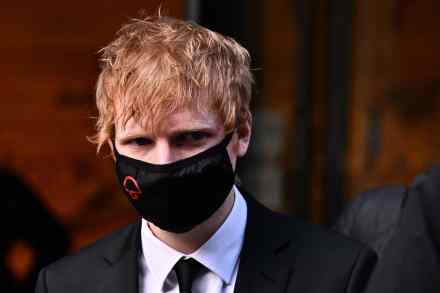
As they say in the music business, where there’s a hit, there’s a writ. It is something that no one knows better than Ed Sheeran, who yesterday won a legal battle over claims that his song Shape of You plagiarised an earlier song, Oh Why by Sami Chokri and Ross O’Donoghue. The judge ruled that Sheeran had neither copied the song deliberately nor subconsciously. After his victory, Sheeran said: Claims like this are way too common now and have become a culture where a claim is made with the idea that a settlement will be cheaper than taking it to court, even if there is no basis for the claim, and it’s really damaging to the songwriting industry.

Sex, trans rights and the Scottish census

It takes some doing to make a census interesting. So congratulations to the National Records of Scotland (NRS). NRS, which administers the decennial survey, is facing a judicial review over its guidance on the document. On the question of sex, it states that 'if you are transgender the answer you give can be different from what is on your birth certificate'. That is, something other than your legal sex. Feminist group Fair Play For Women will challenge this guidance at the Court of Session on 2 February. If this sounds familiar, it’s because similar guidance for last year’s census in England and Wales was challenged at the High Court and found to be unlawful.

Have we reached peak human rights?

After the Colston debacle, you might be forgiven for having missed the other legal story that broke this week. The European Court of Human Rights has dismissed the complaint in the Ulster 'gay cake' case, so the decision in favour of the baker will stand. In case you need reminding, seven years ago a Belfast gay rights activist called Gareth Lee asked Ashers, a high-class bakery, to produce a cake inscribed with the phrase 'Support Gay Marriage' for an event he was organising. The bakery owners refused, citing Presbyterian religious scruples, whereupon Lee sued for discrimination. He lost.

The Colston verdict is the triumph of values, not law

The verdict is in on the case of the Colston statue in Bristol. Not guilty. Every one of the accused is innocent. And I mean that: everyone is innocent until proven guilty. If found not guilty, they must — at all times — have retained their innocence. But something feels wrong. Eminent lawyers have described the verdict as both absurd and perverse. In the UK we ‘relate’ to law. We aren’t taught it in schools. Our parents, teachers, instead introduce it to us by osmosis. We have a feel for it, a grasp of it. We might have felt we knew what criminal damage was, and we might have felt that pulling down a statue was wrong. That turns out to be an error.

Parliament, not judges, should decide our laws

The British commentariat has not covered itself in glory in its reaction to Dominic Raab's proposed reforms to judicial review. The Times reported yesterday that the government is planning to introduce a novel legislative tactic, the ‘Interpretation Bill’, to try to shift the balance of power back towards parliament. To be clear: there is no prospect of ministers being given the power to strike down court judgments they dislike. In fact, the core of the proposal is perfectly orthodox. The proper way for parliament to change the law is through legislation, and an Interpretation Bill is legislation. It would need to be passed in the normal way, and MPs would have to vote it through. No despotism involved.

Raab’s law reforms are ridiculous

What should we make of the Times story yesterday, which appeared under the headline ‘Boris Johnson Plans To Let Ministers Throw Out Legal Rulings’? The impression given is that ministers will somehow be handed powers by the Prime Minister simply to ignore court rulings that they do not like. That would lead to an extraordinary constitutional crisis, involving either the arrest and imprisonment of ministers for contempt of court, or the arrest and imprisonment of judges with the government exercising Erdogan-style despotism. Nobody can seriously believe that this is what is intended, and the rest of the Times story makes clear that it is not.