Rory Geoghegan

Rory Geoghegan is the founder of the Public Safety Foundation. He used to work in Downing Street and as a police officer in the Met

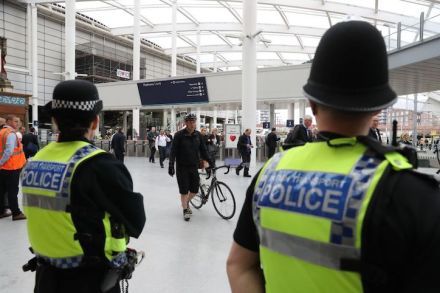
Why is the British Transport Police launching a bursary for British Africans?

From our UK edition

Some of Britain's police chiefs are in a total pickle when it comes to race, not least as a result of them rushing to embrace critical race theory and anti-racist ideology in the wake of George Floyd’s death in the United States in 2020. Whether actually captured, or simply pretending to be, they have committed policing to a political course that risks ending very badly. The latest development has seen a police force agreeing to fund a bursary for a law student, but only if they are ‘British African’. At a time when many of our public institutions are happy for you to identify however you like, something tells me that a more traditional interpretation will be applied to this term.
No, John Major: Britain doesn’t lock up too many prisoners

From our UK edition

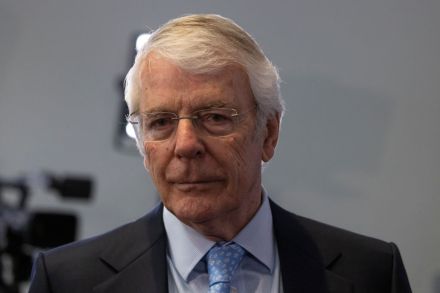
While most of the country thinks we should be cracking down on crime, former prime minister Sir John Major has been busy telling the world this week that in the UK we lock up too many prisoners. In a speech at the Old Bailey for the Prison Reform Trust, Major has made the case for reducing the UK’s prison population, arguing that we should have more non-custodial sentences instead, especially for ‘non-violent’ offences.   You really have to wonder what planet he is living on. Only this year a teenage girl who was raped was forced to watch her attacker walk free from court after being sentenced to unpaid work. In Brighton, a police sergeant was violently assaulted, left with broken bones and almost lost his sight.

How verbal and physical abuse drove me out of the police | 24 August 2019

From our UK edition

The past decade has not been kind to those we entrust, in the words of Sir Robert Peel, ‘to give full-time attention to duties which are incumbent on every citizen’. Since 2010, police numbers have fallen by more than 20,000, with too many choosing to leave the force owing to physical and emotional assaults in a stressed and underfunded job. I can sympathise, because I had to step away from the front line and the job I loved three years ago. At the time, friends and family repeatedly asked me why I felt I had to leave. Set against the latest news of escalating assaults on police, I’m not so sure they’d ask now. There were approximately 31,000 assaults on officers last year, an increase of almost 5,000 on the year before.

How verbal and physical abuse drove me out of the police

From our UK edition

The past decade has not been kind to those we entrust, in the words of Sir Robert Peel, ‘to give full-time attention to duties which are incumbent on every citizen’. Since 2010, police numbers have fallen by more than 20,000, with too many choosing to leave the force owing to physical and emotional assaults in a stressed and underfunded job. I can sympathise, because I had to step away from the front line and the job I loved three years ago. At the time, friends and family repeatedly asked me why I felt I had to leave. Set against the latest news of escalating assaults on police, I’m not so sure they’d ask now. There were approximately 31,000 assaults on officers last year, an increase of almost 5,000 on the year before.

Prison is failing. Here’s how to fix it

From our UK edition

As much as the country is divided by Brexit, there’s arguably an even more stark division. It’s the one between those directly and repeatedly affected by crime, and those who aren’t. Prison officers – more so than police, prosecutors, barristers, or probation officers – face the worst of state failure when it comes to crime. They go to work and spend their shifts outnumbered by prisoners, and only marginally less constrained in their movements than their charges. They see colleagues – and prisoners – routinely and violently assaulted. Recent cases involve a prison officer having their throat slit. It’s the sort of event that, occurring in any other workplace, would be massive news.

Sajid Javid has made a start, but a lot more needs to be done to reduce knife crime

From our UK edition

Another day, another teenager fatally stabbed on the streets of Britain. It’s a domestic issue crying out for urgency and action. It’s something the Home Secretary is reportedly losing sleep over – as are many parents, particularly in those communities most affected. Today’s announcement of a new Knife Crime Prevention Order forms part of a welcome chain of action from the Home Secretary, but it lacks the knock-out blow required to change things on our increasingly violent streets. In particular, it takes us no closer to addressing the fundamental issue that came from the huge collapse in stop and search: a significant minority of people who feel they can carry weapons without reasonable fear of detection.

The truth about stop and search

From our UK edition

Today in Britain, some of our poorest communities are under siege from gangs and violent crime – and it can be stopped. It is near impossible for people to realise their potential when they do not even feel safe in their communities and so it is a social justice issue that the Home Secretary is right to weigh in on. Sajid Javid is said to be planning a significant extension of police stop and search. After years of restricting these powers, it's about time. Javid is far from alone in believing stop and search is part of the answer to dealing with surging knife crime and serious violence. The Centre for Social Justice’s poll of Londoners in July found 89 per cent think that increasing the chances of being caught is important to tackling the problem.

Paid police informants are a necessary evil

From our UK edition

Police paying a convicted child rapist to be a covert informant will always turn stomachs. But the real stomach-churner is that the grooming and exploitation of vulnerable women and girls is continuing. Even so, the £10,000 payment made to a sex offender who helped bring the Newcastle grooming gang to justice has sparked a backlash. The chief constable of Northumbria, who authorised the payment, has conceded that his decision is widely seen as 'morally repugnant'. Yet the criticism aimed at the police should not mask the importance of paid informants. It's clear to me that information and intelligence is the lifeblood of any investigation.

What causes riots? An ex-policeman’s view

From our UK edition

What causes riots? How do peaceful, civilised protests turn into violence and anarchy? It can take just a few factors. First, the unfortunate death of a criminal who has come into contact with police. Second, poor public relations from the police or IPCC, who are too often sluggish to explain what has occurred and why – especially in those communities with a history of distrust. Last, the involvement of a hard core of individuals with criminal intent, who become parasites on legitimate protest, twisting it into something much nastier. If that makes the process sound like slow evolution, consider the pace at which the 2011 riots took hold.